Your selection gave 851 results.
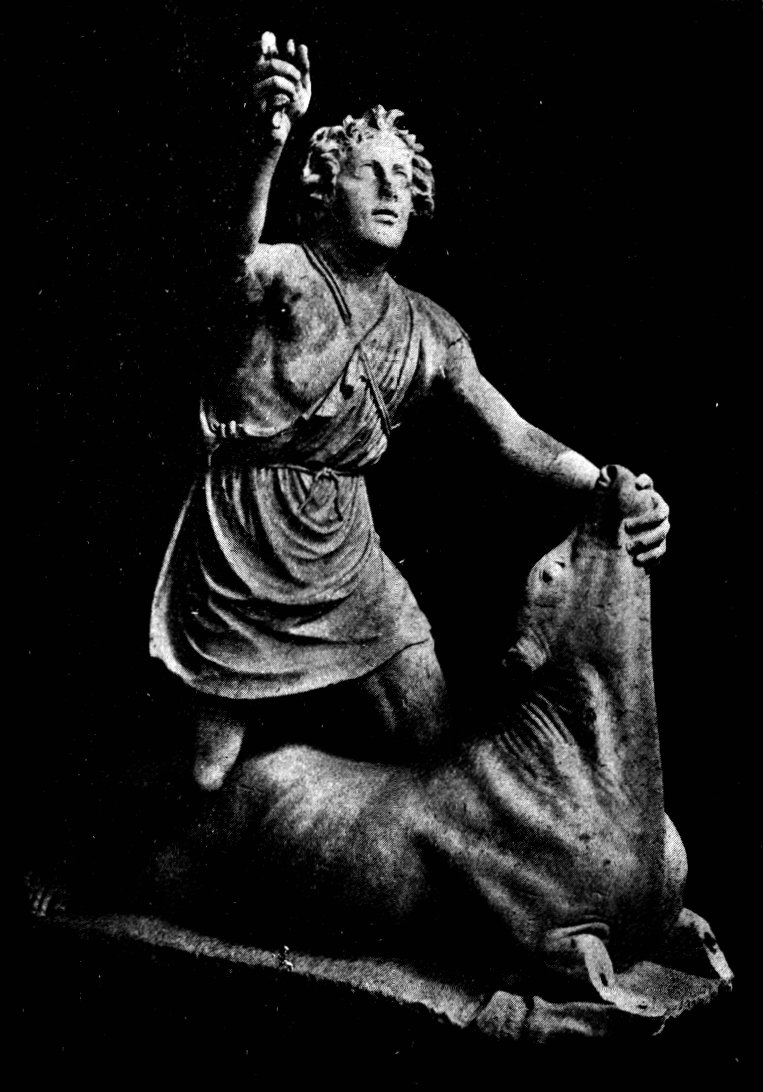
The person who commanded the sculpture may have been M. Umbilius Criton, documented in the Mitreo della Planta Pedis.
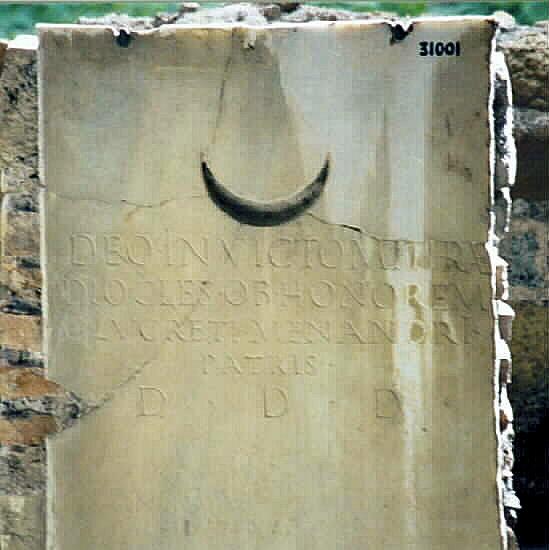
The brick altar of the Mithraeum Menander was covered with marble slabs bearing a crescent and an inscription.

Late Roman funerary inscription from Antium commemorating the senator, governor of Numidia and Mithraic pater Alfenius Ceionius Iulianus Kamenius.
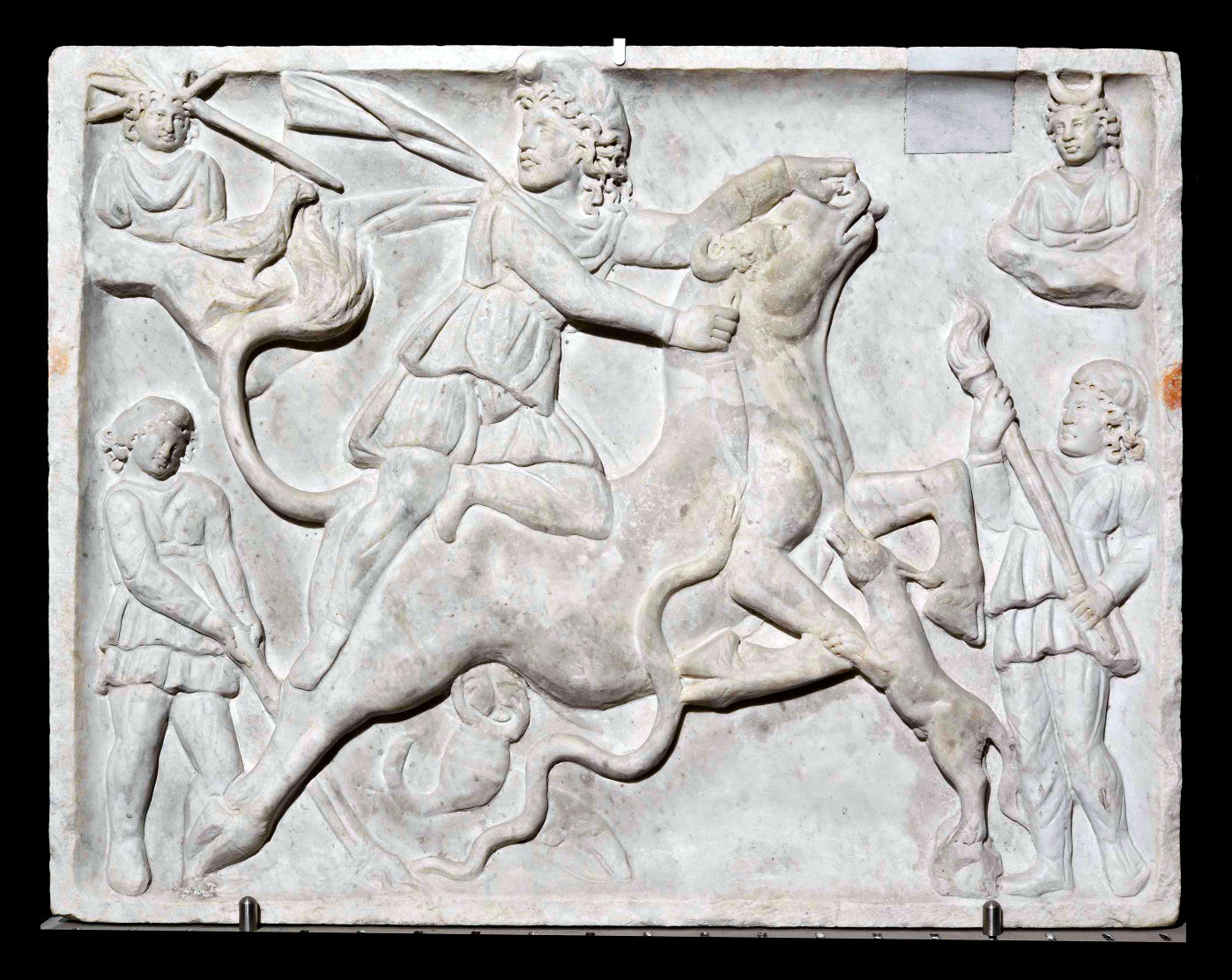
It is not certain that the marble relief of Mithras killing the bull was found on Capri, in the cave of Matromania, where a Mithraeum could have been established.
Gold lamina from Ciciliano showing a nude, serpent-entwined Aion-Kronos holding a key and surrounded by Greek voces magicae (2nd c. CE).

Ciciliano is a comune in the Metropolitan City of Rome in the Italian region of Latium, located about 35 kilometres east of Rome.
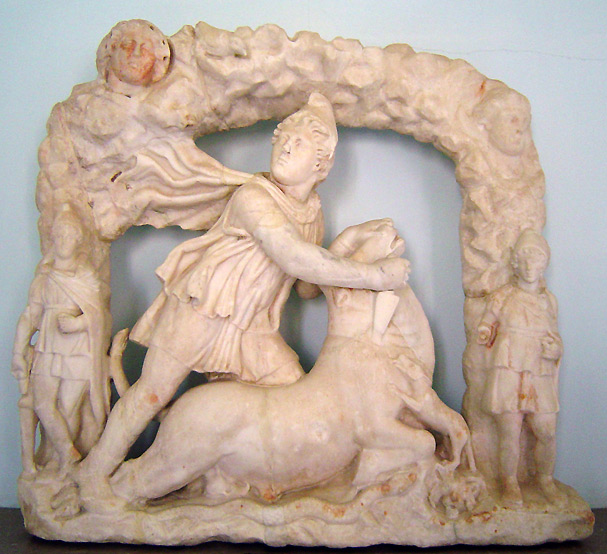
The assumed find-place of the Mithras Tauroctonus of Palermo is uncertain.
Fragmentary marble relief with the hind legs of a bull once interpreted as Mithraic but considered doubtful by Vermaseren.
Group of Mithraic finds distributed across different localities named San Zeno along the Verona–Brenner route.
Second-century Mithraeum discovered in the lower storey of the Curia complex at Cosa.
Group of Mithraic and other cult remains possibly originating from several neighbouring sanctuaries destroyed or abandoned in Late Antiquity.
Mithraic monuments associated with Ceionius Iulianus Kamenius and linked with the inscriptions discussed in entries 395A–B.
Mithraic material whose correct archaeological attribution belongs to Regio XII of ancient Rome.
Two painted decorative phases from the Santa Prisca Mithraeum whose figures became clearer after later conservation work.
Fragmentary relief from the area of the Porticus of Pompey once interpreted as Mithraic but later identified as a representation of Victoria.
Archaeological remains connected with the Praetorian camp and the presence of Mithraic worship among the imperial guard.
Marble cippus from the Quirinal residence of Ceionius Iulianus Kamenius preserving references to his Mithraic and other priestly functions.
Monumental inscription honouring the senator and Mithraic pater Kamenius together with his numerous priestly offices and initiatory roles.
Marble inscription discovered near the Via Cupa mentioning an offering to the invincible Mithras by Apollonius Tetes Syras of Marcianopolis.
Inscription now preserved in the Palazzo Ducale of Urbino whose wording may point to the existence of a Mithraic community.
