Your search Ša‘āra gave 2439 results.
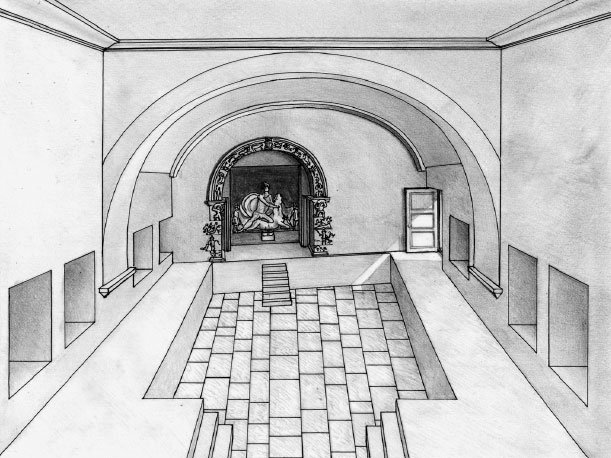
The Mithraeum of Saara, Syria, has been identified through the deciphering of the remains of the iconographic programme on its arch.
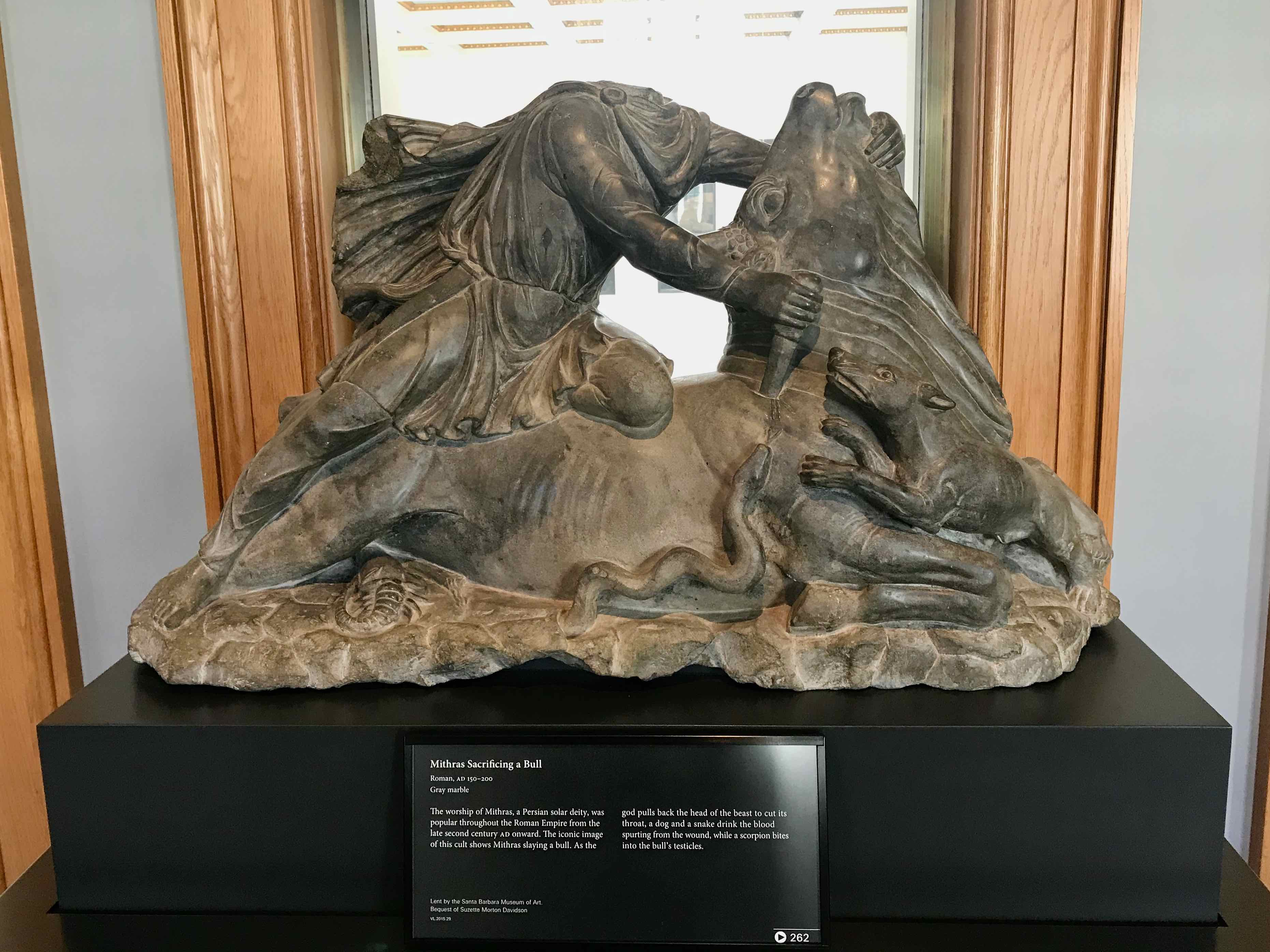
Tauroctony in black marble on display at the Santa Barbara Museum of Art, California.

Le groupe caractéristique « lion, serpent, cratère » marque le rapport avec le culte mithriaque, car comme nous croyons l’avoir montré, ce groupe ne symbolise pas la lutte des éléments, terre, eau et feu, mais la participation des animaux-attributs au sacrifice, par Mithra…

La localización de una comunidad mitraísta en San Juan de la Isla posee un notable interés, debido a la débil popularidad de este culto oriental entre las poblaciones de Hispania.

A collection of 284 coins, spanning from 254 to 395 AD and mostly of the fourth century, found in the Mithraeum at Pons Saravi (modern Saarburg) in Belgica, indicating that the sanctuary was founded under the Severan dynasty and destroyed in the fourth century…
A skeleton of a man aged approximately thirty to forty years, with arms tied behind his back and wrists bound with an iron chain, found lying on a fragment of the main relief at the back of the Mithraeum at Pons Saravi (modern Saarburg) in Belgica…
A small terracotta lamp from the Mithraeum at Pons Saravi (modern Saarburg) in Belgica, bearing a beardless head on its upper surface and the inscription SOLI on its underside, found among numerous lamp fragments.
Numerous animal bones including birds, beasts of prey, and the muzzle of a wild boar, found as ritual deposits in the Mithraeum at Pons Saravi (modern Saarburg) in Belgica.
A collection of ritual vessels from the Mithraeum at Pons Saravi (modern Saarburg) in Belgica, including a stone vase, a plate with a lion's head in relief, a terra-sigillata plate with a hunting scene, and an urn filled with ash, bird bones, and rings…
A fragmentary inscription from the Mithraeum at Pons Saravi (modern Saarburg) in Belgica, recording a dedicant's gift made a second time.
Several fragmentary stone bases and altars without identifying marks, one of which has a semicircular hole in one of its sides, found in the Mithraeum at Pons Saravi (modern Saarburg) in Belgica.
A stone hand of more than natural size from the Mithraeum at Pons Saravi (modern Saarburg) in Belgica, with the thumb touching the index finger and a rectangular projection in the palm on which an object was probably fastened.
Two female stone heads of varying sizes, found in the Mithraeum at Pons Saravi (modern Saarburg) in Belgica.
A naked torso of a robust figure, preserved as far as the navel with head and arms lost, from the Mithraeum at Pons Saravi (modern Saarburg) in Belgica, possibly representing the rock-birth of Mithras.
A fragment from the Mithraeum at Pons Saravi (modern Saarburg) in Belgica, showing a standing naked man with a bird, possibly a cock, on his left arm, tentatively identified as Mercury, with the head, hands, and parts of the legs lost.
The upper part of a dressed male figure from the Mithraeum at Pons Saravi (modern Saarburg) in Belgica, holding a wreath or broad ring in the right hand and a round object in the other, tentatively identified as Aion but without sufficient evidence.
The right lower corner of a relief fragment from the Mithraeum at Pons Saravi (modern Saarburg) in Belgica, showing a standing naked man holding his hands crosswise on his breast, with the upper part and head lost.
Rock inscription of Sagarios, strategus of Ariaramneia, recording a Mithraic ceremony near Farasha (ancient Ariaramneia), Cappadocia, likely 1st century A.D.
In this 4th-century Roman altar, the senator Rufius Caeionius Sabinus defines himself as Pater of the sacred rites of the unconquered Mithras, having undergone the taurobolium.

