Your search Al-Bahnasa gave 3013 results.

This marble dedication from Puteoli was offered to Sol Invictus and the genius of the colony by Claudius Aurelius Rufinus together with his wife and son.
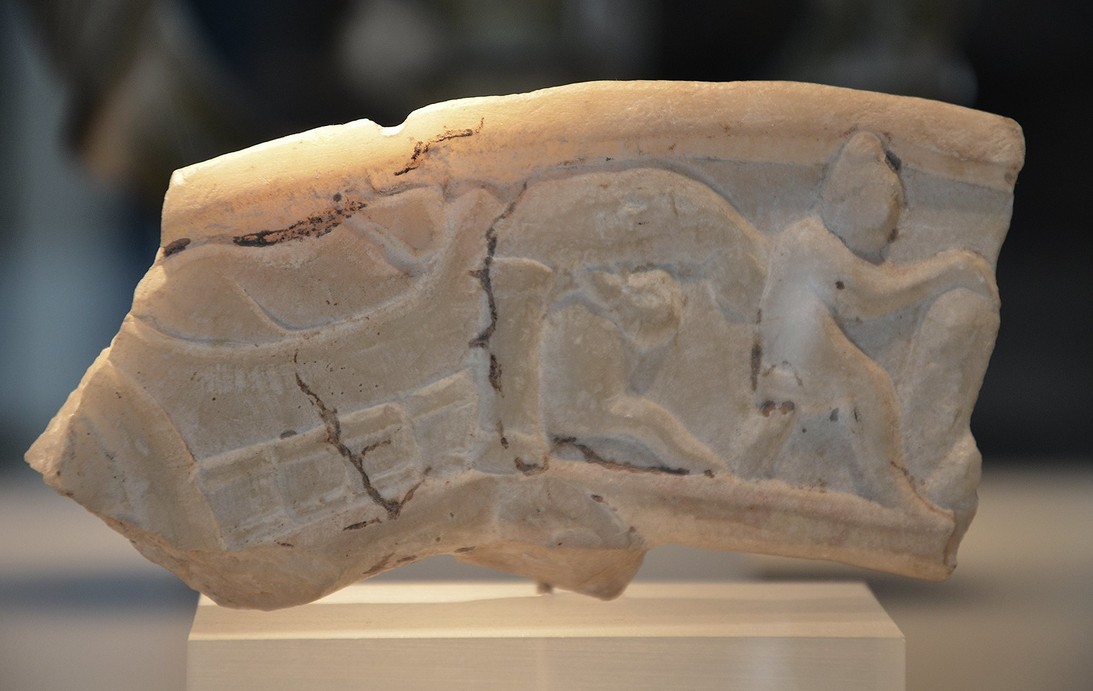
Fragment of an alabaster relief from Cologne with part of a tauroctony scene. Only the tip of Mithras’ Phrygian cap and small narrative details above are preserved.
Sepulchral limestone inscription from the vicinity of the Mithraeum at Colonia Agrippina (Germania Inferior), mentioning the Mithraic grade Corax.
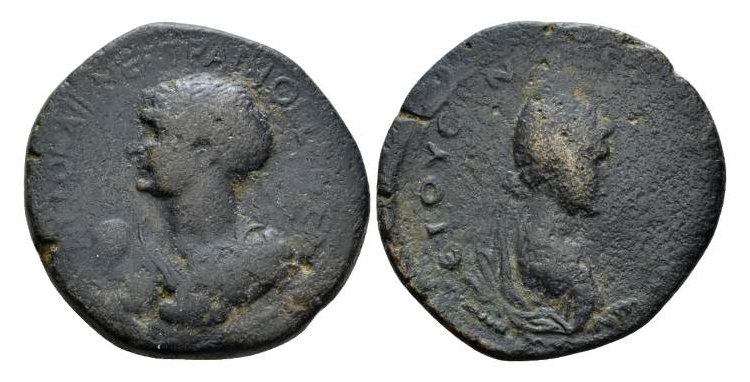
These bronze medallions associates the image of several Roman emperors with that of Mithras, usually as a rider, in the province Pontus.
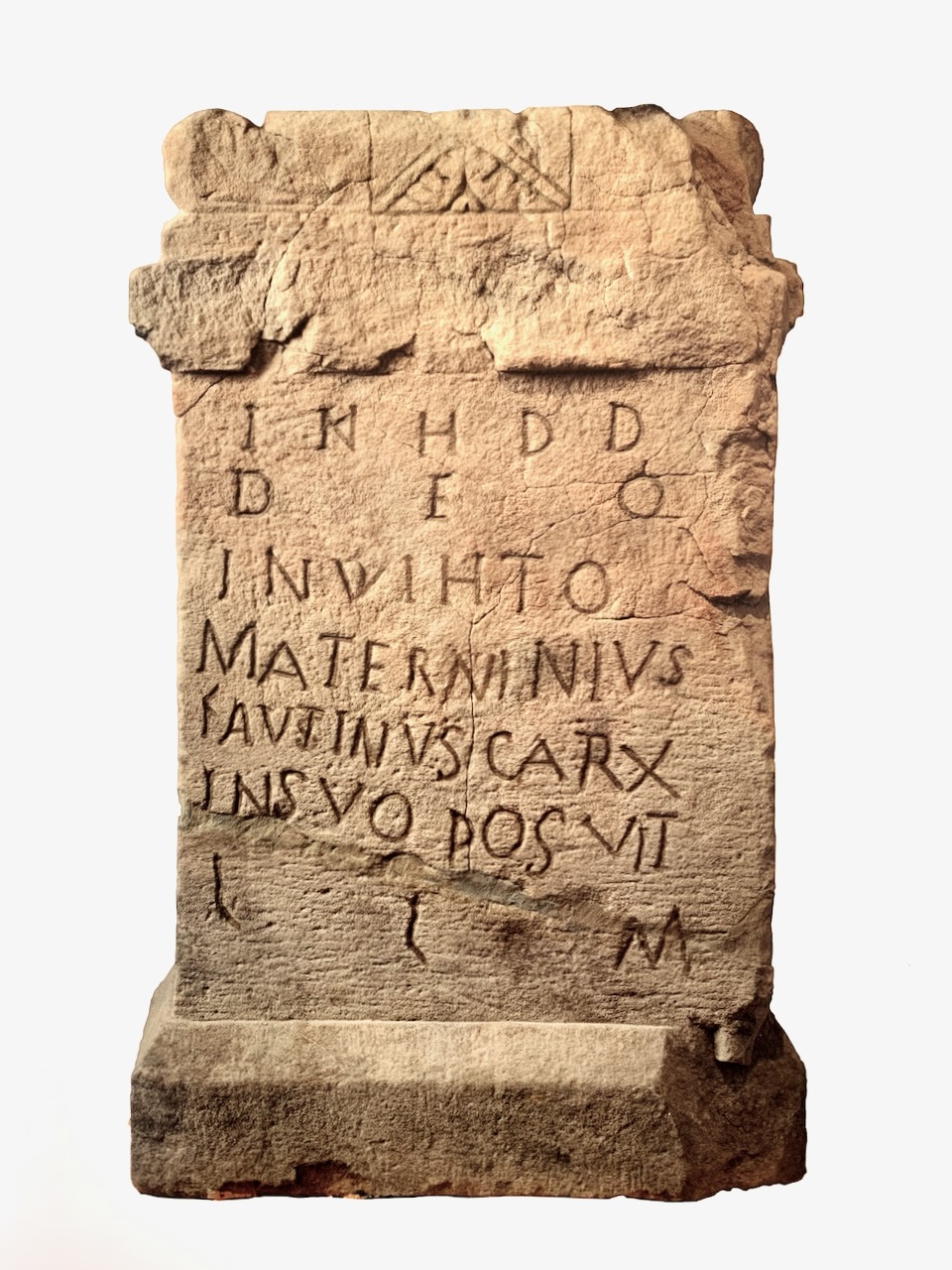
Corax Materninius Faustinus dedicated other monuments found in the same Mithraeum in Gimmeldingen.
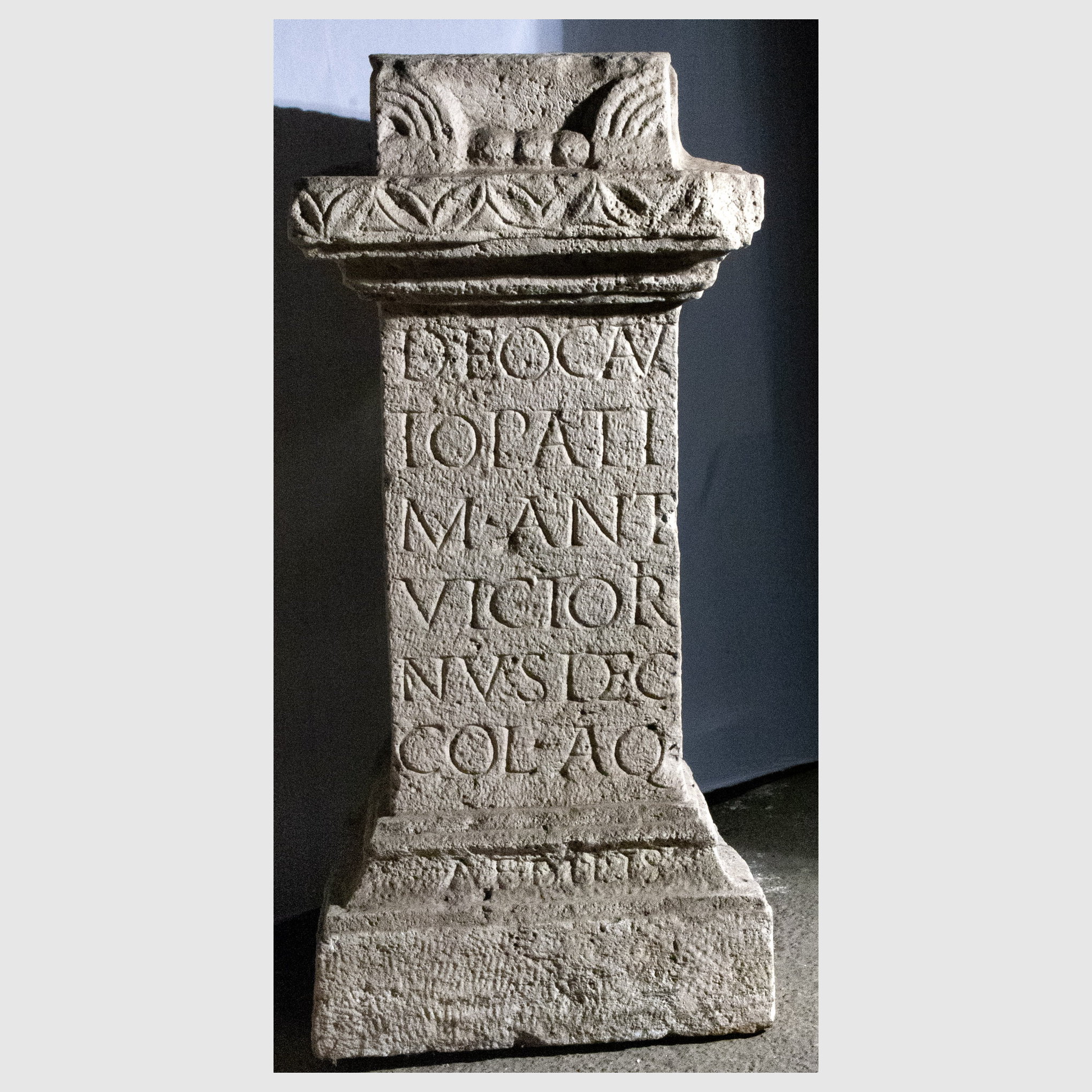
These two altars, erected by a certain Victorinus in the mithraeum he built in his house, bear inscriptions to Cautes and Cautopates.
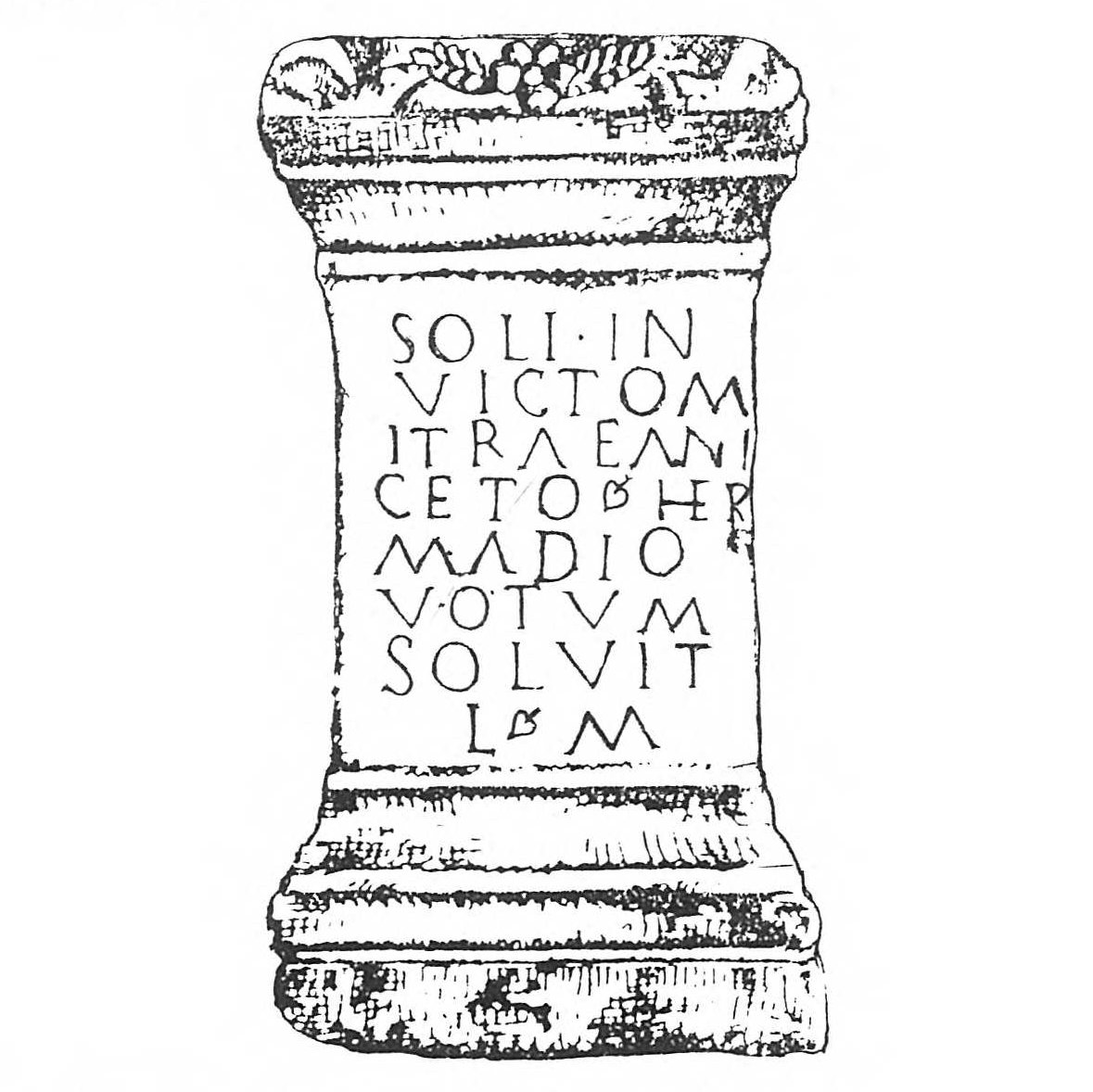
This altar was erected by Hermadio, who also signed other monuments in Dacia and even in Rome.
Fragmentary marble statue of a woman from the Mithraeum delle Sette Porte.
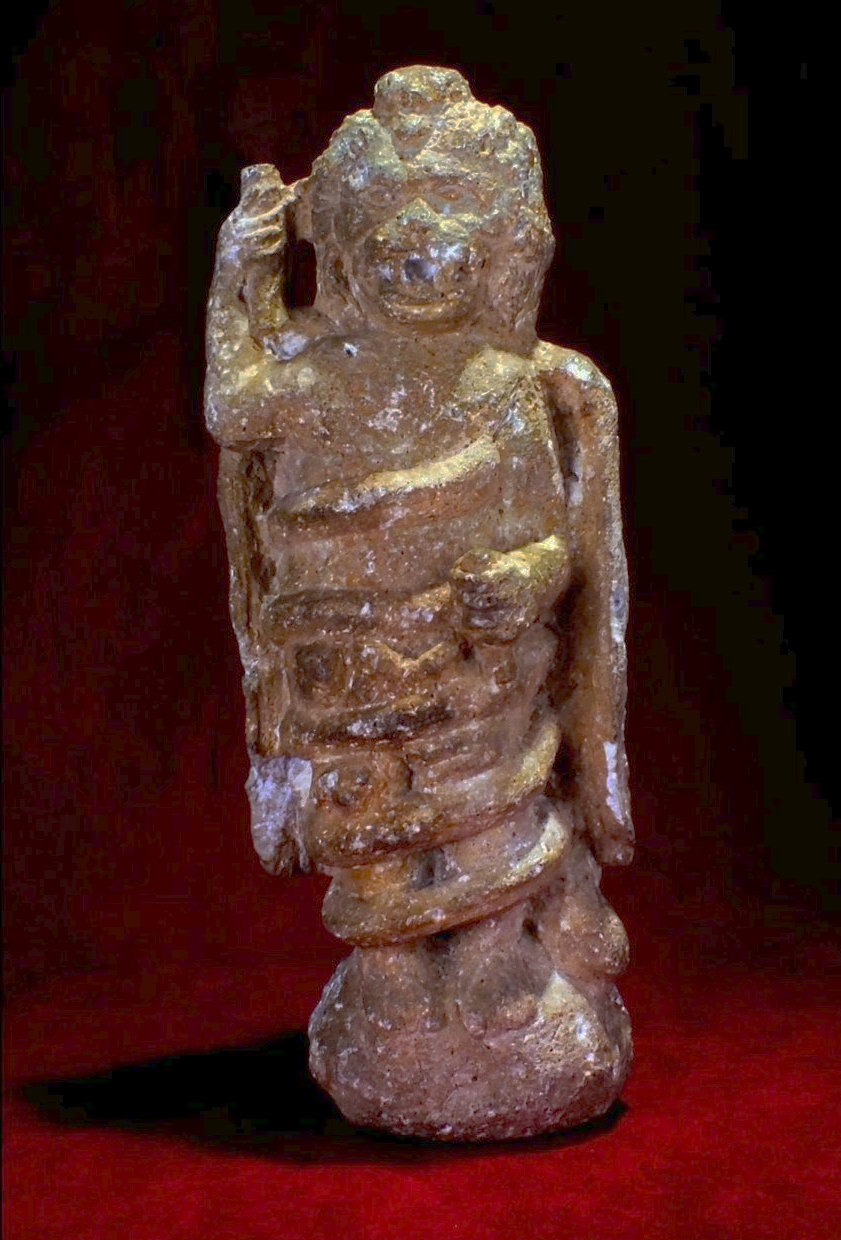
Its base is partially broken, so it is unclear if the figure was standing on a globe, an expected position, or not.

This second relief depicting a phallus from Tiddis, Algeria, has been positioned alongside its counterpart atop pillars that greet visitors to the Mithras shrine.

Lenni George on Hekate’s development across ancient traditions, from mystery cults to magical practice and philosophical thought.
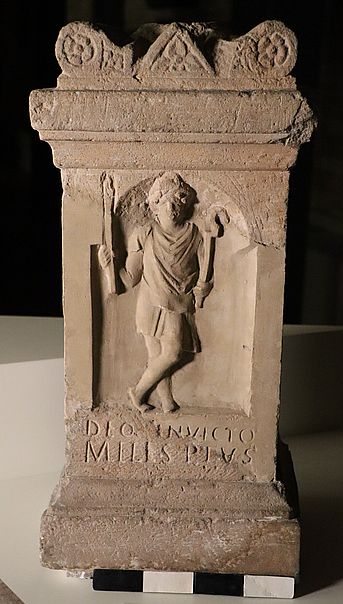
Small votive altar in white limestone from Aquae Mattiacae, dedicated to Deo Invicto by a miles pius. The top preserves the head of Cautes with his raised torch.
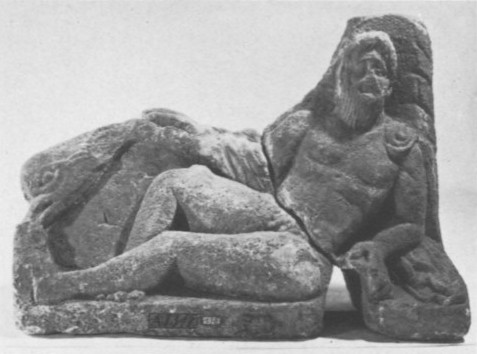
A small limestone altar from Bandorf near Oberwinter dedicated to Deo Invicto Regi. Found in an isolated structure not resembling a mithraeum, its function remains uncertain.
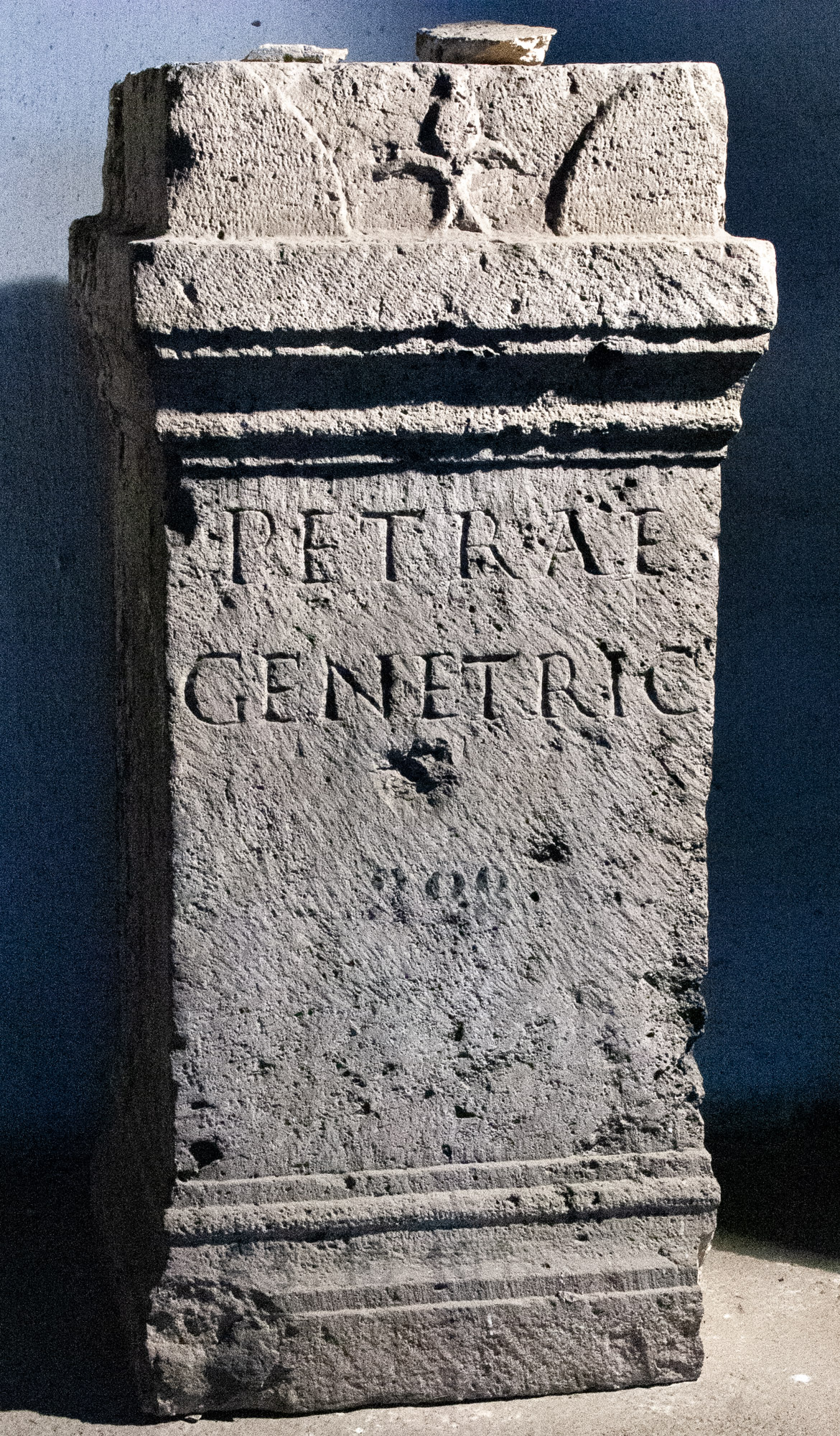
Small limestone altar from Aquincum, Budapest, dedicated to Petra Genetrix.

Dominique Persoons proposes a reconstruction of Mithraic ritual based on archaeological remains, frescoes, and zodiacal symbolism. He interprets the mithraeum as a liturgical microcosm governing the descent, purification, and ascent of souls.
This inscription mentions a Pater for the first known time.
Red sandstone altar from Stockstadt, featuring a square cavity in the front that contained a fragment of crystal and a small lamp.
The article examines two recently discovered Mithraic representations of Cautes from Alba Iulia, focusing on a rare iconographic type showing the torchbearer with a bucranium.
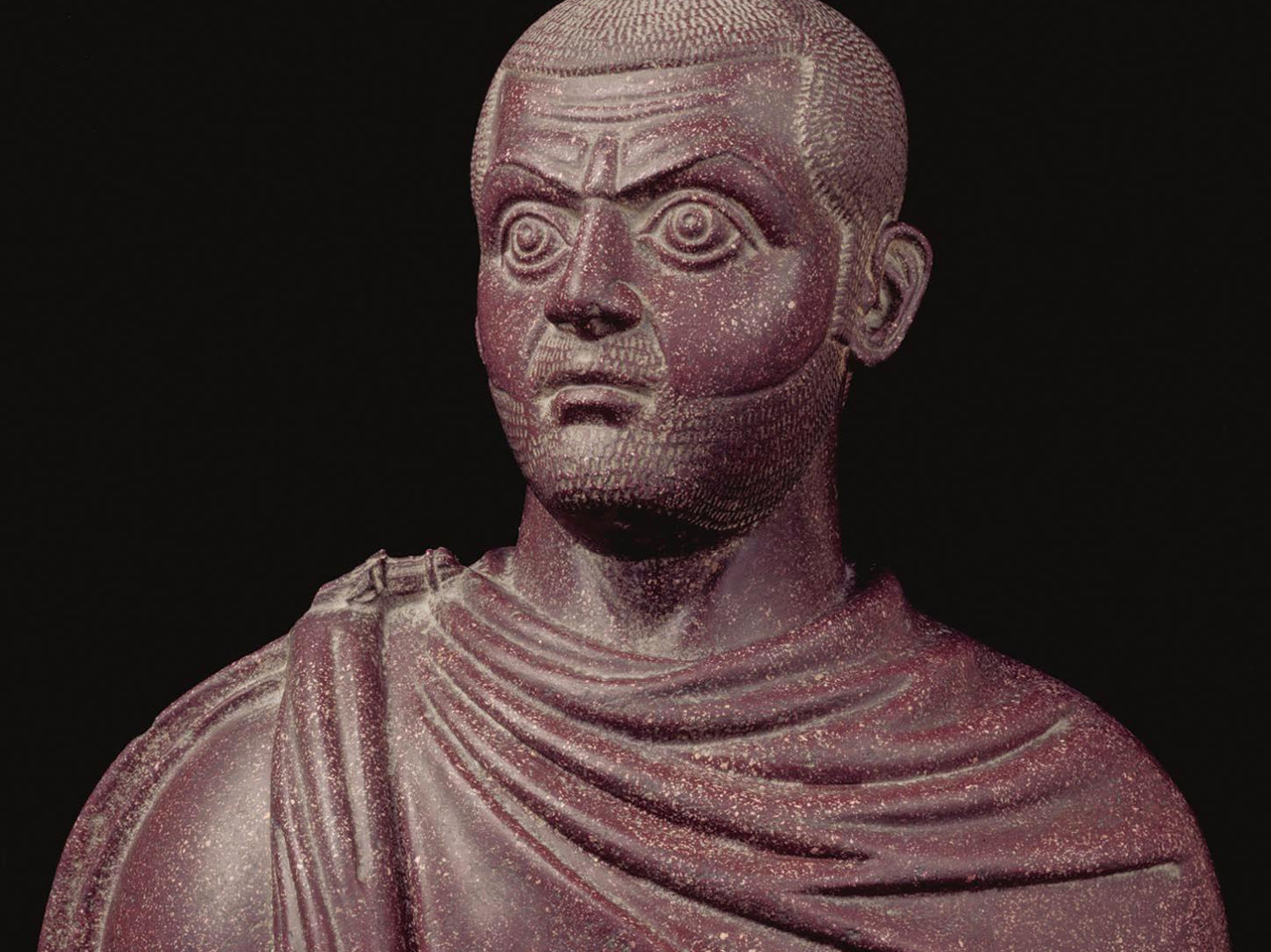
In the eighteenth year of Diocletian’s reign, Galerius Maximianus, persuaded by the sorcerer Theoteknos, consulted demonic oracles in a cave and was urged to initiate the persecution of the Christians.
