Your search Al. N. Oikonomides gave 3559 results.

Marble head in the Museo Baracco, Rome, generally described as an Alexander but very probably representing Mithras with his eyes lifted towards heaven; the back of the head is finished obliquely with a small hole for fastening a Phrygian cap.
Fragment of a relief from the Villa Wolkonsky showing the usual representation of Mithras slaying the bull, with the dog, serpent and scorpion; the bull's head, Mithras' head and right foot are lost.
Large limestone jar from room Z of the S. Prisca Mithraeum, fitted with a small cylindrical vase and a lid bearing the graffito "Te cauterio i Saturne i Ata[r i] Opi".
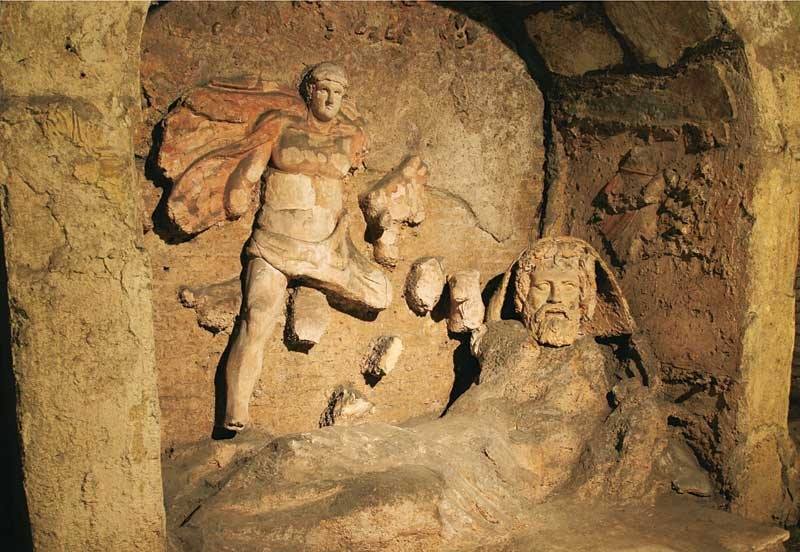
Even if only a few fragments remain, it is very likely that the main niche of the Mitreo di Santa Prisca contained the usual representation of Mithras killing the bull.
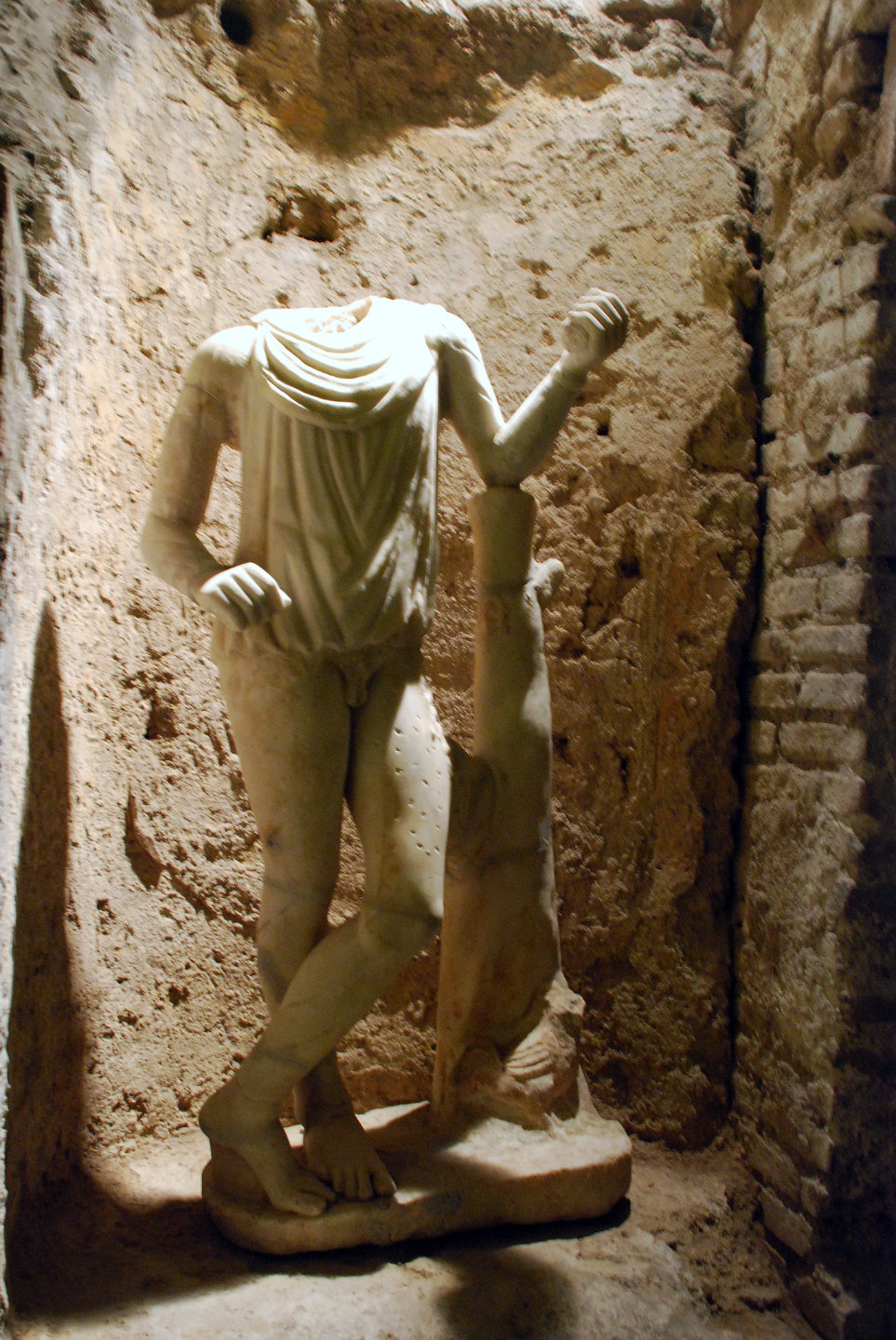
The marble statue of Cautes, found in the Mithraeum of Santa Prisca, was originally a Mercury.
Lower part of a candelabrum-shaft in the form of a palm trunk on an acanthus base, with a dedication to Mithras by T. Aelius Iustus on three faces of the plinth, found between the churches of SS. Eusebius and Vitus, Rome.
Upper part of a small marble column with late 2nd- or 3rd-century lettering, bearing a dedication to Sol Invictus Mithras and his sodality by actors from the Forum Suarium, excavated on the Esquiline.
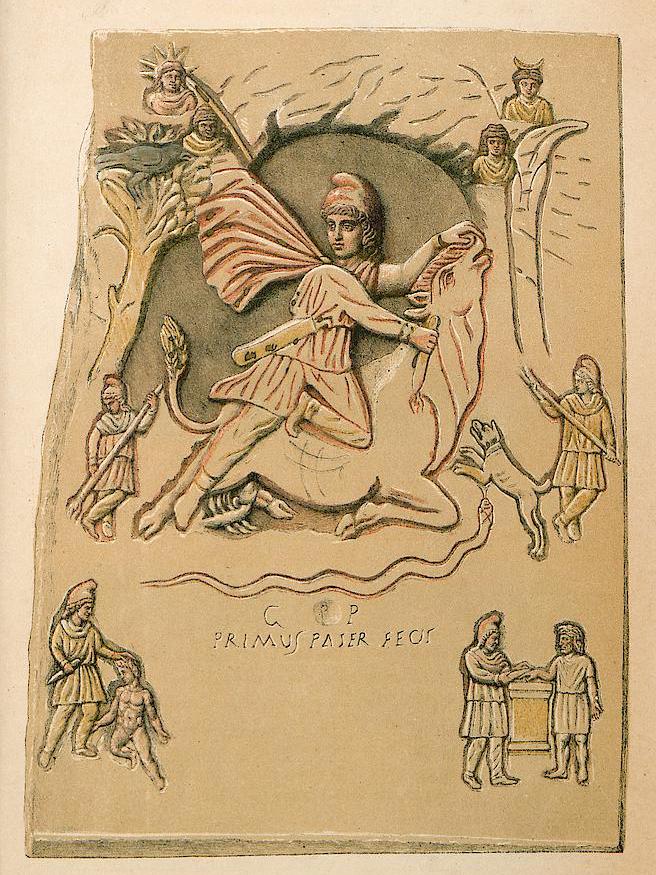
The relief of Mithras slaying the bull found on the Esquiline Hill includes two additional scenes with Mithras and two other figures.

This unusual mural depicting Mithras killing the bull was found near the Colosseum in 1668.
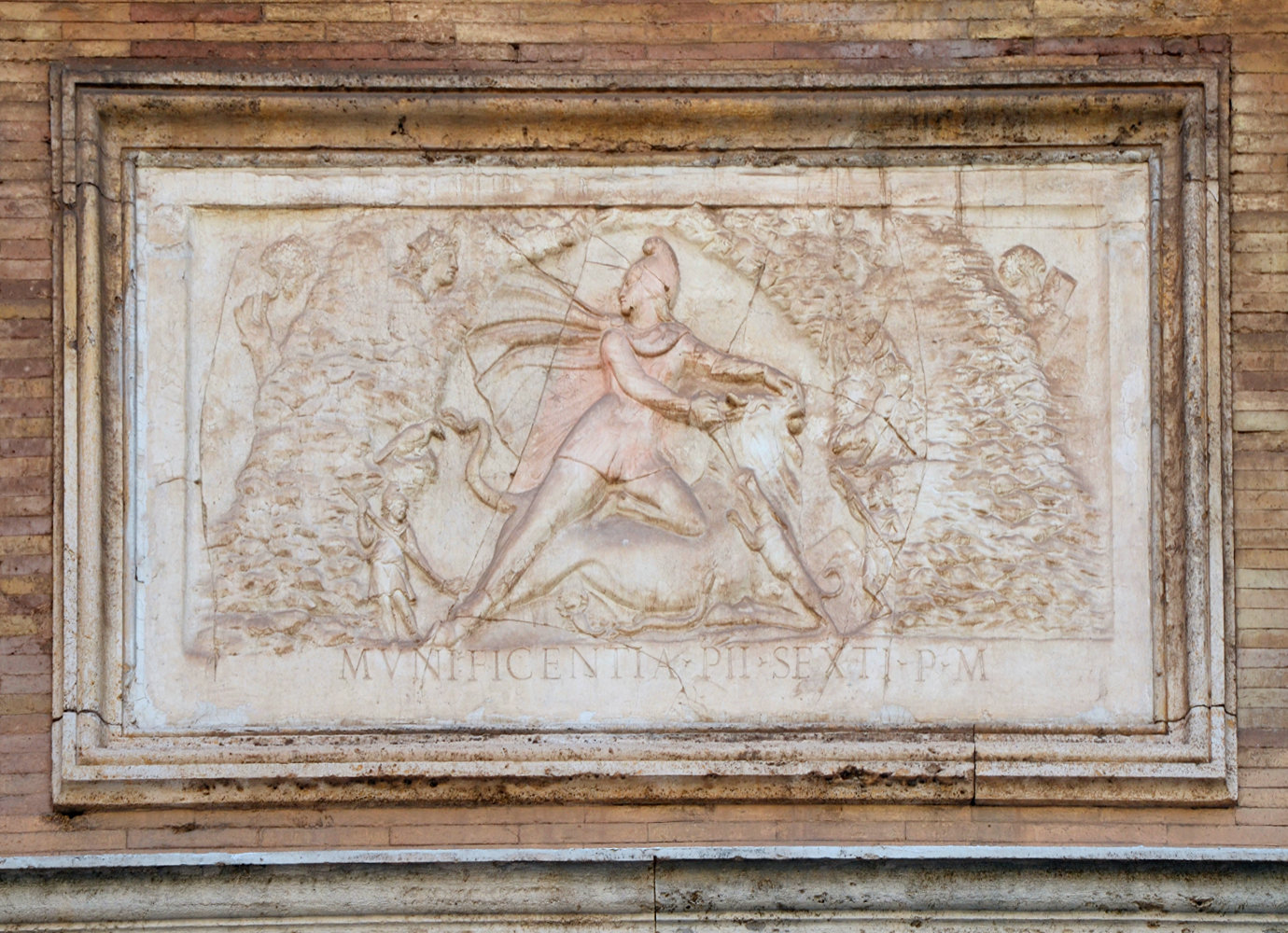
The Tauroctony relief of Mithras killing the bull walled in the Cortile of the Belvedered, Vatican City, was found by Fagan near Ostia.
Graffito on a wall of the Caseggiato del Sole adjacent to the Mitreo dei Serpenti at Ostia, reading "Dominus Sol hic avitat" (Lord Sun dwells here).
Partial list of Mithraic initiatory grade titles attested in inscriptions from the Mithraeum of Dura-Europos, Syria, 3rd century A.D.
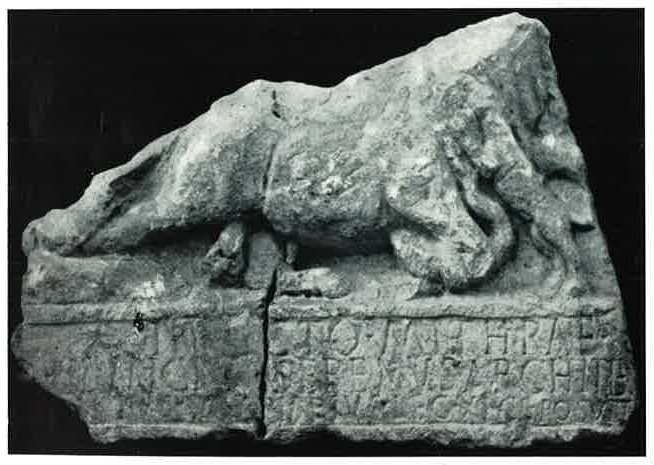
Sandstone tauroctony relief from Balcic, ancient Dionysopolis in Moesia Inferior, depicting the standard bull-slaying scene; the attribution to Dionysopolis rather than another site is disputed.
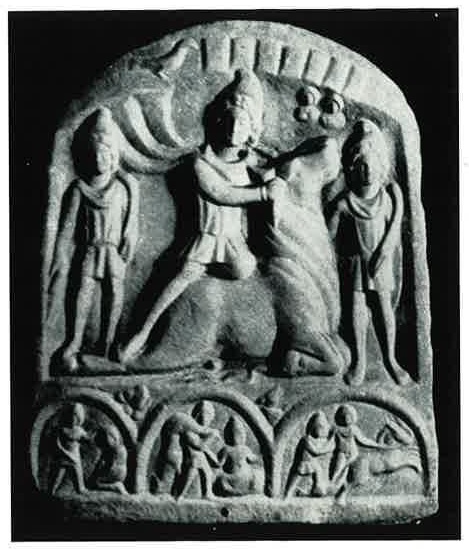
White marble tauroctony relief from the ruins of the Roman castle near Koniovo, Moesia Superior, depicting the standard bull-slaying scene.
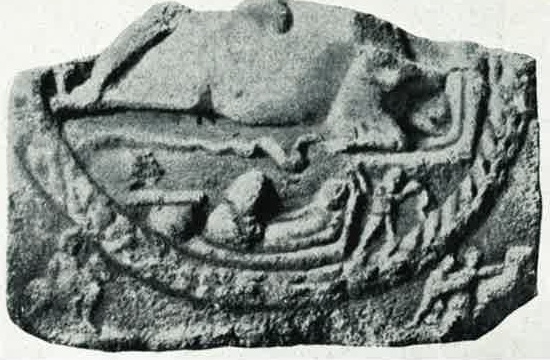
Lower part of a marble tauroctony relief from Küstendil, ancient Pautalia in Moesia Superior, preserving only the lower half of the bull-slaying scene with partially visible legs of the torchbearers.
Monument from Almus, Moesia Superior, with a tauroctony representation and a dedication to Deo invicto above it; no further details are available.

Small relief found in 1956 at Oarda de Sus near Alba Julia, Dacia, framed by a border; the upper part depicts the dressed bust of Mithras in Phrygian cap, the lower portion the bull-slaying scene.
The six divine names inscribed on the bronze hatchets from Thun-Allmendingen — Iovi, Neptuni, Minervae, Mercurio, Matribus, Matroni — reflecting the polytheistic religious landscape of the Mithraic community at this site.
Limestone left hand holding a caduceus from Thun-Allmendingen, belonging to a statue of Mercury associated with the possible Mithraeum.
Fragmentary limestone relief from Thun-Allmendingen of the same dimensions as the bull relief, depicting a swine; both may have formed part of the sanctuary's ritual décor.
