Your search Aleš Chalupa gave 135 results.


In this article, Chalupa examines the scant evidence that has been found for the presence of women in the Roman cult of Mithras.

Five fragments of a red terra-sigillata vessel showing Cautopates with his torch pointing downwards, in Eastern attire and cross-legged, with the hoof of the bull's hindleg before him, found at Alesia (Mont-Auxois) in Lugdunensis.
A red terra-sigillata cup bearing a relief tauroctony of Mithras, with Cautes and Cautopates cross-legged on either side, found at Alesia (Mont-Auxois) in Lugdunensis and now kept at Saint-Germain-en-Laye.
Group of Mithraic objects now preserved in the museum of the Société des Sciences de Semur at Alésia.

This catalogue proposes, thanks to the contributions of some 75 international experts, a new synthesis for a complex and fascinating cult that reflects the remarkable advances in our knowledge in recent decades.

Syria-Palestina occupied a complex religious landscape shaped by imperial administration, pilgrimage and eastern Mediterranean mobility.
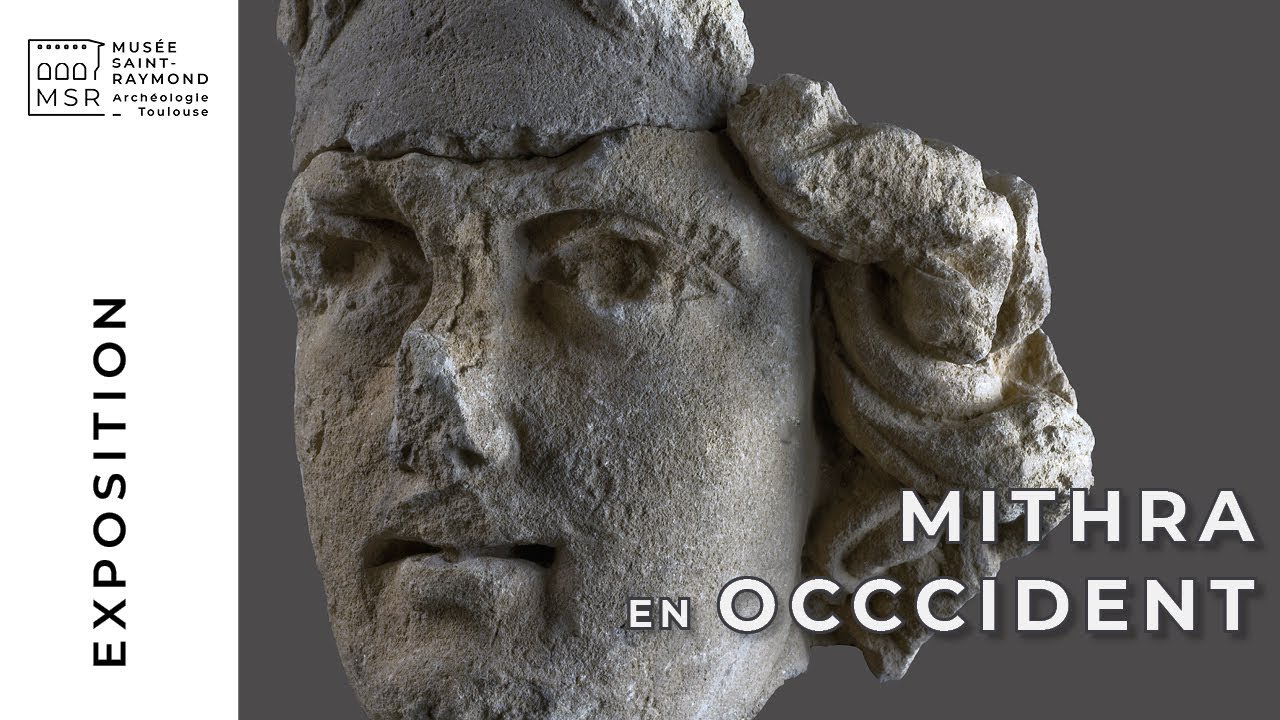
Philippe Roy, docteur en Sciences de l’Antiquité, présente dans cette vidéo la réception du culte de Mithra dans les provinces occidentales de l’Empire romain.
Fragment of a white marble statue of Mithras tauroktonos with dog, serpent and scorpion, upper body and right leg missing, found at Praeneste (modern Palestrina).
In this terracotta relief depicting Mithras as a bull killer found at Cales, now in Calvi Risorta, none of the usual accompanying animals is present.


A Romano-Germanic woman whose inscription became central to debates on female participation in the Mithraic cult.
Alesia became famous as the site of Caesar’s decisive siege during the Gallic Wars.
Palestrina is a modern Italian city and comune with a population of about 22,000, in Lazio, about 35 kilometres east of Rome.