The Mithraic material documented in Syria-Palestina reflects the province’s position within the urban, military and communication networks of the Roman Near East. The evidence contributes to understanding the circulation of cults through one of the most culturally diverse regions of the empire.
Mithraic monuments of Syria-Palestina
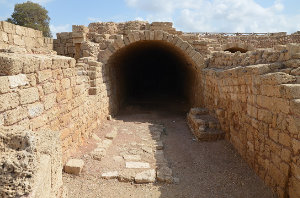
Mithraeum of Caesarea Maritima
This shrine developed towards the end of 2nd century and remained active until beginning 4th.
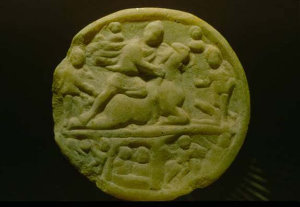
Tauroctonic medallion from Caesarea Maritima
The small medallion depicts three scenes from the life of Mithras, including the Tauroctony. It may come from the Danube area.
Places in Syria-Palestina
Caesarea Maritima
Caesarea was first settled by the Phoenicians in the 4th century BC. In 63 BC, the Romans annexed the region and Caesarea became the seat of the Roman procurators.
References
- Aleš Chalupa (2016) The Origins of the Roman Cult of Mithras in the Light of New Evidence and Interpretations: the Current State of Affairs
- Blakely, J.A. (1987) Caesarea Maritima: The Pottery and Dating of Vault 1: Horreum, Mithraeum, and Later Uses
- Gordon, R. (2017) From East to West: Staging Religious Experience in the Mithraic Temple
- Richard Lindsay Gordon (2001) Trajets de Mithra en Syrie romaine
- Robert J. Bull (2017) The Mithraeum at Caesarea Maritima
- Robert Jehu Bull (2017) The Mithraeum at Caesarea Maritima, vol. II. American Schools of Oriental Research archeological reports, 25