Your search Arsha wa Qibar - Qaybar - Qeibar - Qibare, al-Hawa gave 3149 results.
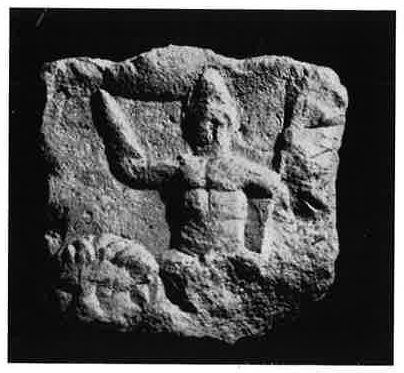
White limestone relief fragment from the walls of Salona, Dalmatia, found in 1906, depicting naked Mithras being born from the rock with a dagger in his right hand and a torch in his left.
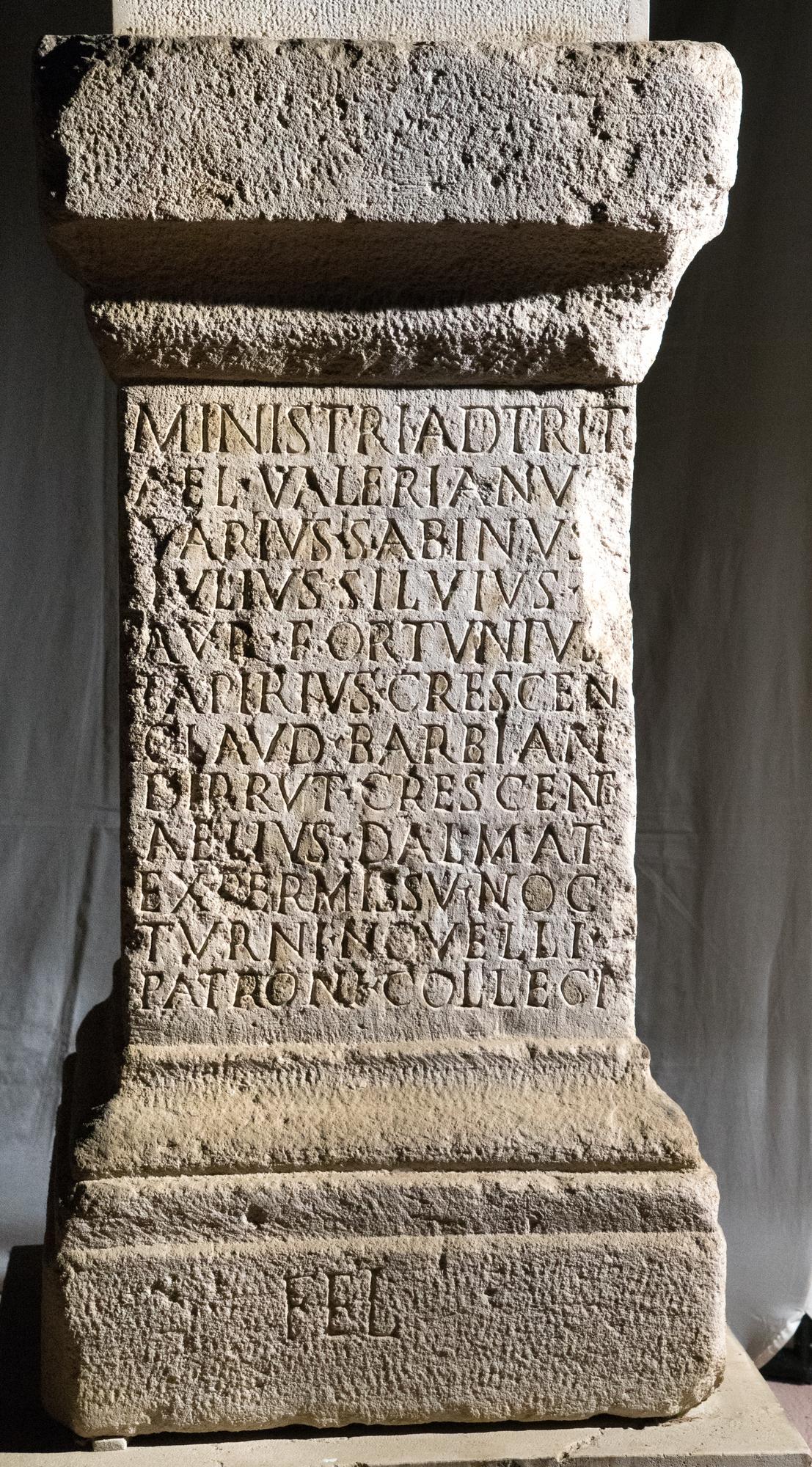
This inscribed limestone altar from Roman Salona preserves several lists of ministers associated with the Tritones collegium during the Tetrarchic period.
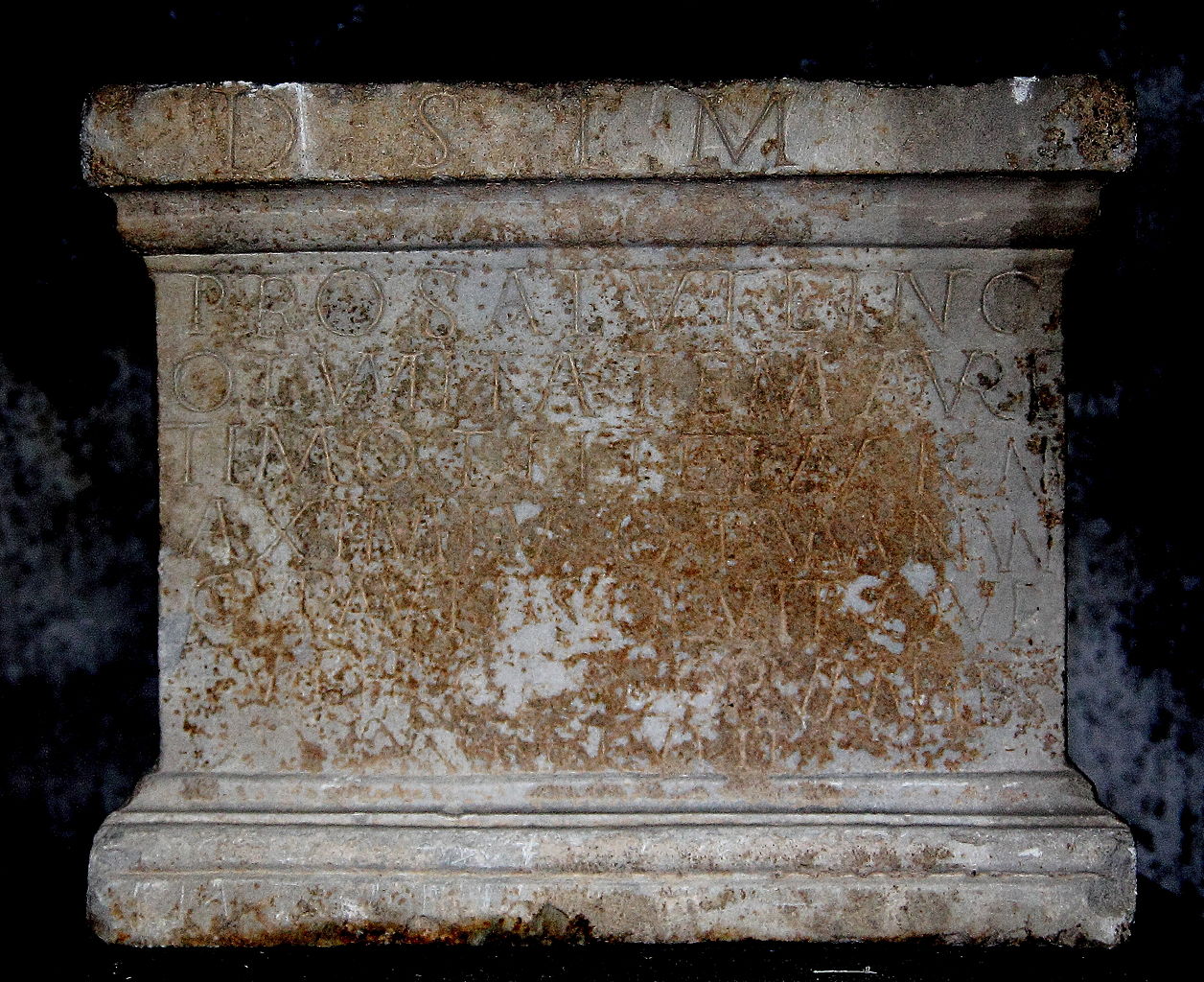
Mithraic stele, from Alba Iulia, Romania, with inscription.

A red terra-sigillata cup bearing a relief tauroctony of Mithras, with Cautes and Cautopates cross-legged on either side, found at Alesia (Mont-Auxois) in Lugdunensis and now kept at Saint-Germain-en-Laye.
Group of Mithraic objects now preserved in the museum of the Société des Sciences de Semur at Alésia.
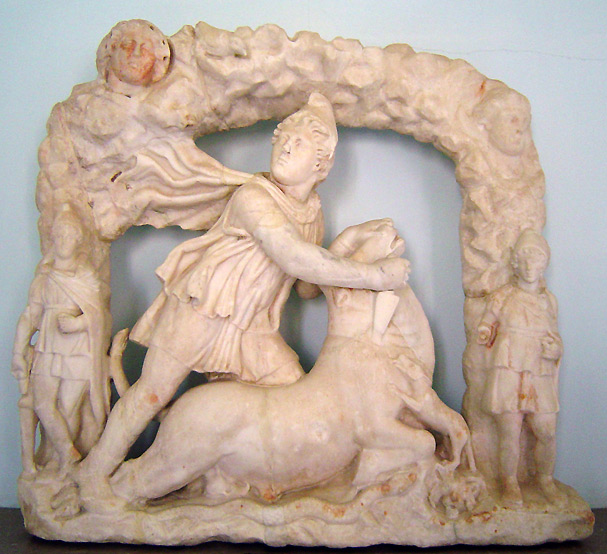
The assumed find-place of the Mithras Tauroctonus of Palermo is uncertain.

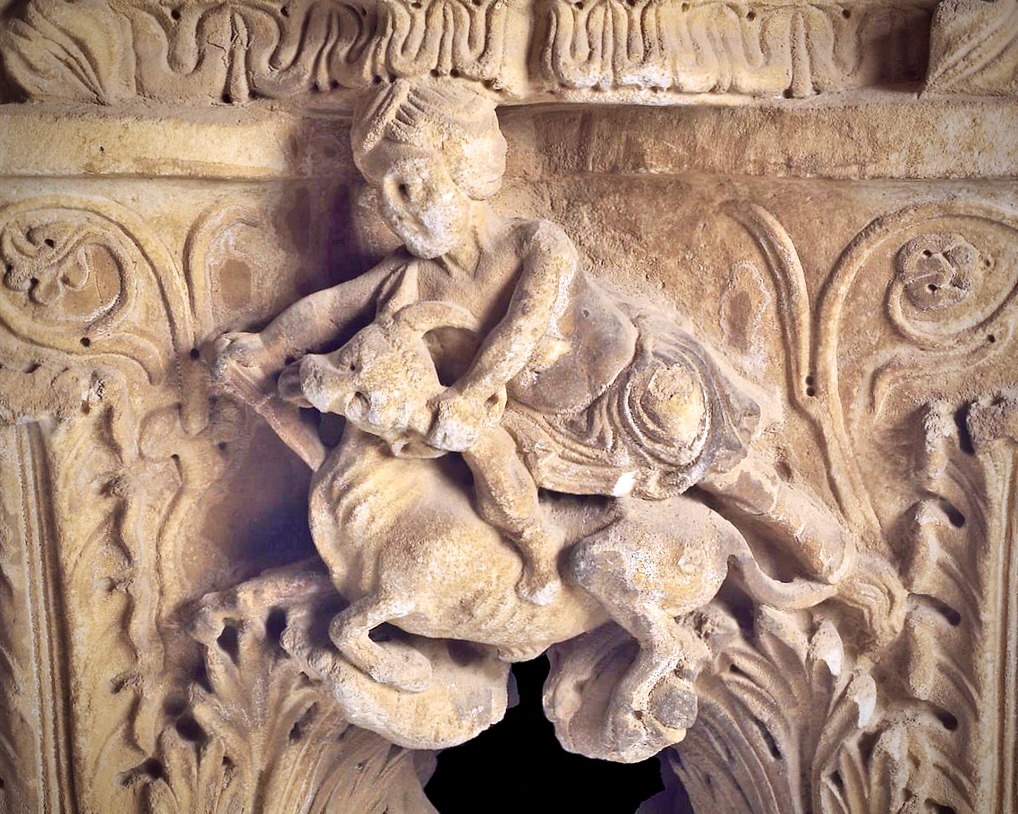
On one of the capitals of the cathedral of Santa Maria Nuova in Monreale, Sicily, an unusual turbaned bull-slaying Mithras has been recorded.
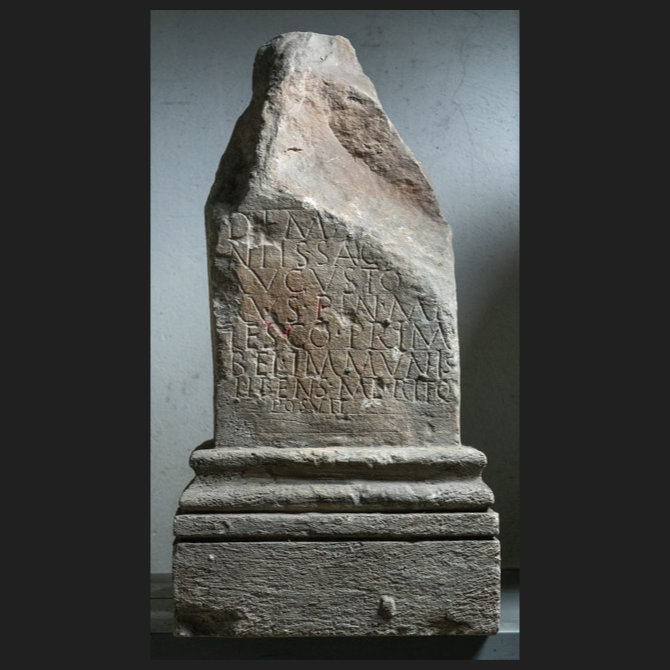
This altar, discovered in Grude, near Tihaljina, Bosnia and Herzegovina, bears an inscription by Pinnes, a soldier of the Cohors Prima Belgica.
This temple of Mithras has been discovered under the Church in Vieux-en-Val-Romey, in 1869.
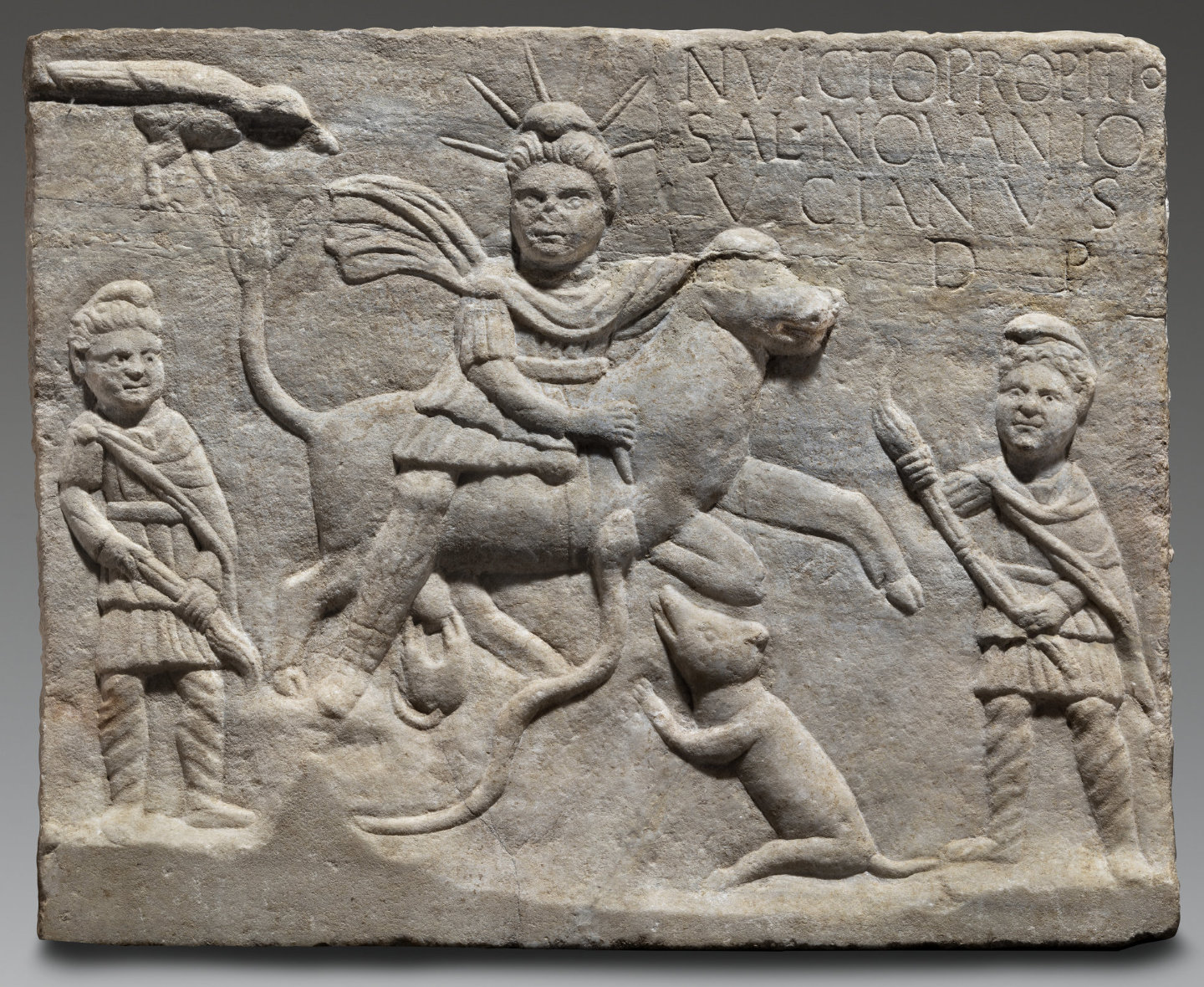
The Macerata Tauroctony shows Mithra slaying the bull with the usual Pyrigian cap and six rays around his head.

Wahlheim lies within the Upper Germanic frontier zone and has produced material from the Roman period.