Your search Arsha wa Qibar - Qaybar - Qeibar - Qibare, al-Hawa gave 3160 results.

Left lower corner of a limestone tauroctony relief from Salona, Dalmatia, preserving the crossed legs of a torchbearer and the grotto base.

Fragmentary inscription from Salona, Dalmatia, preserving only the phrase impendio suo — probably recording a building act.
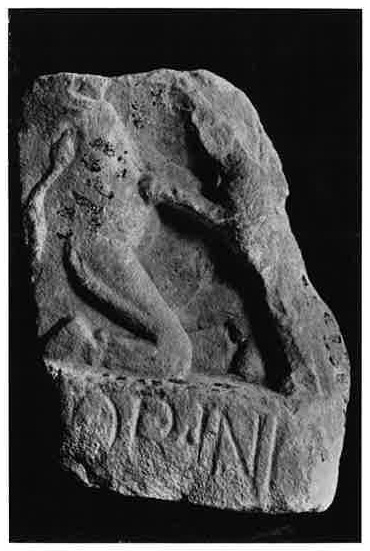
Limestone tauroctony relief fragment from Salona, Dalmatia, preserving the foremost part of the bull, the dog, the serpent, and part of Mithras's dagger hand.
This marble tablet found at Portus Ostiae mentions a pater, a lion donor and a series of male names, probably from a Mithraic community.
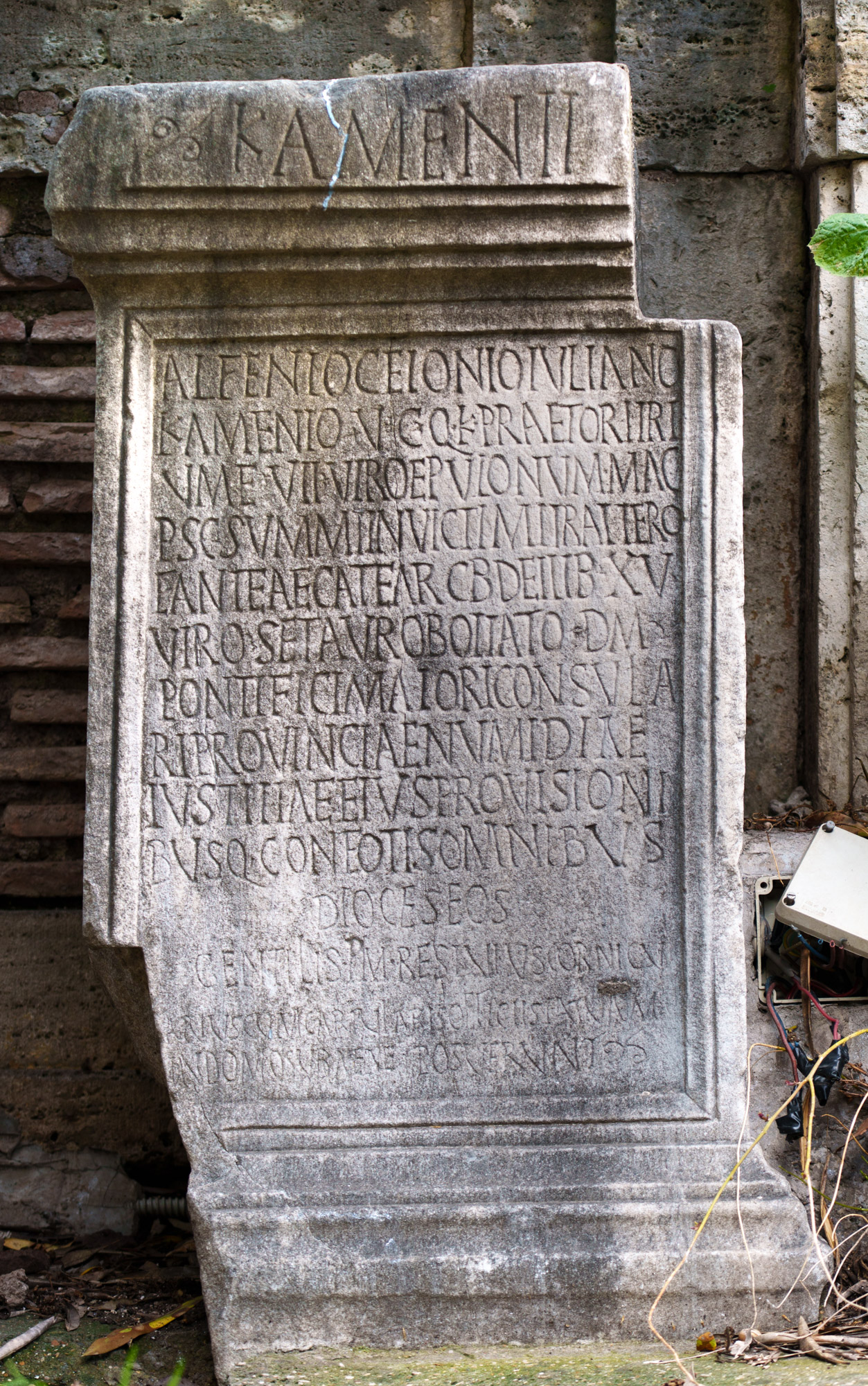
Honorific marble statue base dedicated to the senator and Mithraic pater Alfenius Ceionius Iulianus Kamenius by members of his provincial administration.
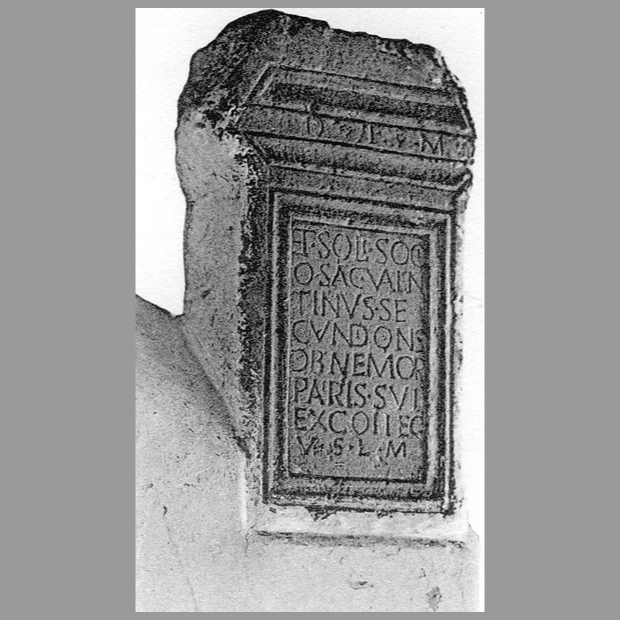
This monument, now lost, was discovered in the 16th century, probably on the site of Sublavio statio.
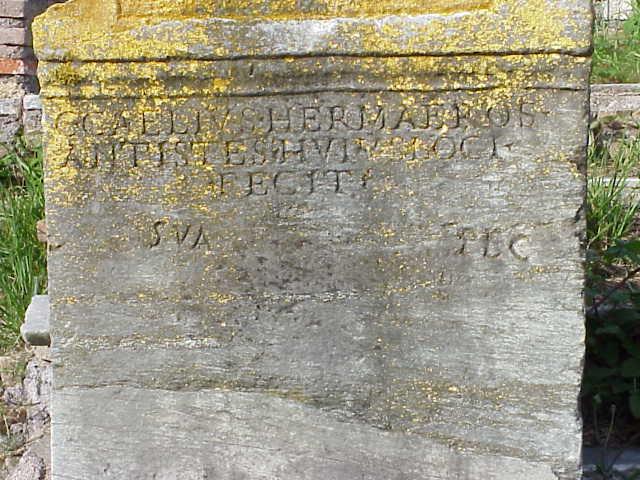
This is one of several marble inscriptions made by a certain Caelius Ermeros, who was the antistes of the Mithraeum of the Imperial Palace.
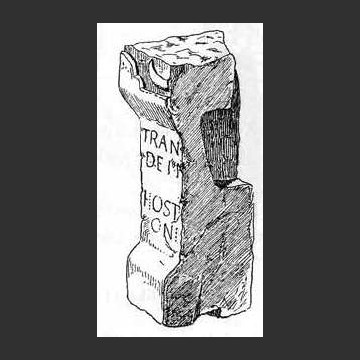
This damaged monument of a certain Hostilius from Malvesiatium, now Skelani, bears an inscription apparently to Mithras transitus.
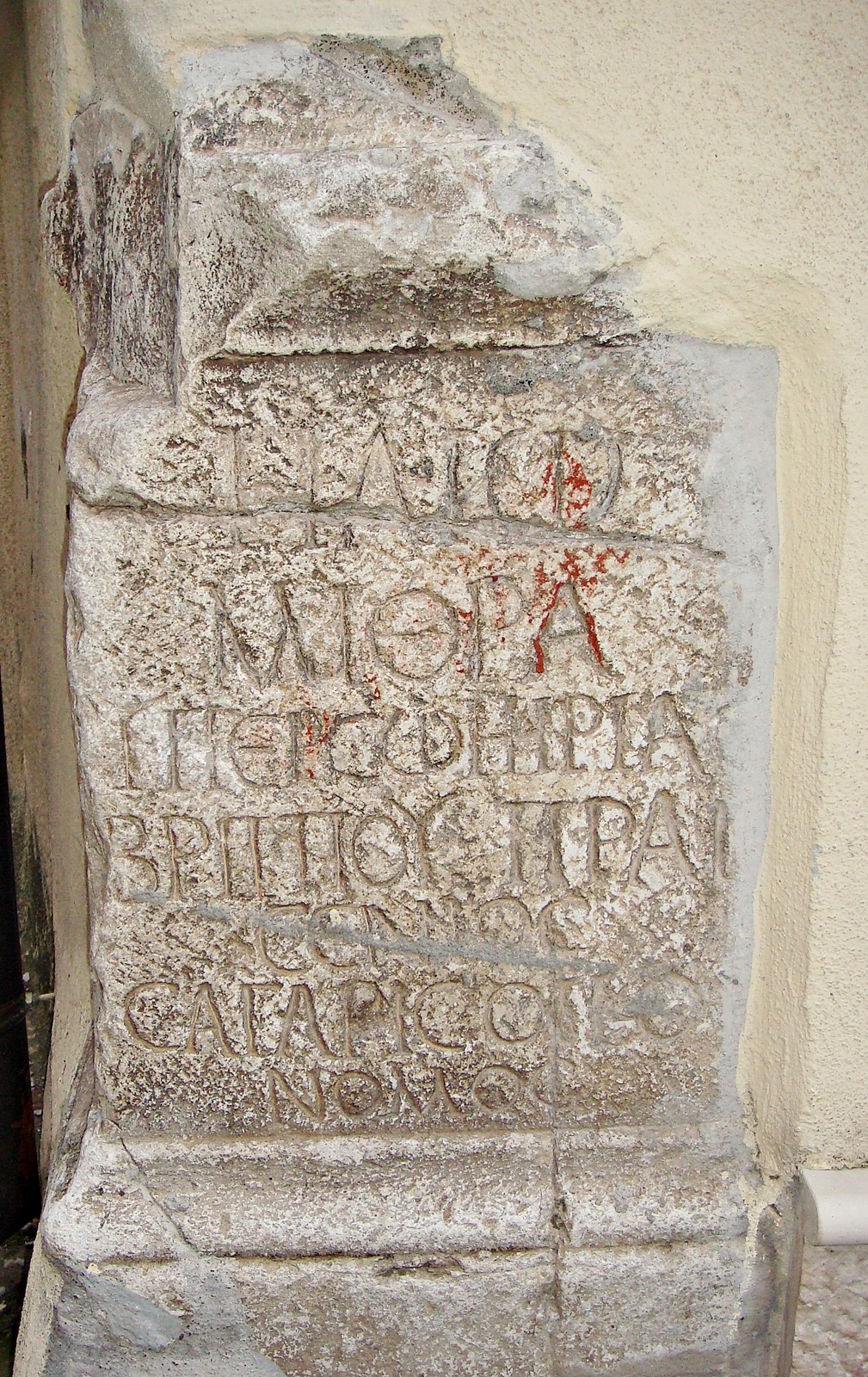
This altar dedicated to Helios Mithras by a certain Sagaris was repurposed in the masonry of Palazzo Bagnoli, Venosa, Italy.
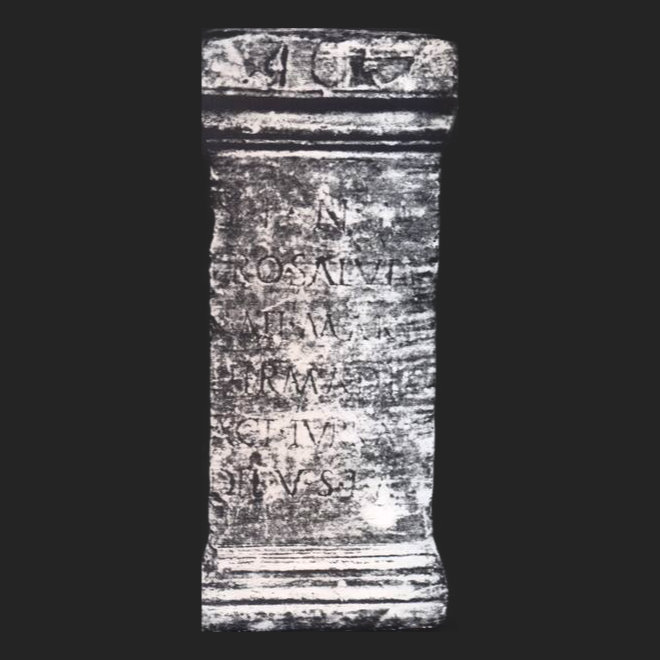
This altar was erected by Hermadio, who also signed other monuments in Dacia and even in Rome.

This altar was dedicated by a certain Marcus Aurelius Decimus to Sol Mithras and other gods in Diana, Numibia, present Argelia.

This altar for the completion of a temple to Sol Invictus by Flavius Lucilianus was found in Fossa, Italy.

This is one of the at least three inscriptions of Dioscorus, servant of Marcus to Mithras Invictus found in Alba Iulia, Romania.
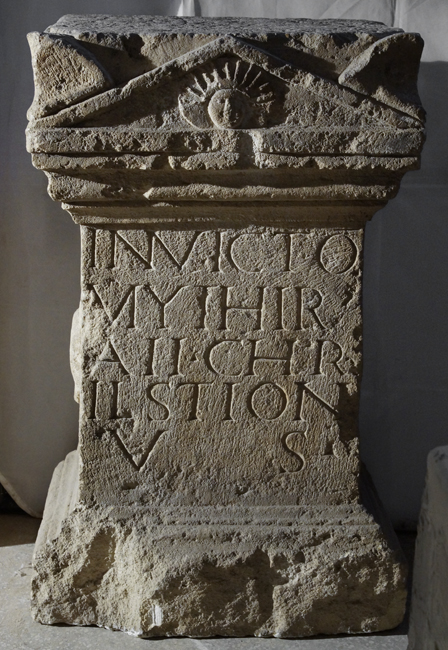
In 1852, Károly Pap, a naval captain, unearthed several Mithraic monuments in his garden at Marospartos, including this altar.
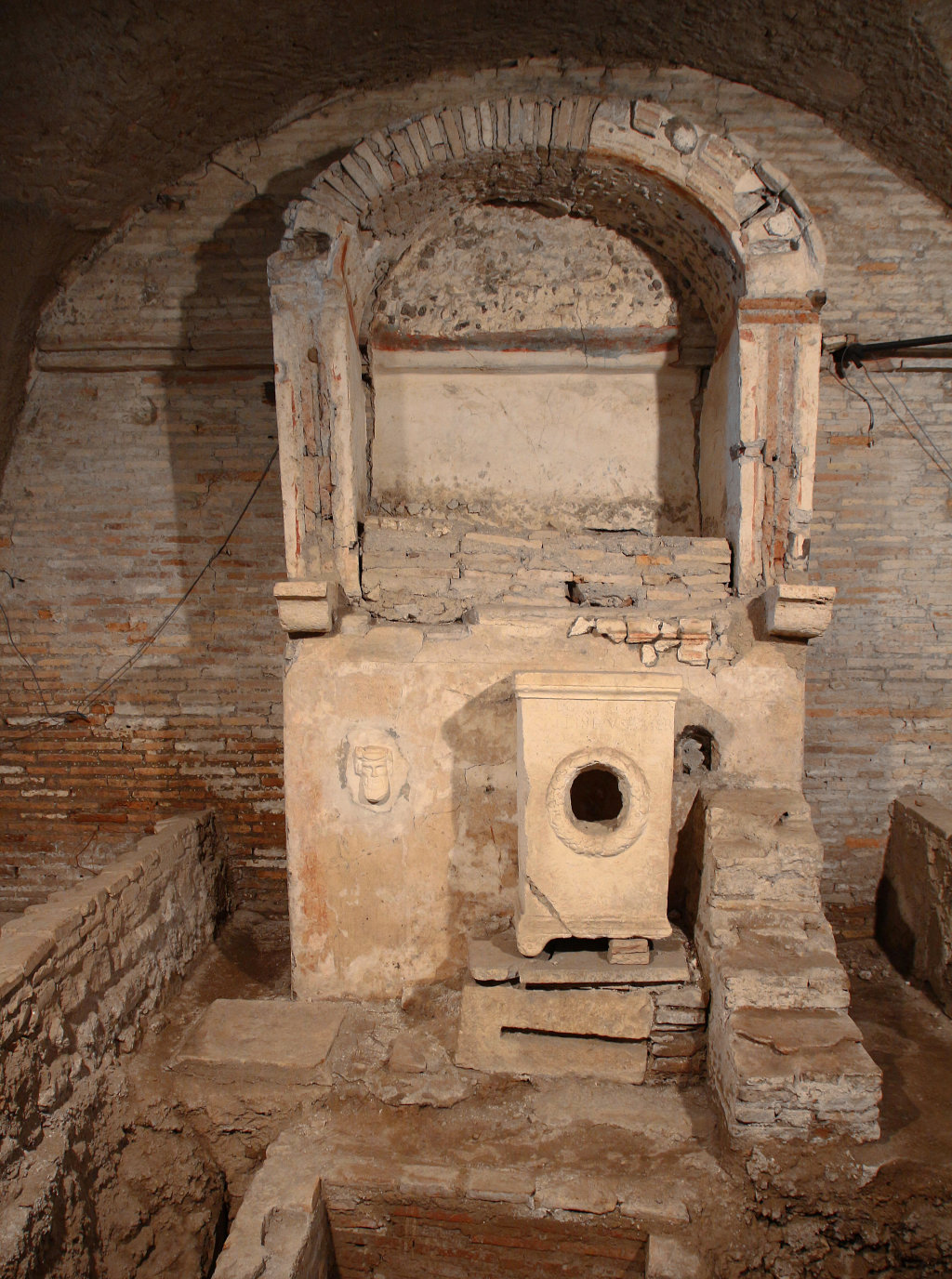
This altar was originally consecrated to Hercules and was rededicated to Mithras by Callinicus in the Mithraeum of the House of Diana.


White marble statue of Lion-head god of time, formerly in the Villa Albani, nowadays in the Musei Vaticani.
In this terracotta relief depicting Mithras as a bull killer found at Cales, now in Calvi Risorta, none of the usual accompanying animals is present.

Second terracotta tablet found at Calvi depicting Mithras killing the bull, now at Berlin, Antiquarium.

The relief of Palazzo Colonna, Rome, depicts a lion-headed figure holding a burning torch in his outstretched hands.
