Your search Arsha wa Qibar - Qaybar - Qeibar - Qibare, al-Hawa gave 3149 results.

A fragment of a circular plaque from the Mithraeum at Walbrook in London, showing the Danubian horsemen and leaping dogs.
A marble torso of a male figure from the Mithraeum at Walbrook in London, flattened at the back, probably one of the attendant deities of Mithras, which would have stood about 2 ft. in complete height.
A relief fragment from the Mithraeum at Walbrook in London, preserving the lower part of a cross-legged figure of Cautopates pointing his torch downwards.
A fragment of a white marble statue from the Mithraeum at Walbrook in London, preserving the naked torso of a reclining figure with long hair and beard, with the end of a staff visible near his left shoulder, identified as Oceanus.
A white marble statue from the Mithraeum at Walbrook in London, depicting Bonus Eventus standing in a long hanging cloak, leaning on a ship's stem, holding a cornucopia against his shoulder and a patera above a burning altar from the back of which a…
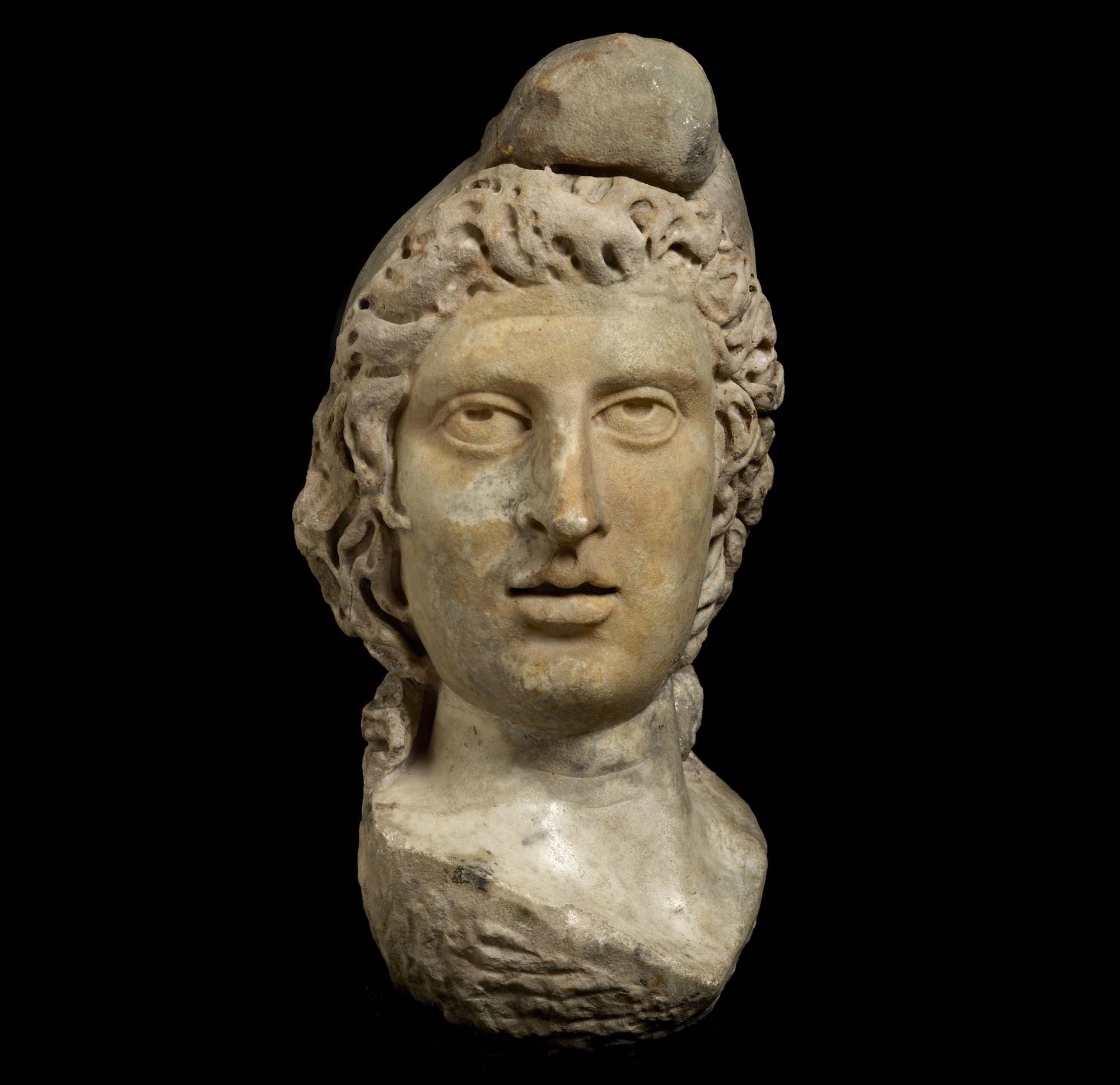
The Mithras's head of Walbrook probable belonged to a life-size scene of the god scarifying the bull.
Sandstone plate from Mithraeum III at Carnuntum, Pannonia Superior, dedicated to Deo invicto by Caius Iulius Propinquus, who built a wall ex voto; traces of red on the rim.
Lower part of a sandstone relief fragment from Rückingen preserving only the lower body of a walking figure, legs lost

Alexandria was founded by Alexander the Great in April 331 BC as one of his many city foundations. After he captured the Egyptian Satrapy from the Persians, Alexander wanted to build a large Greek city on Egypt’s coast that would bear his name.
Cales was an ancient city of Campania, in today's comune of Calvi Risorta in southern Italy, belonging originally to the Aurunci/Ausoni, on the Via Latina.
Málaga is a municipality of Spain, capital of the Province of Málaga, in the autonomous community of Andalusia.
Italica was an ancient Roman city in Hispania; its site is close to the town of Santiponce in the province of Seville, Spain.

This altar, found in Tazoult تازولت, Algeria, was dedicated to the god Sol Mithras by a certain Florus.
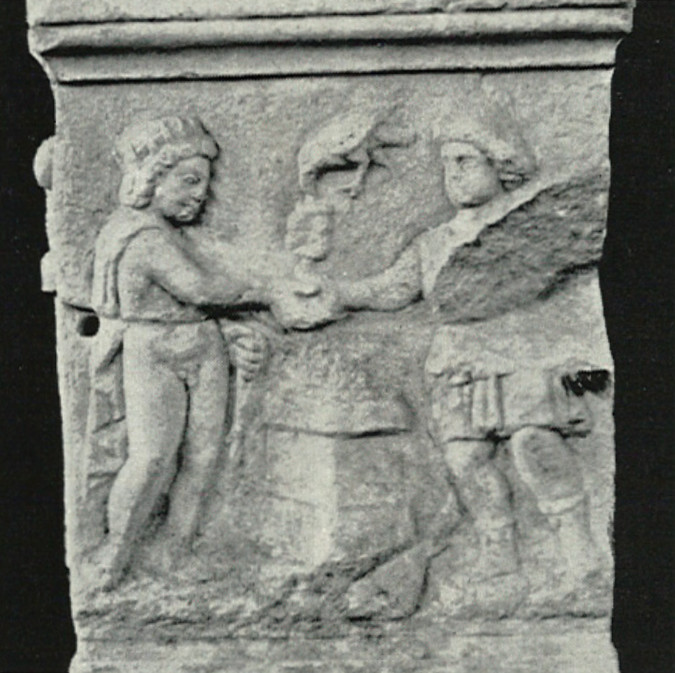
The altar of Ptuj depicts Mithras and Sol on the front and the water miracle on the right side.
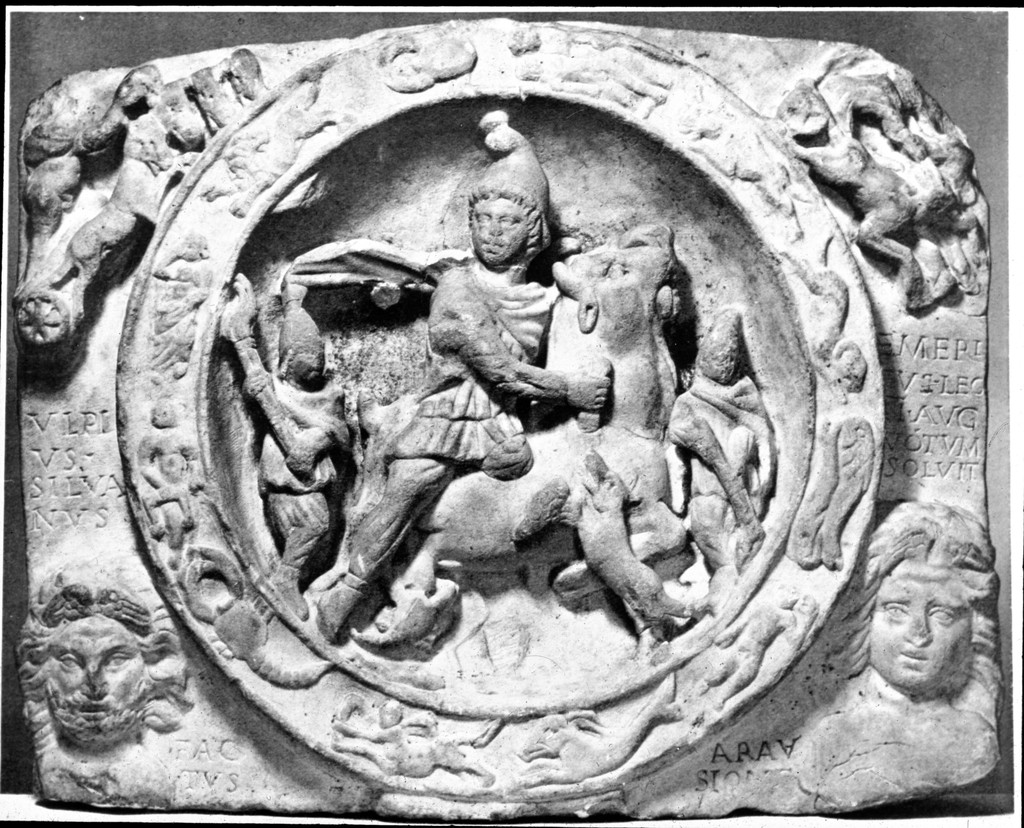
The image of Mithras killing the bull, found near Walbrook, is surrounded by a Zoadiac circle.

Found in Illmitz, Austria, in 1959, this altar was dedicated to the unconquered god Mithras by a certain Aelius Valerianus.

This altar, dedicated to Sol Invictus Mithras by a certain Eutyches for the health of the Emperor Caracalla, was found in Sisak, Croatia, in 1899.
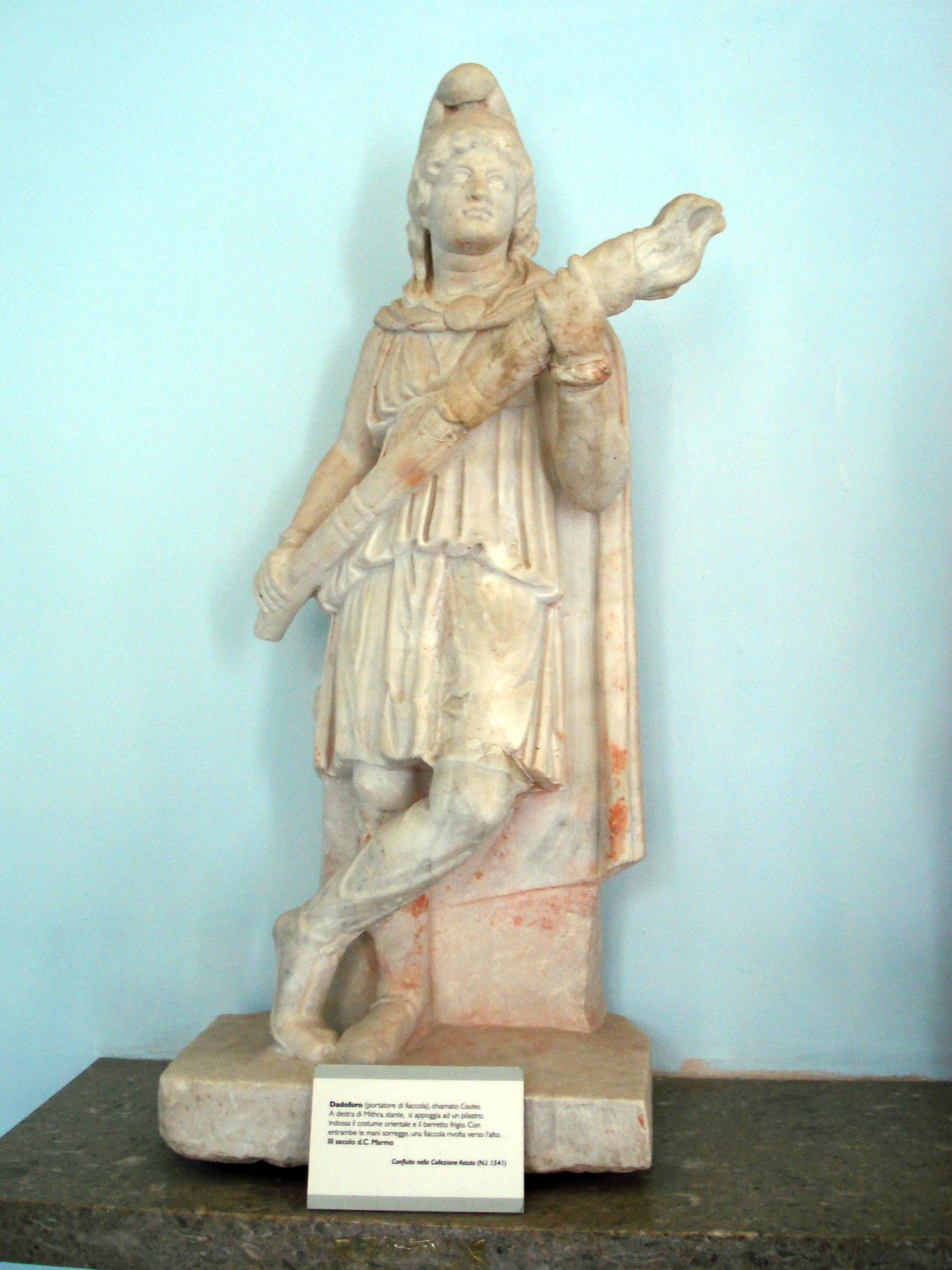
These two mithraic sculptures of Cautes and Cautopates belong to the same collection of Astuto de Noto, made up of mostly Sicilian monuments.
During the excavations of 1804-1805, a series of monuments dedicated to Mithras and a temple were discovered at ancient Mons Seleucus.
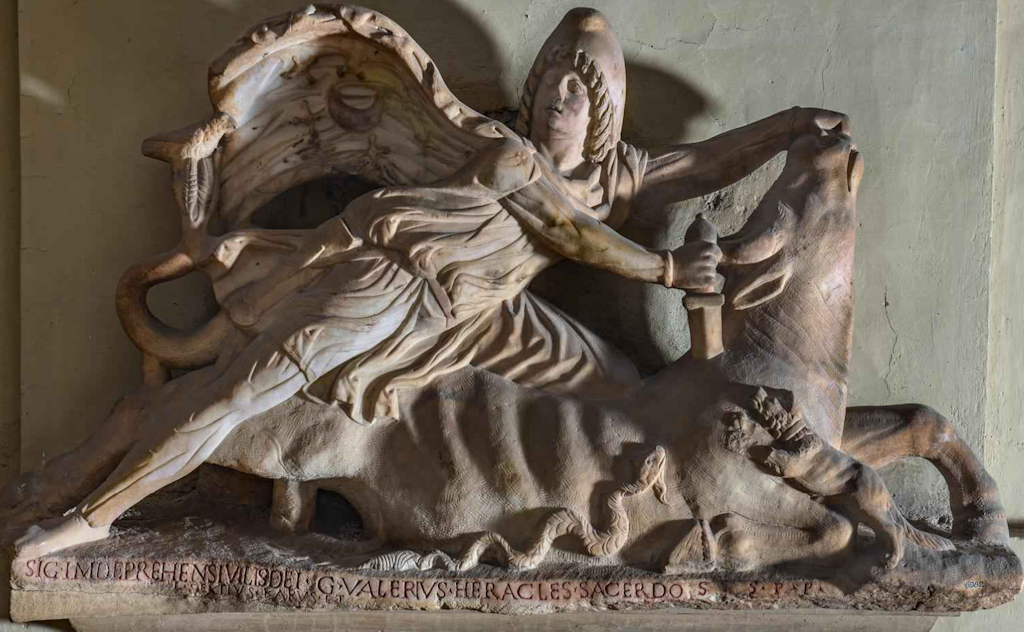
This sculpture of Mithras killing the bull was dedicated to the “incomprehensible god” by a certain priest called Gaius Valerius Heracles.
