Your search for Battaglia Terme gave 28 results.

Cataio is associated with archaeological material from the Euganean area of Venetia.

White marble statue of a cross-legged torchbearer in Eastern attire from Rome with a broken upraised torch and head and feet lost, probably the companion piece of No. 504, now in the Museo Nazionale delle Terme.
White marble statuette of a cross-legged Cautes with an upraised torch and a cock at his feet, with traces of blue and red paint, found during regularisation works in the Tiber and now in the Museo Nazionale delle Terme.
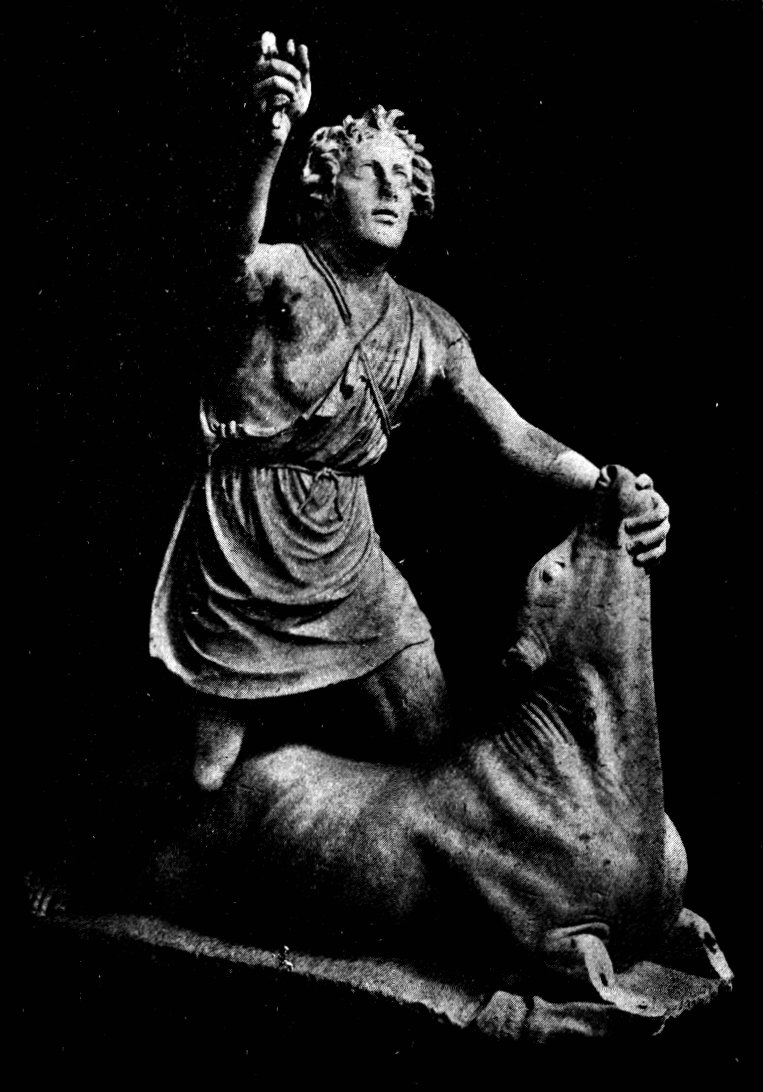
The person who commanded the sculpture may have been M. Umbilius Criton, documented in the Mitreo della Planta Pedis.
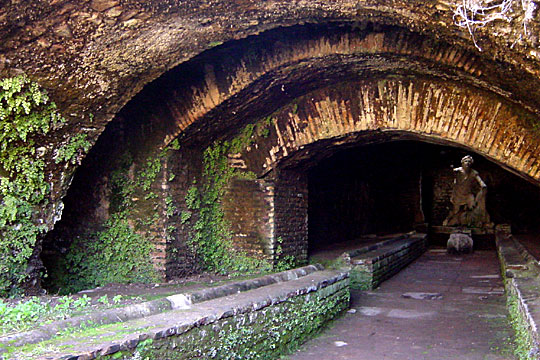
The Mithraeum of the terms of Mithras takes its name from being installed in the service area of the Baths of Mithras.


The dedicator of this marble basin could be the same person who offered the sculpture of Mithras slaying the bull in the Mitreo delle Terme di Mitra.
This small cippus to Zeus, Helios and Serapis includes Mithras as one of the main gods, although some authors argue that it could be the name of the donor.
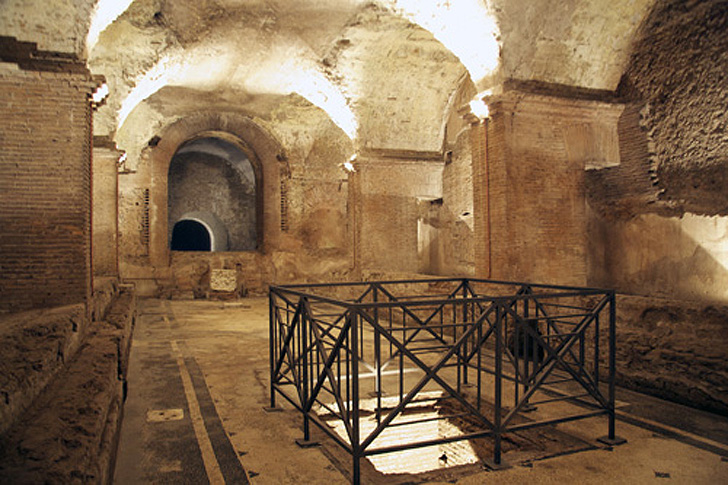
The Mitreo delle terme di Caracalla is one of the largest temples dedicated to Mithras ever found in Rome.
Epigraphic testimony catalogued in the Année Épigraphique and Lugli’s Fontes for ancient Rome.
Two Mithraic monuments received by the Museo Nazionale delle Terme in Rome in 1896, reportedly from Narni: a small head of Mithras tauroctone in Phrygian cap with traces of red and gilding, and a central relief fragment of Mithras slaying the bull.
A marble tauroctony relief fragment probably from Narni (ancient Narnia) in Umbria, now in the Museo Nazionale delle Terme in Rome, preserving Mithras in Eastern dress as a bullkiller with dog and Cautopates standing cross-legged before the bull; the exact find-spot is uncertain…
A marble tauroctony relief, broken in two pieces, found at Sutri in Etruria in 1896 and now in the Museo Nazionale delle Terme in Rome, with raven, dog, serpent and scorpion present, the upper part with the heads of Sol and Mithras broken off and Luna's bust alone preserved…
A statue found along the Via Cassia about six kilometres from Rome, tentatively identified as an Aion entwined by a serpent but possibly representing Atargatis according to Vermaseren, now in the Museo Nazionale delle Terme.
A marble relief depicting Cautopates as a standing cross-legged torchbearer in Eastern attire with his burning torch pointing downwards, found in Rome near the Via Appia and now in the Museo Nazionale delle Terme, the head and much of the torch lost.
A marble relief depicting Cautes as a standing cross-legged torchbearer in a short tunic and Phrygian cap with torch upraised and left hand lost, found in Rome near the Via Appia and now in the Museo Nazionale delle Terme.
Altar formerly in the house of the de Vellis family near the Carmelites in Rome and now in the Museo delle Terme, with a dedication to Silvanus on one side and on the reverse a record by M. Aurelius Bassus, priest of Sol, of having made a fountain flow.
Marble relief with the dressed busts of Sol with five rays, a long-bearded man, and Luna with crescent, found in the camp of the equites singulares near the Scala Santa, now in the Museo Nazionale delle Terme.

White marble statue of Mithras killing the sacred bull preserved in the Museo Nacional Romano.
