Your search Bonn gave 58 results.

Bonna occupied a strategic position on the Rhine frontier and hosted an important legionary presence.

This heavily damaged relief from Narbo preserves the figure of a cross-legged Mithraic torchbearer carved in low relief near the church of Saint-Sébastien in Narbonne.
Sandstone relief fragment with a cup above an inscription panel, probably from a Mithraic monument.
Fragmentary limestone statuette of a cross-legged torchbearer originally attached to a tauroctony relief.
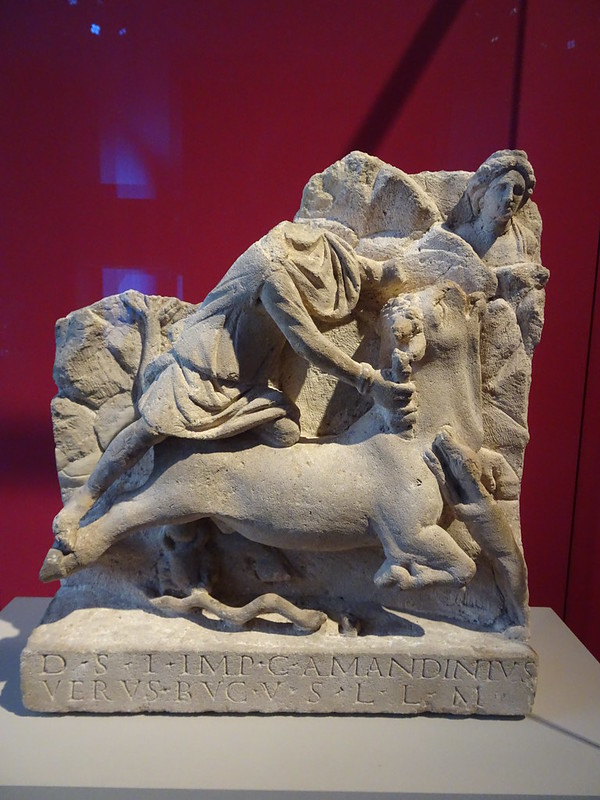
The sculpture of Mithras slaying the bull found in Dormagen is exposed at Bonn Landesmuseum.
Bronze handle of a knife or dagger reportedly originating from Narbo and formerly preserved in major private collections.
Fragment of a red ware dish from Rome, now in the Akademisches Kunstmuseum at Bonn, with a representation of Mithras as a bull-killer sitting astride the bull with a flying cloak.
Narbonne rboː]; Late Latin: Narbona is a commune and subprefecture in Southern France, located in the Occitania region.
A votive altar dedicated to Deus Invictus Mithras by Paterna, among the few women explicitly associated with Mithraic worship.
Fragmentary limestone relief showing the torchbearer Cautopates with a pedum.
Limestone relief fragment showing Cautopates beside traces of a tauroctony scene.
Unusual sculptural representation of stylised flames mounted on a pedestal.
Mithraic dedication by Lucius Candidinius Verus from Bonna.
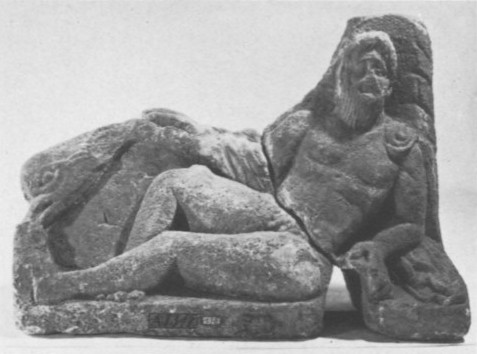
A small limestone altar from Bandorf near Oberwinter dedicated to Deo Invicto Regi. Found in an isolated structure not resembling a mithraeum, its function remains uncertain.

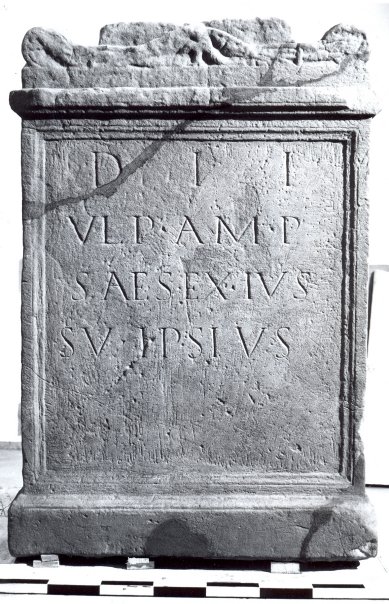
This altar found at ancient Burginatum is the northernmost in situ Mithraic find on the continent.
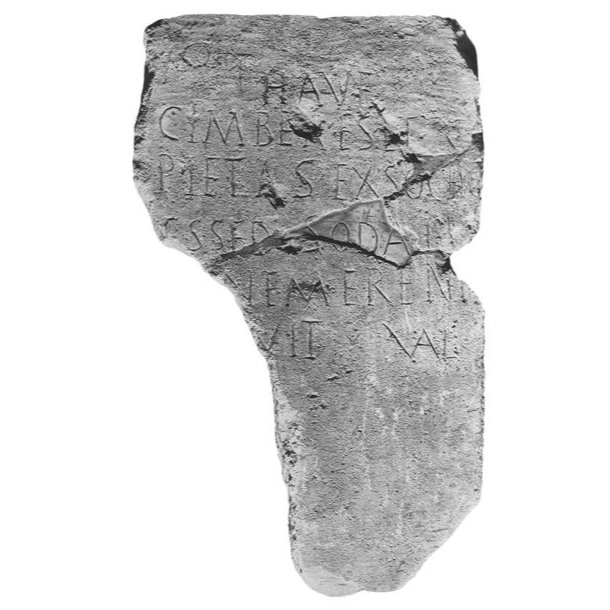
This monument with an inscription by two individuals was found in the first mithraeum of Cologne, Germany.

Black jasper gem from the Seyrig collection, depicting Mithras radiate slaying the bull, with the god grasping the muzzle with the left hand and driving a knife into the animal's neck with the right.
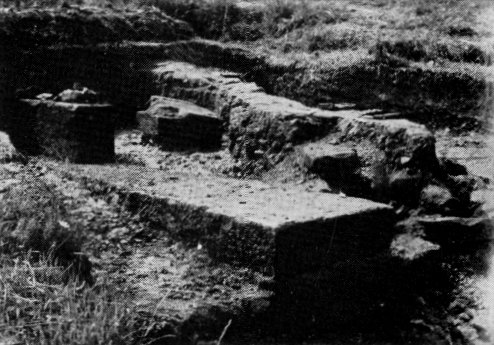
The Mackwiller Mithraeum was built in the middle of the 2nd century, during the reign of Antoninus the Pious, on the site of a spring already worshipped by the natives.
Circular stone base wrapped by a serpent, possibly belonging to a representation of Aion.
