Your search Boulogne-sur-Mer gave 706 results.
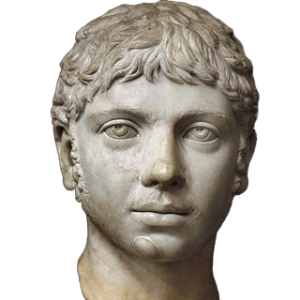
Roman emperor at the age of 14, from 218 to his death in 222, Elagabalus was a main priest of the sun god Elagabal in Emesa.

Emperor Caracalla ordered one of Rome’s largest temples to the god Mithras to be built in the baths bearing his name.

Arabia connected the Roman Near East to caravan routes, desert frontiers and the commercial networks of the southern Levant.
Samsat, formerly Samosata is a small town in the Adıyaman Province of Turkey, situated on the upper Euphrates river.
Puteoli, the great commercial harbour of Roman Italy, preserves evidence of the cosmopolitan maritime environments through which Mithraic cults circulated across the Mediterranean world.
Founded on the site of ancient Byzantium and refounded in 330 CE, Constantinopolis became an imperial residence in the eastern Roman Empire. In the 4th century, it was a key setting for interaction between traditional cults and Christian authority.
Aveia was an ancient town of the Vestini and Roman former bishopric, which remains a Latin Catholic titular see.
The Bad Ischl area has been inhabited since the time of the prehistoric Hallstatt culture. Documentary evidence of the settlement dates back to 1262, when it was referred to as Iselen.
Zerzevan Castle, also known as Samachi Castle, is a ruined Eastern Roman castle, a former important military base, in Diyarbakır Province, southeastern Turkey.
Tarquinia, formerly Corneto, is an old city in the province of Viterbo, Lazio, Central Italy, known chiefly for its ancient Etruscan tombs in the widespread necropoleis, or cemeteries, for which it was awarded UNESCO World Heritage status. In 1922, i
Mampsis or Memphis, today Mamshit, Arabic Kurnub, is a former Nabataean caravan stop and Byzantine city.
Marino has been inhabited by Latin tribes since the 1st millennium BC. During the Roman Republic it was a summer resort for Roman patricians who built luxurious villas in the area.
Cabra is a municipality in Córdoba province, Andalusia, Spain and the site of former bishopric Egabro.
Tripolitania connected the southern Mediterranean coast to caravan routes and maritime exchange networks of Roman North Africa.
Baetica occupied a prosperous and highly urbanised corner of Roman Hispania where Mithraic cults circulated through Mediterranean exchange networks.
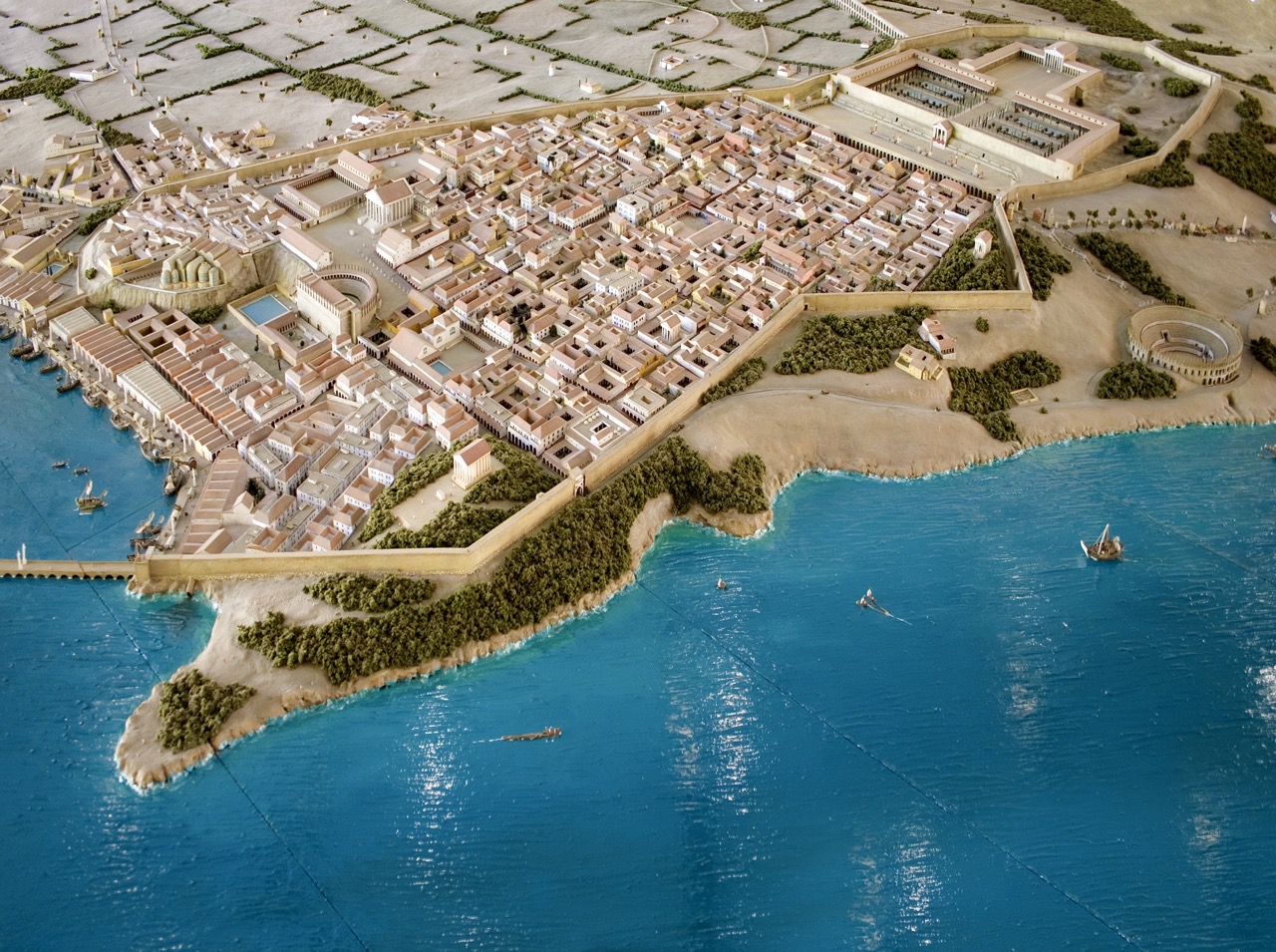
Across Tarraconensis, Mithraic evidence appears in diverse urban, military and Mediterranean environments of Roman Hispania.

Slave and vilicus in the household of Tiberius Claudius Livianus, linked to the earliest known Mithraic tauroctony.
Member of the Mithraic community of Les Bolards and dedicator of a statue of Cautes.
Germania inferior preserves a strongly militarised body of Mithraic evidence from the lower Rhine frontier of the Roman empire.
