Your search Boulogne-sur-mer gave 339 results.
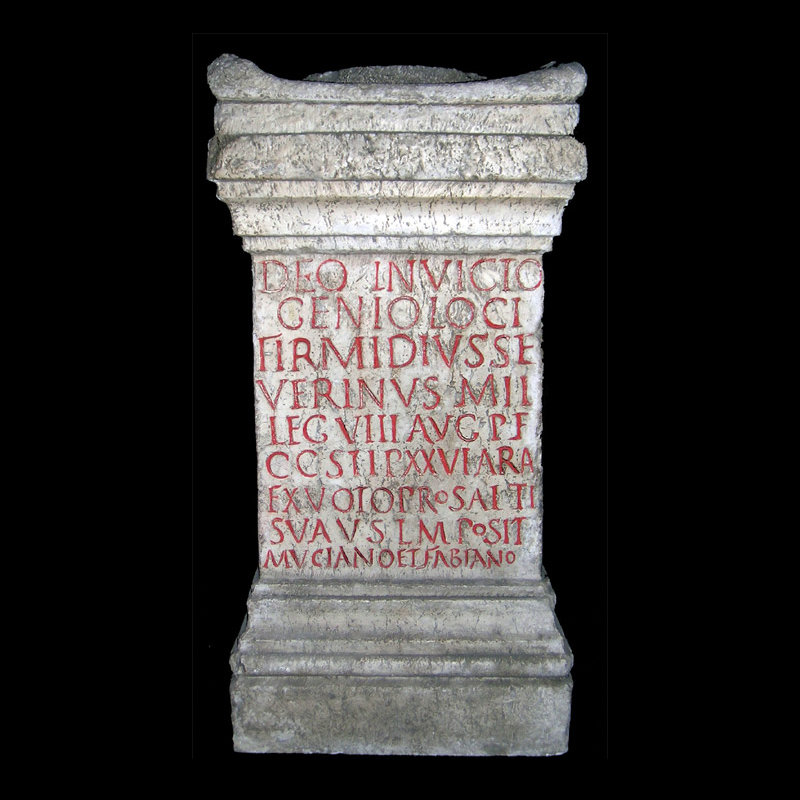
This limestone altar bears an inscription from its donor, Firmidius Severinus, in honour of Mithras after 26 years of service in the Legio VIII Augusta.
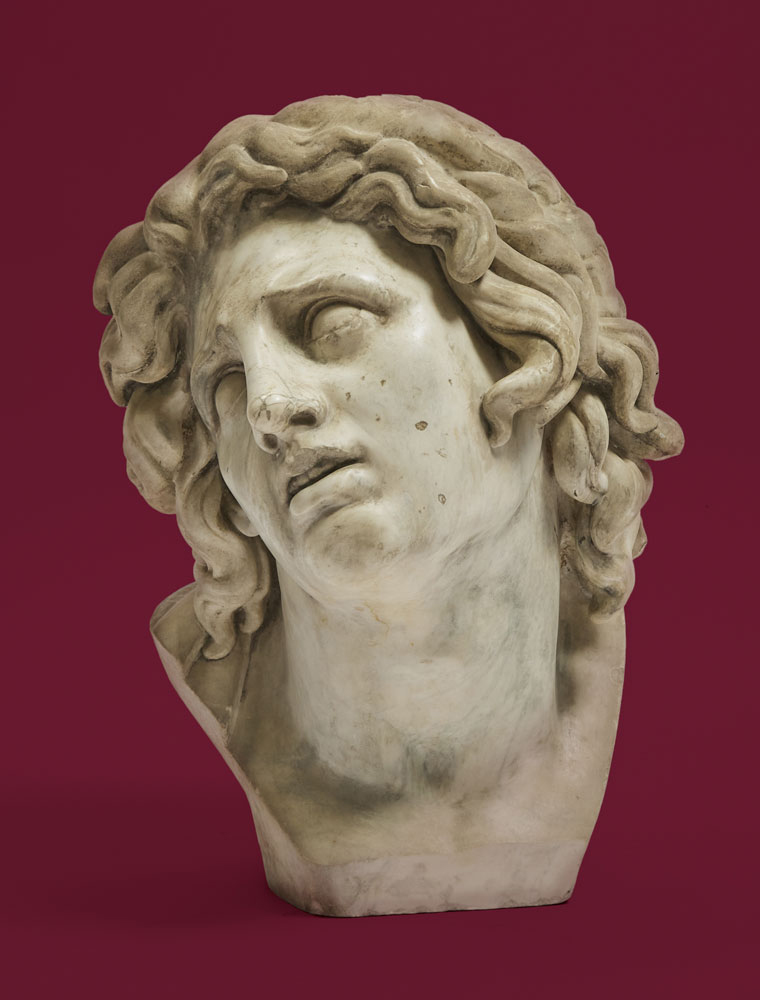
Head formerly associated with Mithraic material but interpreted by Margarete Bieber as a dying Giant.

A tauroctony relief from Rome, formerly in the Hoffmann Collection, showing Mithras slaying the bull with dog, serpent and scorpion, with the god's pupils fashioned from white enamel and the whole piece heavily restored.
Marble relief formerly in the Palazzo Alberoni and then the Palazzo Vaccari on Via del Tritone, showing Mithras slaying the bull with the raven on the god's cloak, the serpent, dog and scorpion, and the busts of Sol and Luna in the upper corners.
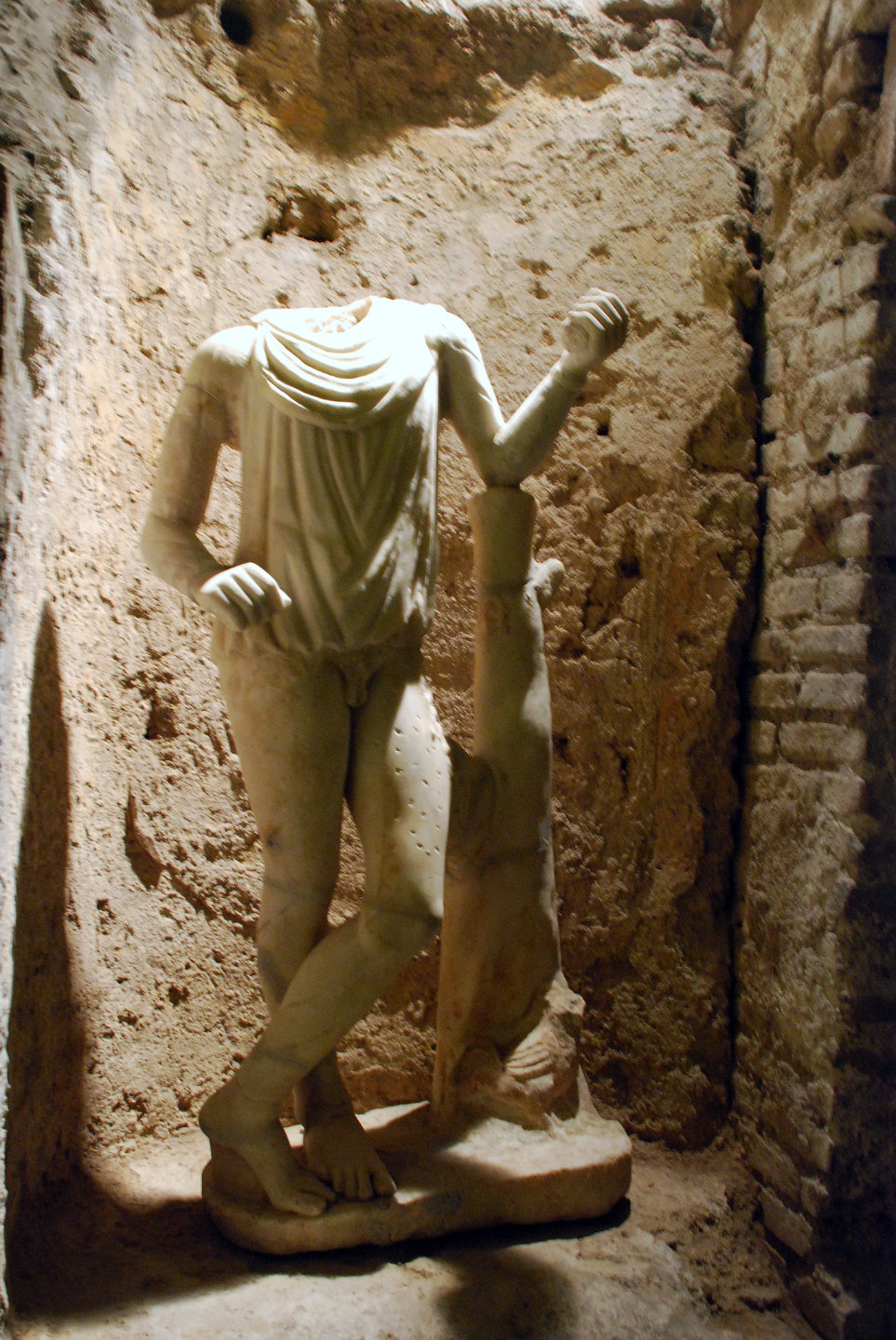
The marble statue of Cautes, found in the Mithraeum of Santa Prisca, was originally a Mercury.
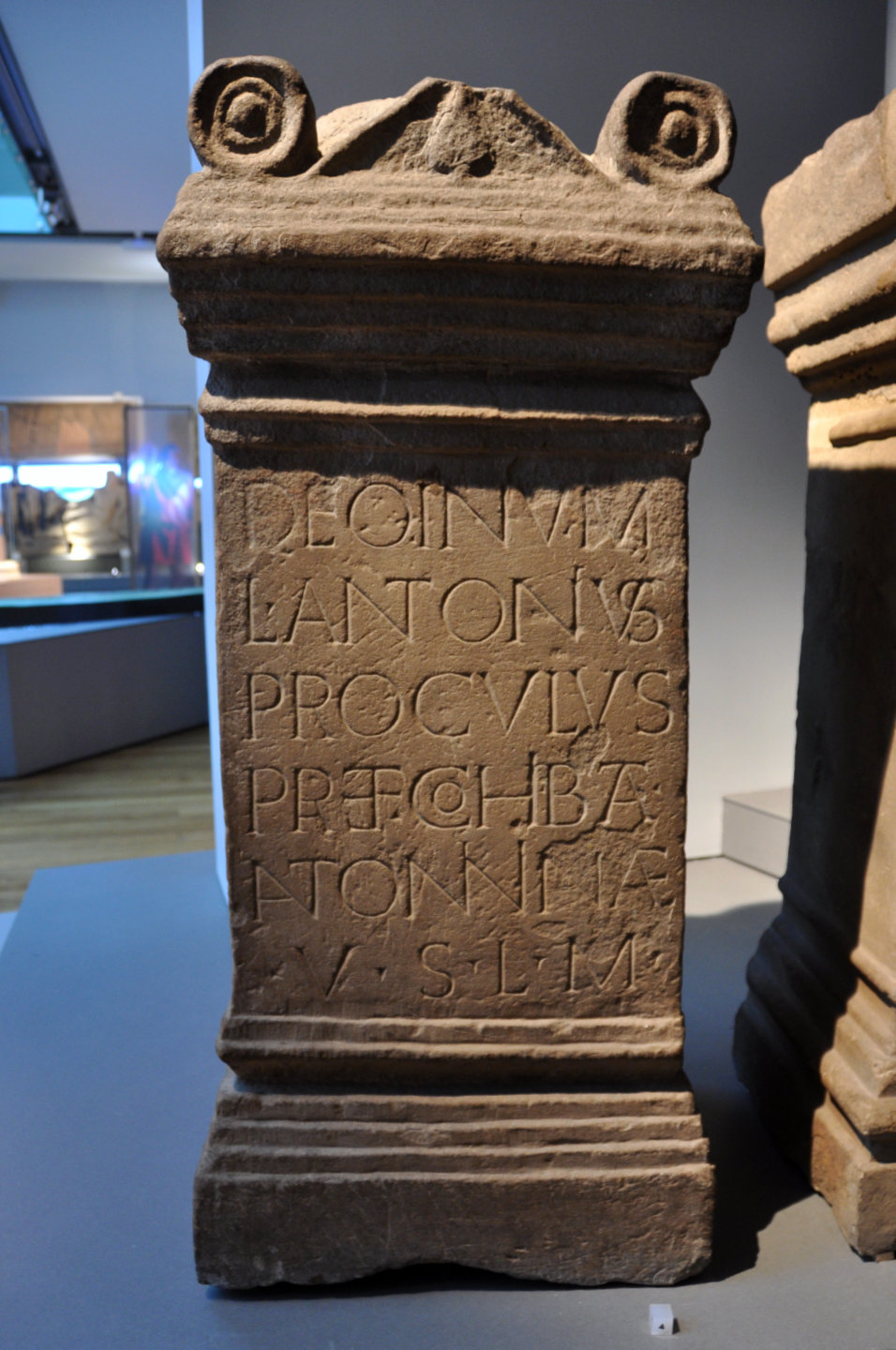
One of the three altars to Mithras found at the Mithraeum of Carrawburgh fort.
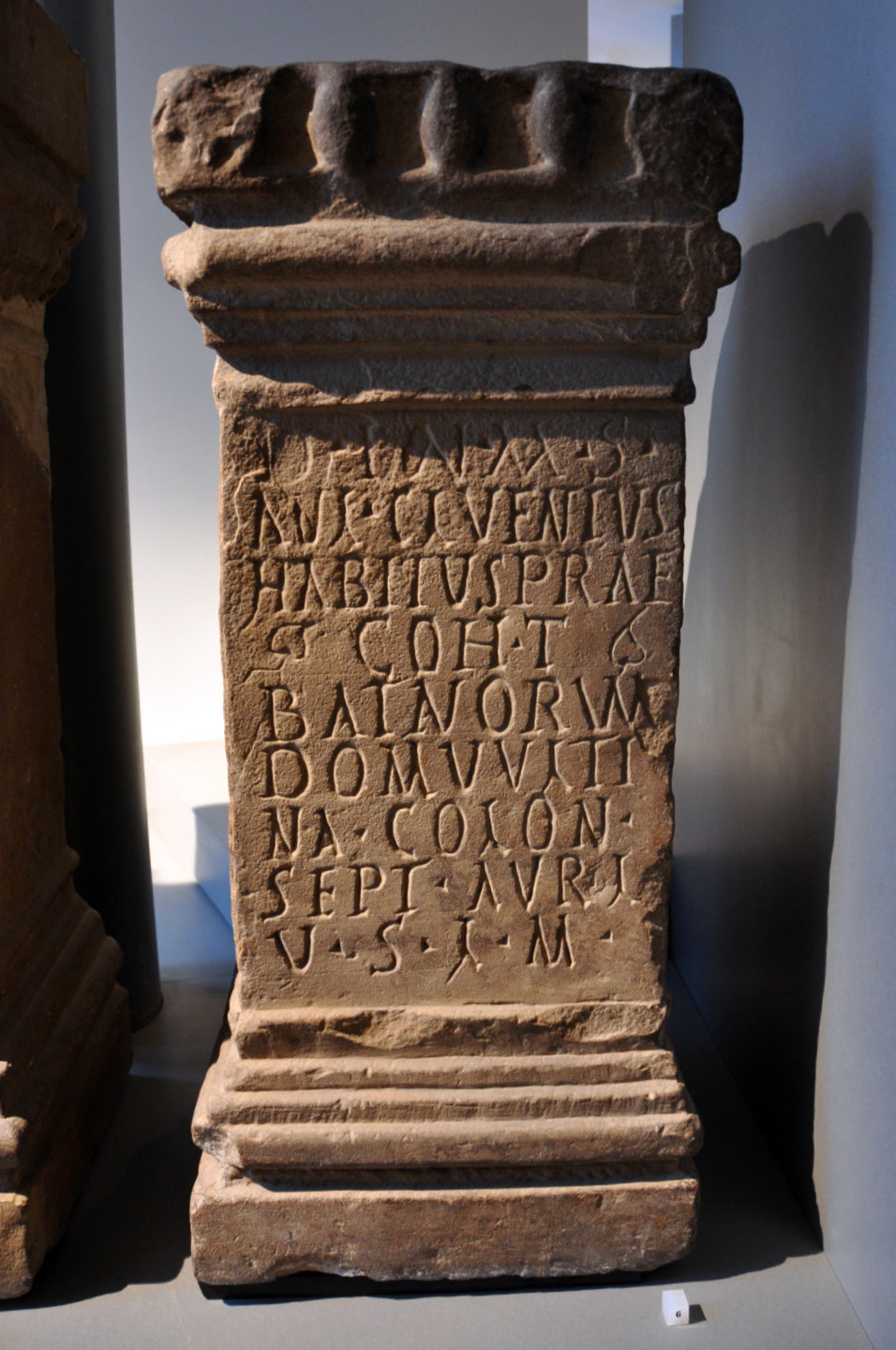
One of the three altars to Mithras found at the Mithraeum of Carrawburgh fort.
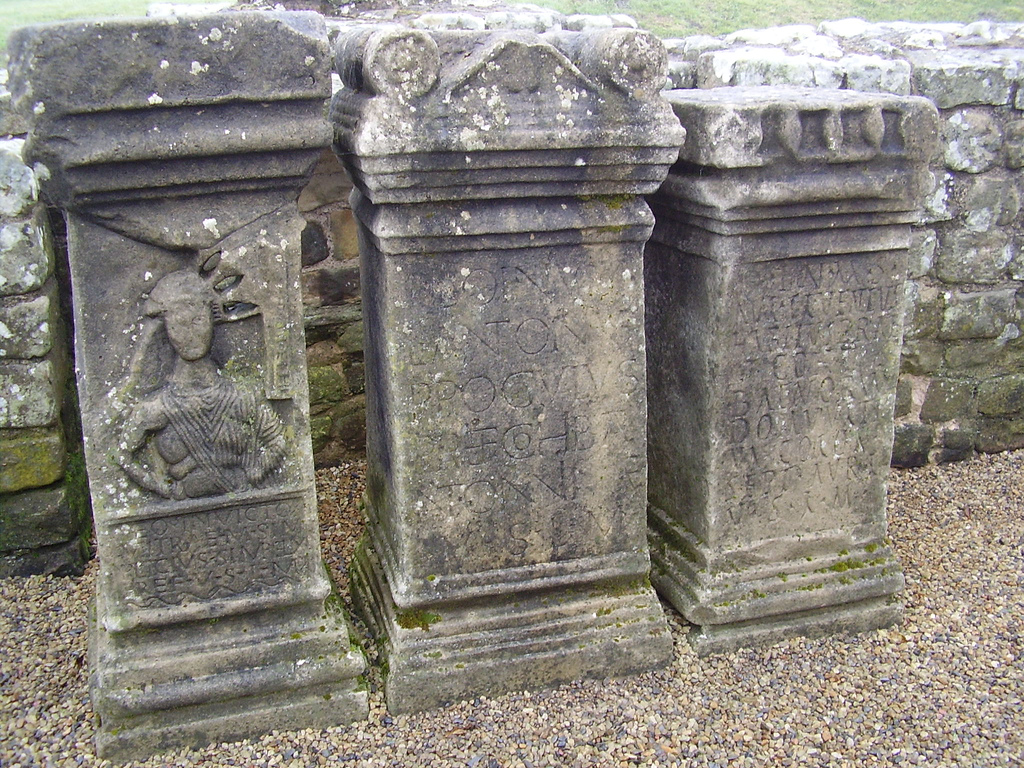
One of the altars from the Carrawburgh Mithraeum depicts the bust of Mithras or Sol.
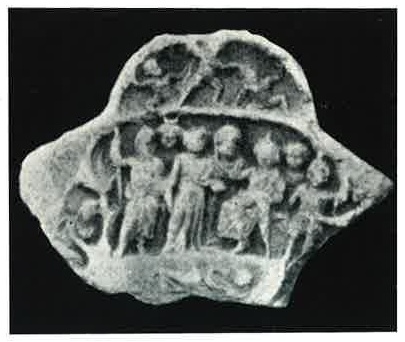
White marble tauroctony relief from Veles, ancient Bylazora in Macedonia; the merchant reported that other fragments of the same monument were walled into a fountain in Veles.
Right portion of a sandstone altar from Topusko, Pannonia Superior, formerly used as a step in a bathing establishment, dedicated to Invicto Mithrae by Maximus with his companions.
The six divine names inscribed on the bronze hatchets from Thun-Allmendingen — Iovi, Neptuni, Minervae, Mercurio, Matribus, Matroni — reflecting the polytheistic religious landscape of the Mithraic community at this site.
Set of six triangular bronze votive hatchets from Thun-Allmendingen, each inscribed with the name of a deity: Iovi, Neptuni, Minervae, Mercurio, Matribus, and Matroni; forming a unique ensemble of polytheistic dedications within a Mithraic context.
Altar from the Mithraeum at Königshoffen, dedicated to Deo Cissonio — a Celtic god identified with Mercury — by Gittonius Pippausus; the dedicant's Celtic name may be etymologically connected to that of the deity.
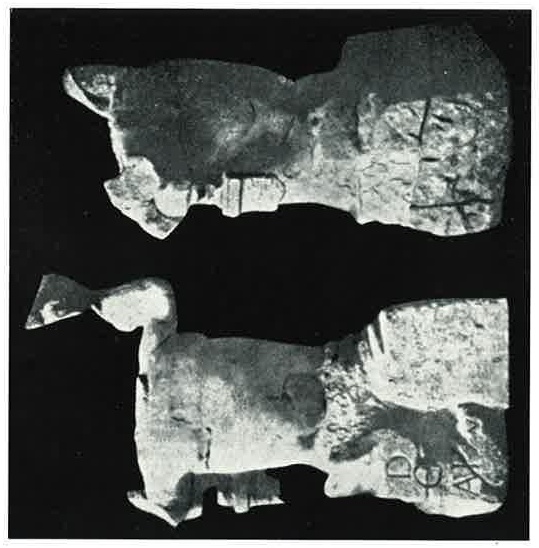
Sandstone statue from the entrance area of the Mithraeum at Königshoffen depicting the youthful naked Mithras emerging from the rock, with the sheath of a dagger still visible at his hip; head, right arm, and left hand are lost.
Bearded nude statue formerly claimed to be Mithraic but later rejected as a seventeenth-century sculpture unrelated to the cult.
A marble plinth inscription formerly in the Vigna Guidii outside the walls of Rome, recording L. Valerius Megistus as pater and sacerdos of the Invincible Mithras.
Two tauroctony statues formerly at the Villa del Grande near the Porta Maggiore in Rome, both lacking the upper part of Mithras and the bull's head.
A stone statue probably found in Rome, depicting a naked Mithras emerging from the rock with his index finger raised to his lips and his right arm broken off, described by Cumont as an unfinished work never completed.
A lost Mithraic relief formerly at the Villa Borghese in Rome, known only through a brief mention in early modern antiquarian literature and no longer traceable.
Marble base formerly in the Villa Negroni and then the Museo Borgia at Velletri, with bas-reliefs on three sides showing Sol in a quadriga, initiates in Oriental dress and other Mithraic scenes; the collection is now dispersed among museums in Naples and Rome…
