Your search Bu Njem gave 1882 results.

A head in a Phrygian cap, possibly belonging to a torchbearer statue, formerly kept at St. Wendel in Belgica but possibly transported to the Provinzialmuseum in Trier, where it may be identical with CIMRM 993.
A funerary inscription from Besançon (ancient Vesontio) in Belgica, bearing the title mater sacrorum, but correctly excluded from the Mithraic corpus, as women were barred from Mithras sanctuaries.
A dedication to the unconquered and propitious Sol Invictus Mithras, made by a priest named M. Pompeius on behalf of the divine house, the most sacred council, and the devout inhabitants of the colony of Elusatium (modern Eauze) in Aquitania.
A double-sided limestone relief found near Meclo in Val di Non in 1895, now in the Museo Nazionale at Trento, with a raven and altar scene on the obverse and scenes on the reverse showing a figure attacking a kneeling Phrygian-capped person and Mithras as a bull-carrier…
A white marble altar base from the Mithraeum at Angera, decorated with palmettes, eagles carrying a festoon and rosettes on the front, dolphins on the reverse, and on each side mythological scenes of Jupiter and Neptune combatting Giants with snake-feet.

San Zeno is a locality near Tuenno in the Val di Non, where Mithraic material attributed to Roman Raetia was discovered.
A fragment of a white marble head in a Phrygian cap, facing right, probably representing Mithras, with an uncertain find-spot but likely from Augusta Treverorum (modern Trier) in Belgica.
Two fragments of a bronze statuette of a lioness, with the head preserved but the mouth lost, from the Mithraic sanctuary at Angleur near Liège in Belgica.
A red terra-sigillata cup bearing a relief tauroctony of Mithras, with Cautes and Cautopates cross-legged on either side, found at Alesia (Mont-Auxois) in Lugdunensis and now kept at Saint-Germain-en-Laye.
A vase or plate bearing a representation of Mithras, reported to be in the Archaeological Seminary of the University of Vienne (ancient Colonia Iulia Vienna Allobrogum) in Narbonensis, but unpublished at the time of Vermaseren's catalogue.
An altar found in 1822 at the Mithraeum at Borcovicium (modern Housesteads), recording a vow fulfilled to Sol Invictus Mithras Saecularis by Publius Proculinus, centurion, for himself and his son Proculus, during the consulship of Gallus and Volusianus in 252 A.D…
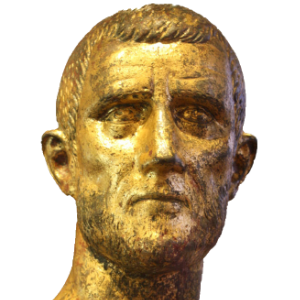
Roman emperor who established the state cult of Sol Invictus and promoted solar worship throughout the Roman Empire.

The last pagan emperor of Rome, closely associated with Mithras and Neoplatonic interpretations of the Sun God.
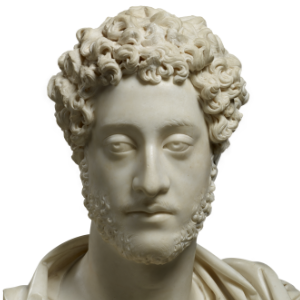
Roman emperor traditionally regarded as the first ruler initiated into the Mysteries of Mithras.
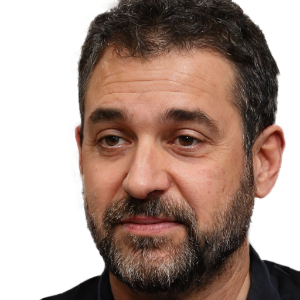
Alfius Severus was a prominent figure associated with the Mithraeum of Marino, probably acting as pater of a small Mithraic community connected with the nearby peperino stone quarries.
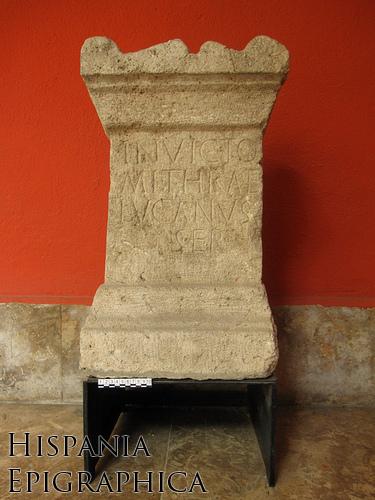
This altar found in Benifaió, València, was erected by a slave called Lucanus.
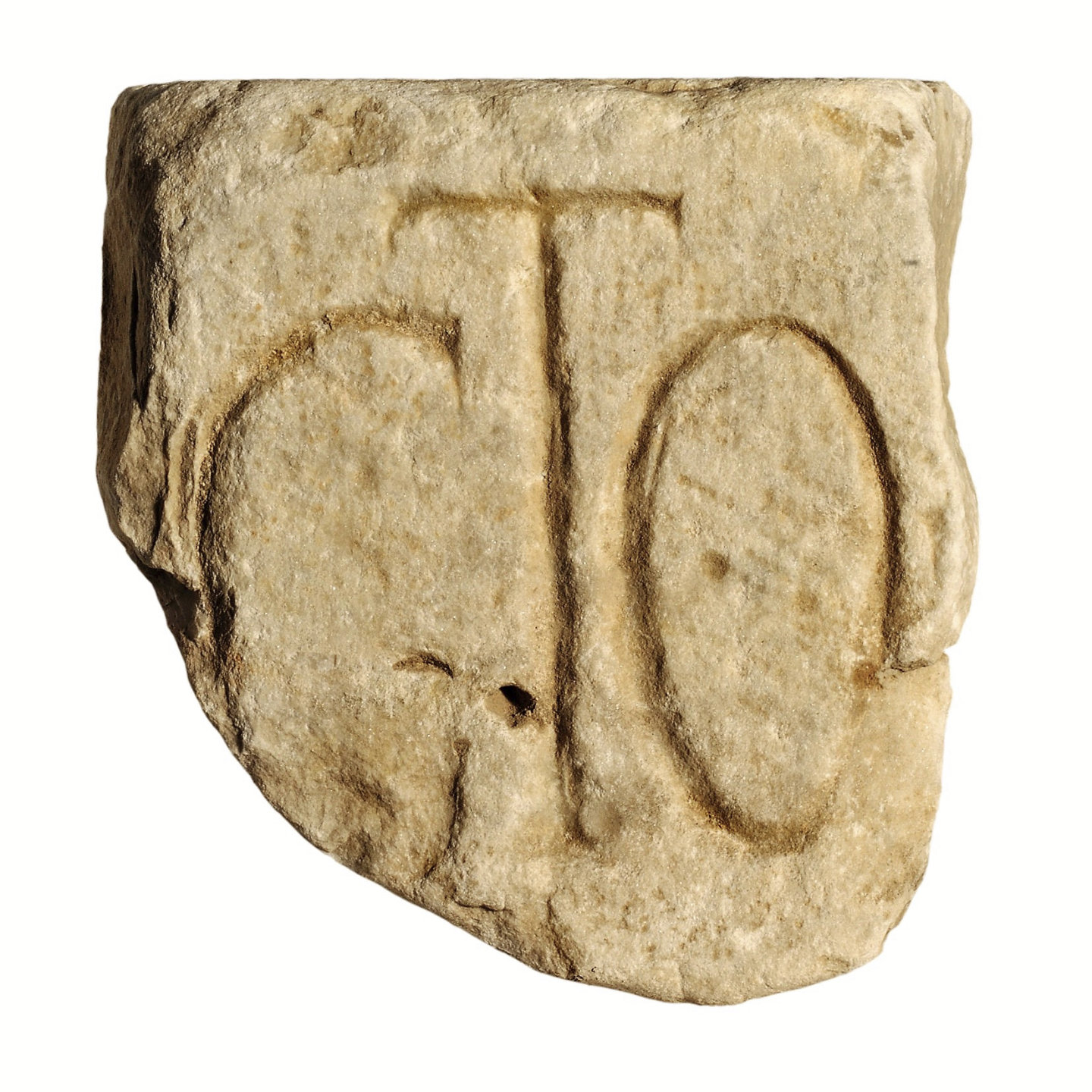
This fragment of the base of a statue from Tarragona, Spain, bears an inscription which appears to be dedicated to the invincible Mithras.
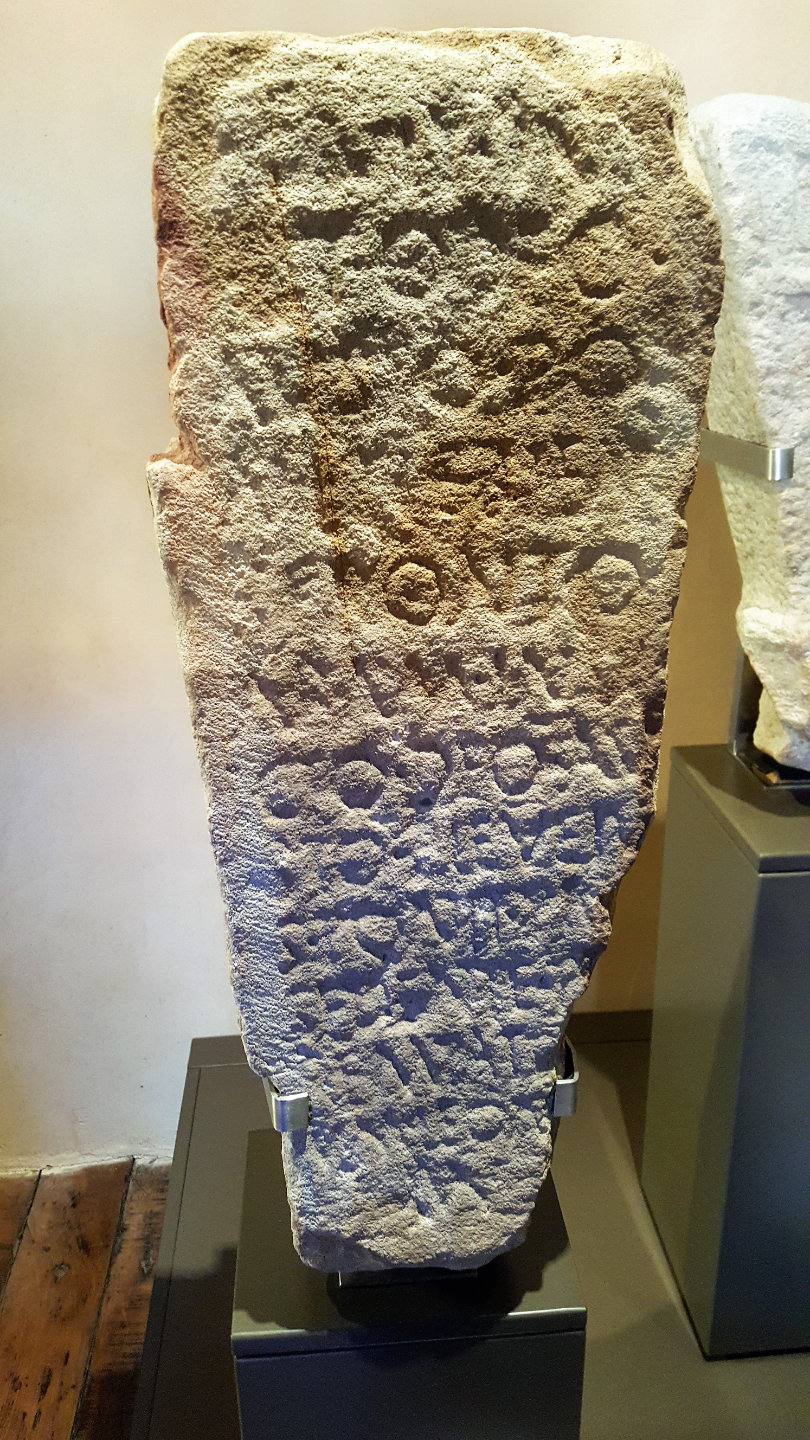
The monument of San Juan de la Isla (Asturias) devoted to Mithras was preserved in the portico of the main church until 1843.
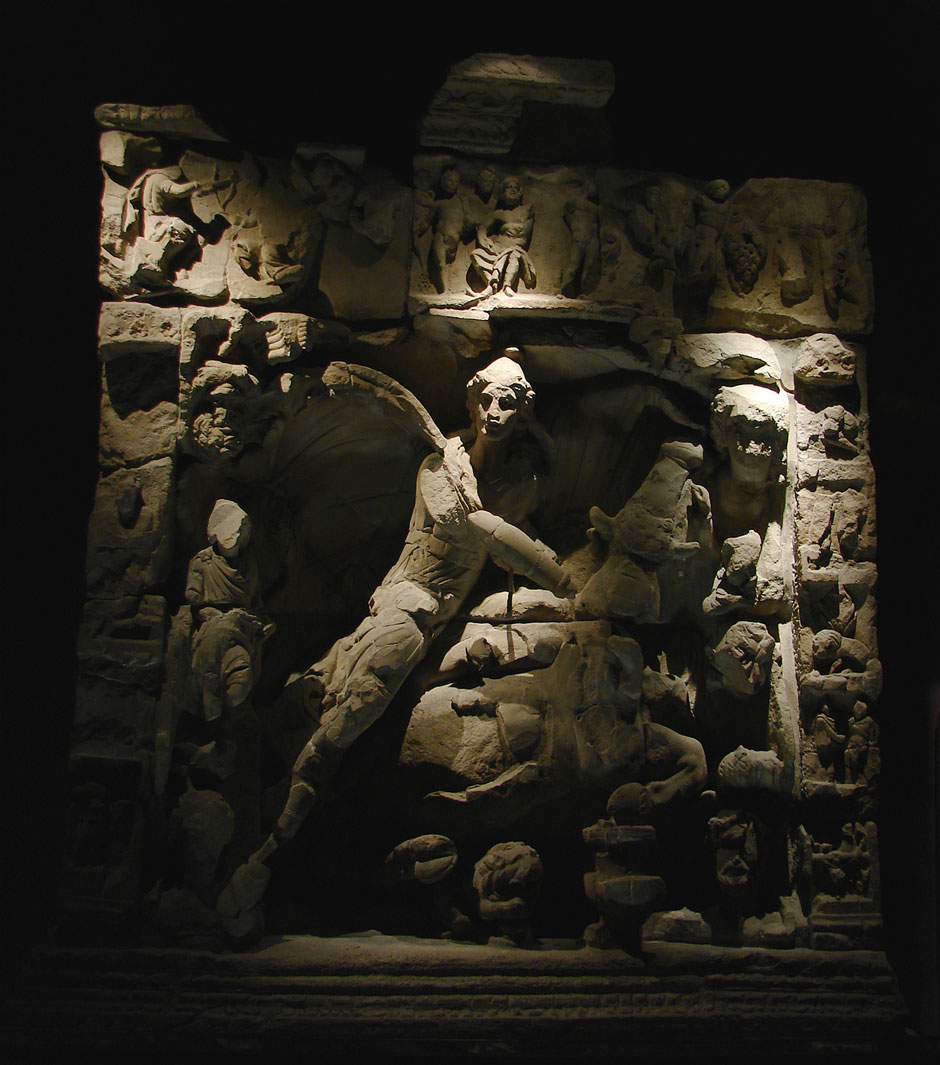
The Tauroctony of Saarbourg (Sarrebourg, ancient Pons Sarravi), France, contains most of Mithras deeds known in a single relief.
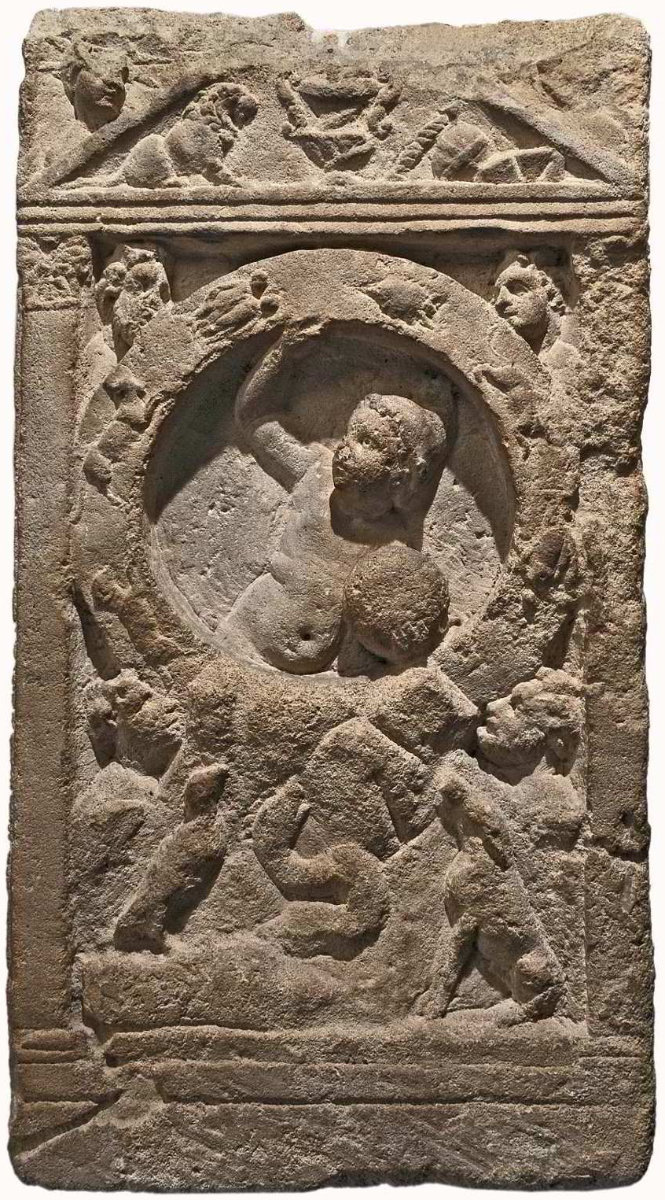
The relief depicts the birth of Mithras, holding a globe, surrounded by the zodiac.
