Your search Bu Njem gave 1882 results.

Marble tauroctony relief fragment from the Byzantine camp at Pontelimonul de sus, ancient Ulmetum in Moesia Inferior, found reused in the masonry; the subject is partly identifiable.
Limestone altar from Oescus, Moesia Inferior, dedicated to Deo invicto by Tettius Plotus, veteran of Legio IIII Flavia Fidelis and pater sacrorum — one of the clearest grade attributions from Moesia Inferior.
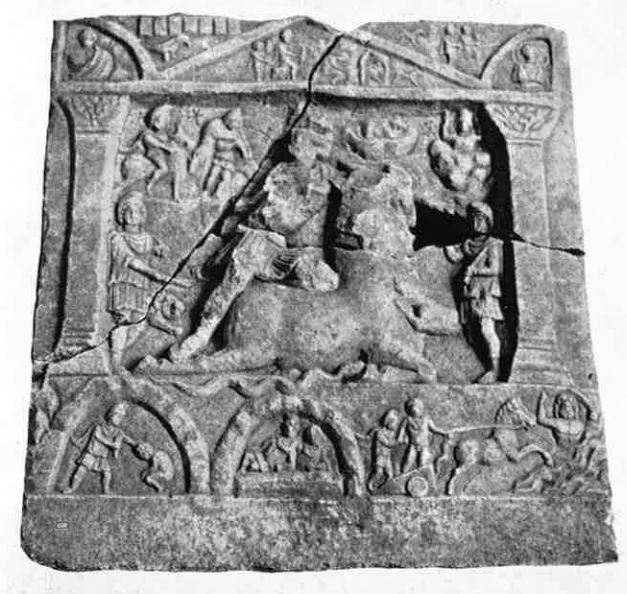
Large marble tauroctony relief from near Tavalicavo, Moesia Superior, with the shape of a temple façade: two columns supporting a pediment, the capital decorated with a head of Medusa, and the tauroctony in the central field.
Monument from Almus, Moesia Superior, with a tauroctony representation and a dedication to Deo invicto above it; no further details are available.
Upper portion of a limestone altar from Kule-Mahata, ancient Almus in Moesia Superior, dedicated to the invictus — possibly but not certainly Mithras — by Caius Plotius Maro for himself and his family.
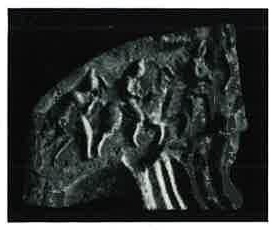
Fragment of a marble tauroctony relief from Artschar, ancient Ratiaria in Moesia Superior, preserving only part of Mithras's flying cloak with the raven perched on it.
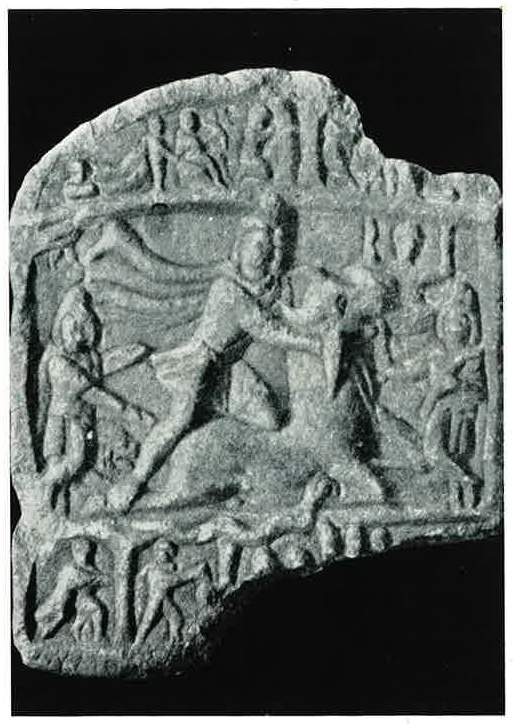
Marble tauroctony relief from Janjevo near Kosovo, Moesia Superior, whose right corners are broken off; the current whereabouts are unknown.
Stone altar with akroteria from Dražinovići, Moesia Superior, found in 1934 near the brook Savina Voda, dedicated to Invicto deo Mithrae for the welfare of Emperor Severus Alexander.
Altar at Knjaževac (Ravna), Moesia Superior, preserved beneath a water-mill called Kulina, dedicated to Invicto deo for the welfare of Emperor Marcus Aurelius Antoninus Augustus.
Marble altar from near Osmakovo, Moesia Superior, now in the Niš museum, dedicated to Soli invicto by Valerius Iucundus.
Inscription from Lopata, Moesia Superior, recording that Apollonides, imperial slave and scrutator of the statio Lamud, restored a Mithraic temple that had collapsed through age at his own expense; dated to the consulship of Gentianus and Bassus, AD 211.
White marble altar from Lopata in the Kumanovo district, Moesia Superior, associated with possible Mithraic sanctuary remains at the find-spot.
Stone slab still in front of the church in Kumanovo, ancient Lopata in Moesia Superior, bearing a dedication to Deo sancto Mithrae.
Inscription from Celei, ancient Sucidava in Dacia, dedicated to the sanctum of Solis invicti Mithrae.
White marble tauroctony relief from Slăveni-Romanați, Dacia, with the raven perched on the grotto's border; the right upper corner is broken off.
Limestone altar fragment from Drubeta, Dacia, bearing a Mithraic dedication.
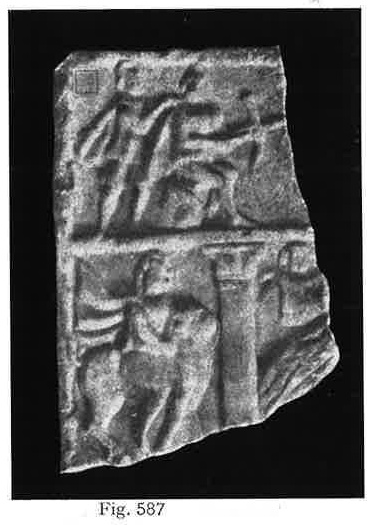
Left upper corner of a white marble tauroctony relief from the Roman camp at Drubeta, Dacia, found in 1896–99, preserving the grotto border and, outside it, Sol in his quadriga with cracking whip.
Limestone tauroctony relief fragment from Mintia-Vețel, ancient Micia in Dacia, now lost, preserving the left corner with Cautopates with torch downward and a partially legible inscription below.
Votive altar from Păuleni, Dacia, dedicated to Soli invicto for the welfare of Caius Iulius Valentinus, conductor salinarum, by Caius Iulius Ornucio.
Inscription from Han Potoci, Dalmatia, dedicated to Deo Soli invicto Meteri by Aurelius Maximinus, Flavius Marcellinus, and Flavius Marcellus; Meteri is interpreted as a variant spelling of Mithrae.
