Your search Cabrera de Mar gave 1568 results.
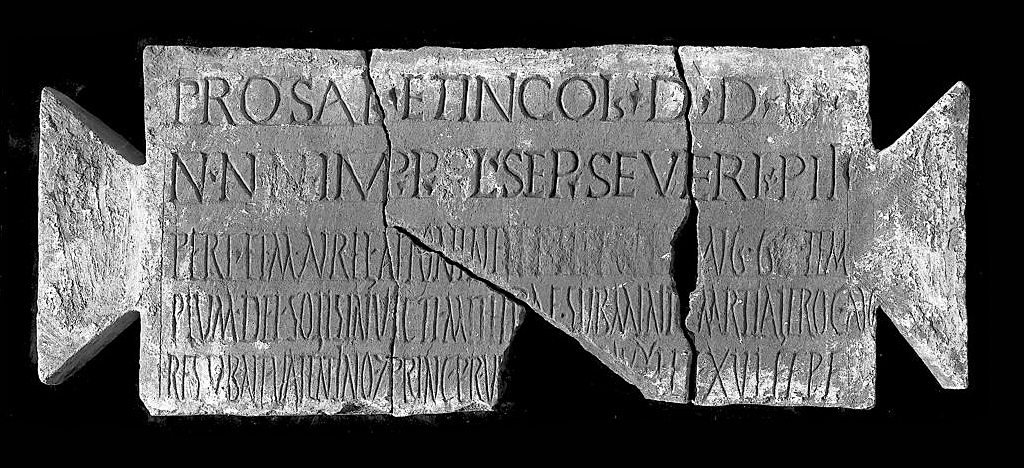
Antonius Valentinus, centurio, made this plaque for the salut des empereurs Septimus Severus and Marcus Aurelius.
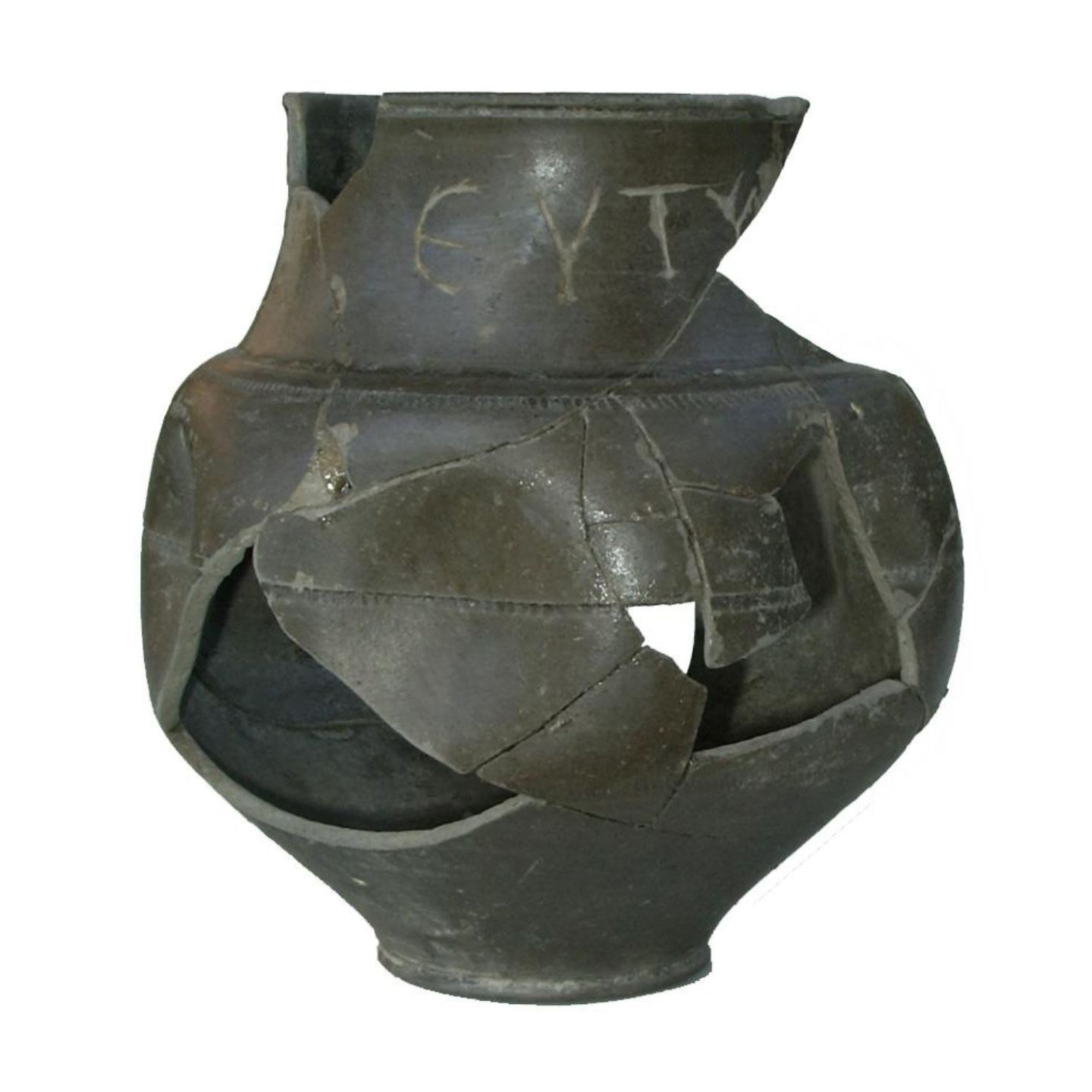
Ceramic cup inscribed with a Greek graffito and recovered from the Mithraeum of Martigny, providing evidence for the use of inscribed vessels within the sanctuary assemblage.
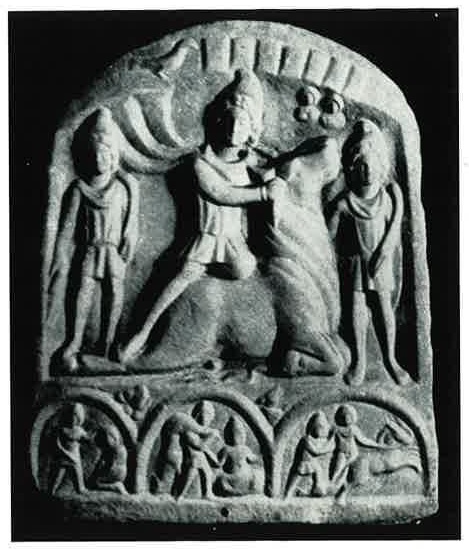
White marble tauroctony relief from the ruins of the Roman castle near Koniovo, Moesia Superior, depicting the standard bull-slaying scene.

In these two key passages, Justin Martyr interprets Mithraic rituals and myths as demonic parodies of Christ’s incarnation, the Eucharist, and biblical revelation.

This monograph presents the findings from Robert J. Bull's 1973 excavation of the Mithraeum in Caesarea Maritima, Israel, including stratigraphic analyses, studies of frescoes and and insights into the site's historical significance.


Magazine Jardin des arts. Numéro spécial consacré aux colosses de Nemrut Dagi.

This magnificently illustrated publication renews the Mithraic dossier on the basis of concrete data, with caution and penetration. Marino's discovery is disconcerting and rekindles the controversy about the order in which bands should be read.

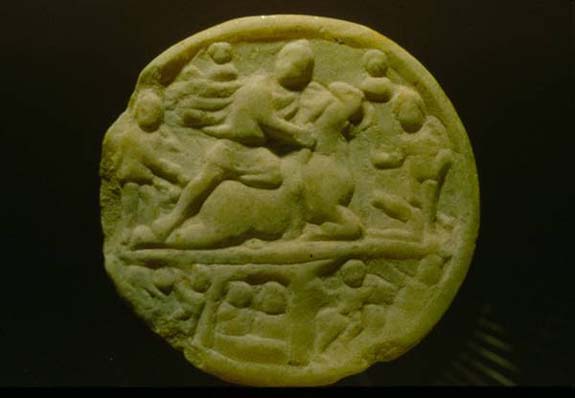
The small medallion depicts three scenes from the life of Mithras, including the Tauroctony. It may come from the Danube area.