Your search Gema Elvira Adán gave 39 results.

La localización de una comunidad mitraísta en San Juan de la Isla posee un notable interés, debido a la débil popularidad de este culto oriental entre las poblaciones de Hispania.
The base of the column bears an inscription that records the rebuilding of a palace at Ectabana ’by the favour of Ahuramaza, Anahita and Mithra’.

Transpadana occupied the northern plains of Italy where major communication routes connected the peninsula to the Alpine and Danubian worlds.

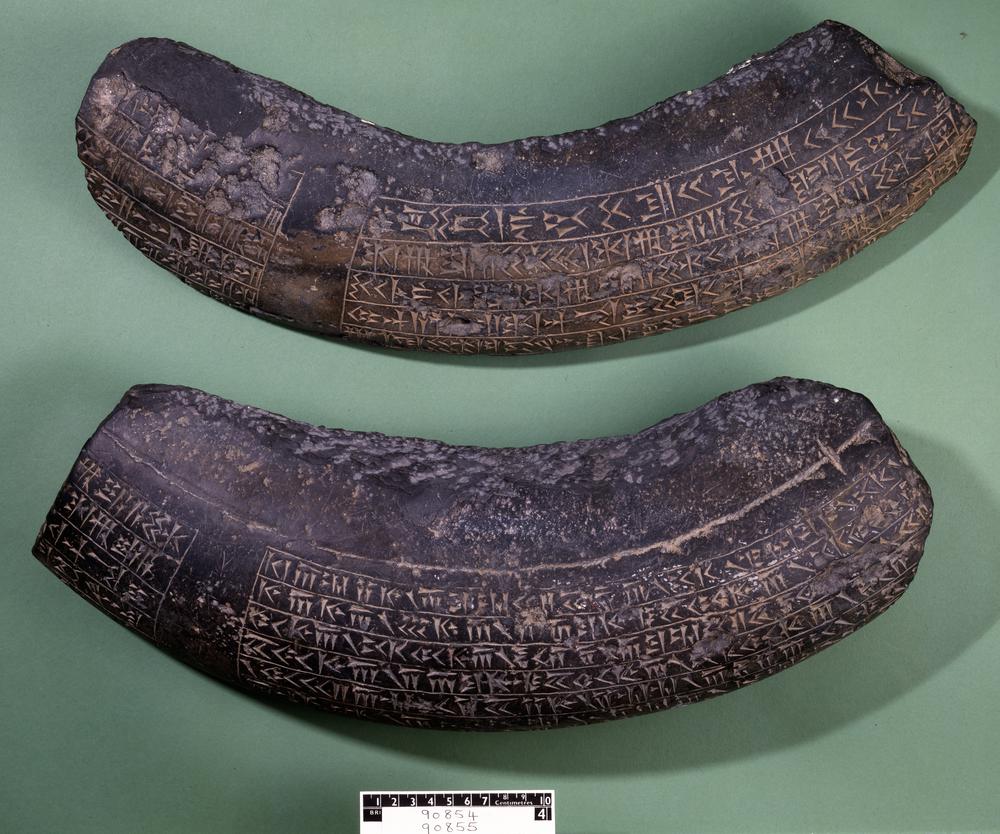
Inscription from Hamadan where the ’great king’ Artaxerxes mentions Ahuramazda, Anahita, and Mithra as guardians.

An inscription recording the completion and dedication of the Temple of Sol at Como by T. Flavius Postumius Titianus, corrector of Italy, by order of the emperors Diocletian and Maximian, with Axilius the Younger as curator of the city of the Comenses.
Roman settlement on the southern shore of Lacus Verbanus (Lake Maggiore) in Transpadana, known for Mithraic inscriptions and a cave sanctuary traditionally identified as a Mithraeum.
Limestone altar from Stojnik, Moesia Superior, found at a house at Guberevci, dedicated to Deo Mithrae Soli for the welfare of Emperor Severus Alexander.
Limestone relief fragment showing Cautopates beside traces of a tauroctony scene.
Ecbatana was an ancient city, which was first the capital of Media in western Iran, and later was an important city in Persian, Seleucid, and Parthian empires.
A small limestone votive altar from Pola (modern Pula) bearing on its front face a damaged relief head of a youthful Sol with long curly hair, above which is carved the inscription Soli and below the dedicatory text by Atticus (No. 757).
A fragmentary limestone tauroctony relief found on the south slope of the Castellhügel at Pola (modern Pula) during the demolition of a wall, now in the Lapidary Museum at Pula, preserving the bull's body, the dog, the serpent, the scorpion and a standing cross-legged torchbearer…
An altar found at Milan (ancient Mediolanum), dedicated to the Invincible Mithras by Varia Severa, daughter of Quintus; because the dedicant is a woman, Cumont suggests it may alternatively be dedicated to the Dis Manibus.
A brief inscription from Trento (ancient Tridentum) recording a dedication to Sol by Q. Muielius Iustus together with his family.
A square base found with its companion piece at Trento, dedicated to the Genetrix of the god in thanks for a birth by Q. Muielius Iustus and his family.
An inscription from Trento (ancient Tridentum) recording a gift dedicated to the Invincible Mithras by L. Claudius Iustio together with his sons Iustus and Iustinus.
A square base found in 1868 near the Sardagna waterfall at San Niccolò beside the ancient Roman road in Trento (ancient Tridentum), in ground full of debris suggesting a nearby necropolis and possibly a Mithraeum.
A double-sided limestone relief found near Meclo in Val di Non in 1895, now in the Museo Nazionale at Trento, with a raven and altar scene on the obverse and scenes on the reverse showing a figure attacking a kneeling Phrygian-capped person and Mithras as a bull-carrier…
An inscription on the altar base from the Mithraeum at Angera, recording that M. Calvius Satullio dedicated a base to Jupiter Optimus Maximus on behalf of the inhabitants of the vicus Sebuinus.
A white marble altar base from the Mithraeum at Angera, decorated with palmettes, eagles carrying a festoon and rosettes on the front, dolphins on the reverse, and on each side mythological scenes of Jupiter and Neptune combatting Giants with snake-feet.
