Your search Hatra District gave 48 results.
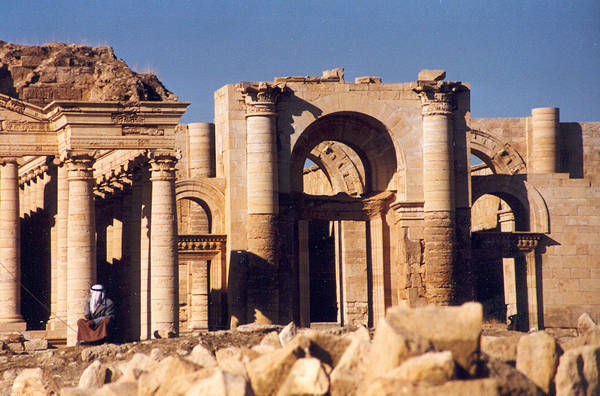
The city of Hatra was famed for its fusion of several civilization cults, which several temples devoted to gods from all Indo-European world.


White marble altar from Lopata in the Kumanovo district, Moesia Superior, associated with possible Mithraic sanctuary remains at the find-spot.

This plaque, located on the western staircase of the Palace of Darius, mentions the god Mithra together with Ahura Mazda as protectors of King Artaxerxes III Ochus.
The Mithraeum of Slaveni was discovered in 1837 on the right bank of the river Olt, in Romanati district.

Sabratha, in the Zawiya District of Libya, was the westernmost of the ancient "three cities" of Roman Tripolis, alongside Oea and Leptis Magna.
Arsameia on the Nymphaios is an ancient city located in Old Kâhta in Kâhta district, Adıyaman Province, Turkey.
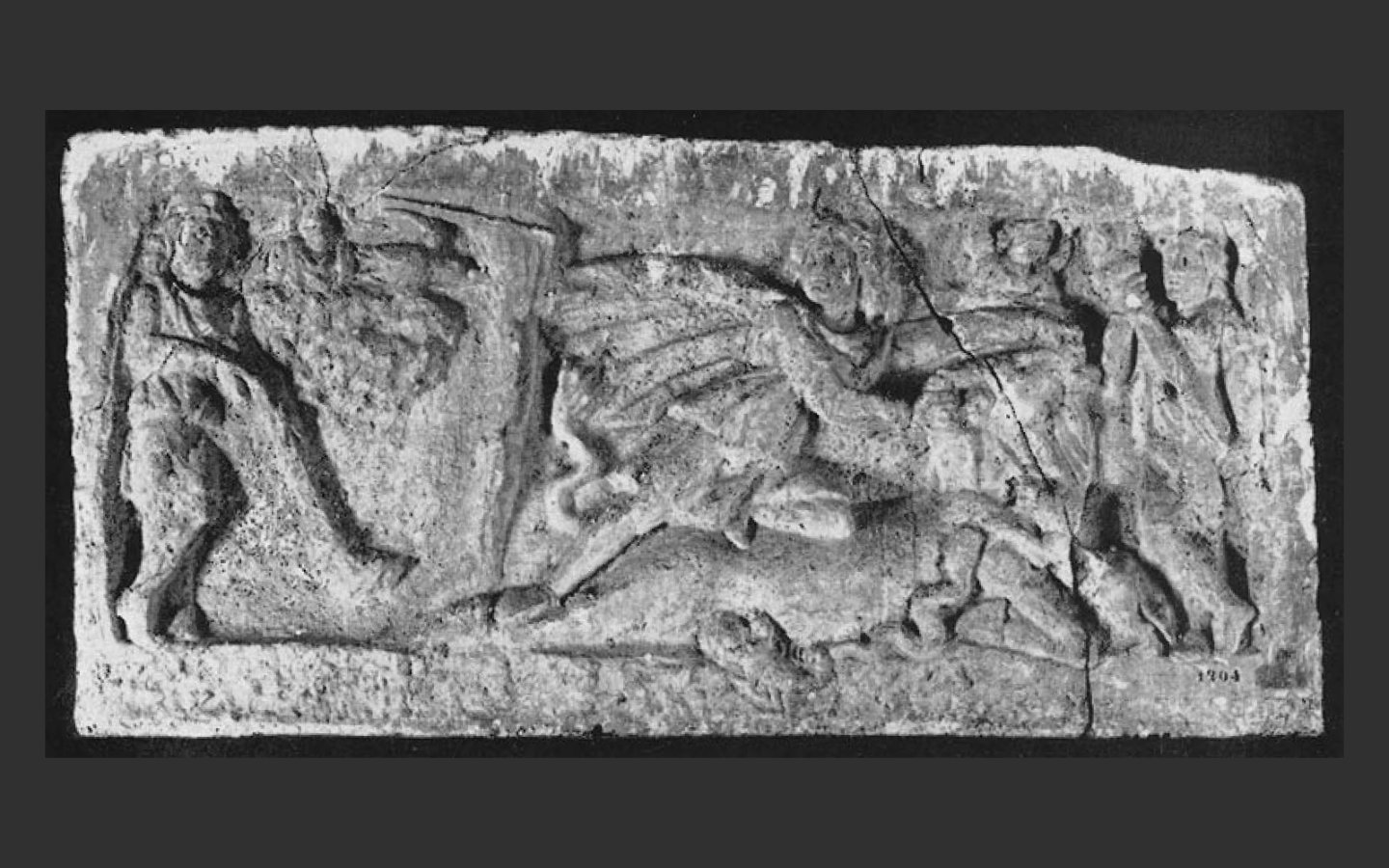
This relief of Mithras Tauroctonos from Rome bears the inscription of three brothers, two of them lions.
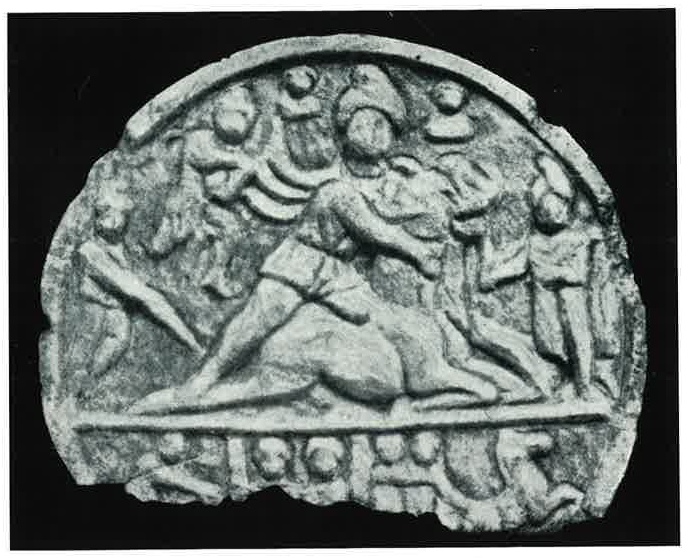
Small circular marble tauroctony relief from Kadine-Most in the Küstendil district, Moesia Superior, divided into two parts by a horizontal rim, with the bull-slaying in the upper and a figure or inscription in the lower.
Upper portion of a limestone altar from Kule-Mahata, ancient Almus in Moesia Superior, dedicated to the invictus — possibly but not certainly Mithras — by Caius Plotius Maro for himself and his family.
White marble tauroctony relief from Golema Kutlovica, ancient Civitas Montanensium in Moesia Superior, depicting the standard bull-slaying scene.
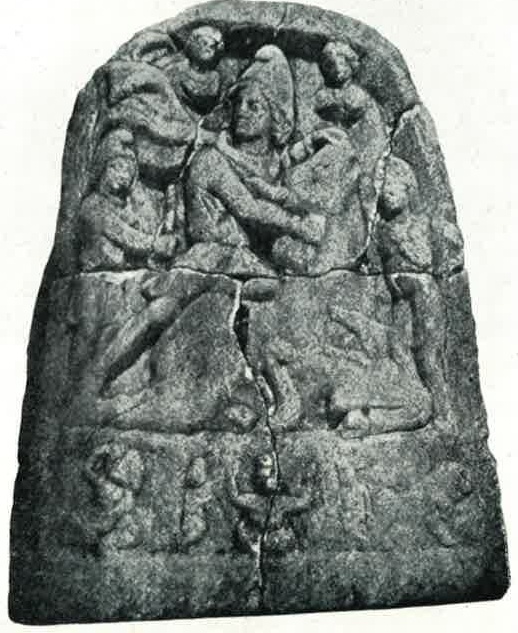
White marble tauroctony relief in five fragments from Dupljane near Călan, ancient Aquae in Dacia, found in 1900, depicting the bull-slaying with the standard iconographic programme.
Sandstone altar from Alsóbajom near Mediaș, Dacia, with Mithras killing the bull between Cautes and Cautopates on its front face and no animals depicted; Sol appears in the upper left corner and Luna in the upper right.
Sandstone altar from Campona, Pannonia Inferior, dedicated to Deo Soli invicto by Claudius Neronianus; the dedication is painted red.
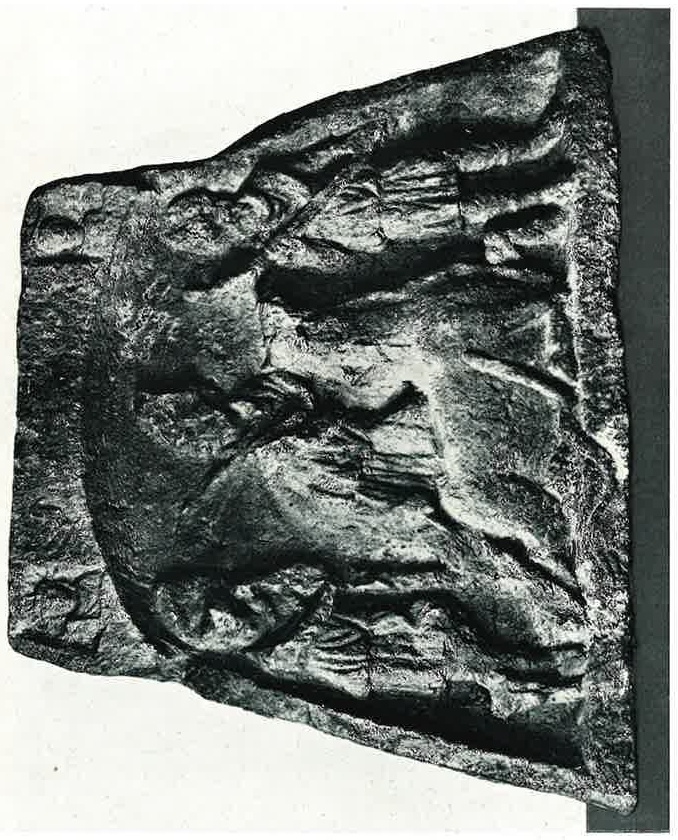
Mithraic sanctuary found in the district of Campona near Nagytétény, Pannonia Inferior, in 1934, yielding three inscribed altars, statue fragments, and other cult objects.
Structure in the Tarn region initially reported as a Mithraeum but later identified as an ordinary silo.
Bearded nude statue formerly claimed to be Mithraic but later rejected as a seventeenth-century sculpture unrelated to the cult.
Plate from Intercisa, Pannonia Inferior, bearing a Mithraic votive inscription; now lost.
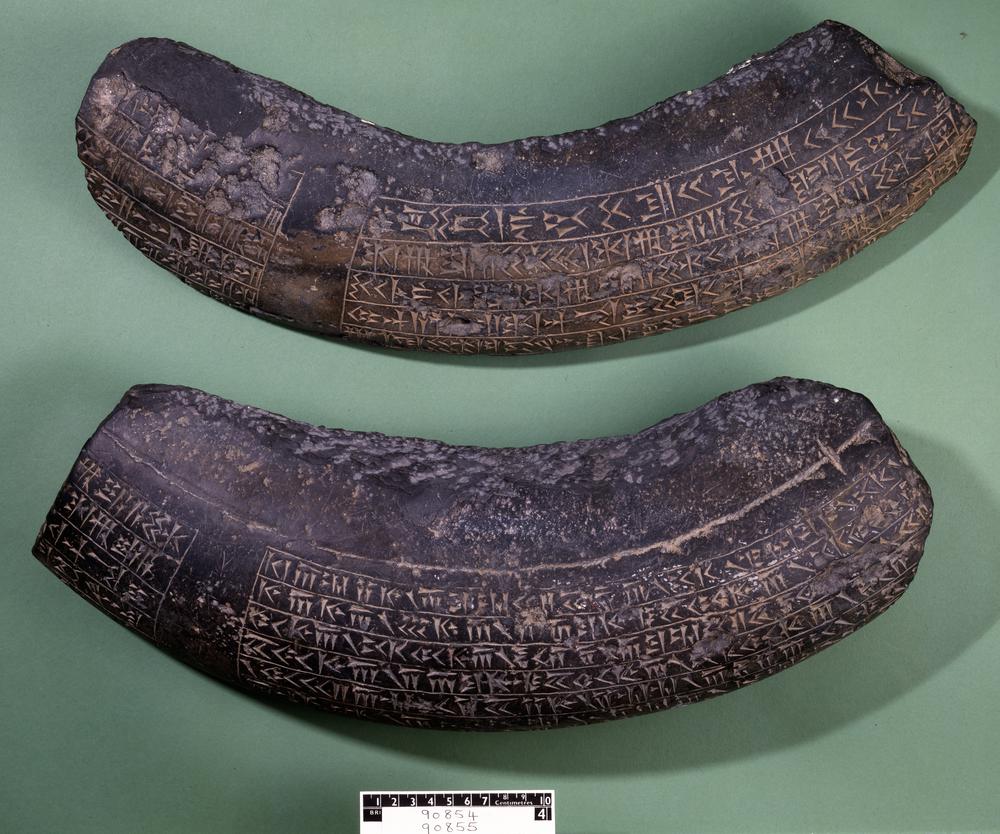
The base of the column bears an inscription that records the rebuilding of a palace at Ectabana ’by the favour of Ahuramaza, Anahita and Mithra’.
