Your search Jabal al-Druze gave 2993 results.

Palaiopoli is an ancient city on the west coast of Andros in the Cyclades Islands, Greece, and was the capital of Andros, called Andros, during the Classical period.
Around 300 BC, Burdigala was the settlement of a Celtic tribe, the Bituriges Vivisci. The Romans conquered the area in 60 BC and made Burdigala the capital of the Roman province of Aquitania during the reign of Emperor Vespasian.
Vindobala, now a hamlet of Rudchester, was the fourth Roman fort on Hadrian's Wall.
Venetonimagus, now Vieu, part of the town of Valromey, would have been called Venetonimagus or Venetonimago in Gallo-Roman times.
Solin is a town in Dalmatia, Croatia, developed on the location of ancient city of Salona, which was the capital of the Roman province of Dalmatia and the birthplace of Emperor Diocletian.
Salona was an ancient city and the capital of the Roman province of Dalmatia. It was founded in the 3rd century BC and was mostly destroyed in the invasions of the Avars and Slavs in the 7th century AD.
The Saalburg is a Roman fort located on the main ridge of the Taunus, northwest of Bad Homburg, Hesse, Germany.
La Bâtie-Montsaléon is a commune in the Hautes-Alpes department in southeastern France. It is notable for being the location of the Battle of Mons Seleucus in 353, when Constantius II defeated the usurper Magnentius.
Icosium was a Berber city that was part of Numidia which became an important Roman colony and an early medieval bishopric in the casbah area of actual Algiers.
Caetobriga, now Setúbal of Proto-Celtic *Caetobrix, became a Turdetani settlement which passed under Roman rule. In the time of Al-Andalus the city was known as Shaṭūbar.
Kalkar is a municipality in the district of Kleve, in North Rhine-Westphalia, Germany.
Apulum, now within Alba Iulia, was a Roman settlement first mentioned by the mathematician, astrologer and geographer Ptolemy. Its name comes from the Dacian Apoulon.

This small and highly questionable relief from southern France may depict a winged leontocephalic figure seated.
This marble dedication from Puteoli was offered to Sol Invictus and the genius of the colony by Claudius Aurelius Rufinus together with his wife and son.
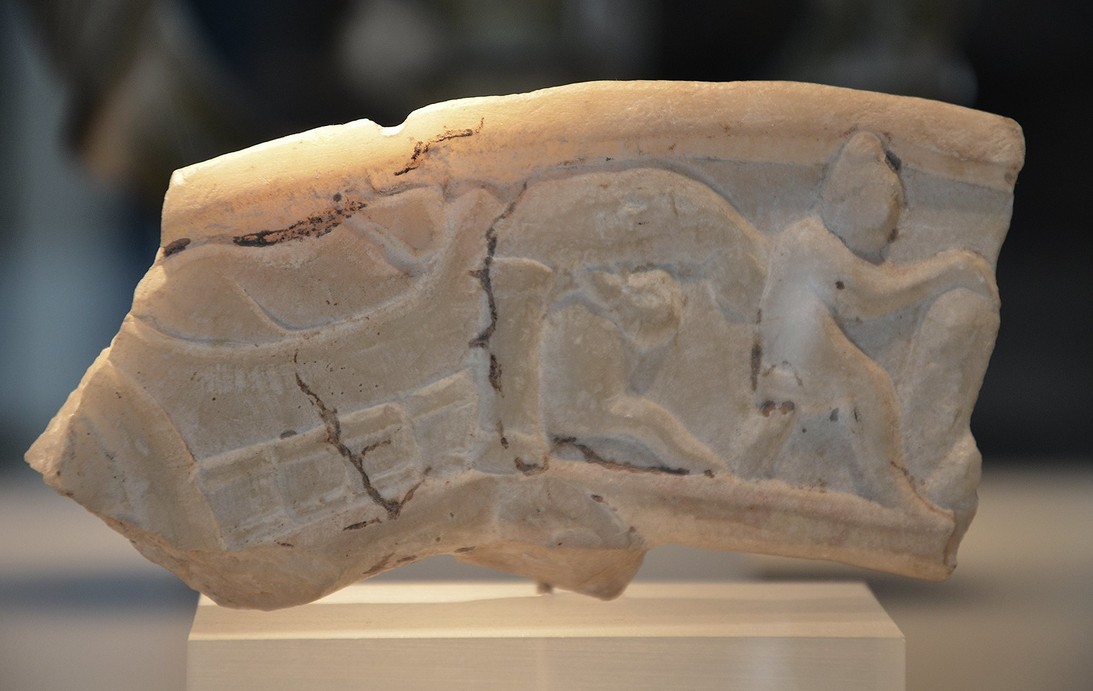
Fragment of an alabaster relief from Cologne with part of a tauroctony scene. Only the tip of Mithras’ Phrygian cap and small narrative details above are preserved.
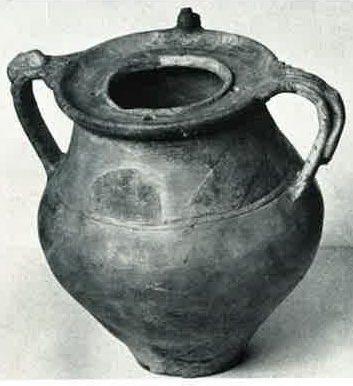
Sepulchral limestone inscription from the vicinity of the Mithraeum at Colonia Agrippina (Germania Inferior), mentioning the Mithraic grade Corax.
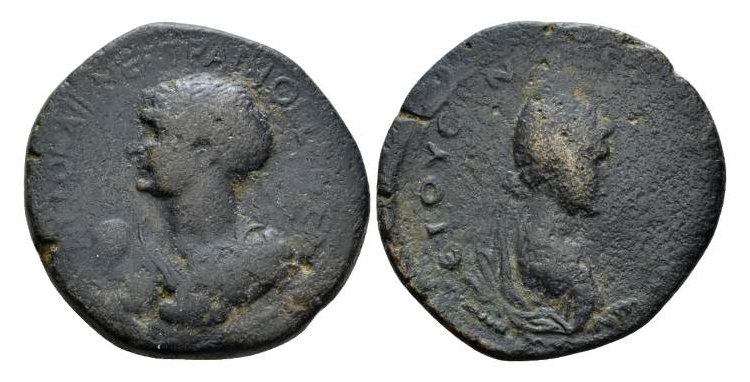
These bronze medallions associates the image of several Roman emperors with that of Mithras, usually as a rider, in the province Pontus.
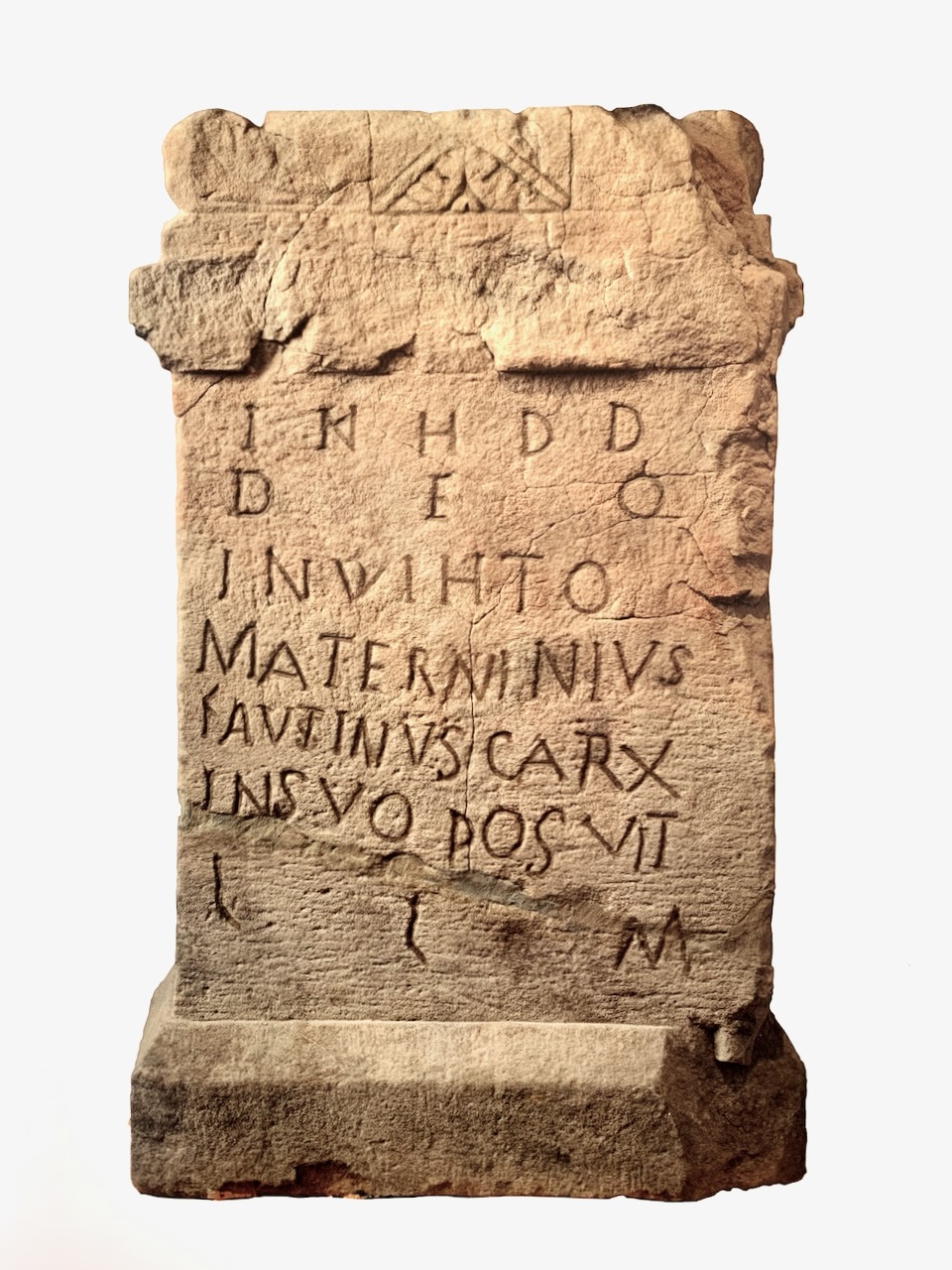
Corax Materninius Faustinus dedicated other monuments found in the same Mithraeum in Gimmeldingen.
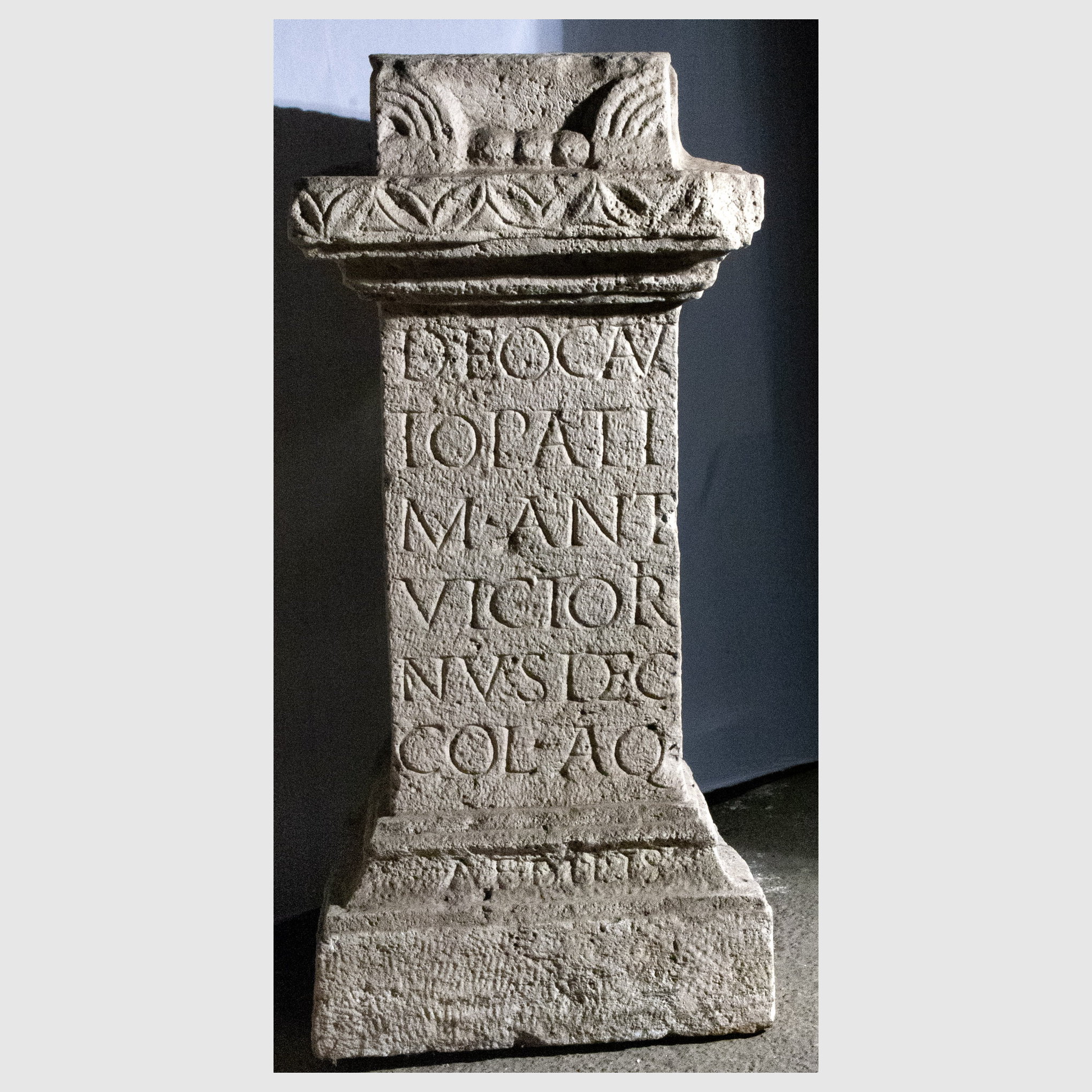
These two altars, erected by a certain Victorinus in the mithraeum he built in his house, bear inscriptions to Cautes and Cautopates.

This plaque, located on the western staircase of the Palace of Darius, mentions the god Mithra together with Ahura Mazda as protectors of King Artaxerxes III Ochus.
