Your search Mackwiller gave 10 results.

Mackwiller has yielded significant archaeological material connected with the religious landscape of Roman Germania.
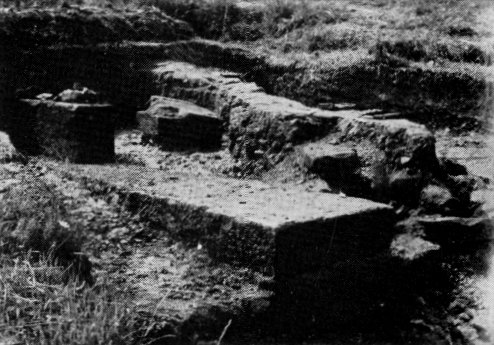
The Mackwiller Mithraeum was built in the middle of the 2nd century, during the reign of Antoninus the Pious, on the site of a spring already worshipped by the natives.

Badly damaged sandstone statue of a togatus from the Mithraeum at Mackwiller, preserving only fragments of the head and garment.
Stone statue fragments from the Mithraeum at Mackwiller depicting Mithras's rock-birth, preserving the head in Phrygian cap, torso, and right hand holding part of a torch.
Reconstructed tauroctony relief from the Mithraeum at Mackwiller, assembled from multiple stone fragments and preserving Mithras's head, shoulders, dagger hand, flying cloak, and parts of the bull and torchbearers.
Lower-central fragment of the large cult relief from the Mithraeum at Mackwiller, preserving the forefeet of the dog, part of a serpent, and a cult vessel; the base bears a partially legible inscription mentioning an eques Romanus.
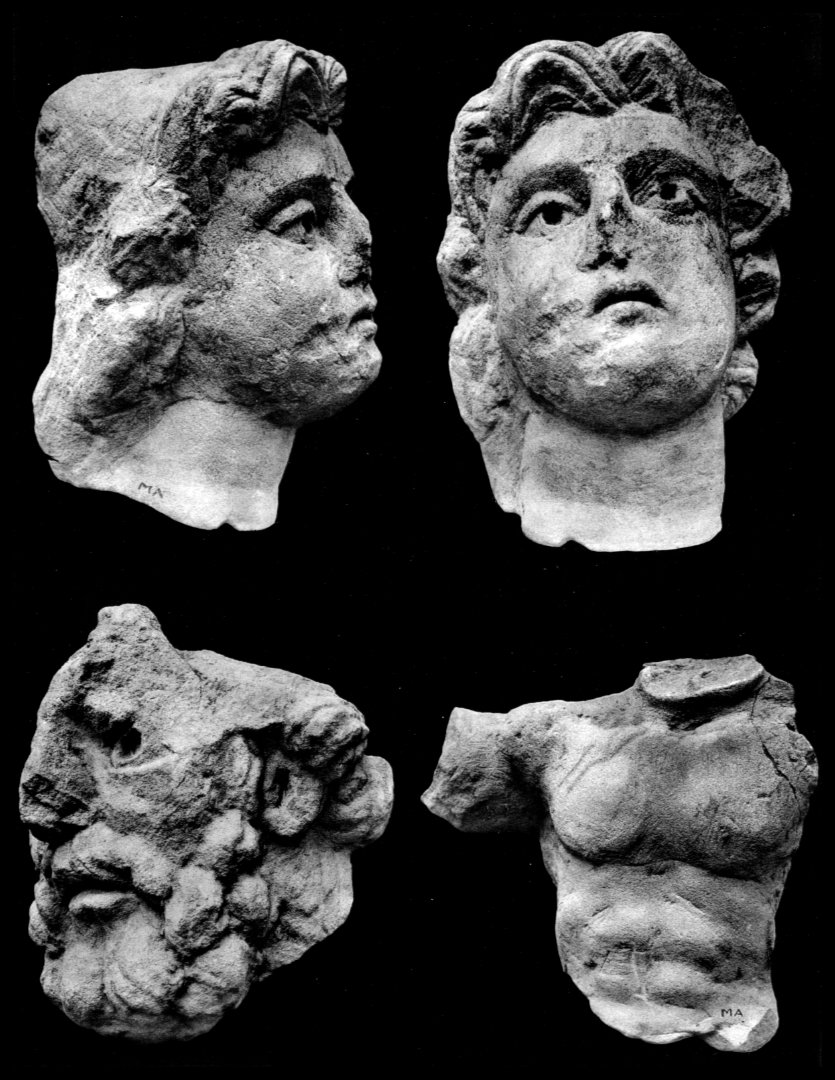
This fragment of the head of a young Mithras is one of the finds made during the excavations carried out by Jean-Jacques Hatt at Mackwiller, France, in 1955.

Alfius Severus was a prominent figure associated with the Mithraeum of Marino, probably acting as pater of a small Mithraic community connected with the nearby peperino stone quarries.
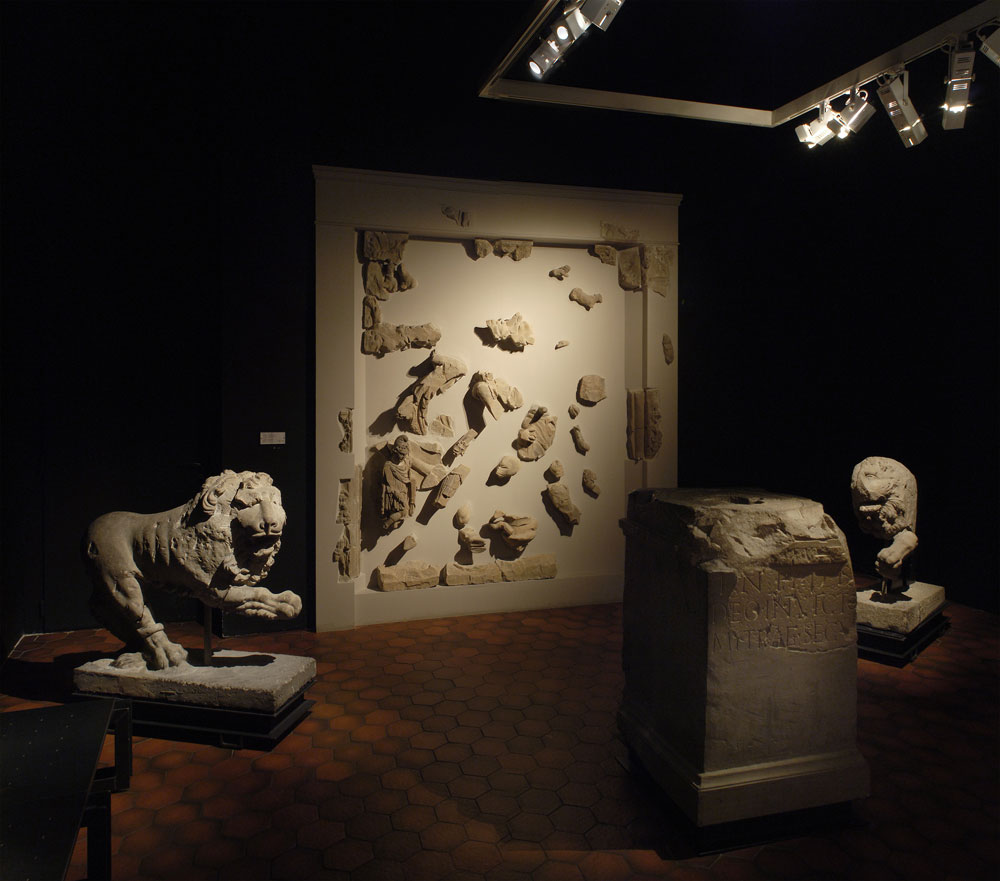
These fragments of a monumental relief of Mithras killing the bull from Koenigshoffen were reassembled and are now on display at the Musée Archéologique de Strasbourg.
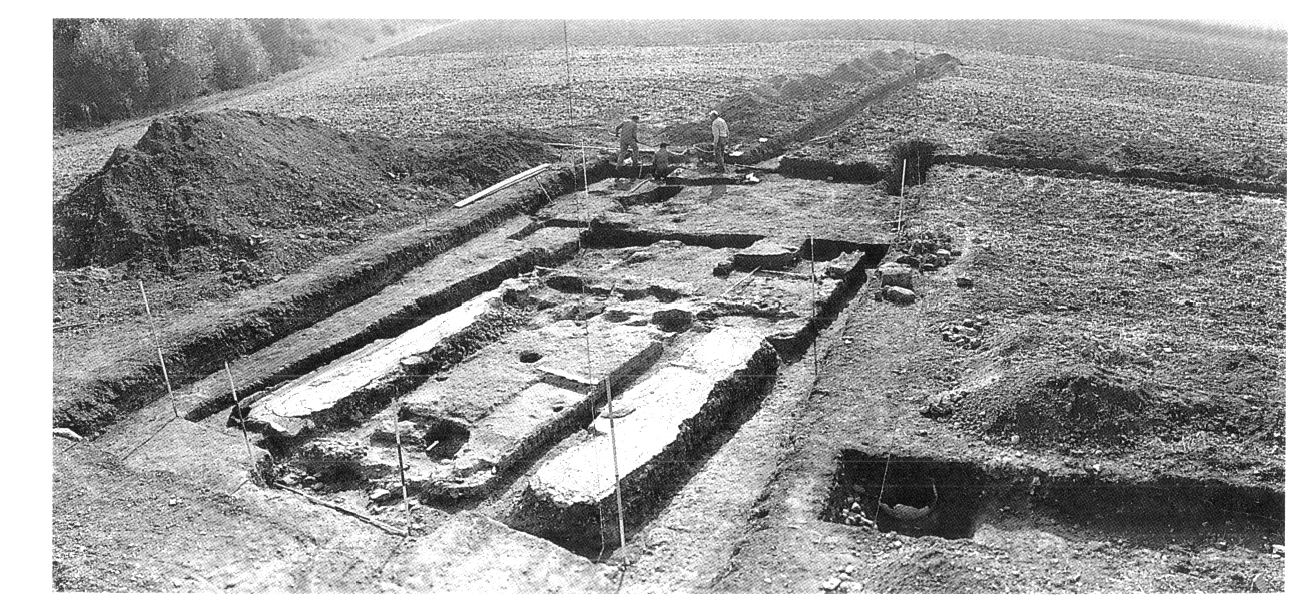
The Mithraeum of Biesheim-Kunheim is located near the ancient village of Altkirch, near the Rhin.
