Your search María Antonia de Francisco Casado gave 59 results.

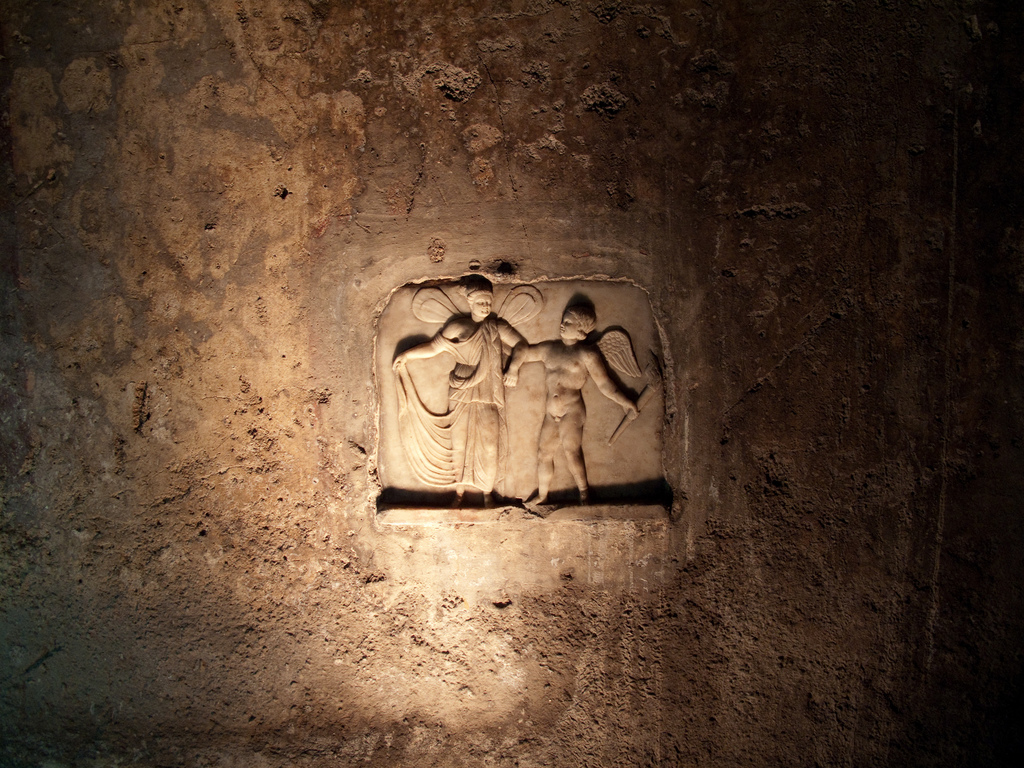
The Mithraeum of Santa Maria Capua Vetere includes a marble relief depicting a child Eros guiding Psyche through the dark.

Mariana is a Roman site south of Biguglia, in the Haute-Corse département of the Corsica région of south-east France.

The Mithraeum at Capua is in many respects one of the most important sanctuaries of the Iranian god who in the first centuries of our era conquered the Roman world.
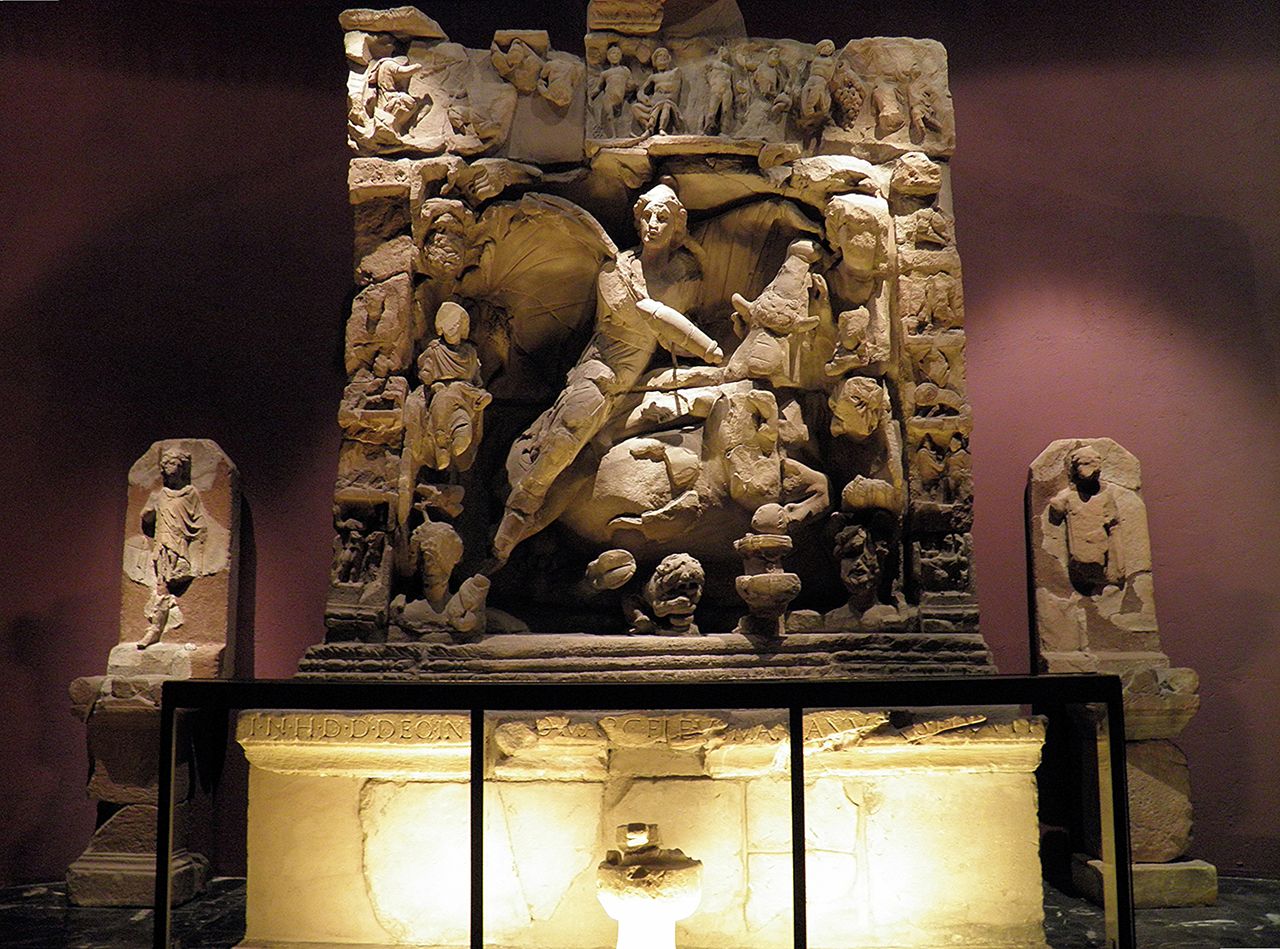
The base of these sandstone reliefs bears an inscription referring to a certain Marcellius Marianus.
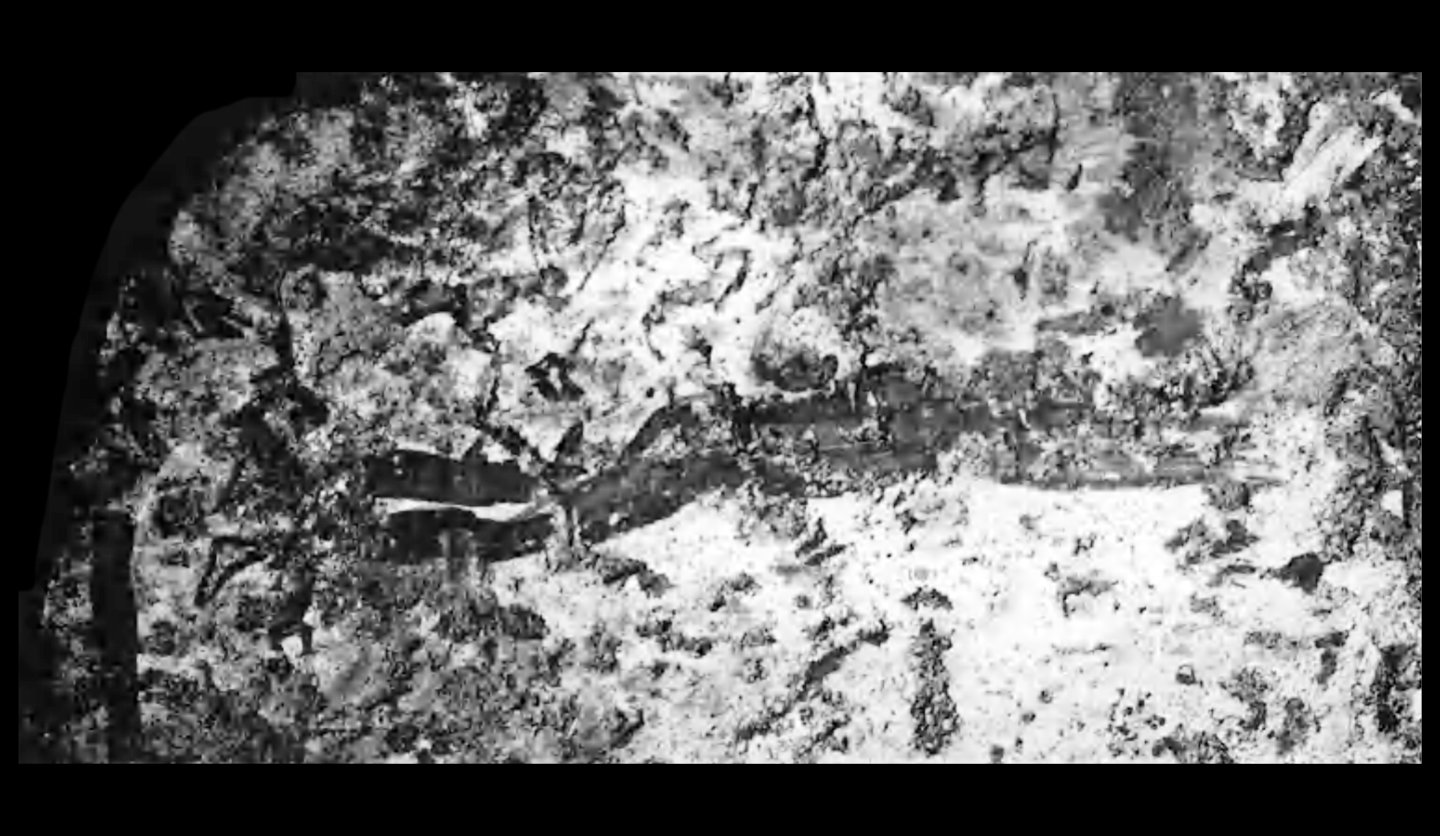
Representation of a person lying prostrate on the ground between two other walking figures on the Mitreo of Santa Capua Vetere.
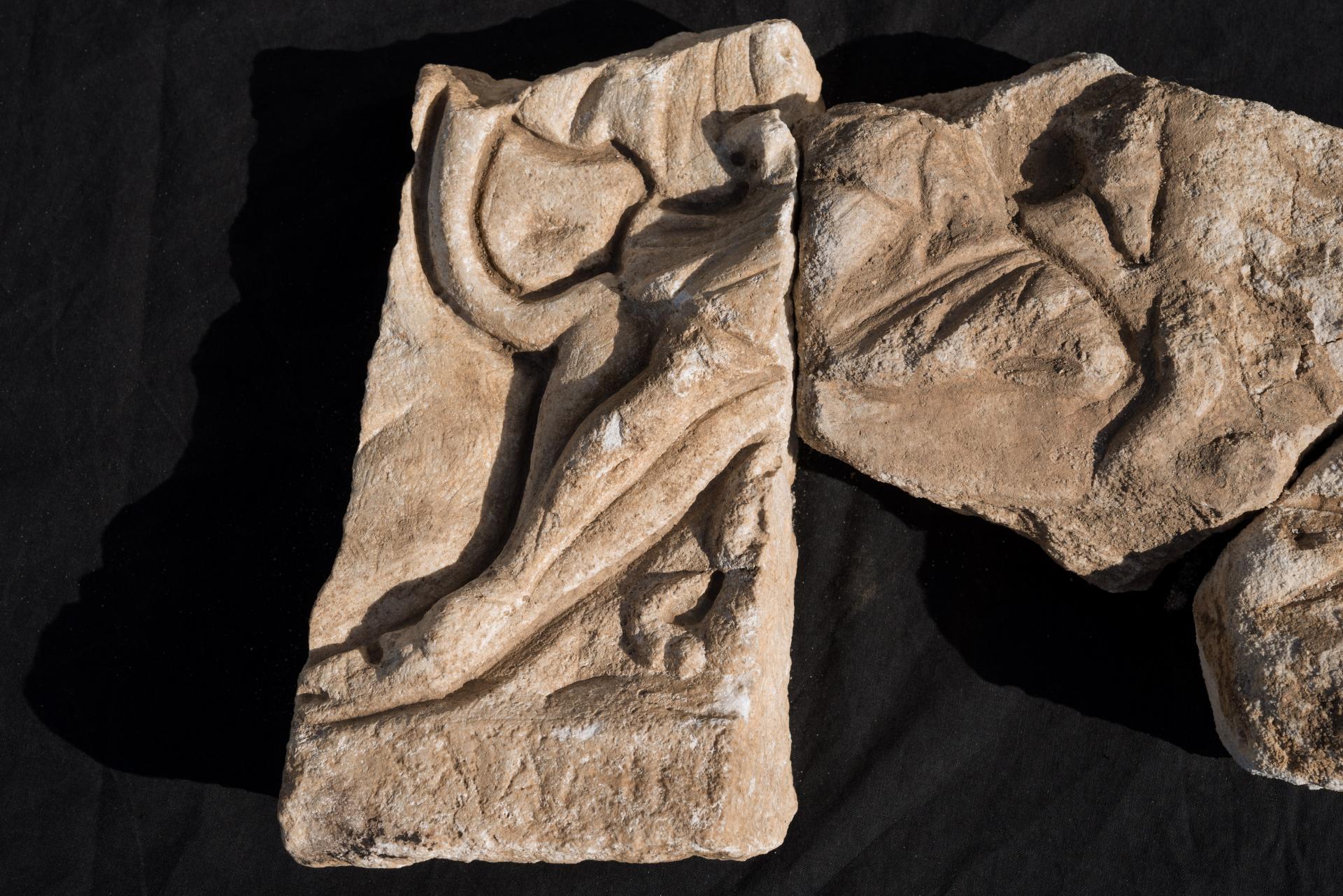
The archeologists have found three fragments of the Tauroctony of Lucciana, which includes Cautes and Cautopates.
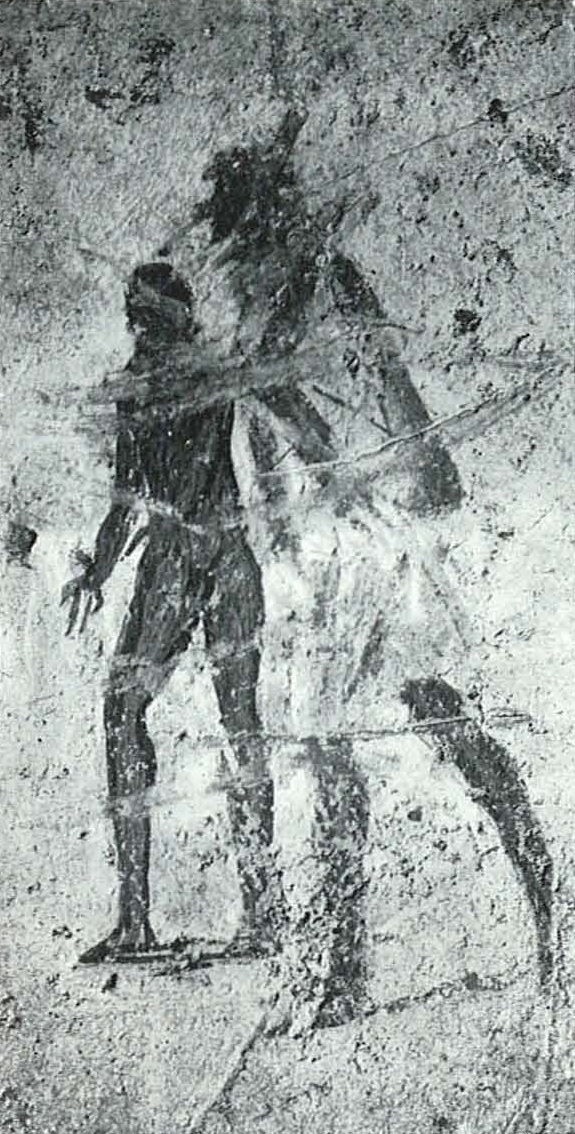
This is the first of several fresco scenes depicting the initiation of a new member in a mithraic community, in Capua Vetere.

Fresco depicting an initiation scene from the Mithraeum of Capua Vetere.
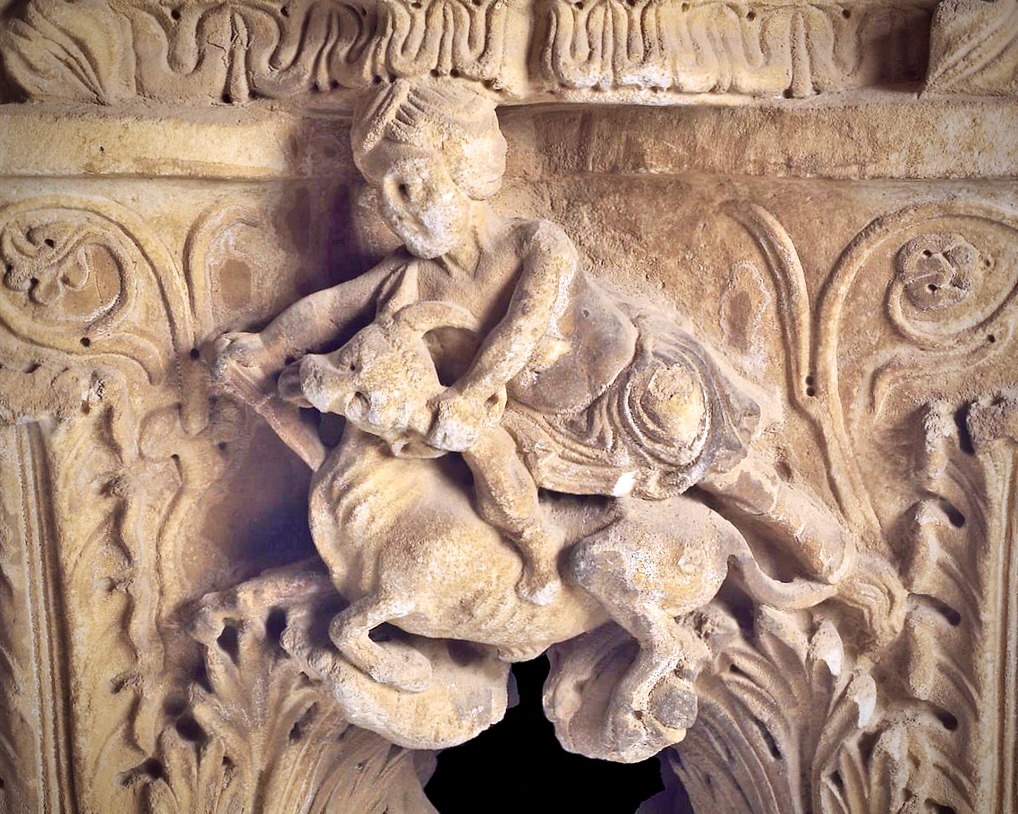
On one of the capitals of the cathedral of Santa Maria Nuova in Monreale, Sicily, an unusual turbaned bull-slaying Mithras has been recorded.
Capua is currently a city and comune in the province of Caserta, in the region of Campania, southern Italy, situated 25 km north of Naples, on the northeastern edge of the Campanian plain.

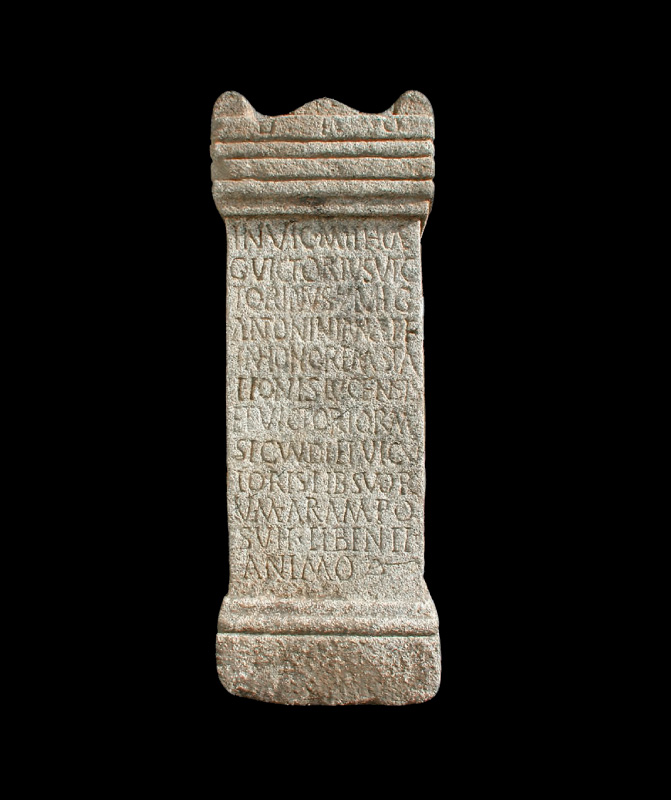
Victorius Victorious, centurion of the Legio VII, erected the altar in honour of the Lugo garrison and of the Victorius Secundus and Victor, his freedmen.
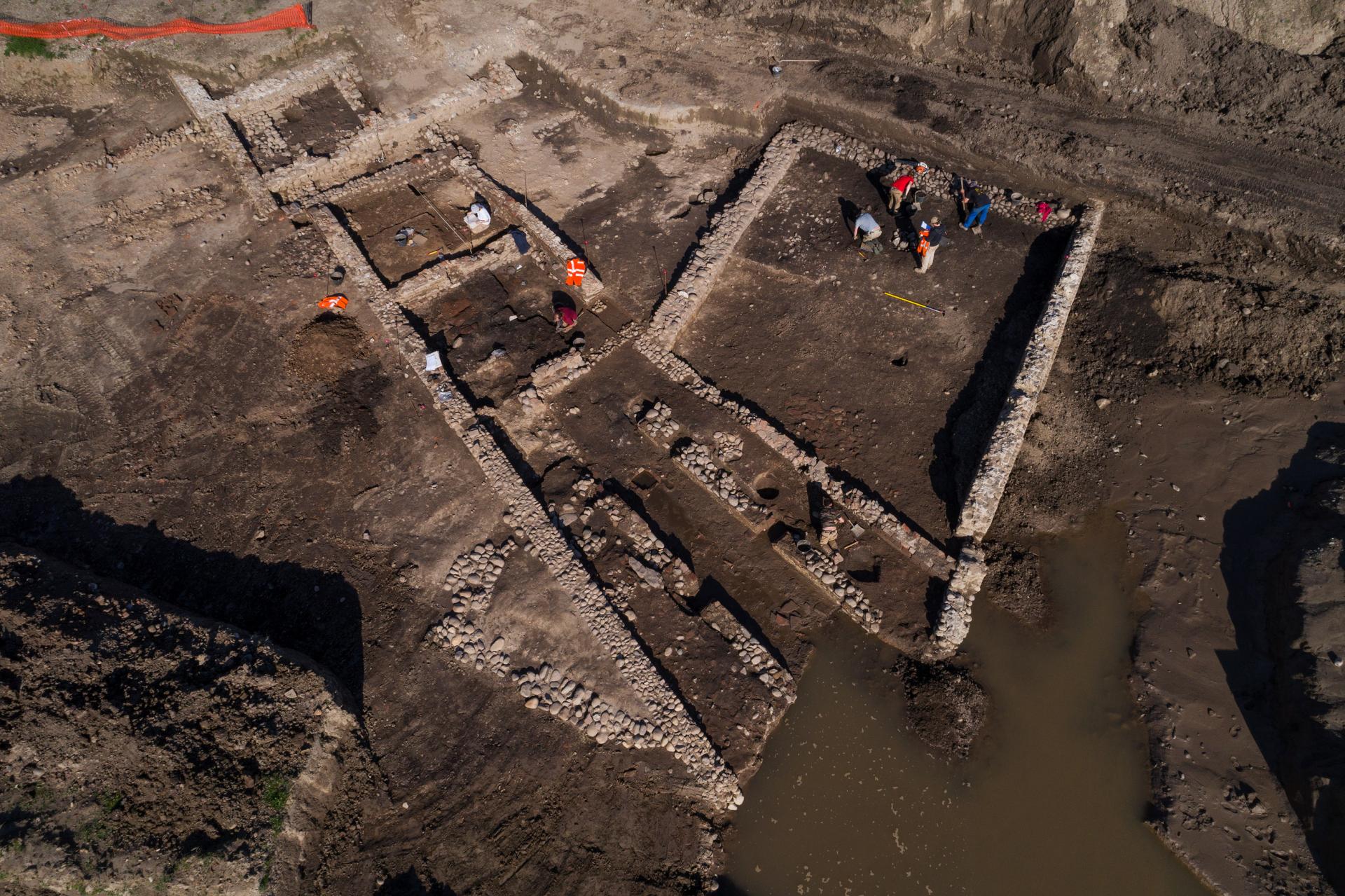
For the first time, a Mithraeum has been discovered in Corsica, at the site of Mariana, Lucciana (Haute-Corse).
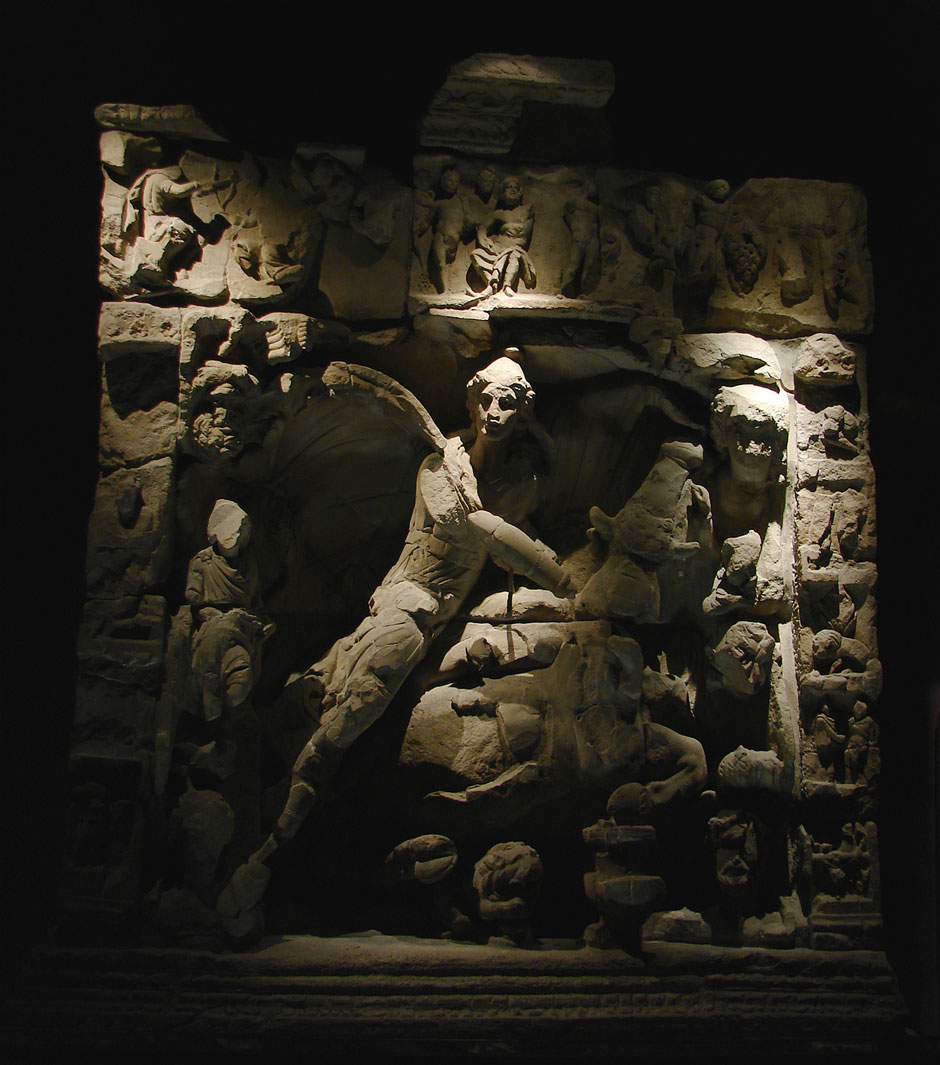
The Tauroctony of Saarbourg (Sarrebourg, ancient Pons Sarravi), France, contains most of Mithras deeds known in a single relief.

Soldier of the Legio XVI Flavia Firma Antoniana stationed at Dura Europos and known from a dedication to Zeus Helios Mithras and Tourmasgade.

An inscription found in the old monastery of San Giulia in Brescia (ancient Brixia), in the arch supporting the crypt of Santa Maria in Solario, recording a dedication to Deus Sol by the res publica.
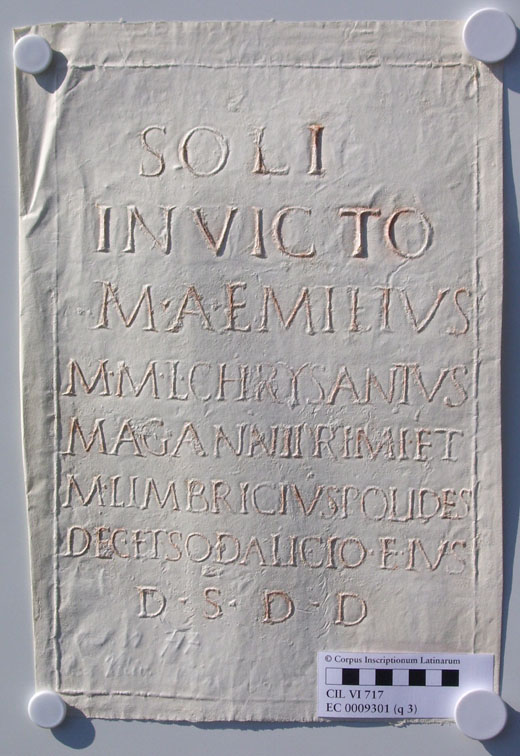
Aemilius Chrysanthus shares the expenses of this monument with a decurio named Limbricius Polides.
Marble base in poor lettering found in the church of S. Maria de Cacabariis in Rome, recording the dedication by M. Aurelius Victor, vir clarissimus and prefect of the Feriae Latinae, to his patron Iovinus Callidianus, priest of Sol.
