Your search Mark Alwin Hoffman gave 170 results.


Several fragmentary stone bases and altars without identifying marks, one of which has a semicircular hole in one of its sides, found in the Mithraeum at Pons Saravi (modern Saarburg) in Belgica.

This remarkable Greek marble relief of Mithras killing the bull was discovered in 1705 and remained in private collections until it was bought by the Louvre.
Tauroctony relief in the Museo Torlonia, Rome, remarkable for having a large ant grasping the testicles in place of the scorpion, with the raven on Mithras' flying cloak, the dog and serpent near the wound, and the busts of Sol and Luna in the upper corners; no torchbearers represented…

This remarkable marble relief from the end of the 3rd century was discovered in the most remote room of the Mithraeum in the Circo Massimo.
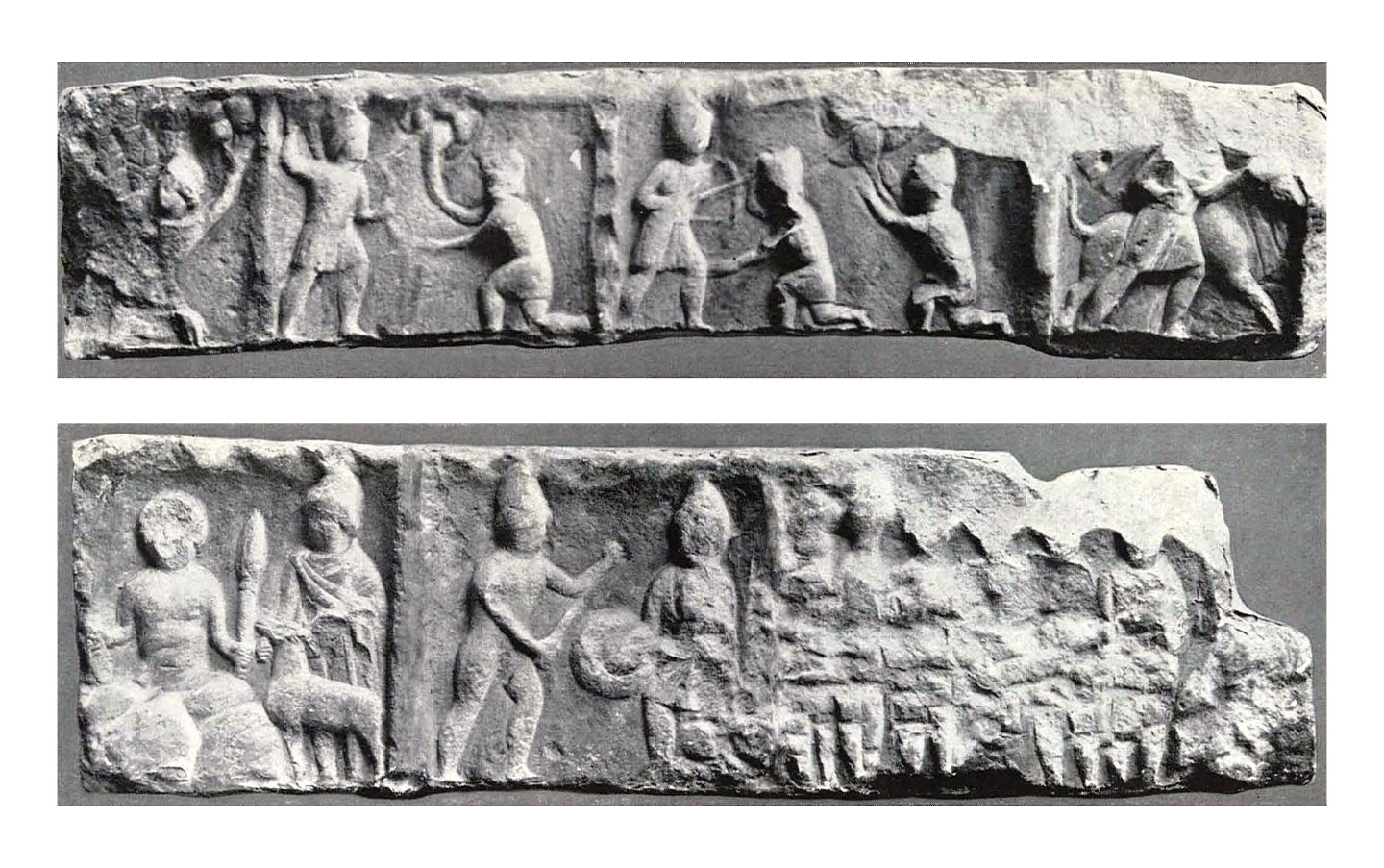
These two fragments of a sandstone relief were walled into a house on the market square in Besigheim.
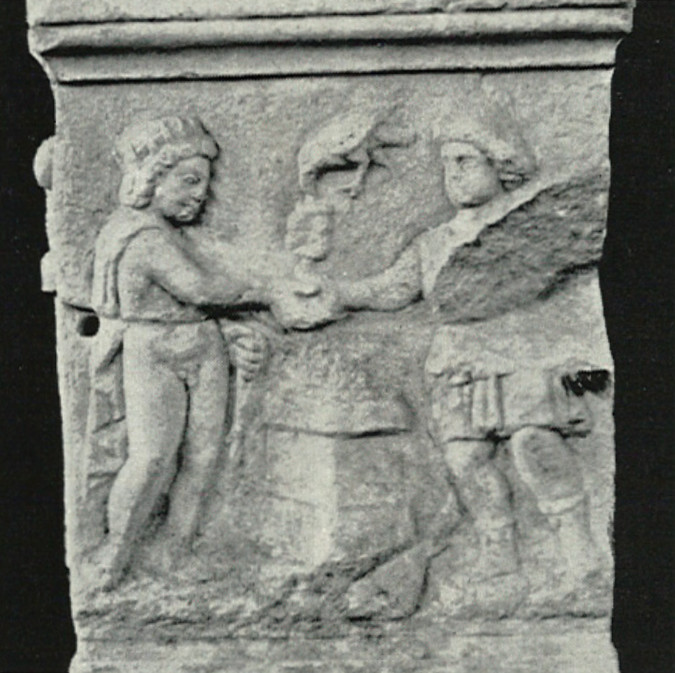
The altar of Ptuj depicts Mithras and Sol on the front and the water miracle on the right side.
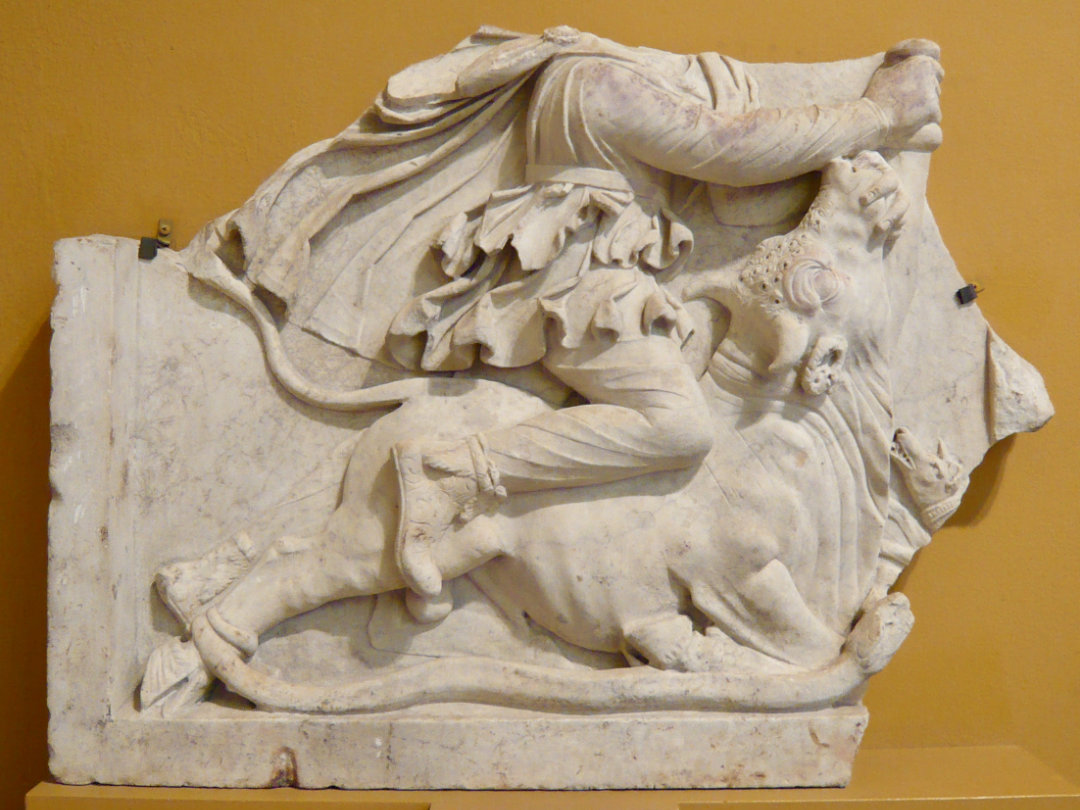
This fragmentary relief depicts Mithras killing the bull in the usual manner, remarkably dressed in oriental attire.

This catalogue proposes, thanks to the contributions of some 75 international experts, a new synthesis for a complex and fascinating cult that reflects the remarkable advances in our knowledge in recent decades.

Conversation with Peter Mark Adams on the occasion of the release of Ritual & Epiphany in the Mysteries of Mithras, by Theion Publishing.

Restoring the Mysteries: A Conversation with Peter Mark Adams on his new book ‘Ritual & Epiphany in the Mysteries of Mithras’.
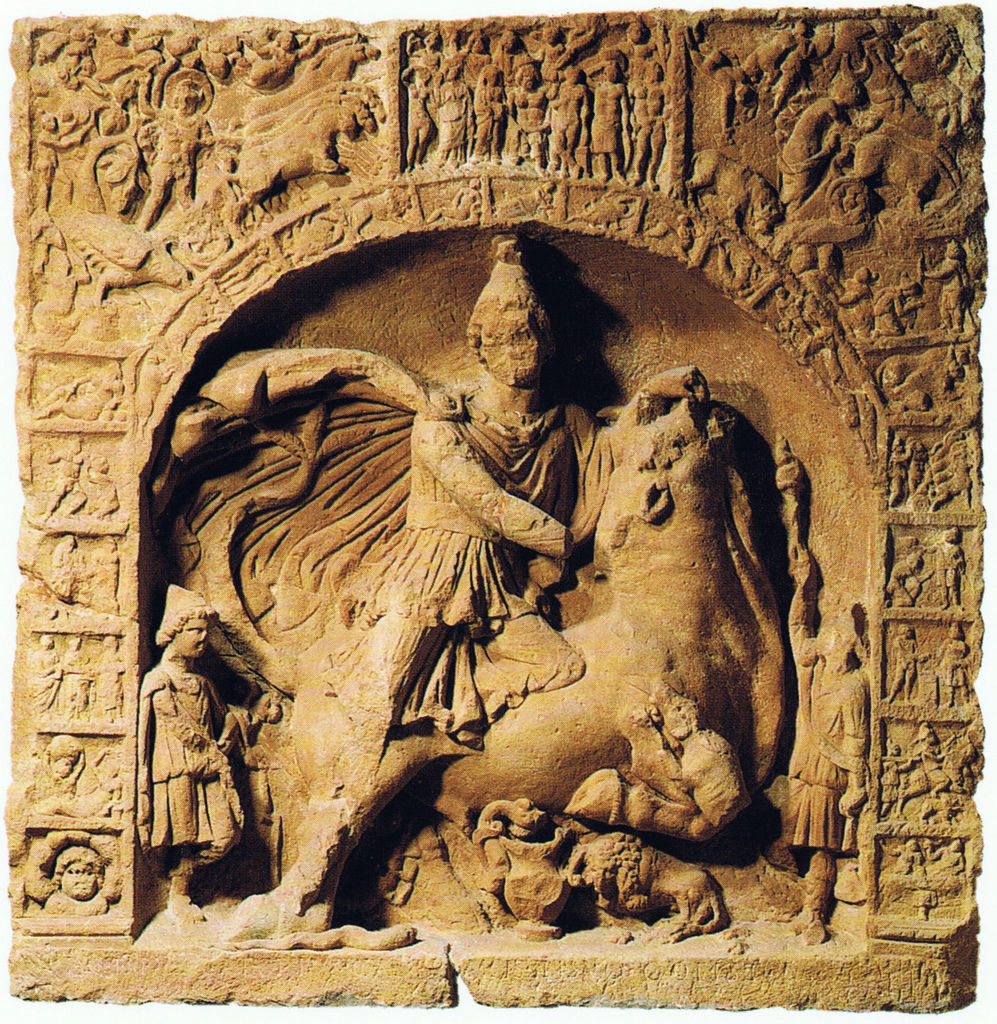
Franz Cumont considers the bas relief of Osterburken ’the most remarkable of all the monuments of the cult of Mithras found up to now’.

This remarkable marble statue of Mithras killing the bull from Apulum includes a unique dedication by its donor, featuring the rare term signum, seldom found in Mithraic contexts.
The Mithras temple of Prilep is in a small grotto under the castle of Markovi-Kuli.
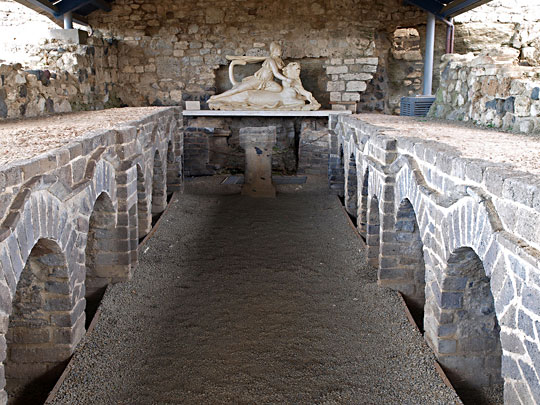
The Mithraeum of Vulci is remarkable because of his high benches and the arches below them.
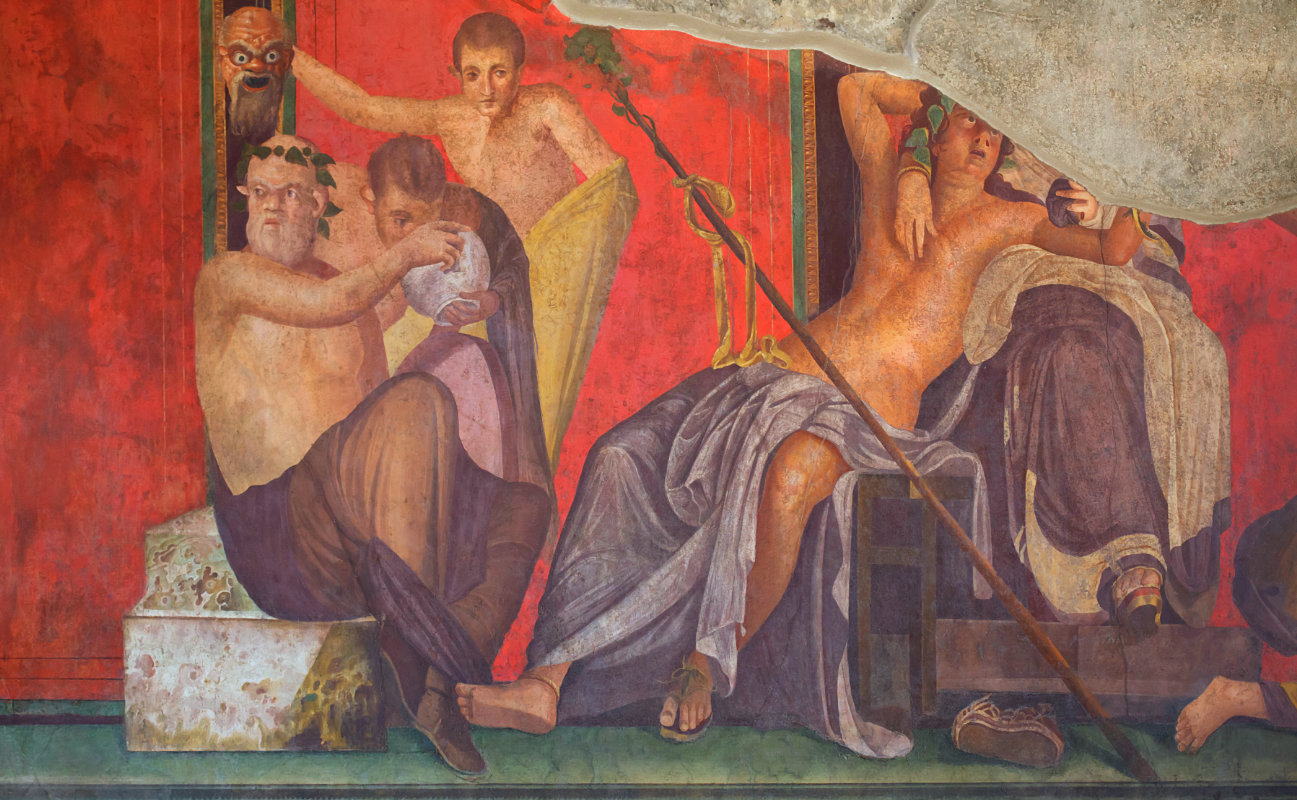
Peter Mark Adams: ‘The initiation was a frightening experience that caused some people to panic as a flood of otherworldly entities swept through the ritual space.’.
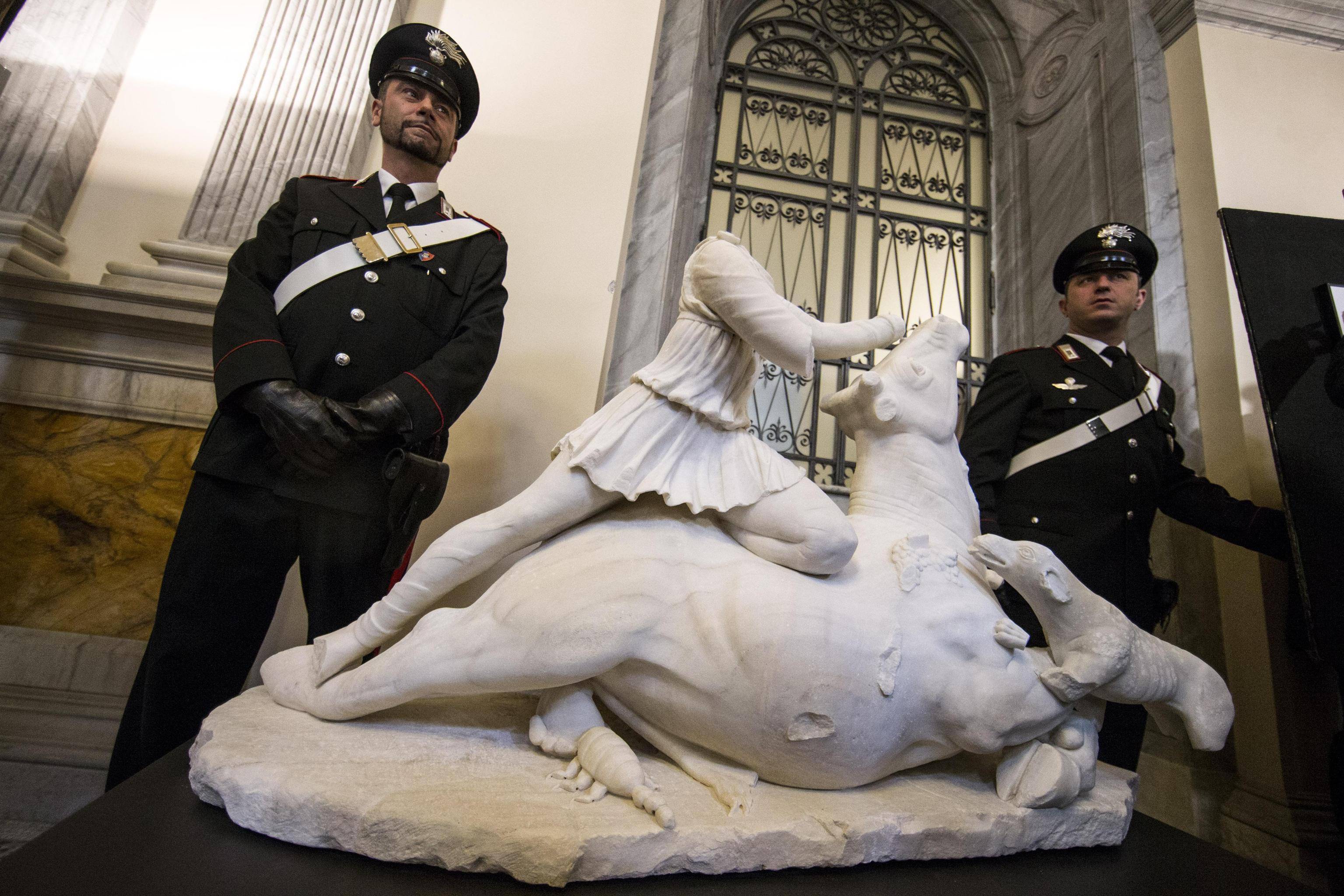
The Mithriac votive sculpture comes from a clandestine excavation in the Tarquinia area. The criminal chain is active in archaeological areas of Rome and southern Etruria.
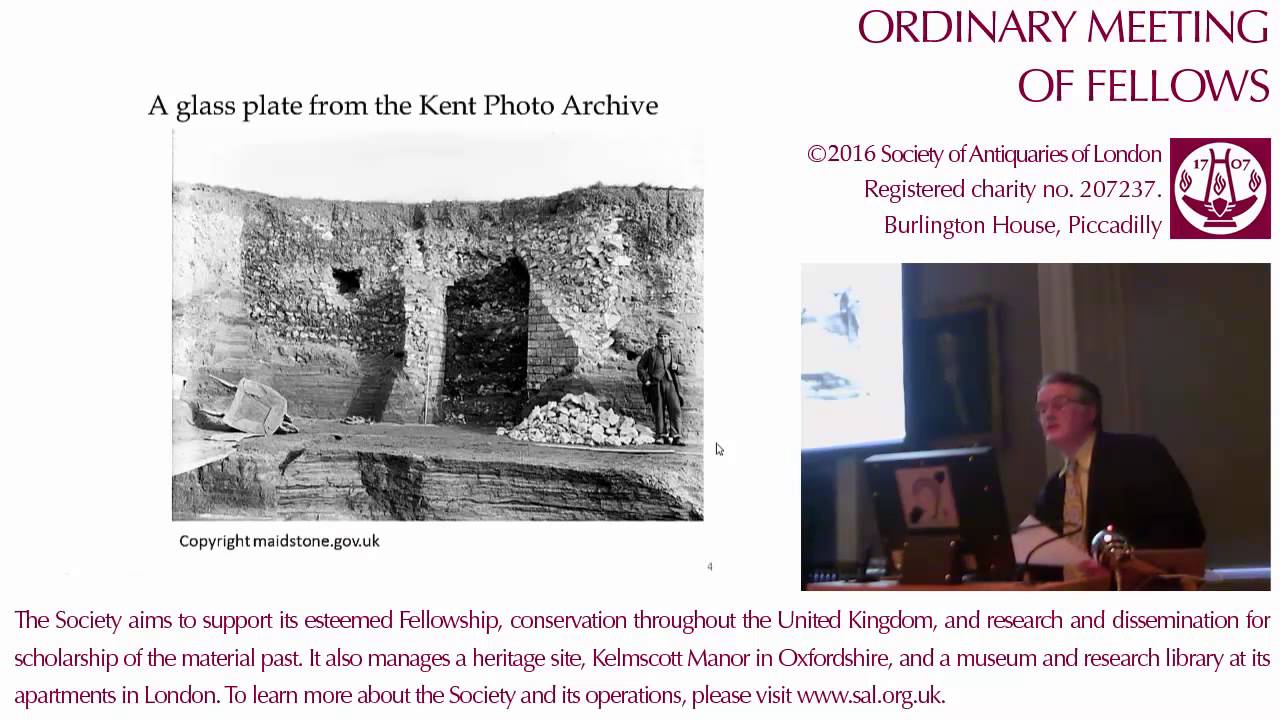
Presentation of the so-called Mithraeum of Burham by Mark Samuel at the Ordinary Meeting of Fellows of the Society of Antiquaries of London.
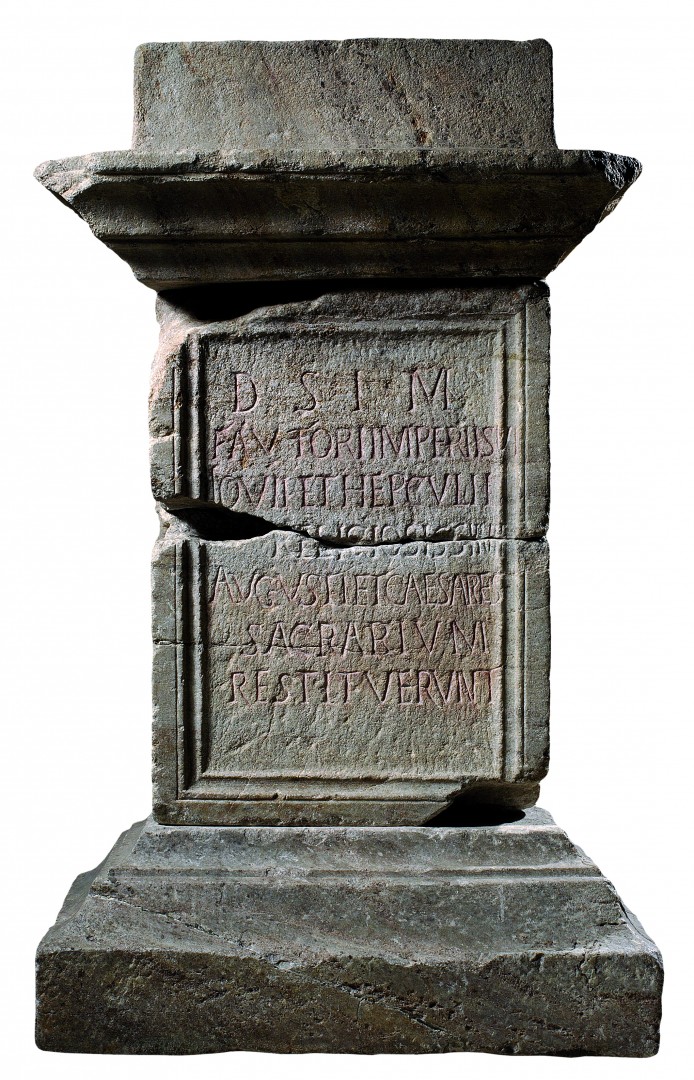
Altar with Cautes and Cautopates dedicated to Sol Invictus Mithras as protector of the Tetrarchy in 3rd-century Carnuntum.
