Your search Mit Rahina gave 2642 results.

Mosaic-paved floor of the central aisle of the Mitreo delle Sette Porte at Ostia, with a krater flanked by serpent and eagle, standing Jupiter and Saturn, torchbearers at the podia, and planetary gods Mars, Luna, Venus, and Mercury.
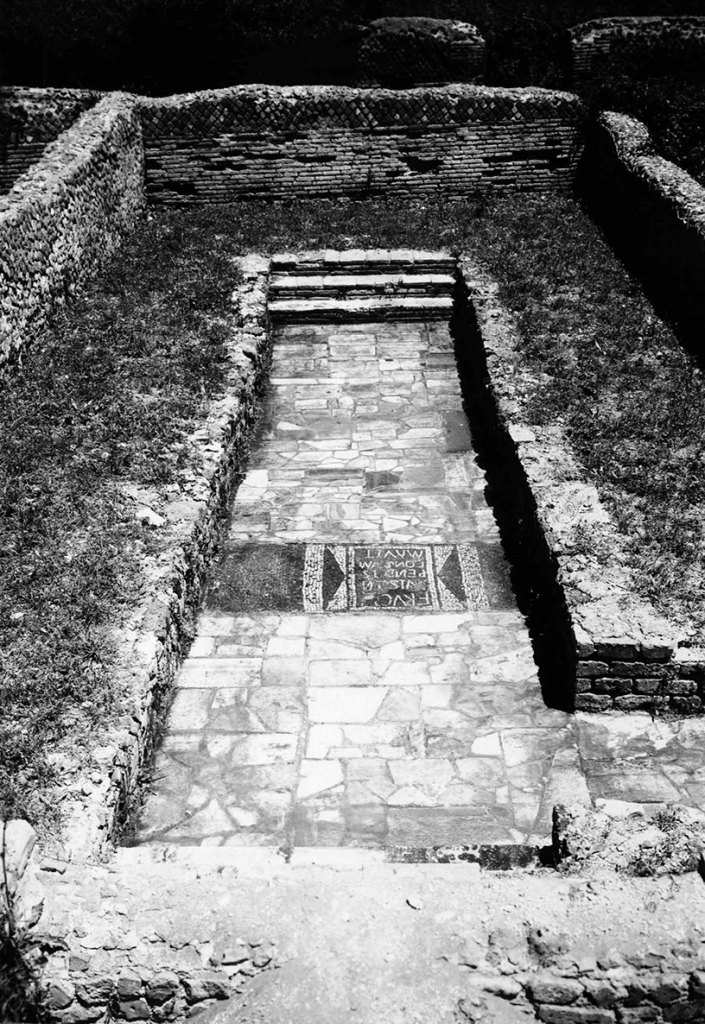
The Mithraeum of Sabazeus was found in one of the rooms of the Horrea built in the years 120 - 125 AD. The installation of the shrine may have taken place in the first half of the third century.

Mithraic sanctuary excavated in a quarry at Kreta near Nikopol, Moesia Inferior, carved into the rock and including a small niche with a sandstone tauroctony relief, a base, and several altars.
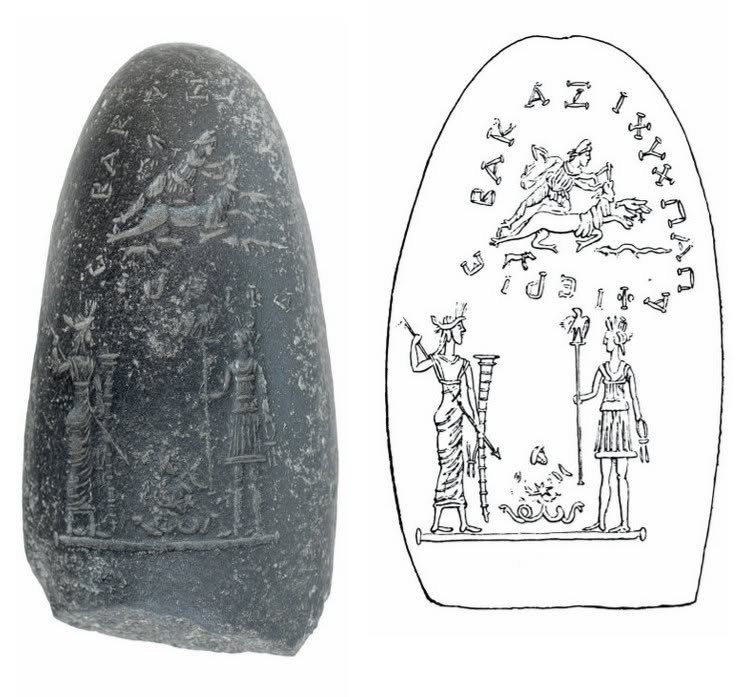
Black polished cone-shaped prehistoric axe from Argolis, now in the Athens National Museum, interpreted by some scholars as having Mithraic votive associations.
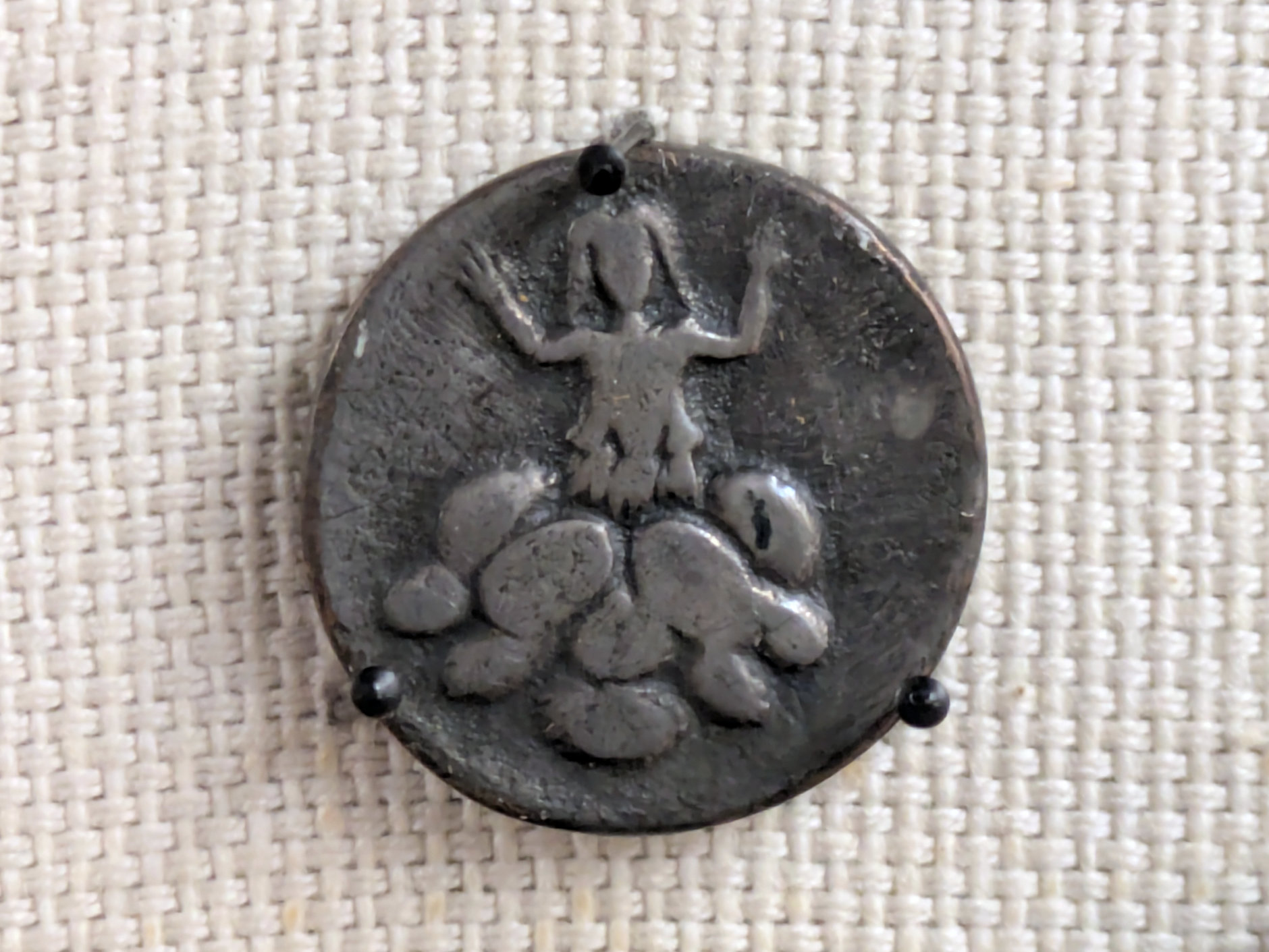
The mithraic denarius of St. Albans dates from the 2nd century.
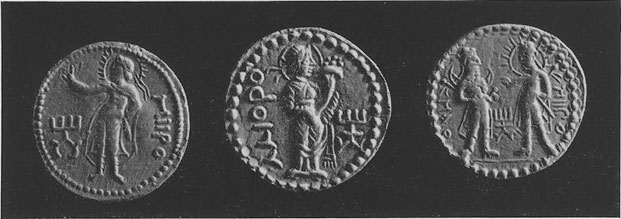
A gold coin depicting a bearded god with a crescent facing another god with a nimbus and a radiate crown, identified as Mithras by Vermaseren.
Bronze statuette bearing a Mithraic inscription, subsequently demonstrated by Anna Sadurska to be a modern forgery.
A small stone pedestal and the fallen statue of a seated Mother-goddess from the Mithraeum at Procolitia (modern Carrawburgh), depicting a figure of ungainly proportions enfolding in her arms a basket resting on her knees, found in the corner behind the screen at the east end of the temple…
The inscription on the decorated altar No. 839 from the Mithraeum at Vindobala (modern Rudchester), recording a gift to the Deity by L. Sentius Castus, a soldier of the Sixth Legion.
A decorated altar from the Mithraeum at Vindobala (modern Rudchester), with the letters DEO crowned with vittae on the shaft, surrounded by palm-branches, a representation of Mithras' rock-birth on the capital, and on the front of the die a naked figure grasping a bull's horns…
A marble fragment with an inscription in a tabula ansata from the Mithraeum at Walbrook in London, reading [Au]gggg(ustis) invicto..., a dedication to the Invincible probably addressing multiple emperors.
An altar in the shape of a mystic chest found at Aquileia in 1828, inscribed with a brief dedication to the Deity Mithras Sol.
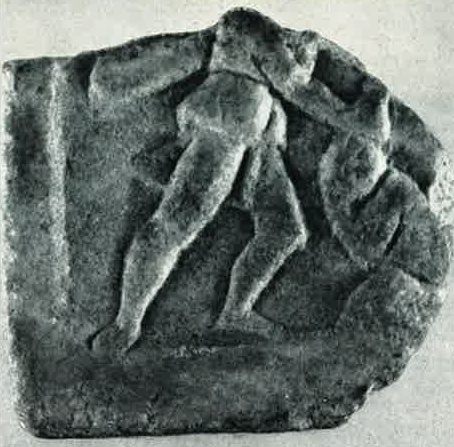
Marble relief fragment from Dacia, depicting Mithras placing a Phrygian cap on the kneeling Sol — one of the more unusual variants of the Mithraic iconographic programme.
Two limestone statue fragments from Mithraeum II at Aquincum, Pannonia Inferior, representing Mercury in a shoulder-pinned garment with wings in his hair; probably stood in room A on base y.
A scholarly note recording that the concentration of Mithraic finds at Interanum (modern Entrains-sur-Nohain) in Lugdunensis indicates the existence of one or more Mithraea there, with stone heads in the Delimoges collection possibly being Mithraic representations…
A fragment of a stone relief from Interanum (modern Entrains-sur-Nohain) in Lugdunensis, preserving only the head of Mithras in his Phrygian cap and vague remnants of the flying cloak.
An inscription on the base CIMRM 940 from Interanum (modern Entrains-sur-Nohain) in Lugdunensis, recording a dedication to Augustus and to the unconquered god Mithras Sol, made by a dedicant named Castor.
A suggestion by H. Corot that a Mithraeum may have existed near the sources of the Seine (ancient Sequana) in Lugdunensis, a hypothesis awaiting archaeological confirmation.
A funerary inscription from Besançon (ancient Vesontio) in Belgica, bearing the title mater sacrorum, but correctly excluded from the Mithraic corpus, as women were barred from Mithras sanctuaries.
A dedication to the unconquered and propitious Sol Invictus Mithras, made by a priest named M. Pompeius on behalf of the divine house, the most sacred council, and the devout inhabitants of the colony of Elusatium (modern Eauze) in Aquitania.
