Your search Mit Rahina gave 2641 results.

A marble altar found in 1873 between the Baths of Diocletian and the Via di Porta Pia in Rome, dedicated to Sol Invictus Mithras by Sextus with Titus Flavius Ianuarius as antistes.

Mithraic relief from Rome reproduced in figure 169 of the corpus.

Roman Mithraic relief illustrated in figure 171 of Vermaseren’s catalogue.
Small marble arula found near the church of SS. Apostoli in Rome, bearing a brief Greek dedication to Helios Mithras Invictus.
Marble head in the Museo Baracco, Rome, generally described as an Alexander but very probably representing Mithras with his eyes lifted towards heaven; the back of the head is finished obliquely with a small hole for fastening a Phrygian cap.
Fragment of a relief from the Villa Wolkonsky showing the usual representation of Mithras slaying the bull, with the dog, serpent and scorpion; the bull's head, Mithras' head and right foot are lost.
Marble relief formerly in the Palazzo Alberoni and then the Palazzo Vaccari on Via del Tritone, showing Mithras slaying the bull with the raven on the god's cloak, the serpent, dog and scorpion, and the busts of Sol and Luna in the upper corners.
Large limestone jar from room Z of the S. Prisca Mithraeum, fitted with a small cylindrical vase and a lid bearing the graffito "Te cauterio i Saturne i Ata[r i] Opi".
Mithraic object or evidence from Rome reported as no longer preserved.

Roman building on the Aventine between the eastern side of S. Saba and Via Salvator, probably used as a Mithraeum at the end of the 4th century, with a long corridor bearing three semicircular niches and a large external basin.
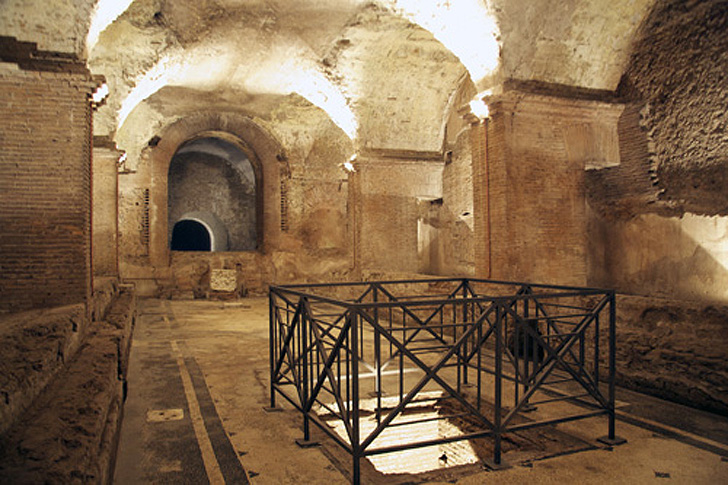
The Mitreo delle terme di Caracalla is one of the largest temples dedicated to Mithras ever found in Rome.
Wall-painting of Mithras tauroktonos in fresco, discovered in 1886 in an underground room of the house of the Nummi Albani on the Quirinal (Via Firenze); the god wears a red cap and tunic, the torchbearers wear yellow or orange tunic and cap with green or brown anaxyrides…
Small semi-round base found on the Monte Quirinale in Via Mazzarini, from a small Mithraeum, with a dedication to Mithras by T. Camurenus Philadelfus through Nonius Firmus pater.
Lower part of a candelabrum-shaft in the form of a palm trunk on an acanthus base, with a dedication to Mithras by T. Aelius Iustus on three faces of the plinth, found between the churches of SS. Eusebius and Vitus, Rome.
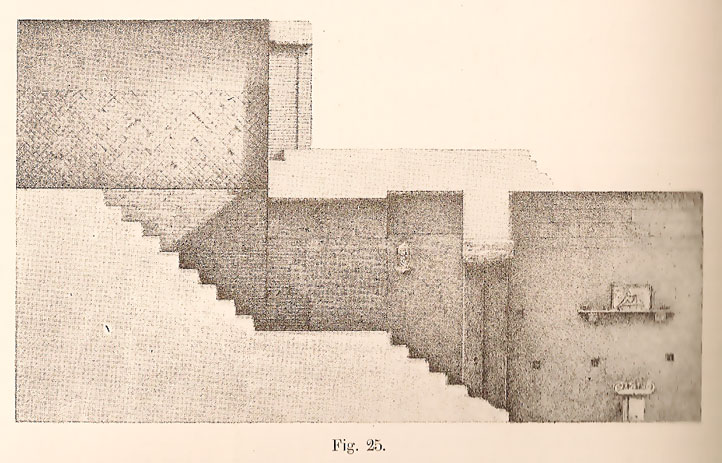
In a house from the time of Constantine, a Lararium was found with a statue of Isis-Fortuna. The Mithraeum was a door next to it, on a lower room.
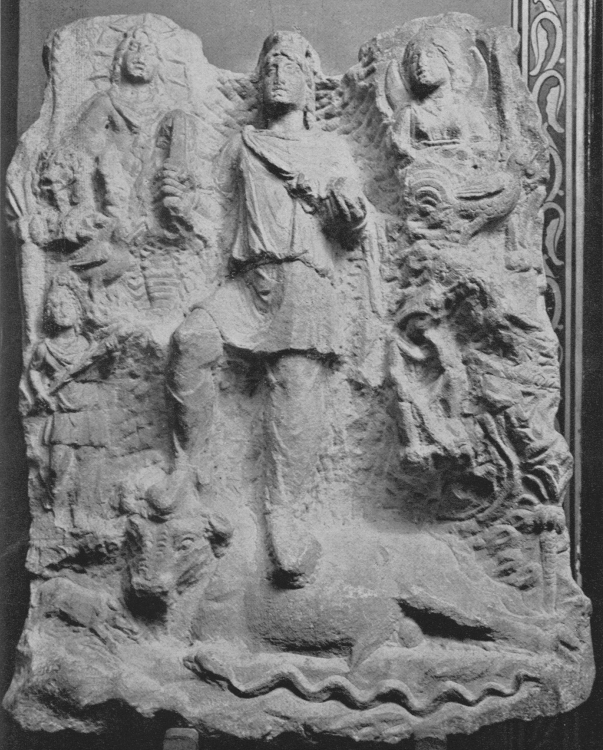
This unusual representation of Mithras standing on a bull was kept in the Casino di Villa Altieri sul Monte Esquilino until the 19th century.
Marble plate inscription dedicated to Deo Soli Invicto Mithrae for the wellbeing of Emperor Commodus, dated 180-192 A.D., from Aïn-Tekria.
Small Mithras relief found in the upper layer of the tophet at Carthage by Cintas in 1949.
Statuettes of eastern deities including Mithras, found in a walled compartment near a Punic cemetery at Duimes, Carthage.
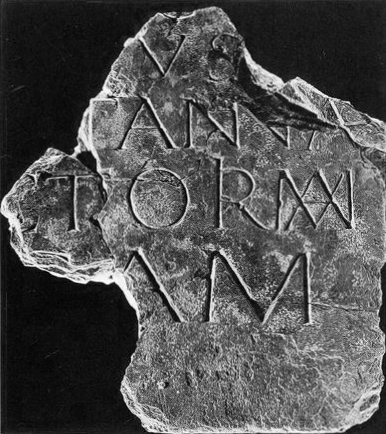
Archaeological material from the Mithraeum of Londinium discussed in Hill’s study of Roman London.
