Your search Pantelimon de Sus gave 223 results.

The image of the god Arimanius to which this monument refers has not yet been found.
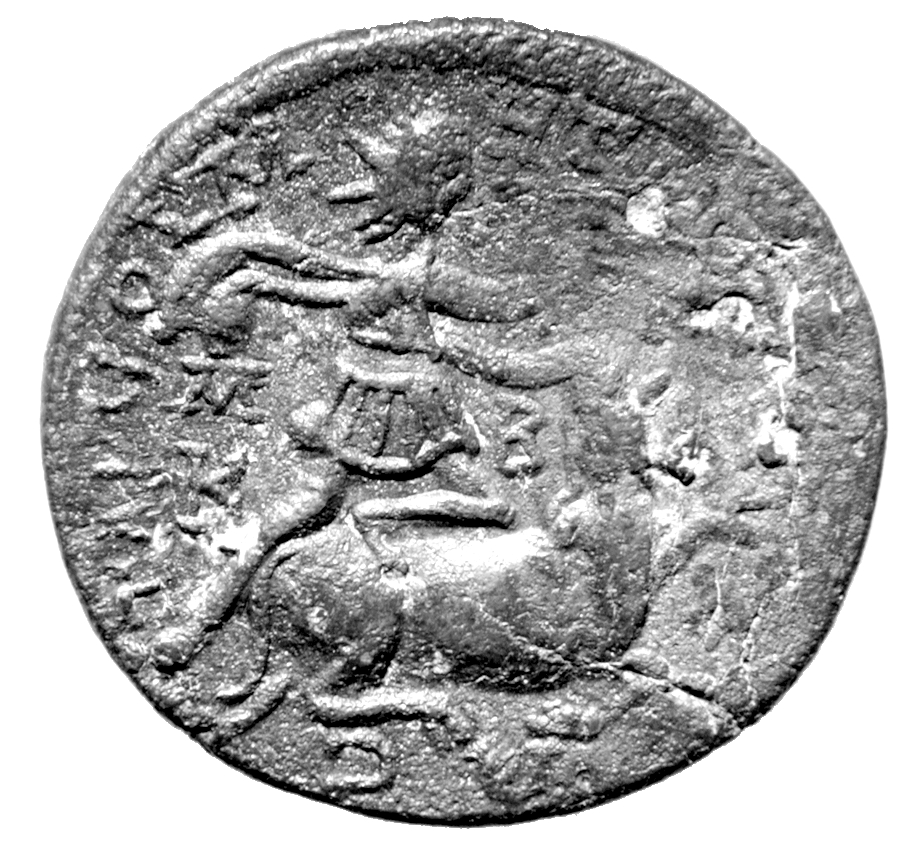
The bronze medallion, from Cilicia, shows Mithras Tauroctonus on the revers.


Early Mithraic Leo from Novae whose name has been associated with the honey symbolism of the leonine grade.

Pater sacrorum attested in a funerary inscription from Murviel-lès-Montpellier, probably connected with the Mithraic community of Nemausus.

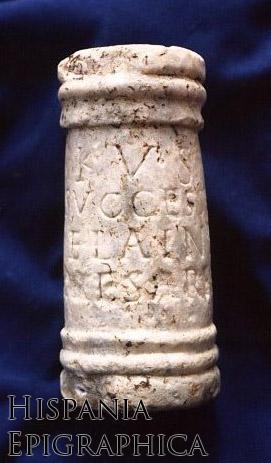
A large inscription from Olisipo (modern Lisbon), recording a dedication to the Eternal Sol and Luna for the perpetuity of the empire and the welfare of Septimius Severus, Caracalla and Geta, executed under the supervision of Drusus Valerius Coelianus and others, dated to the Severan period…
Inscription from Oarda de Sus near Apulum, Dacia, dedicated to Invicto Mithrae by Potinus ex voto.
A white marble tauroctony statue fragment in the Palazzo Corsini in Florence, possibly from the Florentine area, heavily restored, with the upper body of Mithras and the bull's hind quarter with scorpion preserved but hind-legs lost and the god's head replaced by a petasus…
Fragments of a green-glazed maiolica krater with silver sheen, probably decorated with a dodekatheon showing Minerva, Jupiter, Dionysus, and Hercules, from the Mitreo delle Sette Porte at Ostia.

Roman military and religious settlement in Chersonesus Taurica occupied between the 1st and 4th centuries CE, associated with the castellum of Characis.
Susa was an ancient city in the lower Zagros Mountains about 250 km east of the Tigris, between the Karkheh and Dez Rivers in Iran.
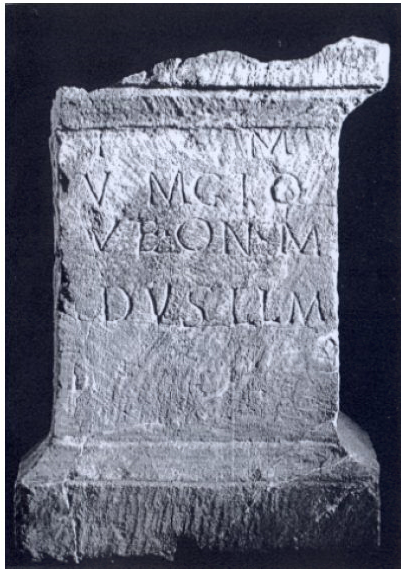
This fragmented monument bears an inscription of a certain veteran named Valerius Magio.
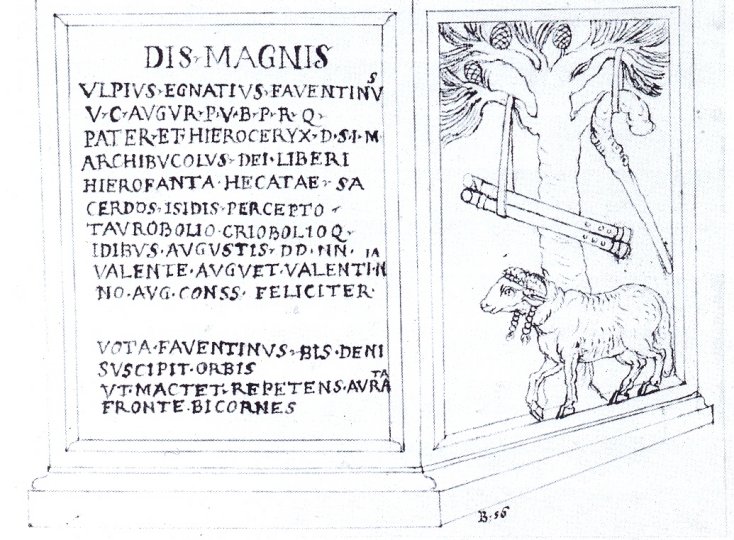
Both of them were discovered in 1609 in the foundations of the façade of the church of San Pietro, Rome.

