Your search Pantelimon de Sus gave 223 results.

A funerary cippus, dated to the 2nd–3rd century, commemorating Publius Anthius Logus, pater sacrorum, and erected by Cornelia, daughter of Lucius, found at Sextantio near modern Montpellier in Narbonensis.

This sandstone altar from the Mithraeum of Vindobala (modern Rudchester) preserves a dedication to the Invincible Mithras by P. Aelius Titullus, prefect of a cohort.
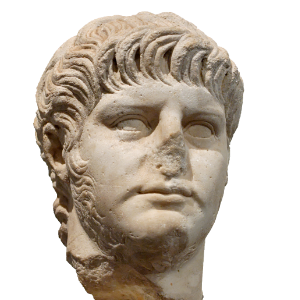
Roman emperor whose ceremonial reception of Tiridates I of Armenia established one of the earliest recorded links between Mithras and the Roman imperial court.
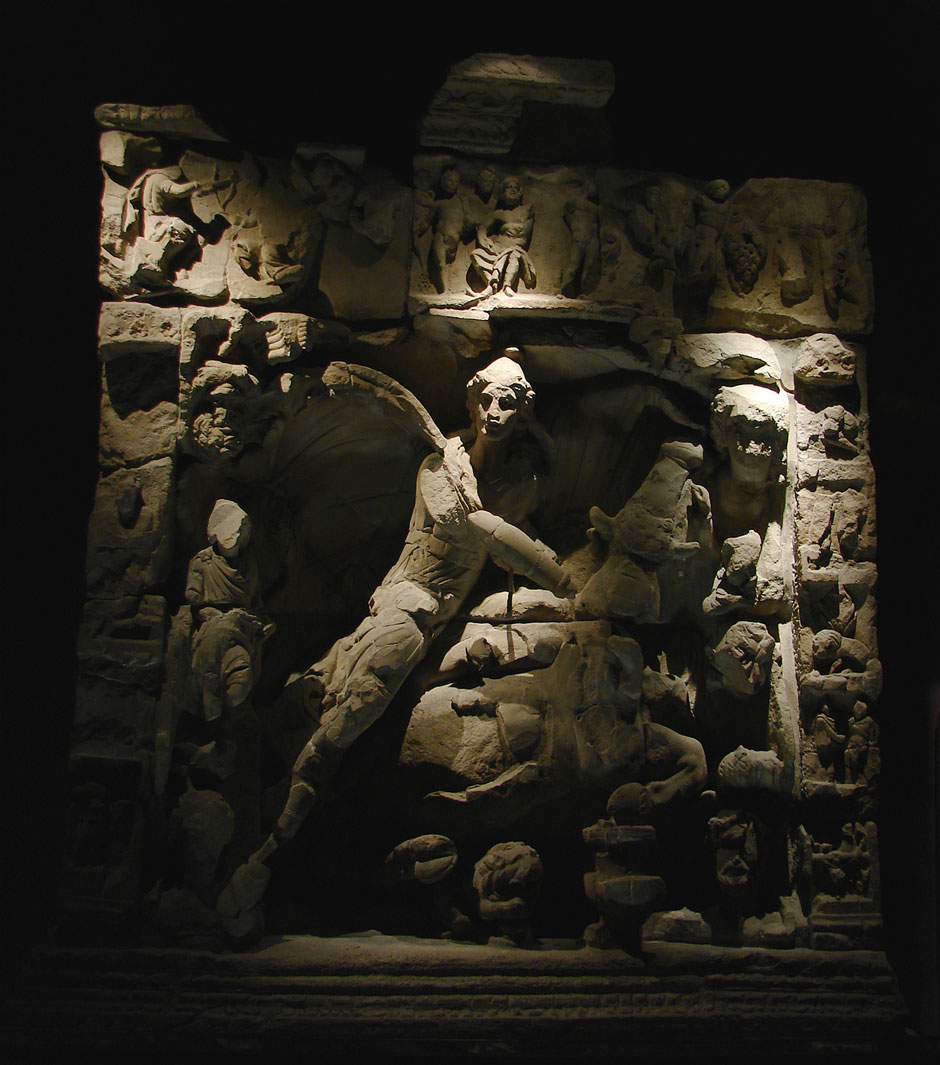
The Tauroctony of Saarbourg (Sarrebourg, ancient Pons Sarravi), France, contains most of Mithras deeds known in a single relief.
An inscription to Sol Invictus Mithras found in the Vigna Patritii outside the Porta Pia in Rome, dedicated by Aelius Victorinus, a veteran of the emperors honourably discharged, with M. Aurelius Romulus as antistes and sacerdos of the cult.

Mithraic relief from Rome reproduced in figure 169 of the corpus.
Greek inscription dedicated to Sol Invictus Mithras by Balbillus, saved from the waters, in the presence of Bassus the priest, belonging to the Mithraic grade of Leo.
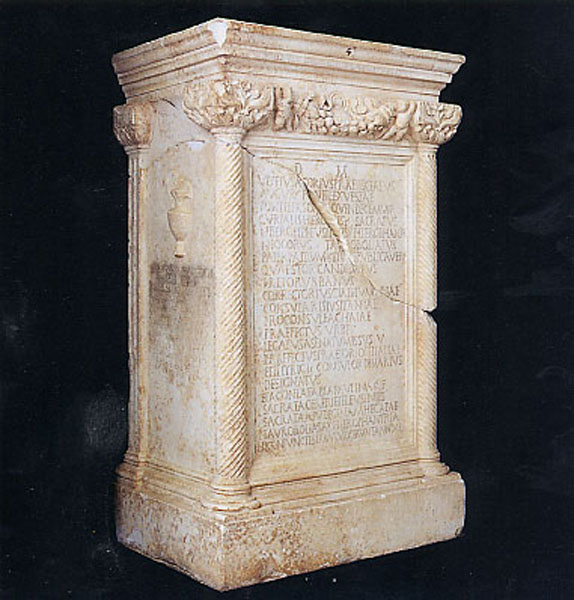
The marble altar mentions Vettius Agrorius Praetextatus as Pater Sacrorum and Patrum and his wife Aconia Fabia Paulina.

This remarkable Greek marble relief of Mithras killing the bull was discovered in 1705 and remained in private collections until it was bought by the Louvre.
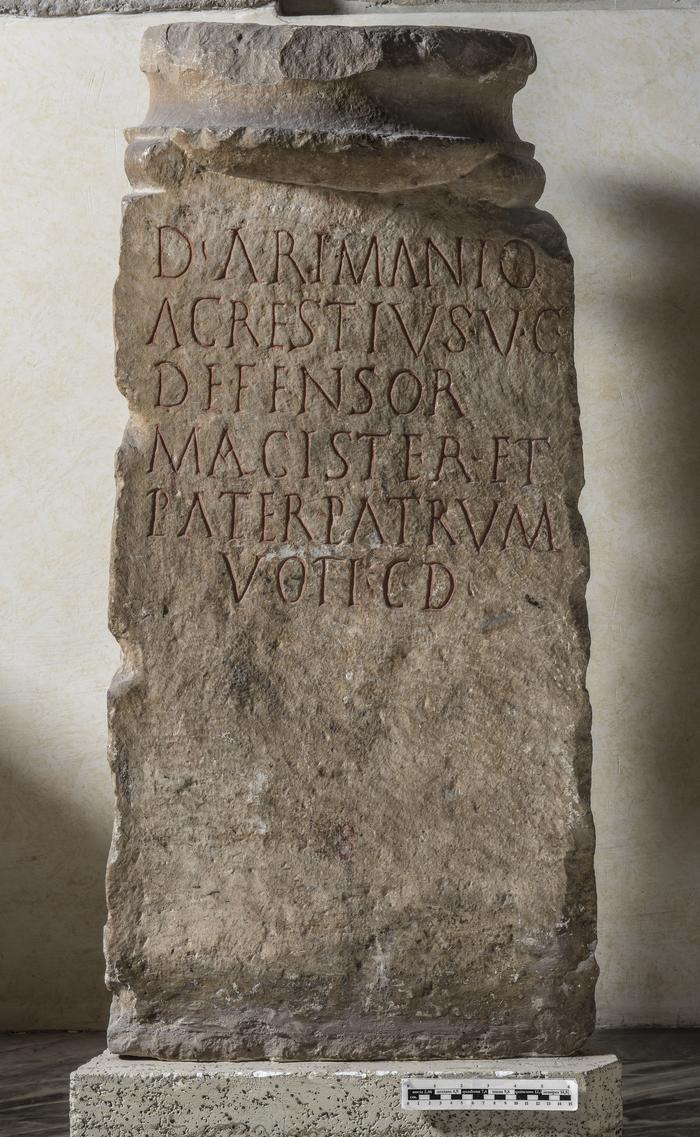
This altar mentioning the god Arimanius was found in 1655 at Porta San Giovanni, on the Esquilino.
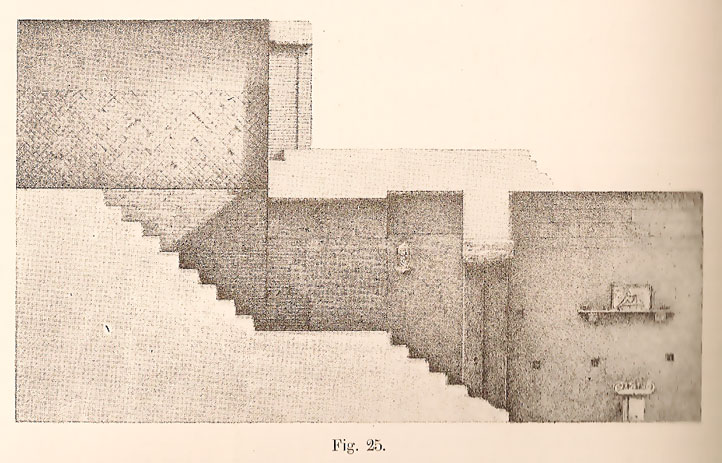
In a house from the time of Constantine, a Lararium was found with a statue of Isis-Fortuna. The Mithraeum was a door next to it, on a lower room.
.jpg)
This limestone statue of Cautes is now exposed at Great North Museum of Newcastle.
One of the rooms in a sustantive masonry building in Hollytrees Meadow was considered to be a Mithreum, a theory that has now been discarded.
Third-century sepulchral inscription from near Philippi, Macedonia, studied for its Mithraic content in the upper lines of the text.
Inscription from Lopata, Moesia Superior, recording that Apollonides, imperial slave and scrutator of the statio Lamud, restored a Mithraic temple that had collapsed through age at his own expense; dated to the consulship of Gentianus and Bassus, AD 211.
Inscribed altar from Lengfeld near Aschaffenburg dedicated to Numini augusto deo invicto by Caius Atulius Maior ex voto
Large inscribed altar from Lengfeld near Aschaffenburg dedicated to Numini augusto Soli deo invicto by Lucius Trougillus ex voto
Inscribed altar from Gross-Krotzenburg dedicated to Deo Soli invicto Mithrae by Iulius Macrinus, immunis of Legio VIII Augusta
Small marble altar from the house of the guardian of the Cancelleria in Rome, dedicated to Sol Sacrum in fulfilment of a vow by C. Iulius Helius, a blacksmith, decorated with a urceus on the left and a patera on the right.
Marble altar in the Museo Capitolino, Rome, bearing a bust of Sol and a dedication by P. Aelius Amandus, a soldier of the equites singulares Augusti, in fulfilment of a vow on receiving his honourable discharge, dated to 158 A.D.
