Your search Petronell-Carnuntum gave 70 results.

Carnuntum was a Roman legionary fortress and headquarters of the Pannonian fleet from 50 AD. After the 1st century, it was capital of the Pannonia Superior province. It also became a large city of 50,000 inhabitants.
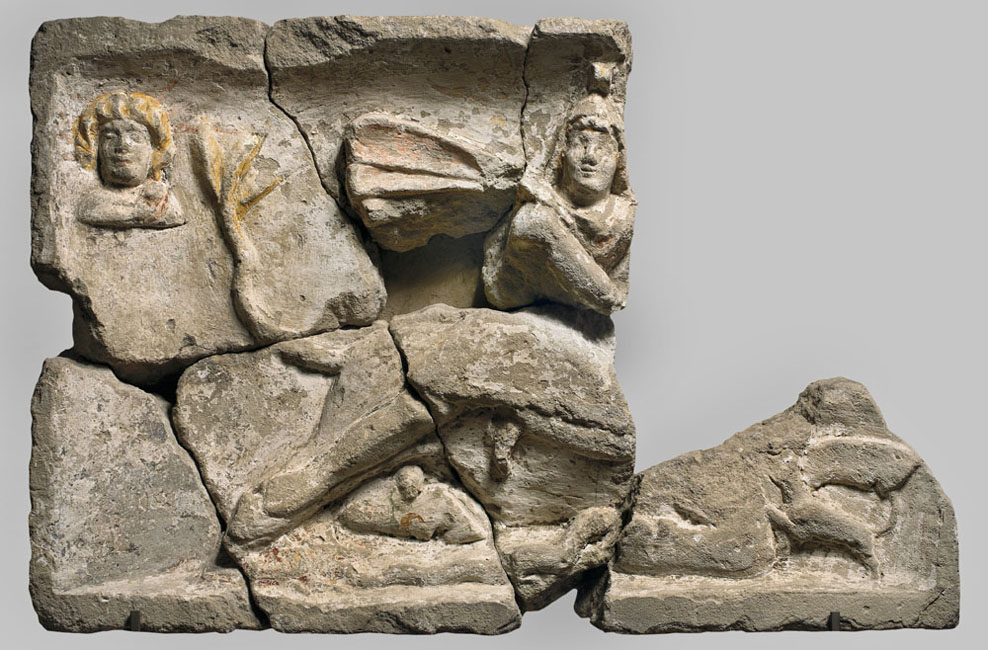
Sandstone relief of Mithras as bull-slayer, found at Petronell in 1932, with dog, serpent and scorpion, traces of polychromy preserved, now in the Museum Carnuntinum.
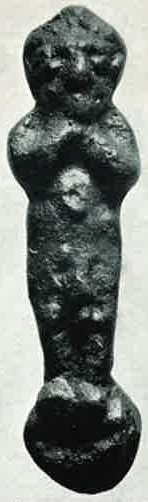
Bronze fibula from Petronell-Carnuntum, depicting a standing lion-headed Aion.
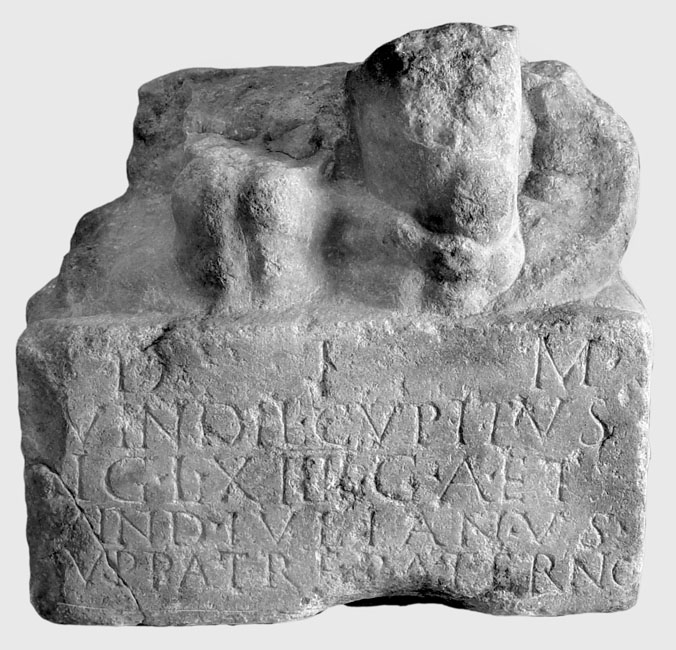
Only parts of the knees of Mithras, emerging from the rock, have been preserved from this monument of Petronell-Carnuntum, Austria.
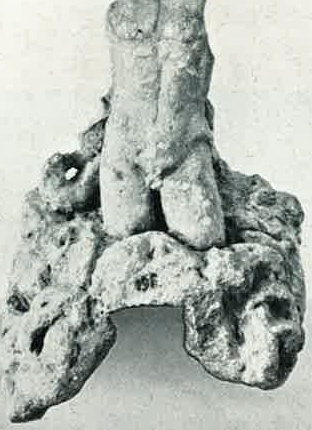
Sandstone petrogenesis from Petronell-Carnuntum (Lower Austria), depicting Mithras emerging from the rock, preserved from the knees upwards.

The second temple devoted to Mithras in Carnuntum is situated besides a Jupiter's temple.
Mithraeum III found in the west part of Petronell near Hintausried in August 1894 by J. Dell and C. Tragau.
According to the scarcely detailed design of von Sacken, the lay-out of the temple must have been nearly semi-circular.
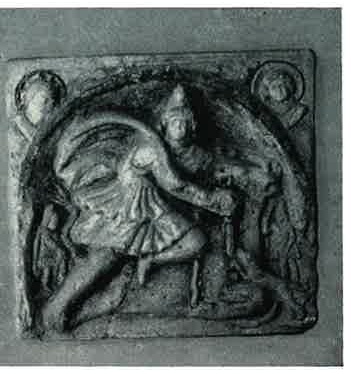
Marble tauroctony relief from Petronell, ancient Carnuntum in Pannonia Superior, with the bull's tail ending in corn-ears; no scorpion is depicted, and Cautes holds the upraised torch.
Altar from Petronell, ancient Carnuntum, Pannonia Superior, dedicated to Soli by Quintus Cottius Lalus.
Altar from Petronell, ancient Carnuntum, Pannonia Superior, dedicated to Soli divino ex visu by Lucius Aelius Leo — possibly the same individual who dedicated a further altar identifying himself as a miles of Legio XIIII Gemina.
Small altar from Petronell, ancient Carnuntum, Pannonia Superior, dedicated to Mithras (spelt Motre) by Caius Rip-, who made the altar as merited; the garbled spelling suggests a non-Latin speaker.
Altar from Petronell, ancient Carnuntum, Pannonia Superior, dedicated to Deo invicto Mithrae by Aurelius, whose name is only partially preserved.
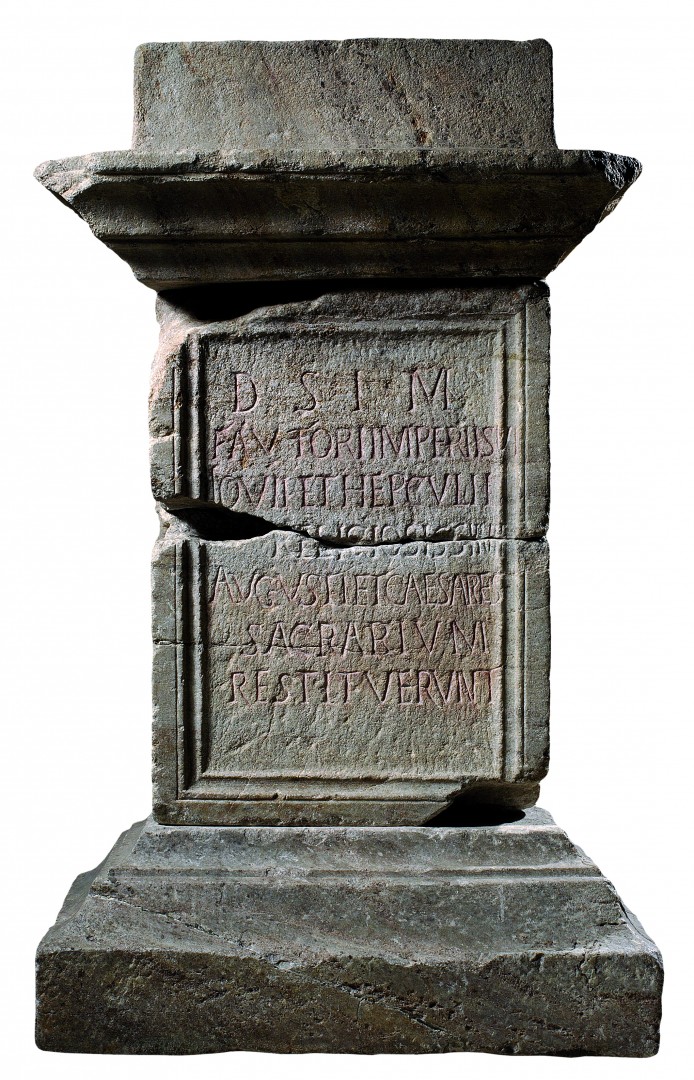
Altar with Cautes and Cautopates dedicated to Sol Invictus Mithras as protector of the Tetrarchy in 3rd-century Carnuntum.
Altar from Carnuntum, Pannonia Superior, dedicated to the Transitus — the Mithraic transit ritual — by Caius, an association also attested at Brigetio and Poetovio.
Lost inscription from Carnuntum, Pannonia Superior, dedicated to Soli invicto deo by Quintus Livinius Senecio, veteran of Legio XIIII Gemina; dated to the second or third century.
Votive altar from Carnuntum, Pannonia Superior, dedicated to Deo invicto Mithrae sacrum by Ulpius Vitalis pancrestarius — a term denoting an athlete or performer, possibly in the context of Mithraic initiation rites.
Sandstone altar from Carnuntum, Pannonia Superior, found near the theatre in 1890, dedicated to Deo Soli by Aurelius Exuperatus.
Sandstone altar from Carnuntum, Pannonia Superior, dedicated to Soli deo by Iulius Iulianus.
Small sandstone altar from Carnuntum, Pannonia Superior, dedicated to Deo Soli invicto by a dedicant whose name reads Sacellus; found in the Burgfeld in 1878.
