Your search Radcliffe G. Edmonds III gave 138 results.

Marble altar from Mithraeum III at Ptuj, ancient Poetovio, dedicated in honour of the Domus Divina to Deo invicto Mithrae by Ulpius Valerianus, veteran of Legio XIII Gemina.
Marble altar from Mithraeum III at Ptuj, ancient Poetovio, dedicated to Deo Soli invicto Mithrae for the welfare of Emperor Marcus Aurelius Severus Alexander and the Domus Divina by Aelius Aurelianus; dated AD 222–235.
Marble altar from Mithraeum III at Ptuj, ancient Poetovio, dedicated to Deo invicto Mithrae by Aurelius Sabinus, signifer of Legio XIII Gemina.
Marble altar from Mithraeum III at Ptuj, ancient Poetovio, dedicated to Deo invicto Mithrae by Aelius Secundus.
Marble relief fragment from Mithraeum III at Ptuj, ancient Poetovio, preserving the dog and part of the serpent approaching the bull's wound.
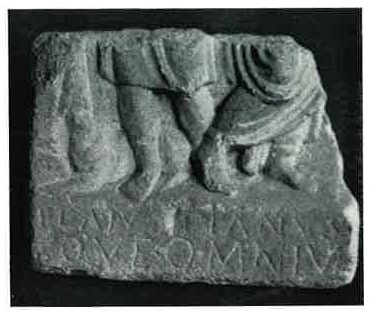
Marble relief fragment from Mithraeum III at Ptuj, ancient Poetovio, preserving part of Mithras's flying cloak and the scorpion below the bull.
Upper portion of a marble relief from Mithraeum III at Ptuj, ancient Poetovio, depicting a torchbearer in Phrygian cap.
Marble relief fragment from Mithraeum III at Ptuj, ancient Poetovio, preserving Cautopates with the torch pointing downward; head and feet are lost.
Marble relief fragment from Mithraeum III at Ptuj, ancient Poetovio, preserving the upper part of Cautes with his torch raised.
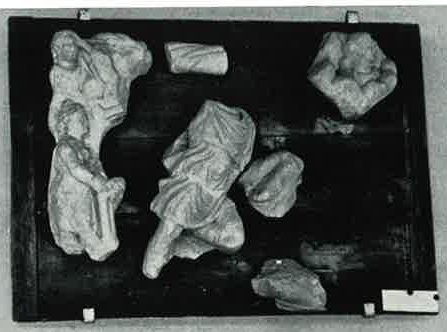
Marble tauroctony relief from Mithraeum III at Ptuj, ancient Poetovio, preserving Mithras killing the bull — head and most of the flying cloak lost — flanked by Cautopates holding the torch downward.
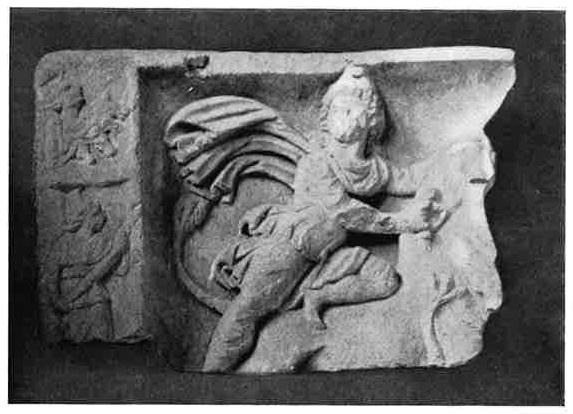
Marble tauroctony relief fragment from Mithraeum III at Ptuj, ancient Poetovio, notable for a three-headed serpent and a dog attempting to lick the blood; the bull's tail ends in three corn-ears.
Inscription from Mithraeum III at Ptuj, ancient Poetovio, recording that Sextus Vibius Hermes, Augustalis of the Colonia Ulpia Traiana Poetovionis, donated a silver signum with its base to Soli invicto Mithrae, with Lucius Vernasius Heraclida presiding as pater…
Marble stele from Mithraeum III at Ptuj, ancient Poetovio, tapering towards the top and bearing a square hollow with five nail-holes designed to hold a small silver plaque — the plaque was removed, perhaps taken by the Mithraists themselves.
Inscription from Mithraeum III at Ptuj, ancient Poetovio, dedicated to Deo Soli invicto Mithrae for the welfare of Legio V Macedonica and Legio XIII Gemina Gallienarum by Flavius Aper, vir egregius praepositus — dated to the reign of Gallienus, AD 260–268…
Damaged marble relief from Mithraeum III at Ptuj, ancient Poetovio, preserving Cautopates with torch downward on the right and the outline of a standing Cautes on the other side, with a fragmentary inscription in the lower border.
Corner of a marble altar from Mithraeum III at Ptuj, ancient Poetovio, dedicated to Deo Soli invicto Mithrae for the welfare of persons whose names begin Atti- and Saturni-; the rest, including the dedicant, is lost.
Fragment of a large marble cornice from Mithraeum III at Ptuj, ancient Poetovio, preserving only the beginning of the name Iulian- from the inscription below.
Small votive altar from Mithraeum III at Ptuj, ancient Poetovio, with an oblong hollow in the top, probably designed to hold a libation or ritual object.
Inscription from Mithraeum III at Ptuj, ancient Poetovio, dedicated to Invicto Augusto sacrum by an imperial slave serving as hereditatum tabularius — an officer for death-duties — one of the rarer administrative titles attested in Mithraic epigraphy.
Barbara-stone pedestal from Mithraeum III at Ptuj, ancient Poetovio, with a hollow and three attachment holes in the top indicating that a votive object was originally fixed to it.
