Your search Rohr im Kremstal gave 2036 results.

Flat marble base from Rome, with fragments of statue feet still resting on it, bearing a dedication to the Lord Sol in fulfilment of a vow by Claudius Amerimnus, a lictor curiatus.
Large limestone jar from room Z of the S. Prisca Mithraeum, fitted with a small cylindrical vase and a lid bearing the graffito "Te cauterio i Saturne i Ata[r i] Opi".
Preliminary readings of the painted Mithraic texts later revised after additional research and restoration.
This monument was erected on the occasion of the elevation of a member to the Mithraic grade of Perses.
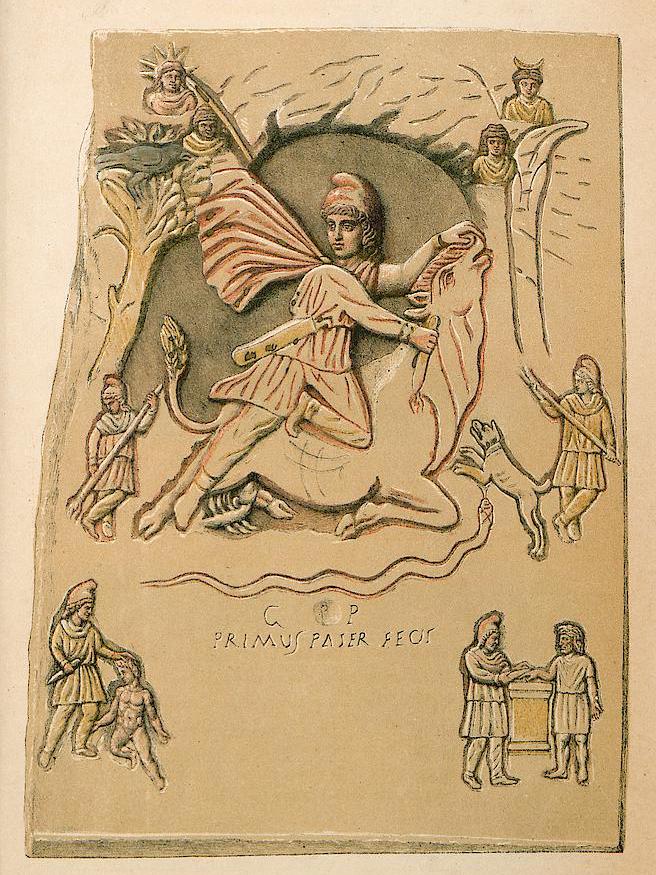
The relief of Mithras slaying the bull found on the Esquiline Hill includes two additional scenes with Mithras and two other figures.
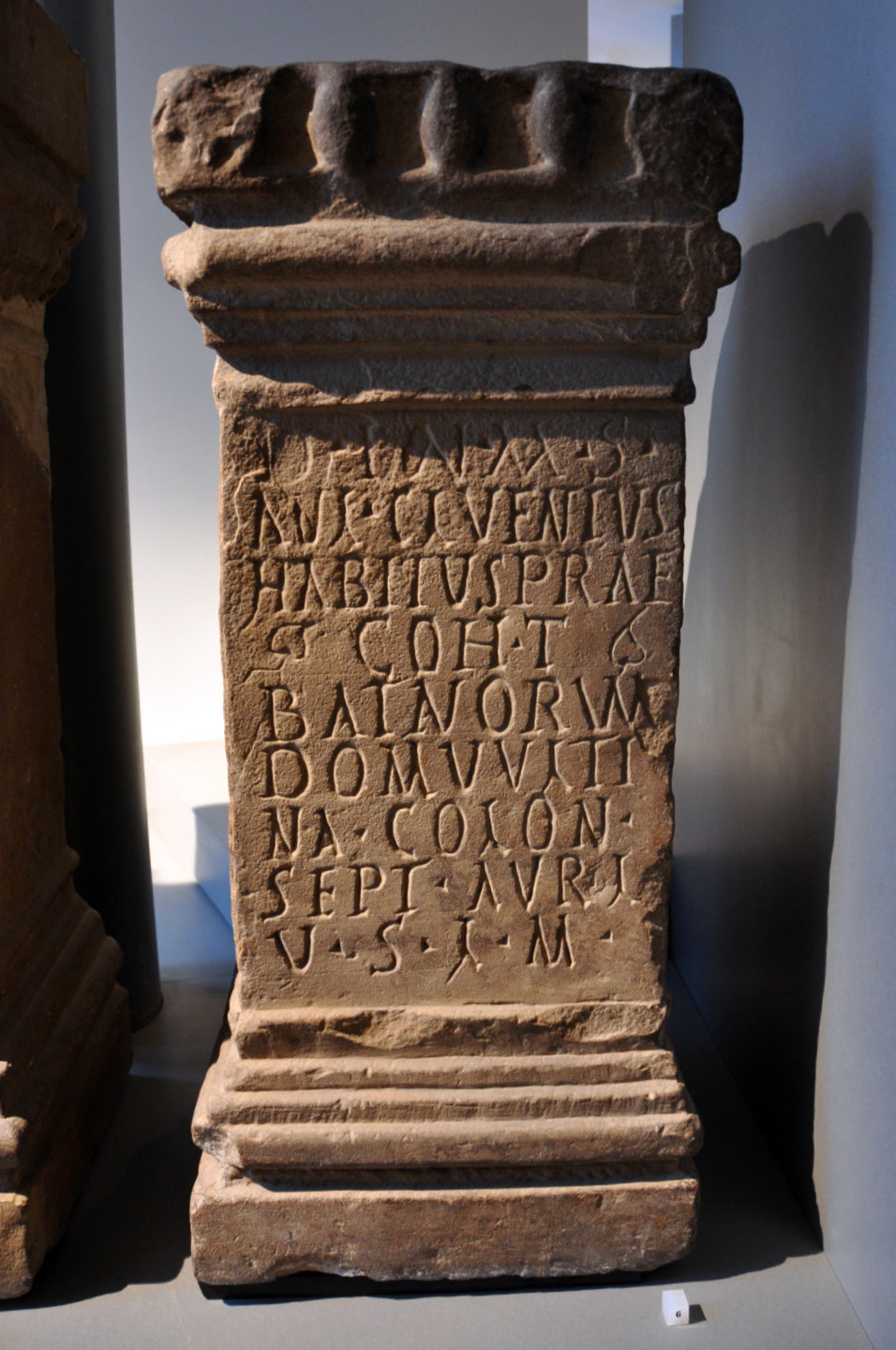
One of the three altars to Mithras found at the Mithraeum of Carrawburgh fort.
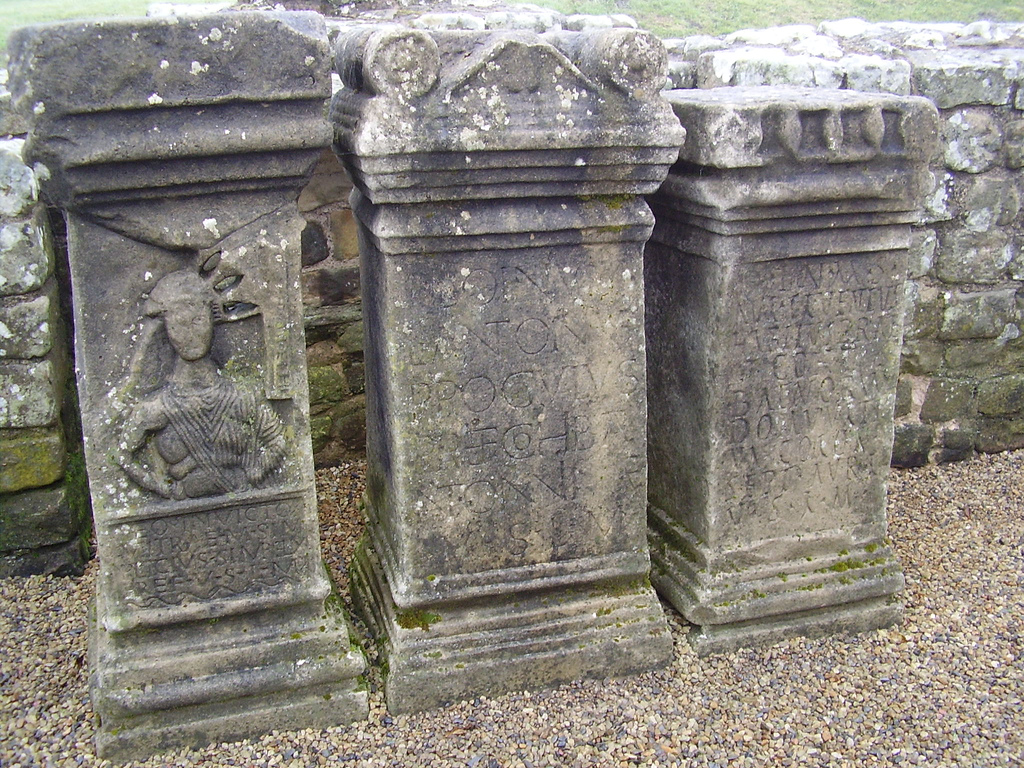
One of the altars from the Carrawburgh Mithraeum depicts the bust of Mithras or Sol.
Limestone base from the Mithraeum at Tirgușor, Moesia Inferior, bearing a Greek inscription dedicated to the invincible Mithras by Flavius Horimos.
Inscription from Axiopolis, Moesia Inferior, recording a dedication by a vir perfectissimus dux limitis provinciae Scythiae.
Large marble altar from Ghighen, ancient Oescus in Moesia Inferior, dedicated to Deo invicto Mithrae by Marcus Titius Maximus, duumviralis of the Colonia, with Aelianus as scribe.
Primitive marble tauroctony relief from the Museum at Cluj, Dacia, attributed to Micia but with uncertain provenance; a rough representation of Mithras killing the bull without Phrygian cap.
Altar from Carevac in Glamoč Polje south-east of Jajce, Dalmatia, dedicated to Invicto by Sisimbrius, erected by decree of the decuriones.
Altar found at Vid near Metković, ancient Narona in Dalmatia, dedicated to Invicto deo Soli by the freedman Marcus Lusius Trofimas.
Marble altar from the Mithraeum at Modrič, Pannonia Superior, dedicated to Deo invicto Mithrae by Aurelius Maximus, beneficiarius consularis.
Right portion of a sandstone altar from Topusko, Pannonia Superior, formerly used as a step in a bathing establishment, dedicated to Invicto Mithrae by Maximus with his companions.
Altar from Vidy near Lausanne, ancient Leusonna, dedicated to Soli Genio Lunae sacrum by Publius Clodius Primus, curator of the vici Lousonnenses, sevir Augustalis, and curator of the Roman citizens of the Helvetian conventus; not earlier than AD 161–169…
Sandstone altar from the Mithraeum at Königshoffen, dedicated to Deo invicto by a dedicant whose name begins Primu[s]; the remainder of the text is fragmentary.
Small yellow sandstone fragment from the Mithraeum at Dieburg showing the foremost part of an animal, probably a dog or ram, with head turned right
Altar found in the church of S. Giovanni de Mercato in Rome, with a dedication to the holy Invictus Mithras by C. Tullius Trophimianus.
Small marble relief from the Aventine showing a primitive representation of Mithras slaying the bull, without torchbearers or Sol and Luna, with a raven on the flying cloak, the dog and serpent near the wound, and a scorpion, now in the Museo Capitolino.
