Your search Roman cemetery of St. Matthias gave 3406 results.

Marble cap mentioned by Visconti, subsequently identified as certainly belonging to the finds of the Mitreo degli Animali rather than the Mitreo del Palazzo Imperiale, Ostia.
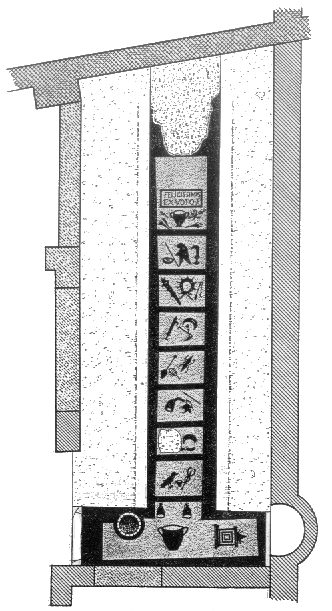
The Mithraeum Felicissimus has a floor mosaic depicting the seven mithraic grades.
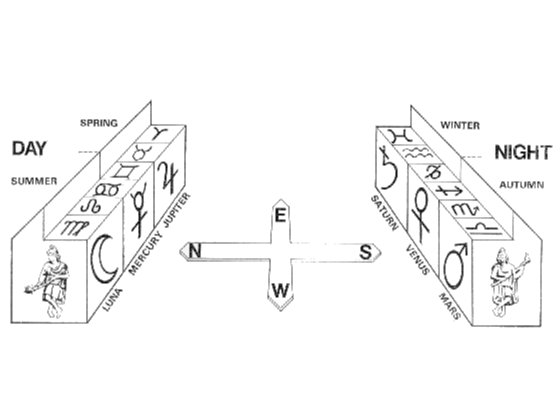
The rich mosaics of the Mithraeum of the Seven Spheres include the the signs of the Zodiac.
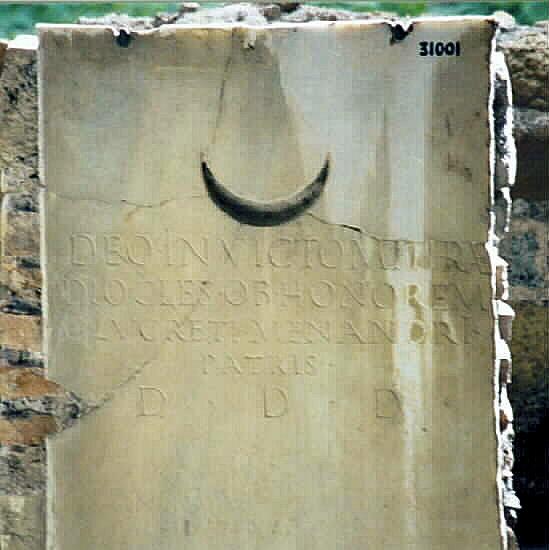
The brick altar of the Mithraeum Menander was covered with marble slabs bearing a crescent and an inscription.
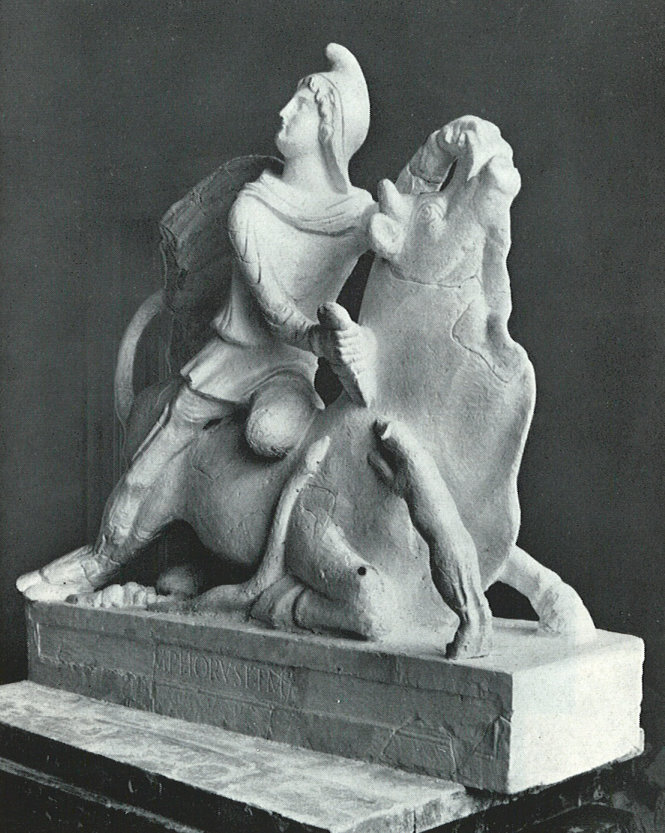
This sculpture of Mithras killing the sacred bull bears an inscription that mentions the donors.
At the entrance to the Mithraeum of the Seven Sferes, Cautopates holds the torch with both hands and Cautes holds the torch in his right hand and a cock in his left.
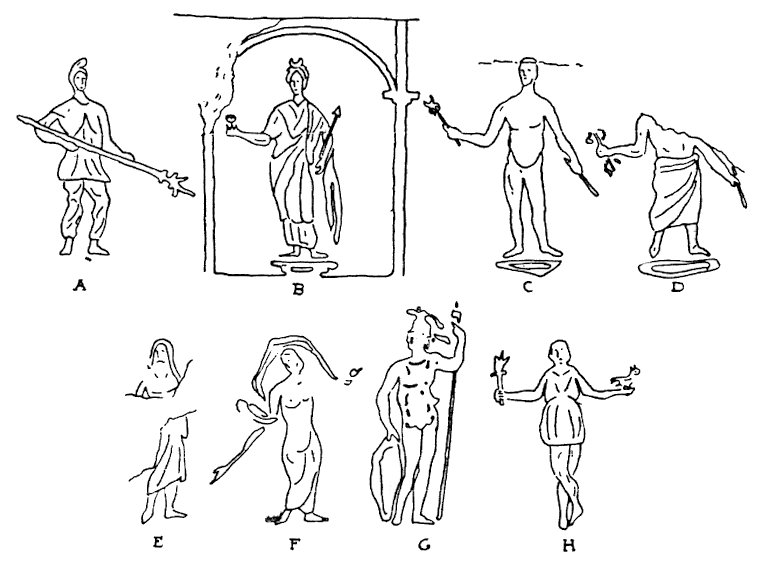
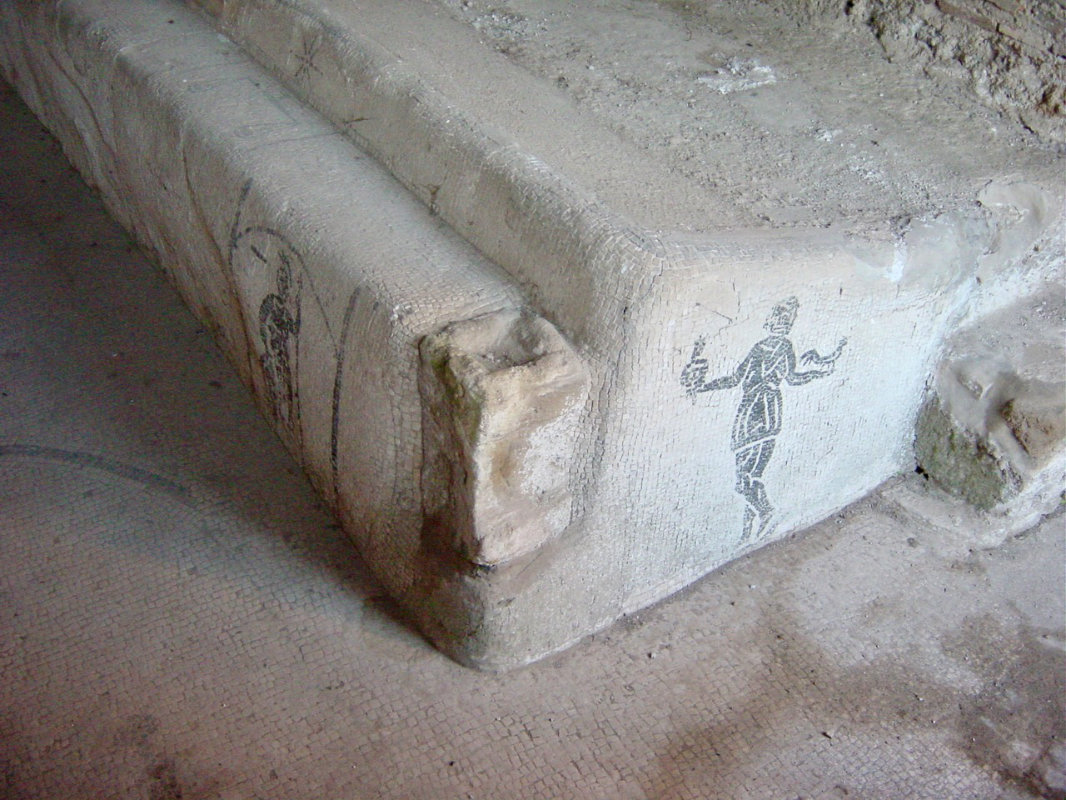
Diana-Luna, Mercurius, Jupiter, Saturn, Venus and Mars are depicted in the mosaics on the benches of this mithraeuma.
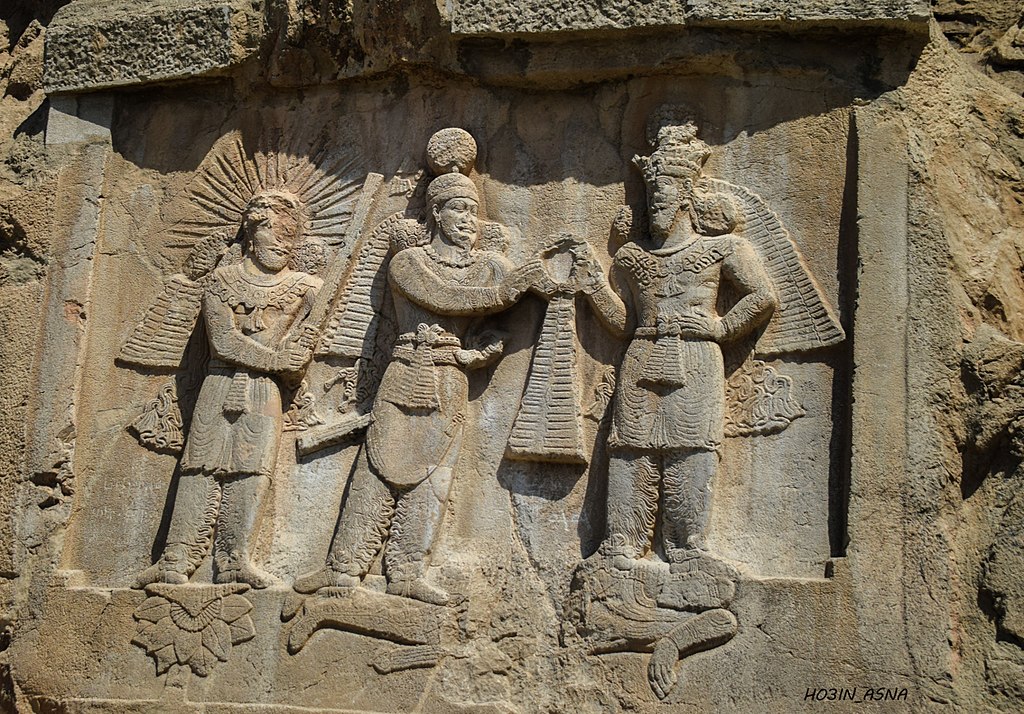
This monument depicts Mihr/Mithras watching over the transition of power from Shapur II to Ardashir II, which took place in 379.
This graffito seems to be an account of offerings made by Mithras worshippers in the Cassegiato di Diana.
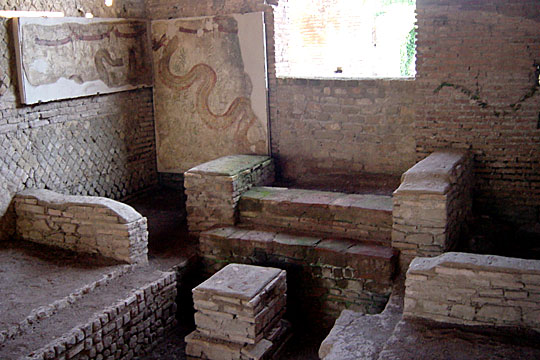
The Mithraeum of the Snakes preserves paintings of serpents, representing Genius Loci, part of an older private sanctuary, which were respected in the temple of Mithras.
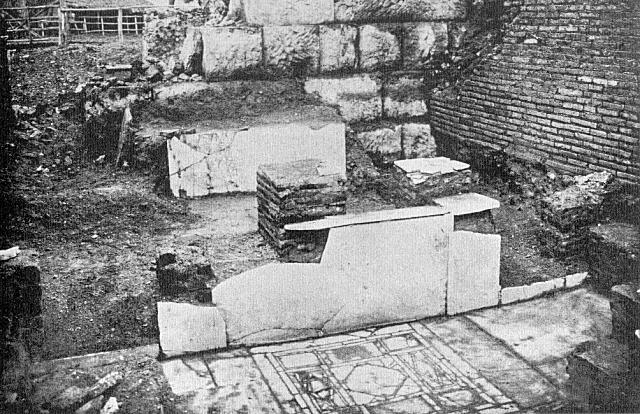
The Mithraeum of Aldobrandini was excavated in 1924 by G. Calza on the premises belonging to the Aldobrandini family.
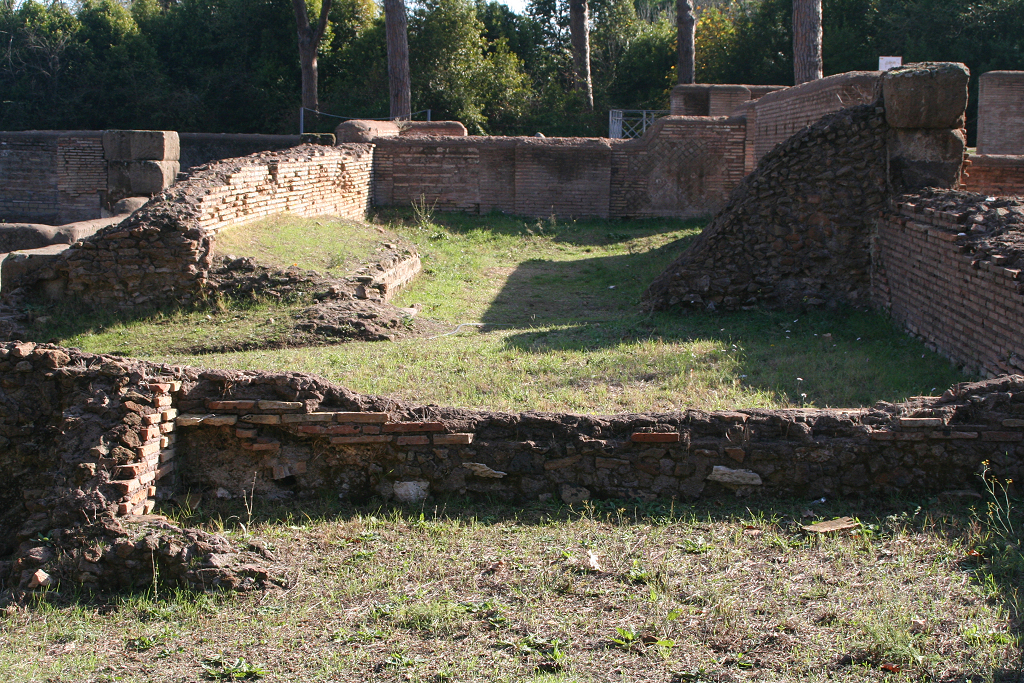
The Mithraeum near Porta Romana was connected to a Sacello, but the door was blocked.
Sandstone altar with patera from the rock sanctuary at Kreta, Moesia Inferior, bearing a Greek inscription of uncertain reading, possibly a thanksgiving to Mithras.
Sandstone base with a hollow at the back from the rock sanctuary at Kreta, Moesia Inferior, probably supporting a cult statue.
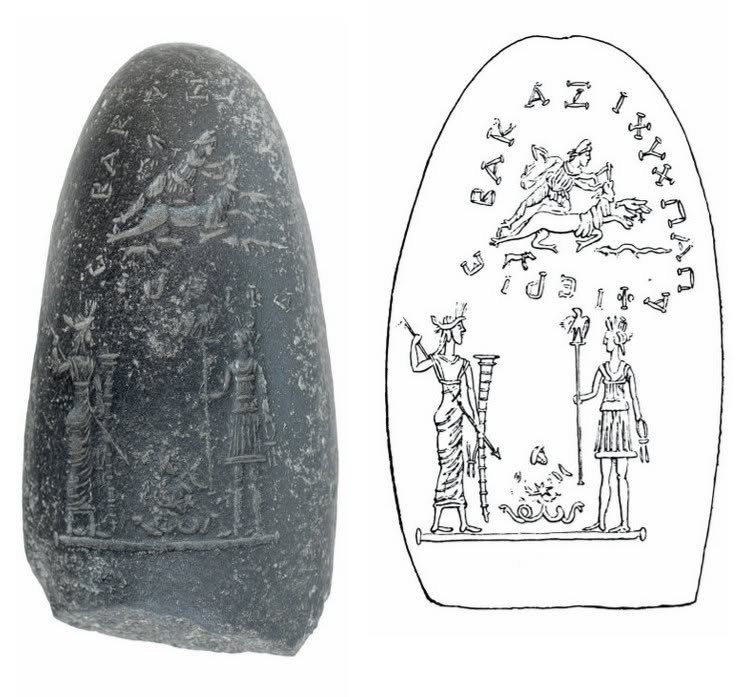
Black polished cone-shaped prehistoric axe from Argolis, now in the Athens National Museum, interpreted by some scholars as having Mithraic votive associations.

A devotee of Mithras who dedicated an altar for the health of Commodus alongside his father, a procurator castrensis, in Rome.

A historical role-playing game inspired by the archaeology of Roman Mithraism. Applications are now open and places are limited. The next campaign begins on 24 June.
Bronze statuette bearing a Mithraic inscription, subsequently demonstrated by Anna Sadurska to be a modern forgery.
Small bronze statuette in Oriental dress from the Walters Art Gallery, Baltimore, depicting a figure no longer considered a Mithraic object.

Rock-crystal gem in the Cabinet des Médailles, Paris, depicting Mithras as bull-slayer with the standard iconographic programme.
