Biography
of Marcus Aurelius Stertinius Carpus
- Marcus Aurelius Stertinius Carpus is attested as a member of a Mithraic community (syndexios).
- Attested at Roma, Latium, Italia in 176 – 192 (TNMM 542).
TNMP 167
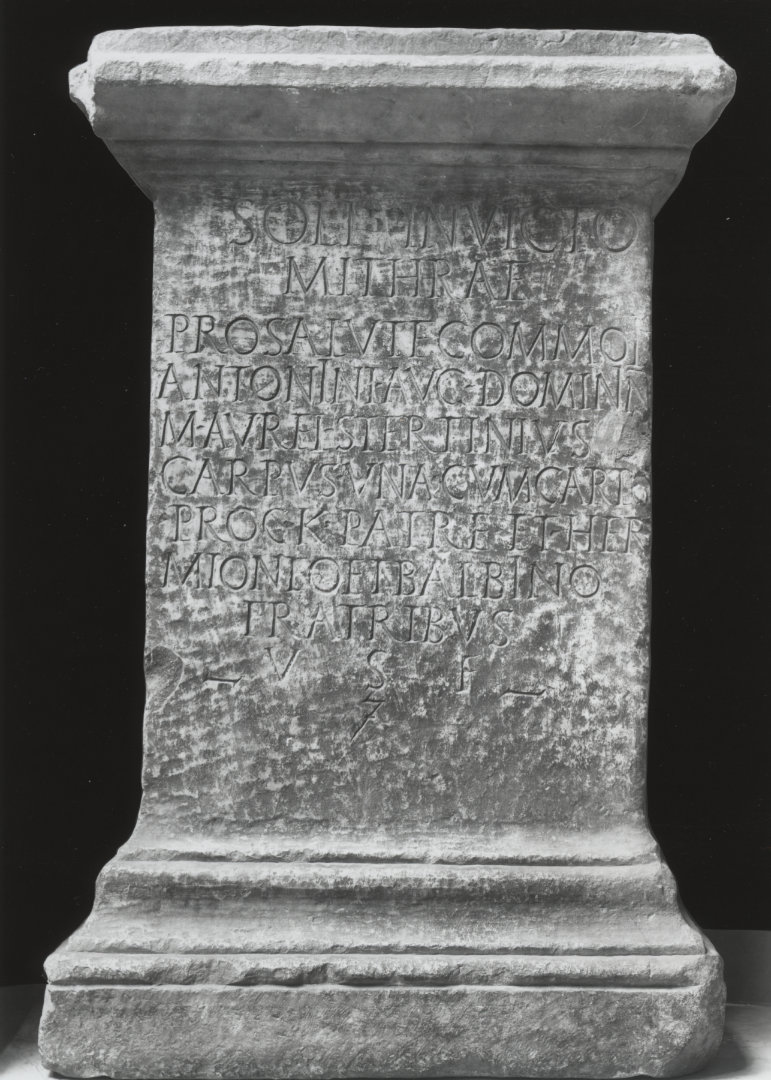
Marcus Aurelius Stertinius Carpus was a Mithraic initiate attested at Rome during the reign of the emperor Commodus. He is known from a large marble altar dedicated to Sol Invictus Mithras for the health and well-being of the emperor. The monument records that Carpus fulfilled a vow together with his father, Carpus, who held the office of procurator castrensis, and with two companions named Hermioneus and Balbinus (TNMM 542; CIL VI 727).
The inscription is particularly noteworthy because Carpus’ father is described as a procurator castrensis, a position associated with the imperial administration. Although the exact responsibilities of the office varied over time, the title indicates a connection with the management of imperial property and household affairs. The dedication therefore provides rare evidence for the participation of individuals linked to the imperial bureaucracy in the cult of Mithras during the late Antonine period.
The nomen Stertinius belonged to an established Roman gens whose members included military commanders, senators and imperial physicians. However, the personal names Carpus and Hermioneus are Greek in origin, suggesting that this branch of the family may have emerged from a milieu of imperial freedmen or descendants of freedmen rather than from the ancient senatorial lines of the gens. This interpretation remains hypothetical but is consistent with both the onomastic evidence and the administrative position held by Carpus’ father.
The altar was reportedly discovered near the ancient Pons Aemilius (modern Ponte Rotto) on the banks of the Tiber. On the basis of this monument and two additional inscriptions found in the same area, the archaeologist Filippo Coarelli proposed the existence of a Mithraeum near the bridge, commonly referred to as the Mithraeum of Ponte Emilio. One of the associated inscriptions belonged to Lucius Septimius Archelaus, who described himself as pater et sacerdos Invicti Mithrae domus Augustanae (“Father and priest of Invincible Mithras of the Imperial Palace”), suggesting possible links between this Mithraic community and personnel connected with the imperial residence on the Palatine. Although the existence and precise location of this Mithraeum remain hypothetical, the association of Carpus’ altar with this group of finds has led several modern scholars to regard him as a possible member of a Mithraic community closely connected to the imperial administration.
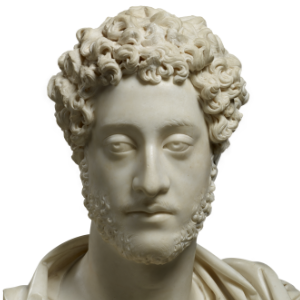
The monument can be dated between 176 and 192 CE, since it was dedicated for the safety of Commodus under the titulature Commodus Antoninus Augustus dominus noster. The altar, measuring approximately 1.18 metres in height, was a substantial and costly dedication, indicating that Carpus and his associates possessed sufficient means to commission a monument of considerable size.
References
- Epigraphik-Datenbank Clauss / Slaby. Altar of Stertinius Carpus from the Ponte Emilio Area, Rome in EDCS.
- The Walters Art Museum (2022) Votive Altar to Mithras.
Attestations
Altar of Stertinius Carpus from the Ponte Emilio Area, Rome
TNMM 542
This altar bears an inscription to the health of the emperor Commodus by a certain Marcus Aurelius, his father and two other fellows.