Your search Roman cemetery of St. Matthias gave 2764 results.

Sandstone base with a hollow at the back from the rock sanctuary at Kreta, Moesia Inferior, probably supporting a cult statue.
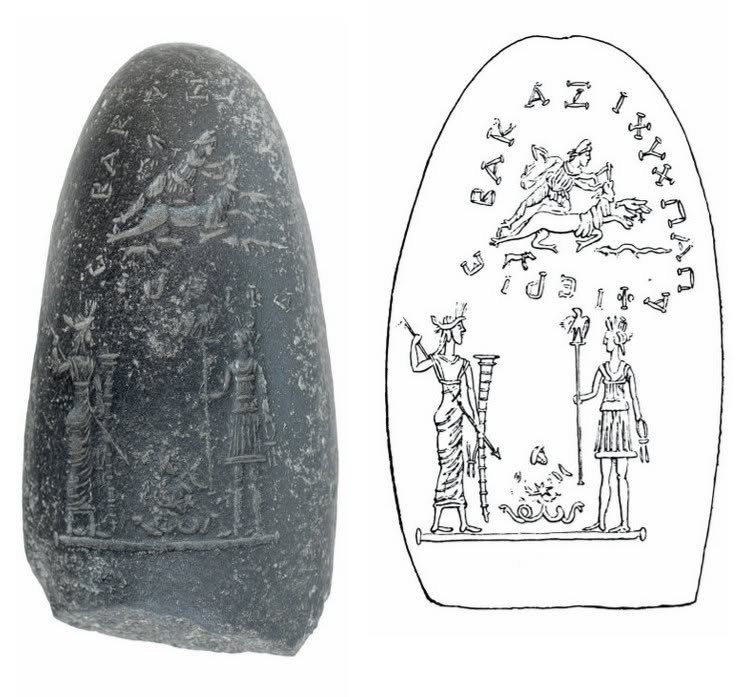
Black polished cone-shaped prehistoric axe from Argolis, now in the Athens National Museum, interpreted by some scholars as having Mithraic votive associations.
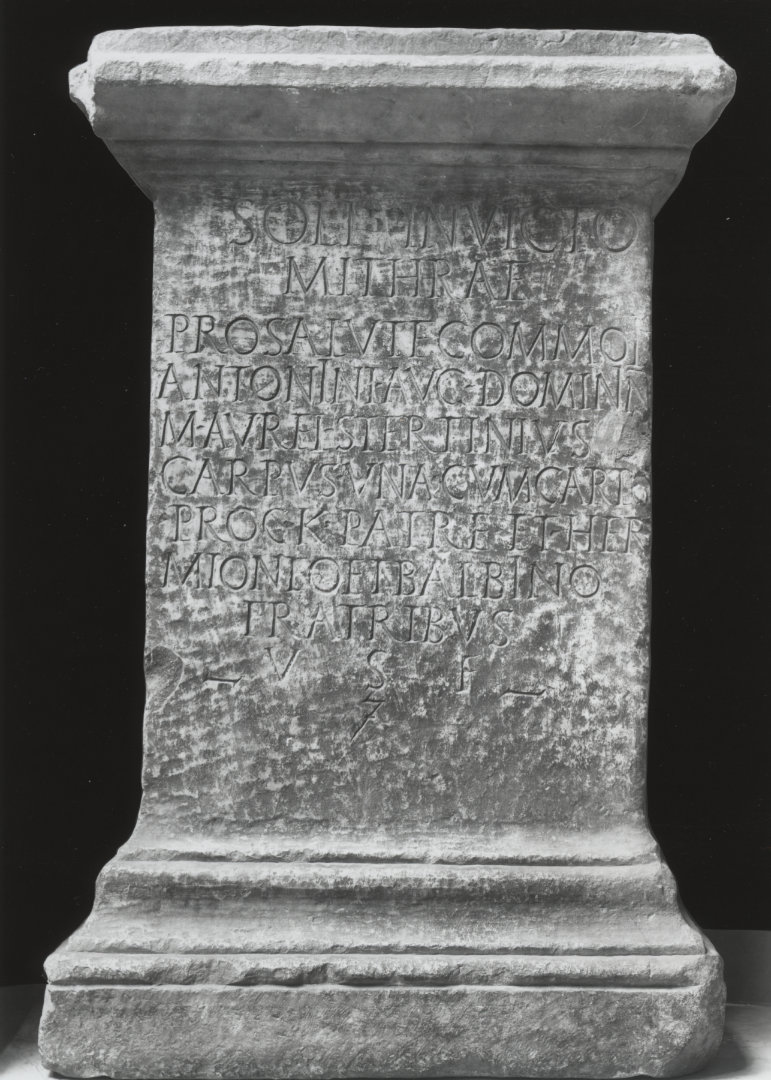
This altar bears an inscription to the health of the emperor Commodus by a certain Marcus Aurelius, his father and two other fellows.

A devotee of Mithras who dedicated an altar for the health of Commodus alongside his father, a procurator castrensis, in Rome.
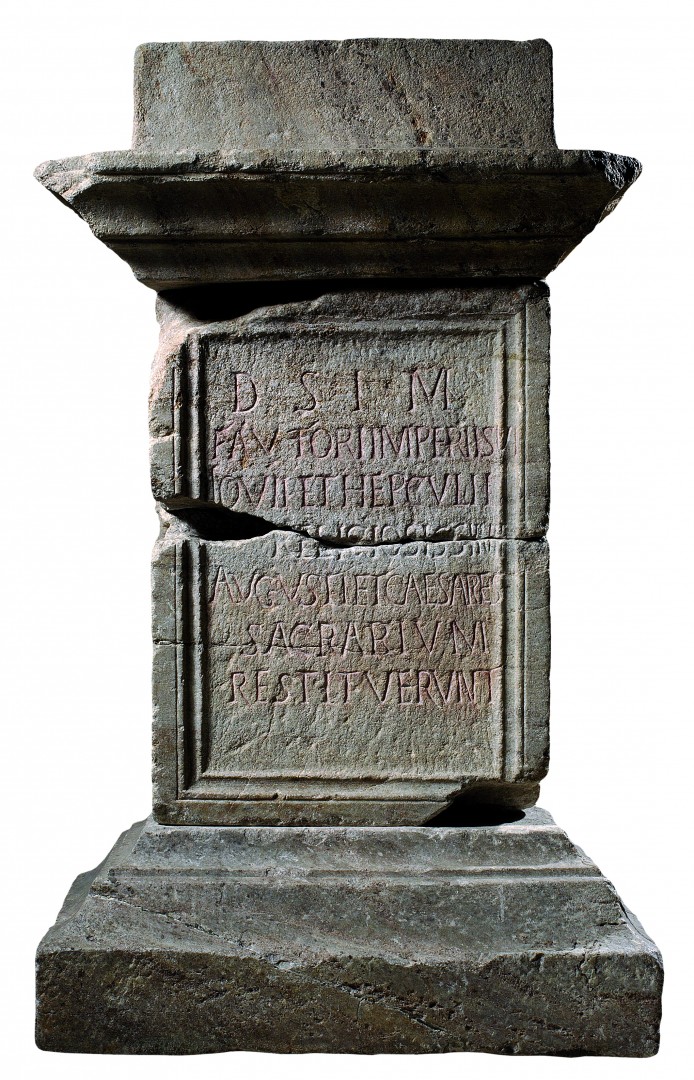
Altar with Cautes and Cautopates dedicated to Sol Invictus Mithras as protector of the Tetrarchy in 3rd-century Carnuntum.

A historical role-playing game inspired by the archaeology of Roman Mithraism. Applications are now open and places are limited. The next campaign begins on 24 June.
Bronze statuette bearing a Mithraic inscription, subsequently demonstrated by Anna Sadurska to be a modern forgery.
Small bronze statuette in Oriental dress from the Walters Art Gallery, Baltimore, depicting a figure no longer considered a Mithraic object.

Rock-crystal gem in the Cabinet des Médailles, Paris, depicting Mithras as bull-slayer with the standard iconographic programme.
Gold ring amulet formerly in the Schlumberger Collection, published as Mithraic by Cumont and later identified as a healing charm against colic and diseases of the uterus.
A small limestone votive altar from Pola (modern Pula) bearing on its front face a damaged relief head of a youthful Sol with long curly hair, above which is carved the inscription Soli and below the dedicatory text by Atticus (No. 757).
An altar in the shape of a mystic chest found at Aquileia in 1828, inscribed with a brief dedication to the Deity Mithras Sol.

Industria was a Roman settlement in northern Italy, today associated with Monteu da Po.
Augusta Taurinorum was the Roman city corresponding to modern Turin.
Ulcisia Castra formed part of the fortified Danube frontier north of Aquincum.
Sexantaprista occupied a strategic position on the southern bank of the lower Danube.
Drmno lies near the important Roman site of Viminacium on the Danube frontier.
The colonia of Iulia Equestris, modern Nyon, overlooked the shores of Lake Geneva and controlled regional routes.
Settlement in inland Numidia associated with the mountainous region south of Cirta and the wider network of North Africa.
Campona occupied a strategic position south of Aquincum along the Danube frontier.
