Your search Roman cemetery of St. Matthias gave 3406 results.

Sandstone relief fragment from Rückingen with an indistinct standing figure, probably a woman, in an arched niche
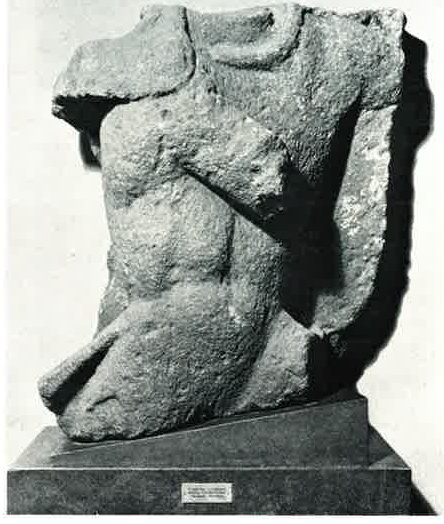
Three basalt fragments of a standing figure in jack-boots from Mithraeum III at Heddernheim, ancient Nida, with traces of red paint on the loin-cloth

Fragment of a statuette on a sandstone base found in Mithraeum III at Heddernheim, ancient Nida, formerly in the Häberlin collection
Two sandstone reliefs from Vibbel, found in a pit at Heddernheim, ancient Nida, in 1884, probably lost during the Second World War
Marble relief fragment showing Mithras slaying the bull, originally belonging to a lost second Mithraeum at Friedberg.
Sandstone altar decorated with ritual vessels and the hooked staff associated with Roman beneficiarii.

Colonia Ulpia Traiana Augusta Dacica Sarmizegetusa was the capital and the largest city of Roman Dacia, later named Ulpia Traiana Sarmizegetusa after the former Dacian capital, located some 40 km away. The city was destroyed by the Goths.
Limestone relief from Ragasch near Philippopolis, Thracia, cited in MMM without further details.
Altar inscription from Sahin invoking the most high heavenly god and Mithras in the Alawite Mountains.
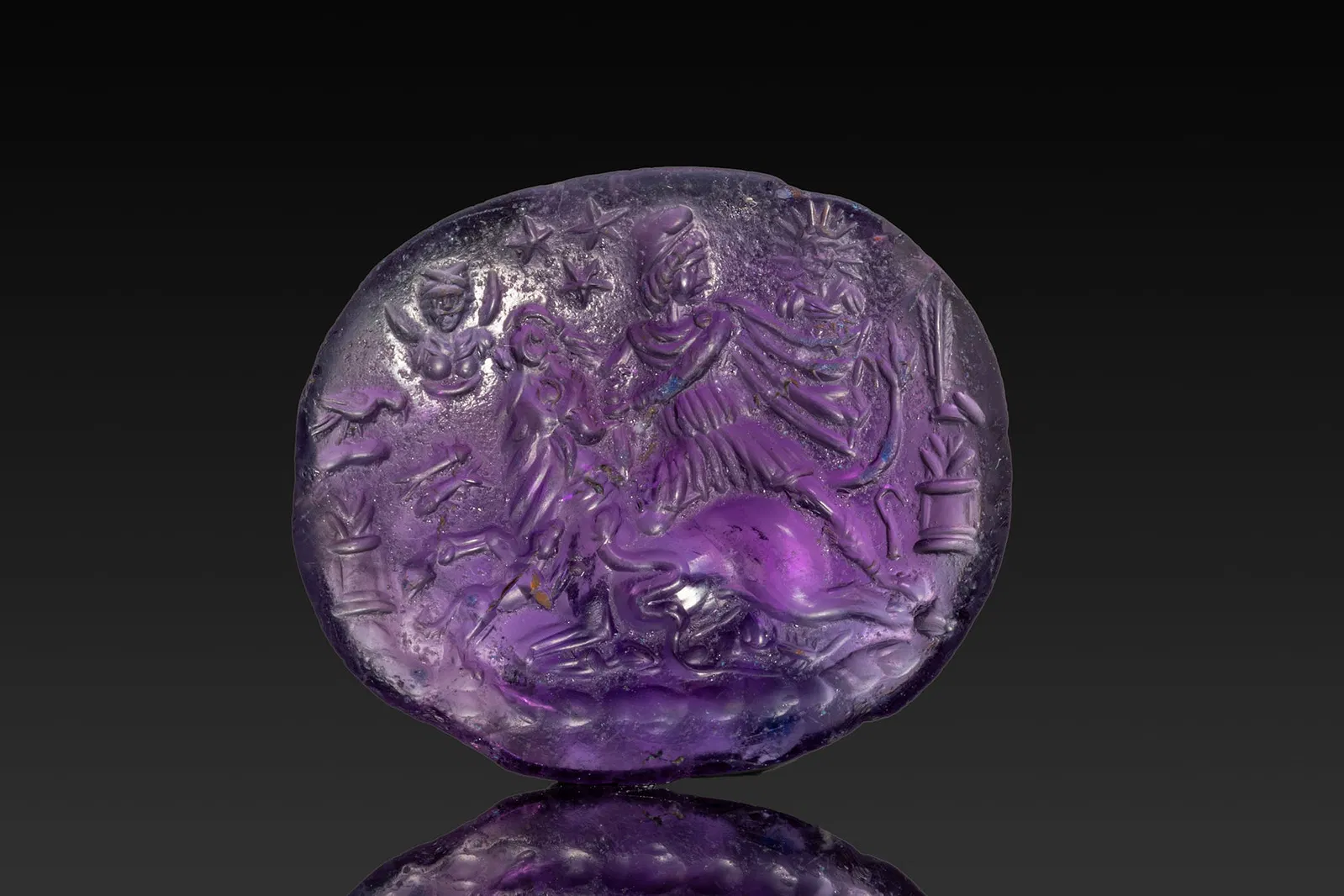
Amethyst intaglio engraved with Mithras slaying the bull, accompanied by Sol, Luna and other canonical Mithraic symbols.
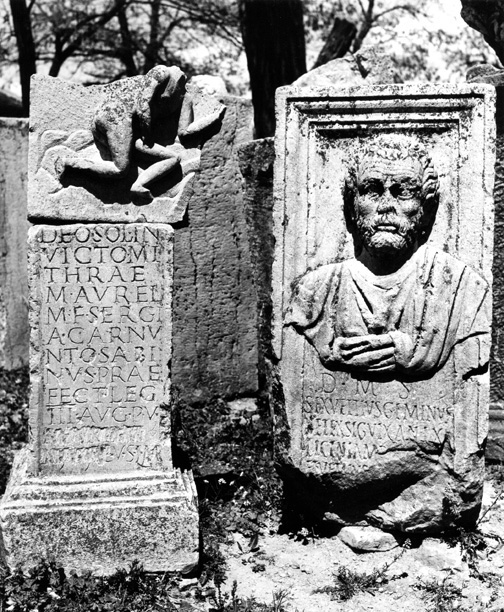
This altar to the god Sol invicto Mithra was erected by a legate during Maximin’s reign in Lambaesis, Numidia.
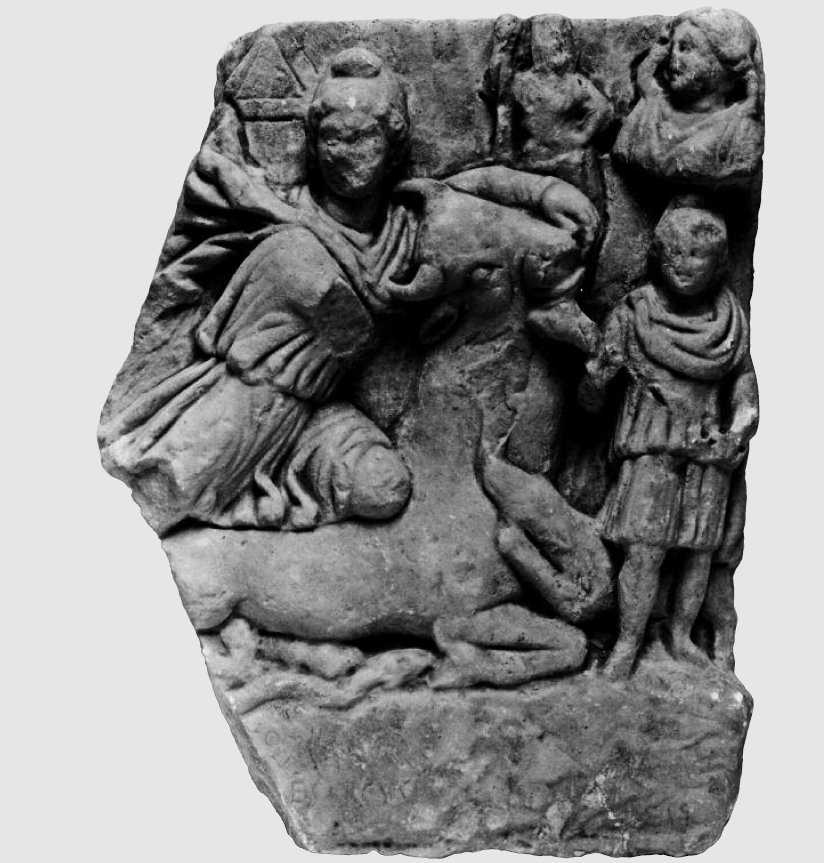
The Tauroctony of Patras was found years before the temple over which the relief of Mithras sacrificing the bull was supposed to preside.
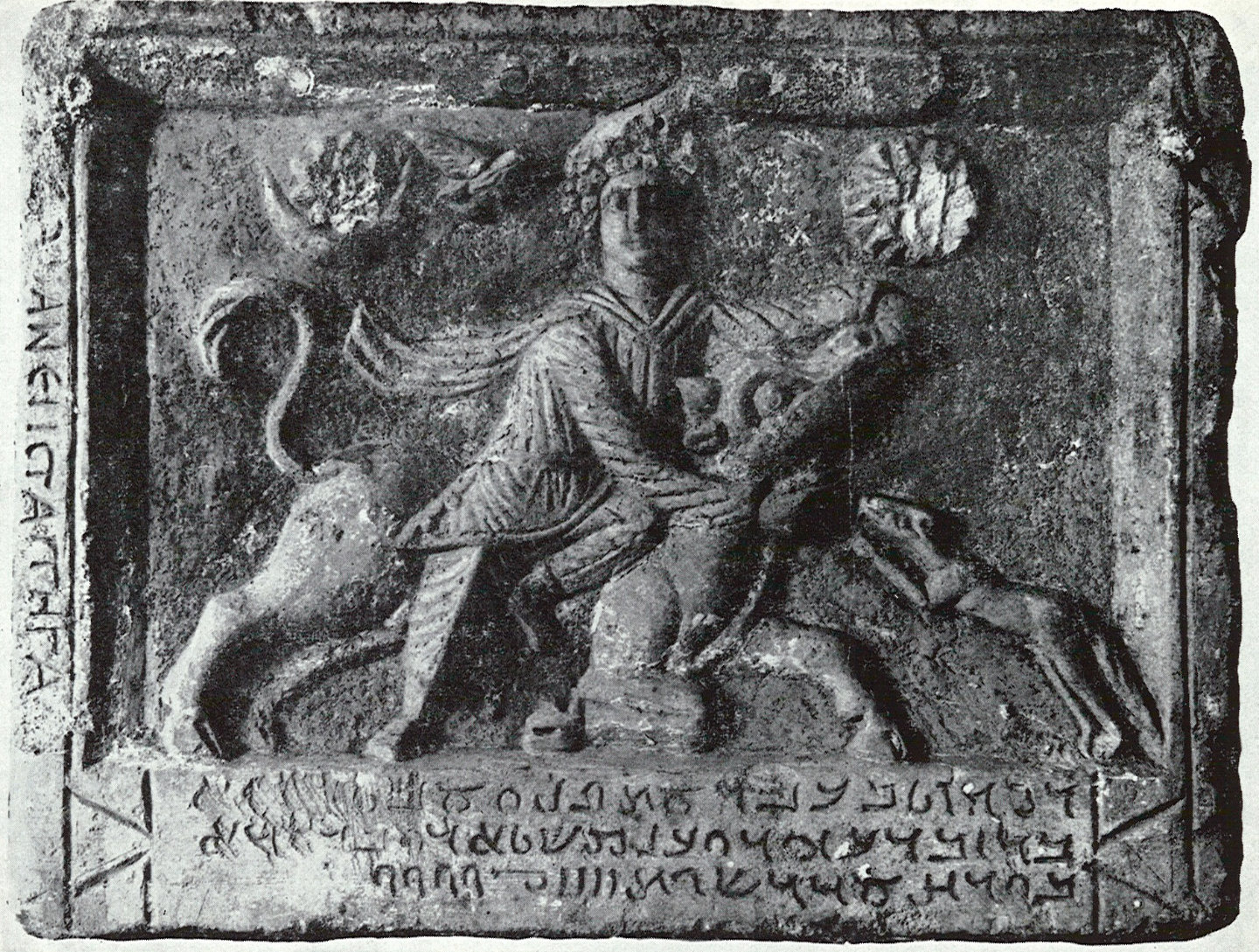
One of the reliefs of the Dura Europos tauroctonies includes several characters with their respective names.
Aosta is the principal city of the Aosta Valley, a bilingual region in the Italian Alps, 110 km north-northwest of Turin.
Astorga is a municipality and city of Spain located in the central area of the province of León, in the autonomous community of Castilla y León, 43 kilometres southwest of the provincial capital.
Stabiae was an ancient city situated near the modern town of Castellammare di Stabia and approximately 4.5 km southwest of Pompeii.
Ostia may have been Rome's first colony. According to legend, Ancus Marcius, the fourth king of Rome, destroyed the area and founded the colony. An inscription seems to confirm the foundation of the ancient castrum of Ostia in the 7th century BC.
