Your search Roman cemetery of St. Matthias gave 2751 results.
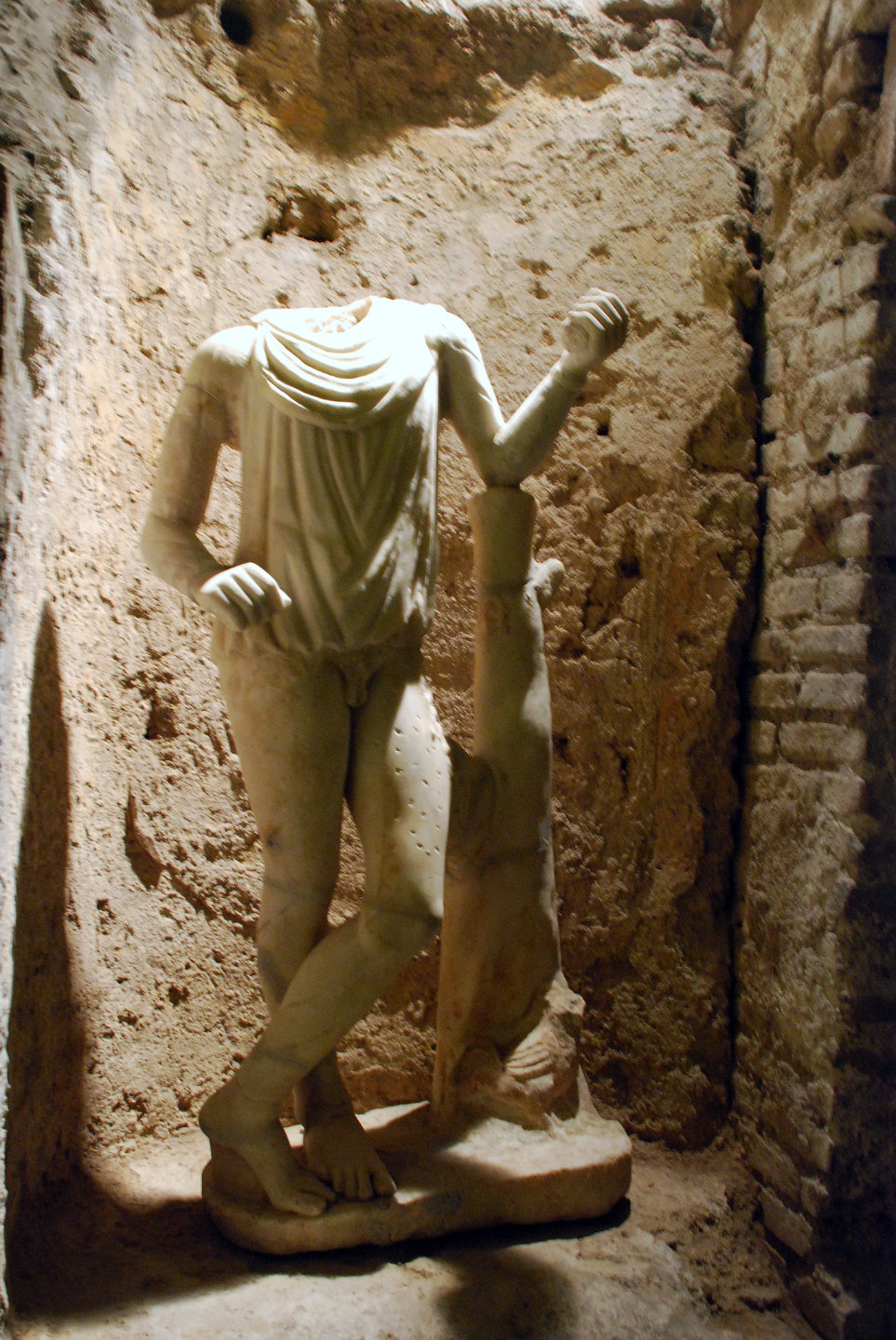
The marble statue of Cautes, found in the Mithraeum of Santa Prisca, was originally a Mercury.

Roman building on the Aventine between the eastern side of S. Saba and Via Salvator, probably used as a Mithraeum at the end of the 4th century, with a long corridor bearing three semicircular niches and a large external basin.
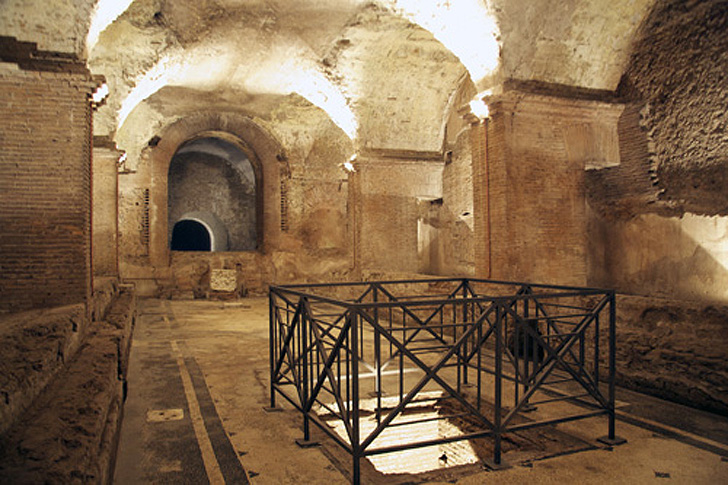
The Mitreo delle terme di Caracalla is one of the largest temples dedicated to Mithras ever found in Rome.
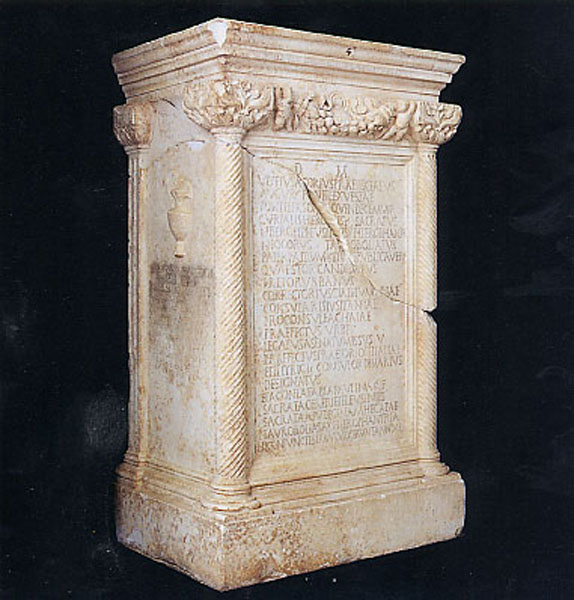
The marble altar mentions Vettius Agrorius Praetextatus as Pater Sacrorum and Patrum and his wife Aconia Fabia Paulina.

This monument was erected on the occasion of the elevation of a member to the Mithraic grade of Perses.
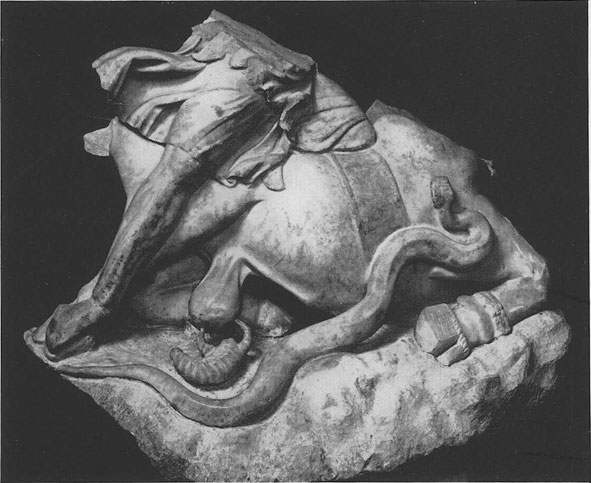
Partial marble statue of Mithras as a bullkiller found near Viale Latino, about 200 meters from Porta San Giovanni.
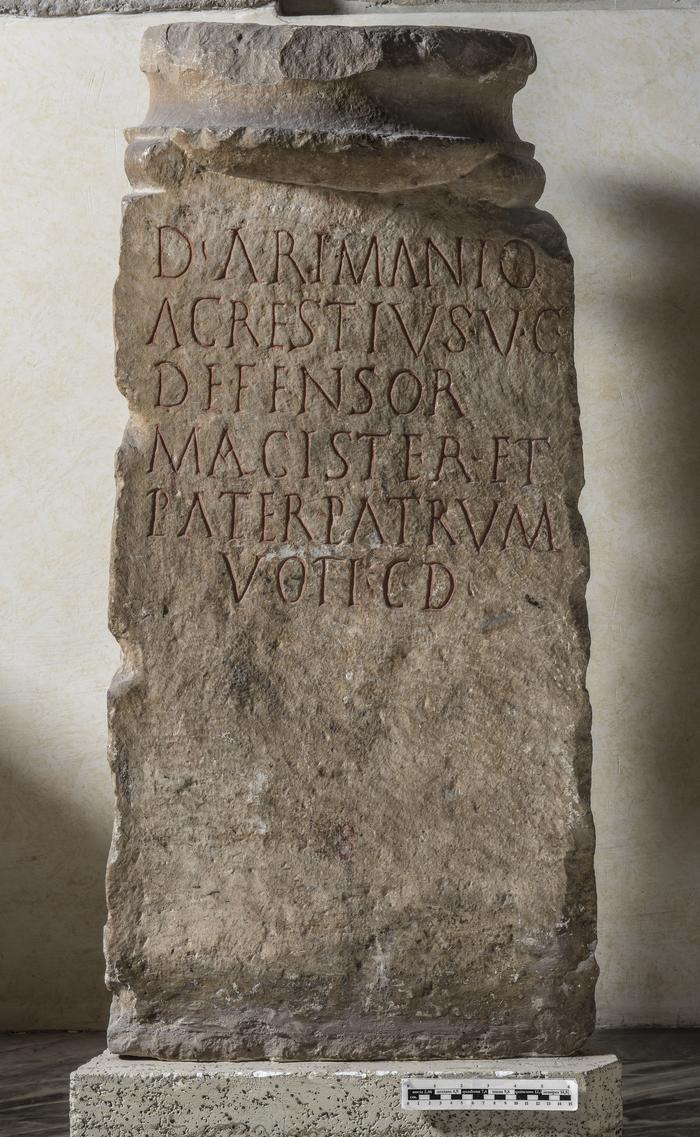
This altar mentioning the god Arimanius was found in 1655 at Porta San Giovanni, on the Esquilino.
Lower part of a candelabrum-shaft in the form of a palm trunk on an acanthus base, with a dedication to Mithras by T. Aelius Iustus on three faces of the plinth, found between the churches of SS. Eusebius and Vitus, Rome.
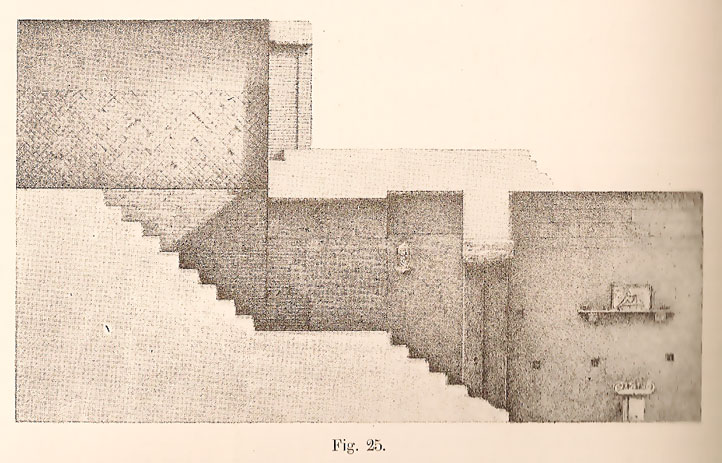
In a house from the time of Constantine, a Lararium was found with a statue of Isis-Fortuna. The Mithraeum was a door next to it, on a lower room.
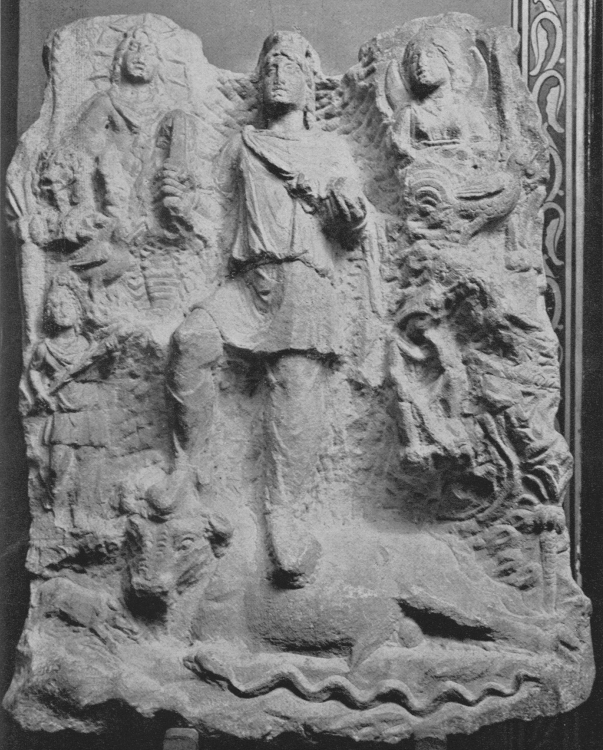
This unusual representation of Mithras standing on a bull was kept in the Casino di Villa Altieri sul Monte Esquilino until the 19th century.
Fragment of a bull-killing relief showing Mithras, the torchbearer Cautes with upraised torch, and the bust of Luna, found at Labicum in the ruins of a Roman villa.
Punic ex-voto to Tanit bearing the formula 'Meqim Elim Mithrahastarni', tentatively interpreted as a Mithras reference but pre-dating the Roman cult.
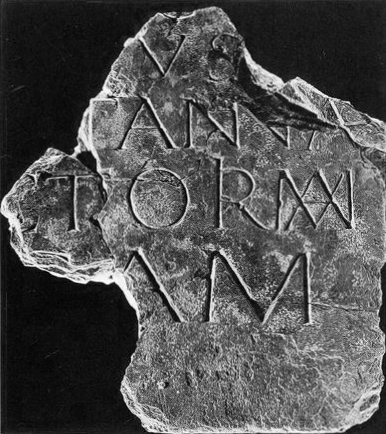
Archaeological material from the Mithraeum of Londinium discussed in Hill’s study of Roman London.
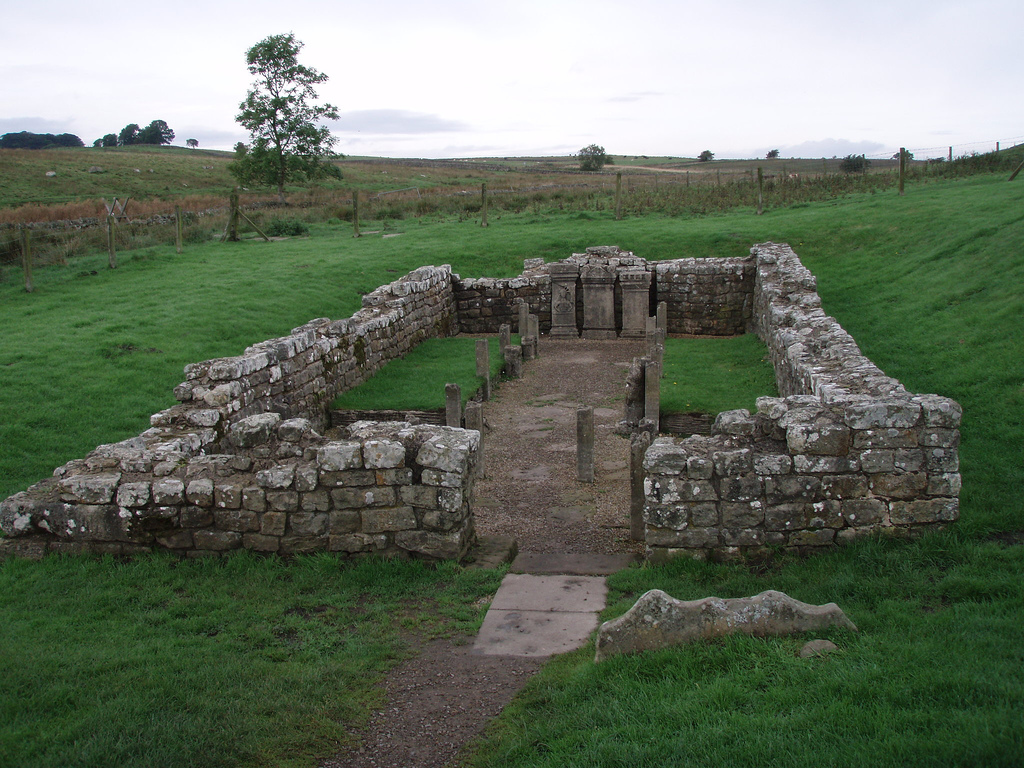
The temple of Mithras of Carrawburgh, Brocolita, disclosed three main stages of development, the second exhibiting two reconstructions.
Limestone keystone dedicated to the invincible Sun by Peticius Pastor and preserved at Lepcis Magna.
Rock inscription of Sagarios, strategus of Ariaramneia, recording a Mithraic ceremony near Farasha (ancient Ariaramneia), Cappadocia, likely 1st century A.D.
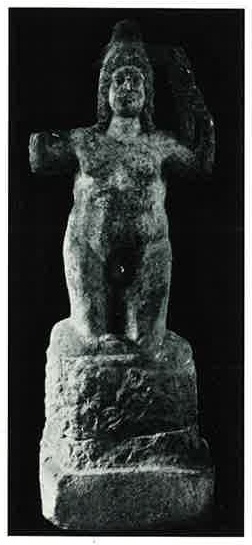
This white marble statue of the rock-birth from Cibinium in Roman Dacia is one of the largest known Mithraic sculptures from the Danubian provinces.
Marble head from the south-west walls of Thasos, Macedonia, found in 1920, with long curly hair, Phrygian cap, and a pathetic expression; possibly Mithras or Attis.
Third-century sepulchral inscription from near Philippi, Macedonia, studied for its Mithraic content in the upper lines of the text.
Stone from Durrës, ancient Dyrrachium in Macedonia, dedicated to Soli aeterno by Marcus Laelius Aquila, sacerdos; the name Aquila may correspond to a Mithraic grade.
