Your search for San Gemini gave 594 results.

Carsulae was a Roman municipium in the region of Umbria, now preserved as an archaeological site, about 4 km north of the small town of San Gemini. Its foundation dates back to 220 BC with the construction of the Via Flaminia.
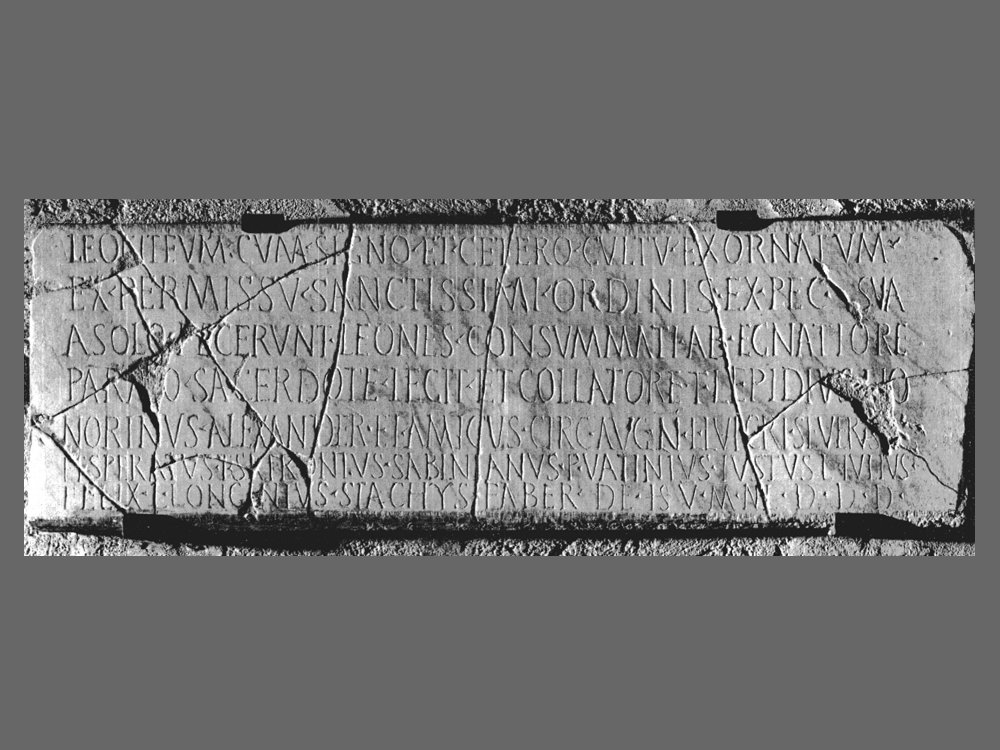
This plaque from Carsulae, in Umbria, refers to the creation of a leonteum erected by the lions at their own expense.

Epigraphic monuments reveal the presence of a Mithraeum in the ancient municiple of Carsulae, in Umbria.
San Zeno is a locality near Tuenno in the Val di Non, where Mithraic material attributed to Roman Raetia was discovered.
San Valentino in Abruzzo Citeriore is a mountain hill town in the province of Pescara, part of the Abruzzo region in central Italy.
The locality of San Juan is associated with archaeological discoveries from the Iberian provinces.

Wall remnants found deep underground at San Zeno near Trento, possibly indicating a Mithraeum, discovered alongside Roman coins, lost bronze figures and a small gold disc decorated with an ear of corn or a sword.
A fragmentary inscription on the lower border of the limestone tauroctony relief from San Zeno di Romedio near Trento, partially reading a dedication to the Invincible Mithras by Marius.
A limestone low-relief tauroctony fragment found in 1869 near the entrance of the valley of San Zeno di Romedio in the Trentino, now in the Museum at Trento, showing a primitive Mithras bullkiller with Cautes upraised, the bust of Luna and an inscription on the lower border…
A coarse-grained yellowish-white marble tauroctony relief fragment found walled in at San Zeno am Nonsberg in the Trentino in 1911, now in the Museum Ferdinandeum at Innsbruck, showing part of Mithras slaying the bull and Cautes raising a flaming torch.
A brief inscription reading "Deo Invicto Mithrae", found in the ruins of the Castello di Tuenno near San Zeno at the entry to the Tovel valley in Trentino, alongside the decorated relief No. 723.
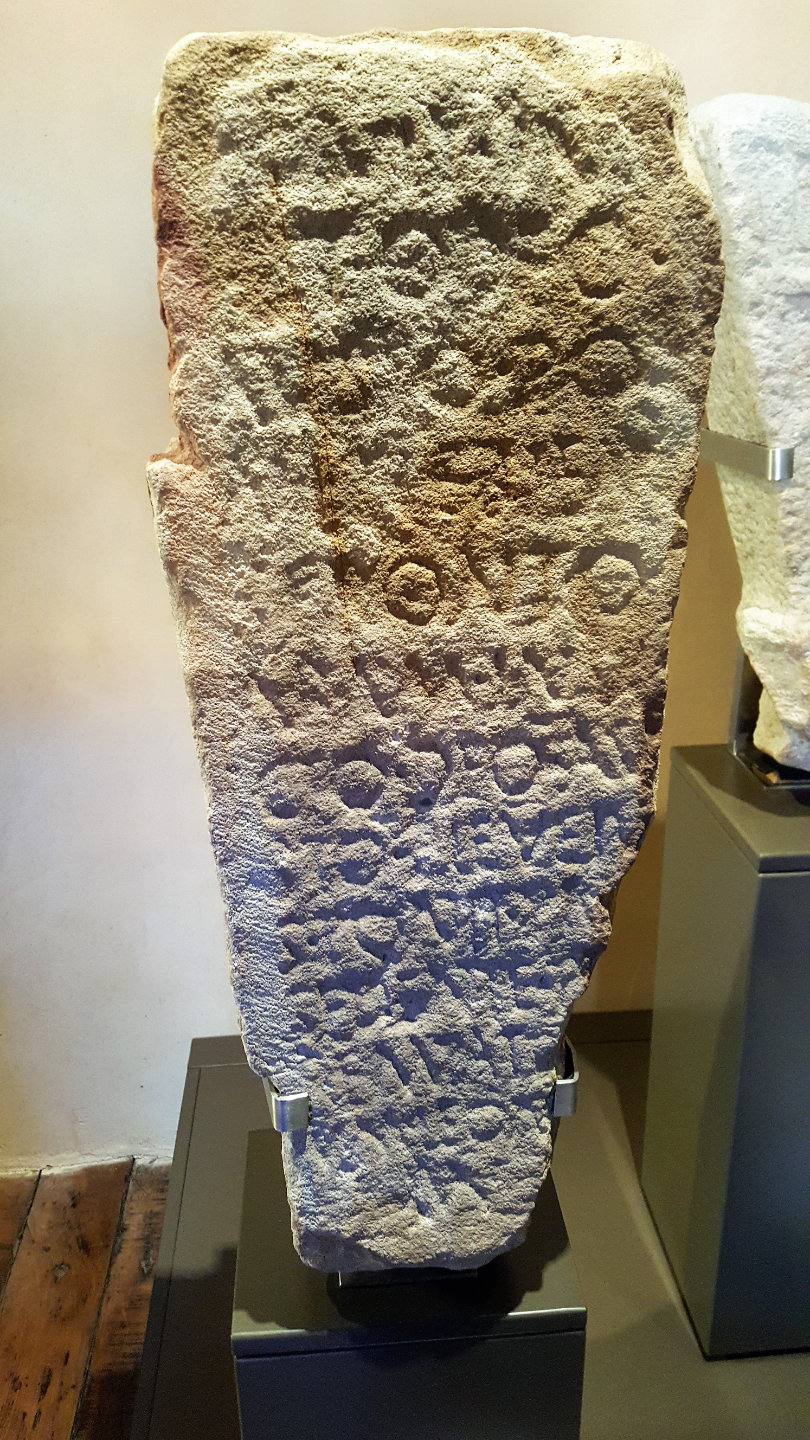
The monument of San Juan de la Isla (Asturias) devoted to Mithras was preserved in the portico of the main church until 1843.
Two marble fragments of the same stone, with worn lettering, set into the floor of the church above S. Clemente, bearing dedications to Sol Invictus Mithras and to Jupiter Dolichenus.
Well with a drainage pipe and two oblong brick-built tombs in the room to the left of the entrance of the Mithraeum of San Clemente, one tomb filled with refuse and a large number of animal bones, particularly swine.
Marble statuette representing a bearded person as the Good Shepherd, found in the Dominicum Clementis opposite the Mithraeum of San Clemente; it definitively represents S. Peter, not a Mithraic father of the mysteries.
Sculptural fragments of two torchbearers from the Mithraeum of San Clemente, Rome.
Marble cippus of which only two sides are preserved, with a brief dedication to Cautes on the front face, from the Mithraeum of San Clemente, Rome.
Group of Mithraic finds distributed across different localities named San Zeno along the Verona–Brenner route.
This stele found at the foot of the Aventine bears an inscription of Kastos father and son, and mentions several syndexioi who shared the same temple.
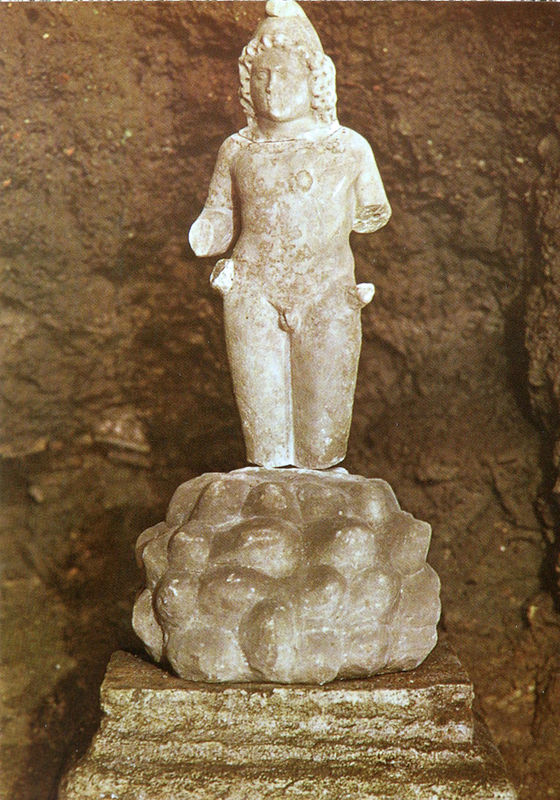
Mithras birth from the knees upwards emerging from a rock and wearing as usual a Phrygian cap.
