Your search Sarmizegetusa gave 138 results.

Colonia Ulpia Traiana Augusta Dacica Sarmizegetusa was the capital and the largest city of Roman Dacia, later named Ulpia Traiana Sarmizegetusa after the former Dacian capital, located some 40 km away. The city was destroyed by the Goths.
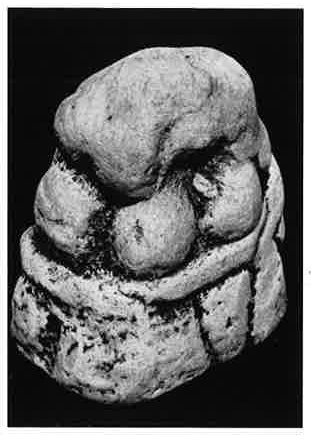
White marble rocky base encircled by a serpent from the Mithraeum at Sarmizegetusa, Dacia, probably the base of a rock-birth group.
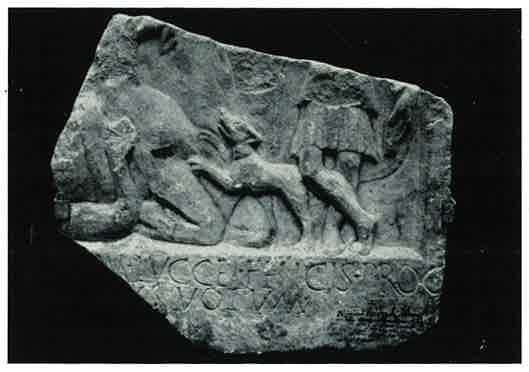
Marble tauroctony relief from Sarmizegetusa, Dacia, found at Zám and subsequently in various private collections; depicting the standard bull-slaying.
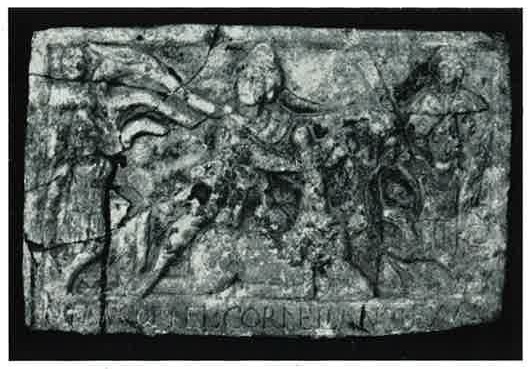
Marble tauroctony relief from Sarmizegetusa, Dacia, in the Deva Museum, depicting Mithras killing the bull; one of several reliefs attributed to the Sarmizegetusa sanctuary that were found elsewhere.

Marble tauroctony fragment from Sarmizegetusa, Dacia, preserving the right lower corner with the forepart of the bull with a broad belt and the leg of a figure.

The large number of monuments found at the Mithraeum of Sarmizegetusa and the sheer size of the temple are unusual.
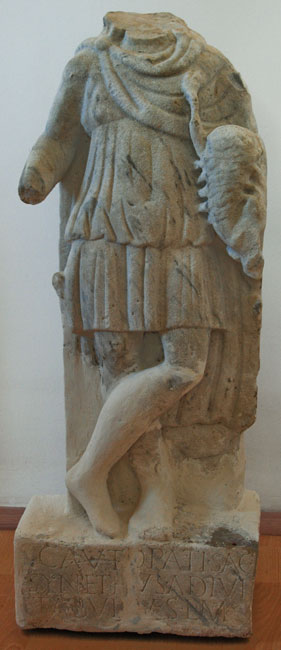
The Cautopates with scorpion found in 1882 in Sarmizegetusa includes an inscription of a certain slave known as Synethus.
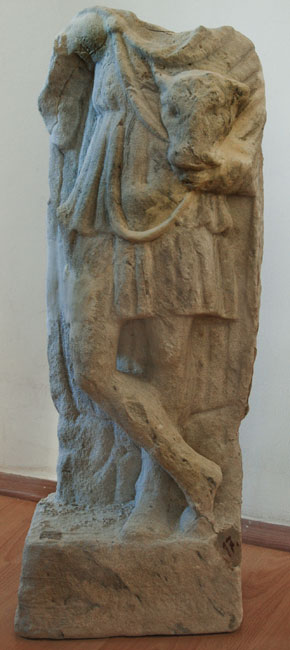
This sculpture of Cautes holding a bull’s head was found in 1882 in Sarmizegetusa, Romania.
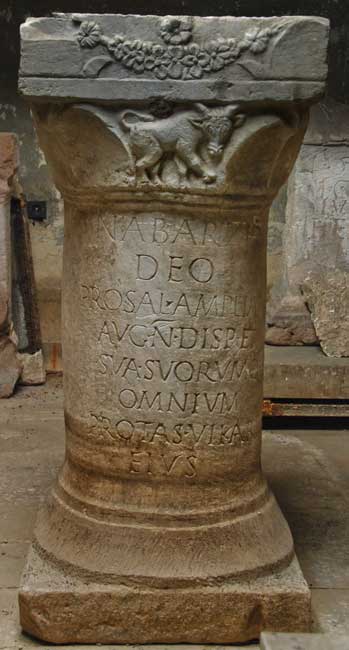
This column found in the Mithraeum of Sarmizegetusa bears an inscription to Nabarze instead of Mithras.
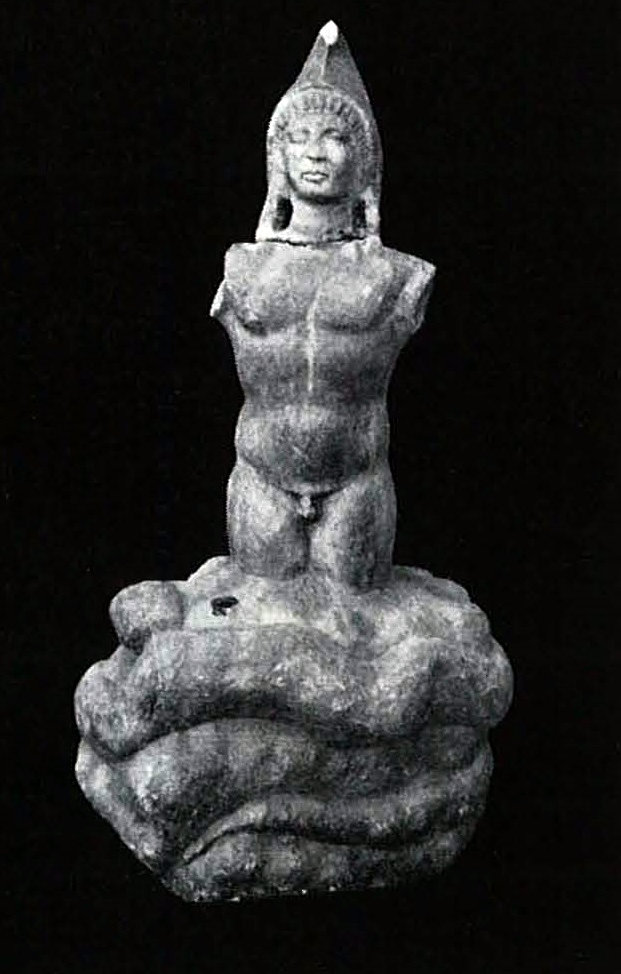
The rock of Mithra's birth in the Petrogenia of Sarmizegetusa is surrounded by a snake.
Fragmentary inscription from Sarmizegetusa, Dacia, recording a dedication by a freedman for the welfare of Marcus Lucceius Felix, procurator Augusti.
Inscription from Sarmizegetusa, Dacia, dedicated to Soli invicto by Lucius Domitius Primanus.
Fragment of an altar from Sarmizegetusa, Dacia, preserving only the opening of a dedication to Deo invicto Mithrae.
Fragment of a limestone column from the Mithraeum at Sarmizegetusa, Dacia, with a partially preserved inscription recording a dedication by multiple members of the Syrian community.
Upper portion of a white marble column from the Mithraeum at Sarmizegetusa, Dacia, bearing the abbreviated dedication to Soli invicto Mithrae.
Inscription from Sarmizegetusa, Dacia, dedicated to Soli invicto Mithrae by Cornelius Cornelianus ex voto.
Bluish marble tauroctony fragment from the Mithraeum at Sarmizegetusa, Dacia, formerly in the collection of Count Géza Kuun at Mintia, preserving Mithras killing the bull.
Three marble parts from the Mithraeum at Sarmizegetusa, Dacia, preserving part of Mithras's shoulders and the bull's tail ending in corn-ears.
Inscription from the Mithraeum at Sarmizegetusa, Dacia, recording a dedication ex voto by Aurelius Valentinus.
Inscription from the Mithraeum at Sarmizegetusa, Dacia, recording a dedication by Severus, imperial freedman, to Cautopates.
