Your search Site gallo-romain de Lauchau gave 364 results.

This is one of the few known Mithraic inscriptions dedicated by a member who attained the grade of Perses.

IT freaky guy protected by Cautes and Cautopates (both at once), made in Barcelona, willing to engage with other guys or gals into the same trips.
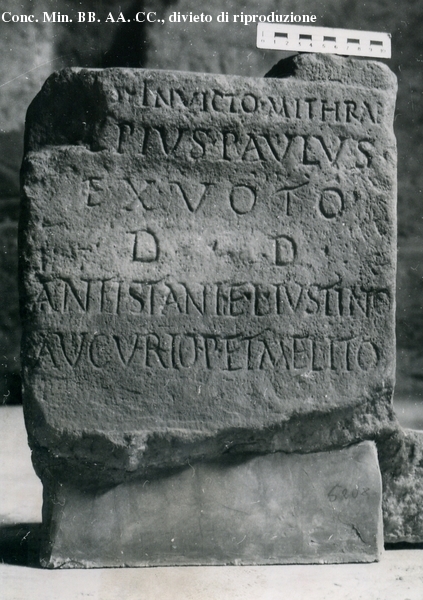
Small marble base, found in one of the private houses along the Via Sacra nearly opposite to the Basilica of Constantine, Rome.
An altar from Baetulo (modern Badalona) in Hispania Citerior, carved in a rock on a hill facing east opposite the town, recording a dedication to Sol Deus by A. Pompeius Abascantus.
Sculpted lion’s head from Vichy tentatively described as Mithraic in regional archaeological literature.
A white marble tauroctony statue found in 1925 at the ancient site of Lorium near the eleventh milestone on the Via Aurelia outside Rome, showing Mithras slaying the bull with dog, serpent and scorpion, accompanied by Cautes and Cautopates; now in the Palazzo Doria…
Mithraeum discovered towards the end of the 16th century in a vineyard of Horazio Muti opposite S. Vitale, between the Quirinal and Viminal hills, known from Vacca's report of a sealed room with many terracotta lamp-holders.
Marble statuette representing a bearded person as the Good Shepherd, found in the Dominicum Clementis opposite the Mithraeum of San Clemente; it definitively represents S. Peter, not a Mithraic father of the mysteries.
Small cippus found opposite the Theatre at Ostia, with a dedication by brothers Aurelius Crescens and Naima Victor Patri for the restoration of the ruined Mithraeum, third century A.D.
Inscription on a clepsydra dedicated to Sol Invictus Augustus by C. Amulius Pultarius, found on the site of the Mosque Sidi Biri Narze at Cirta.


Vaison-la-Romaine is a town in the Vaucluse department in the Provence-Alpes-Côte d'Azur region in southeastern France. Vaison-la-Romaine is famous for its rich Roman ruins and mediaeval town and cathedral. The old town is split into two parts: the
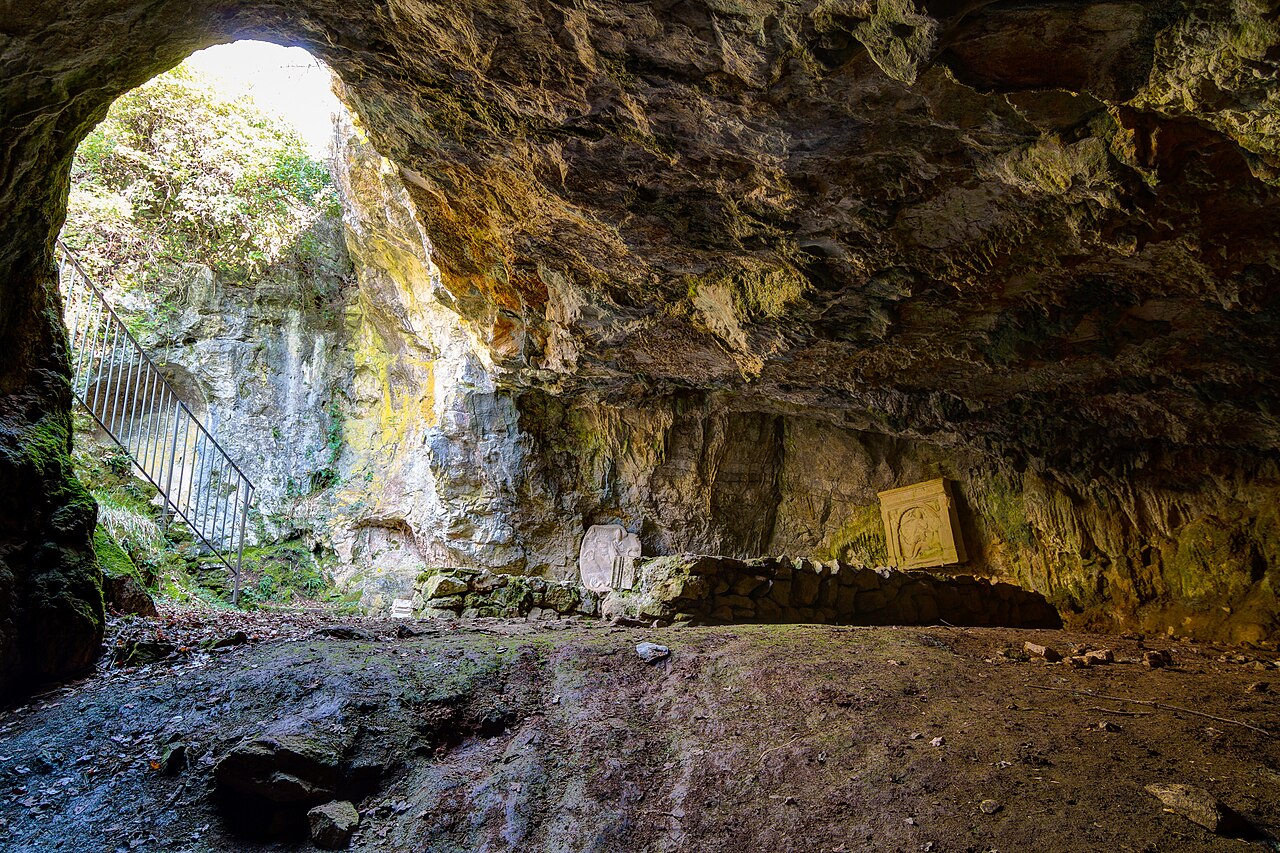
The site was destroyed in the 5th century but some elements, including the benches, can still been seen.

Séminaire du 5 mai 2026 : The Lord of the Covenant: Mihr the judge and the celebration of Mihragān.
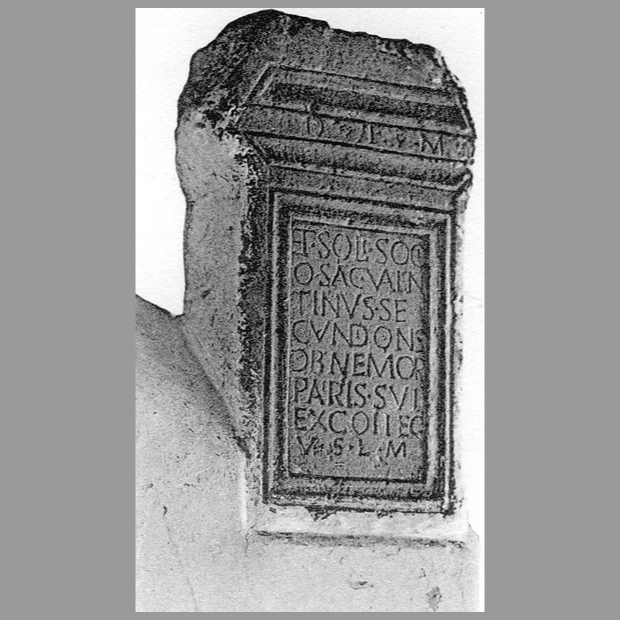
This monument, now lost, was discovered in the 16th century, probably on the site of Sublavio statio.
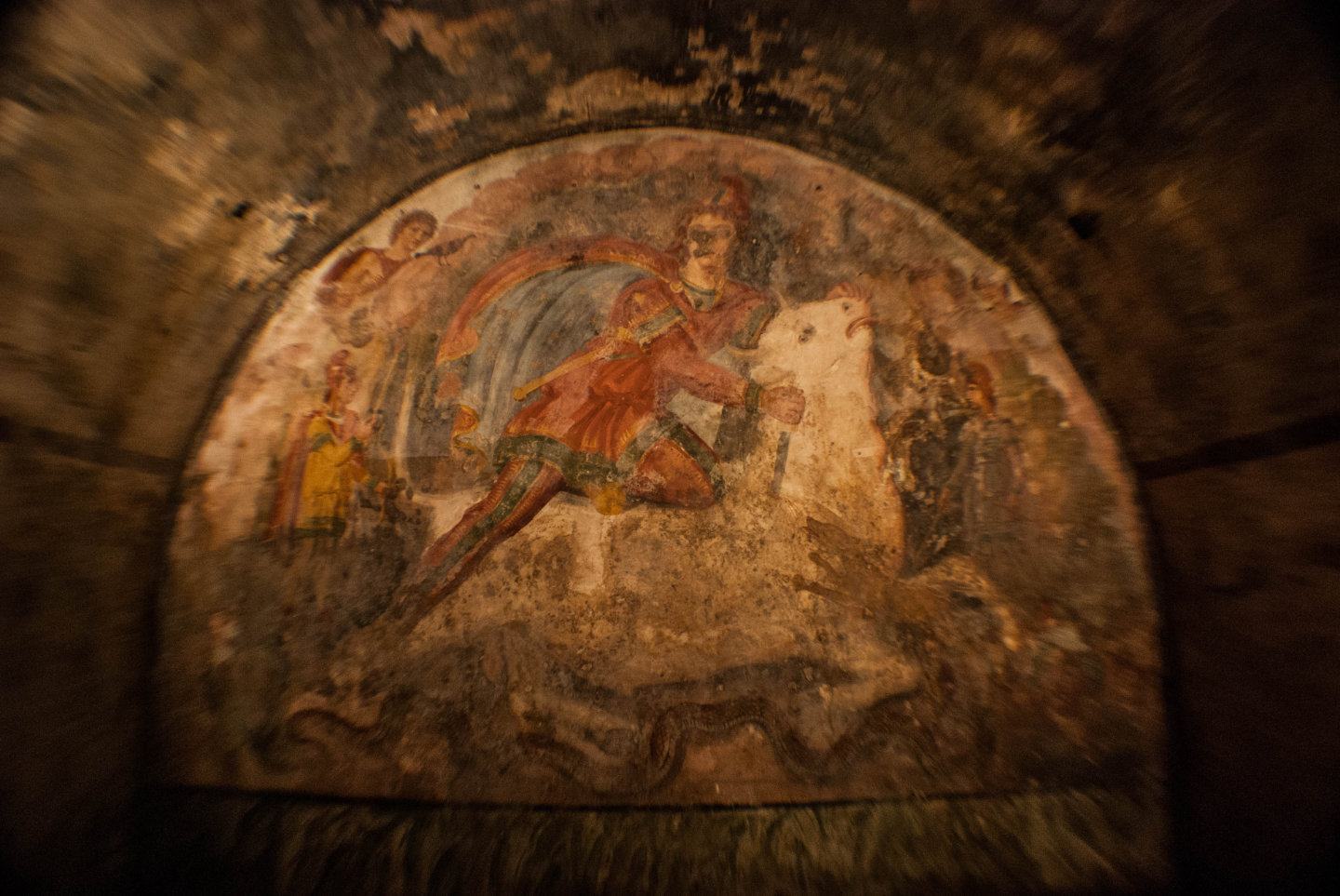
This article revisits the Mithraeum of S. Maria Capua Vetere, one of the most complete and artistically refined Mithraic sanctuaries in the Campanian region, situating it within its archaeological, iconographic, and ritual-historical contexts.
Emperor Julian may have been initiated into the cult of the god Mithras at the Mithraeum of Vienne, France, according to Turcan.


