Your search Spittal an der Drau gave 1495 results.
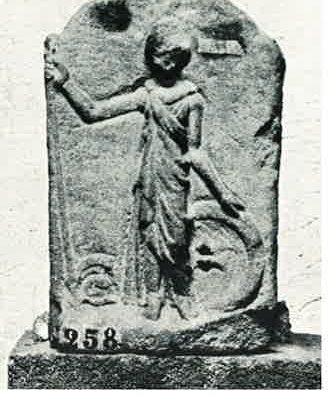
Sandstone relief from Mithraeum I at Heddernheim, ancient Nida, depicting a standing Minerva resting her left hand on a shield while holding a lance

Sandstone relief from Ober-Florstadt featuring two arched niches each containing a naked Dioscurus wearing a shoulder cape and pilum
Sandstone fragment of a Mercury statuette preserving part of the shoulder and caduceus.
Elongated cult building near the Saalburg fort traditionally interpreted as a Mithraeum but later reconsidered as a possible funerary enclosure.
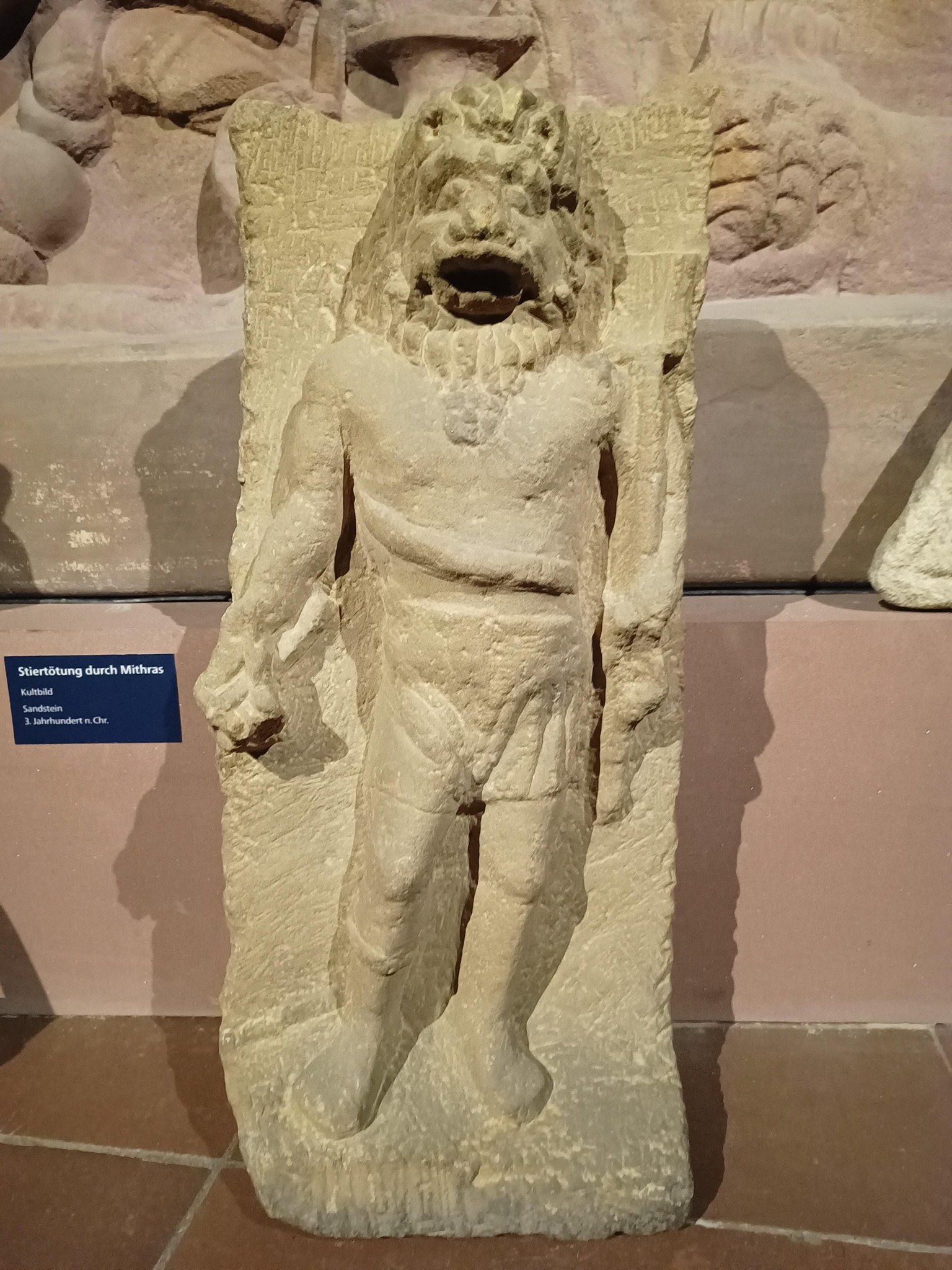
This lion-headed figure from Nida, present-day Frankfurt-Heddernheim, holds a key and a shovel in his hands.
Only the left section survives, showing Sol above the torchbearer Cautopates beside the cave border.
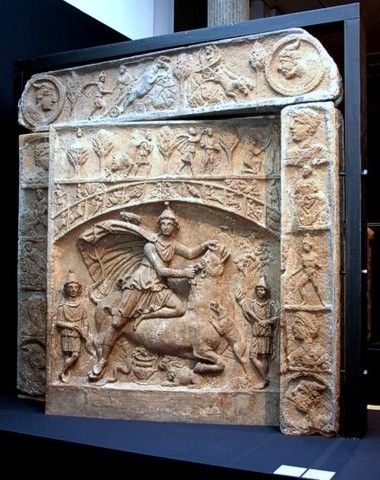
This relief is so well-known that it has been reproduced in nearly every handbook of archaeology and of history of religions.
Relief in red sandstone originally standing on a base in Mithraeum I at Heddernheim, ancient Nida, featuring the bull-slaying scene.
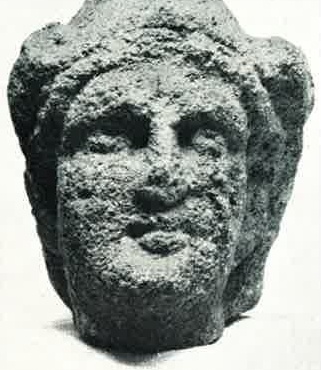
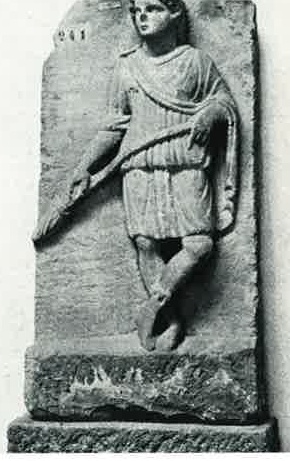
Sandstone fragment from Mithraeum I at Heddernheim, ancient Nida, probably the damaged head of a torchbearer, often misidentified as Mercury.
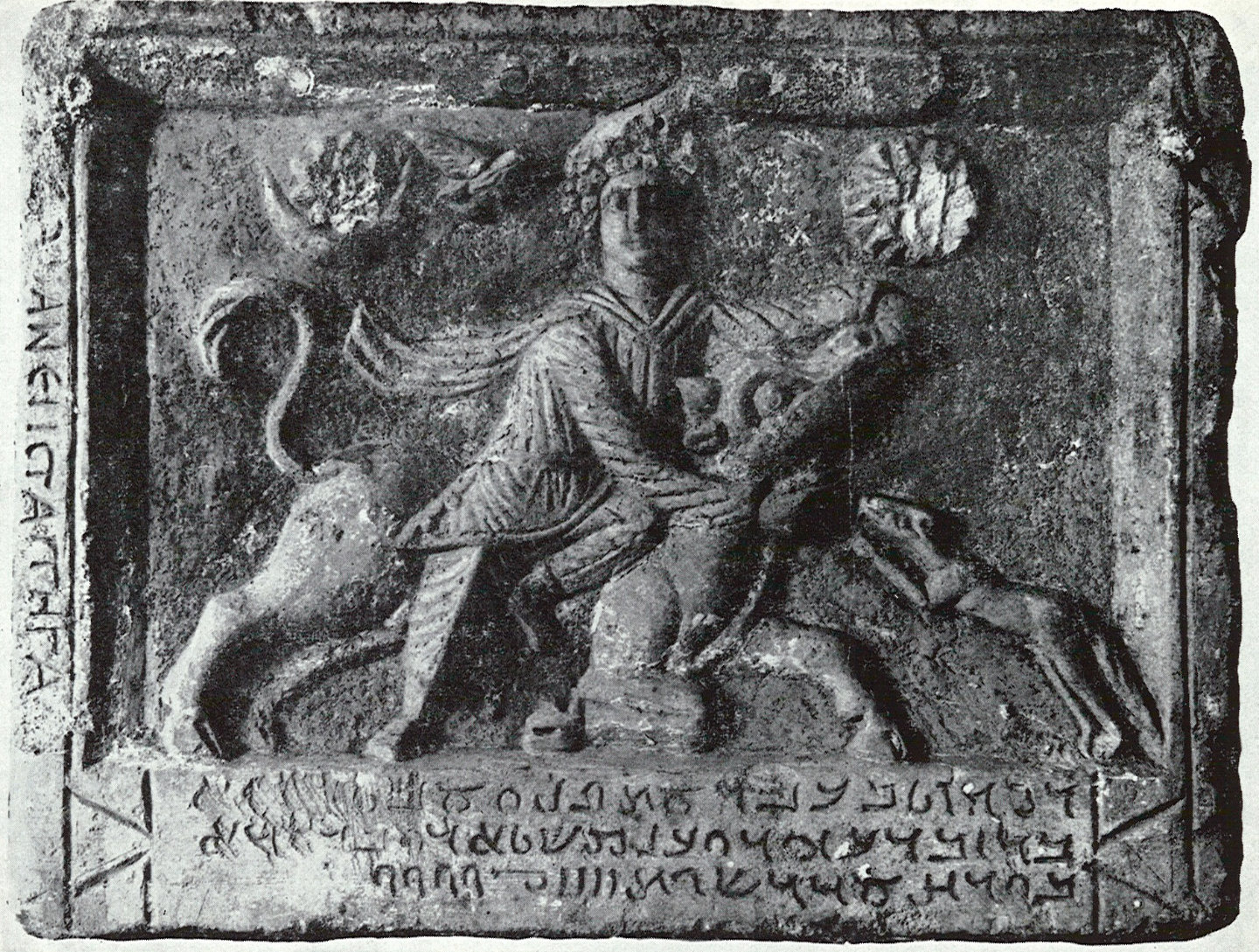
One of the reliefs of the Dura Europos tauroctonies includes several characters with their respective names.

Emperor Caracalla ordered one of Rome’s largest temples to the god Mithras to be built in the baths bearing his name.

Anazarbus was an ancient Cilician city. Under the late Roman Empire, it was the capital of Cilicia Secunda.
Vicus Baudobriga was a Roman settlement on the left bank of the Rhine, founded during the conquest of Gaul. Its development reflects the Rhine’s shifting role as frontier, trade route, and fortified border before Roman withdrawal.
Under Roman rule from the 1st century CE, Histria was incorporated into the province of Moesia. The city is noted on the Tabula Peutingeriana, which places it 11 miles from Tomis and 9 miles from Ad Stoma.
Gimmeldingen is a village, part of the town of Neustadt an der Weinstraße, Germany. Its origins, along with the village of Lobloch (which used to be connected), can be traced back to Roman settlements in 325 AD.
This marble tablet found at Portus Ostiae mentions a pater, a lion donor and a series of male names, probably from a Mithraic community.
Bactria occupied a distant eastern horizon associated with Iranian cultural traditions and the wider background of Mithraic interpretations.
This supposed Mithraic altar from Soulan in the Pyrenees was later identified as a modern forgery, including both the inscription and the alleged cave context in which it was said to have been discovered.
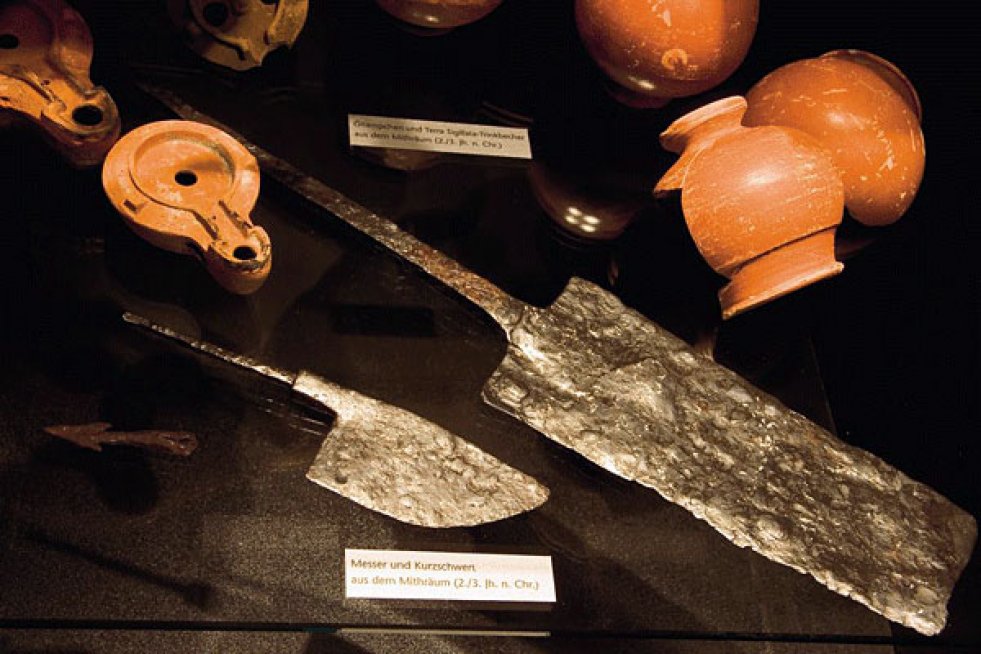
The Mithraeum of Kunzing was an underground building, oriented east-west. The entrance was probably on the east.
Persia occupied a central place in ancient and modern interpretations concerning the origins and eastern background of Mithraic traditions.
