Your search St Albans gave 2762 results.

Bronze lamella probably from Rome, found in 1729, bearing a dedication to Sol Sanctissimus by C. Veratius Faustinus, a soldier of the third praetorian cohort.
Large limestone jar from room Z of the S. Prisca Mithraeum, fitted with a small cylindrical vase and a lid bearing the graffito "Te cauterio i Saturne i Ata[r i] Opi".
Large marble slab found in 1648 near S. Silvestro in Capite, inscribed with a Latin dedicatory poem forming a cypher-acrostic for TAMESIUS and AUGENTIUS, with records of leontica and chrysos initiations, dated to 362 A.D.
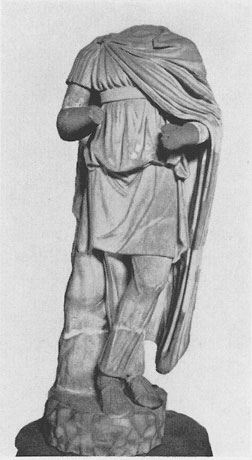
Penthelic marble statue of a standing torchbearer in Eastern attire, cross-legged, with head and torch arm broken off, probably 2nd century A.D., found at Antium (modern Anzio).
Small stone block inscribed to Deo Soli, found walled up in an Arabic wall near a Roman spring at Sicca Veneria (modern Kef).
Statuettes of eastern deities including Mithras, found in a walled compartment near a Punic cemetery at Duimes, Carthage.
Partial list of Mithraic initiatory grade titles attested in inscriptions from the Mithraeum of Dura-Europos, Syria, 3rd century A.D.
Limestone stele recording endowments for the feast of the Mithrakana by Antipater and his son Gaios, found at Amorium (modern Hisarköy), Phrygia.
Rough-hewn statuette found at Emir Ghasi in Lycaonia, once thought to represent a Mithraic soldier; according to Cumont, a modern forgery.
Marble funerary stele dedicated to the soldier Aurelius Lucanus, a devotee of Mithras, found at Amasya (ancient Amasia), Pontus.
Marble bust from the south-east slope of the Acropolis at Athens, from the Attic mountain Pentelikon, depicting a man with an uncovered breast and mantle; probably Mithras, though the head is lost.
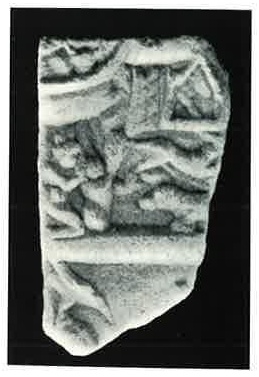
Two fragments of a yellowish marble tauroctony from Acbunar, Moesia Inferior, divided into three registers by two horizontal rims; the upper registers carry subsidiary Mithraic scenes.
Fragment of a marble tauroctony statuette from Artschar, ancient Ratiaria in Moesia Superior, preserving Mithras's head, cloak, right foot, the bull's head, and feet.
Inscription from Lopata, Moesia Superior, recording that Apollonides, imperial slave and scrutator of the statio Lamud, restored a Mithraic temple that had collapsed through age at his own expense; dated to the consulship of Gentianus and Bassus, AD 211.
Bronze statuette from Drubeta, Dacia, depicting Mithras placing his left leg on the bull's head — the tauriphoros type — with the bull in a subordinate posture.
Lost altar from Carevac in Glamoč Polje, Dalmatia, dedicated to Deo invicto Soli Mithrae.
Small red sandstone fragment from the Mithraeum at Konjic, Dalmatia, preserving an oblong object — possibly an arm — within a border.
Tauroctony relief mentioned from a mountaintop at Krivošije near Risn, Boka Kotorska, Dalmatia, found before World War I; the relief was lost.
Fragment of an altar from Pócsmegyer, ancient Ulcisia Castra in Pannonia Inferior, dedicated to Invicto Soli Mithrae by a custos armorum of the Cohors milliaria nova Severiana.
Lost altar from Zsámbék near Aquincum, Pannonia Inferior, dedicated to Soli invicto sacrum; found with the preceding piece.
