Your search Tal hal Hariri / Es-Sâlihiyeh / As Salhiyah gave 3725 results.
An unusual feature of this very ancient relief is that Cautopates carries a cockerel upside down, while Cautes carries it right-side up.

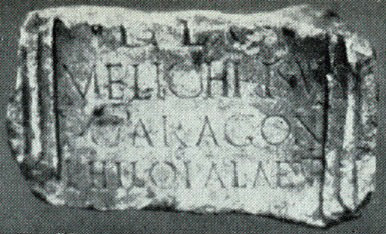
This marble slab found near the Casa de Diana in Ostia bears two inscription with several names of brothers of a same community
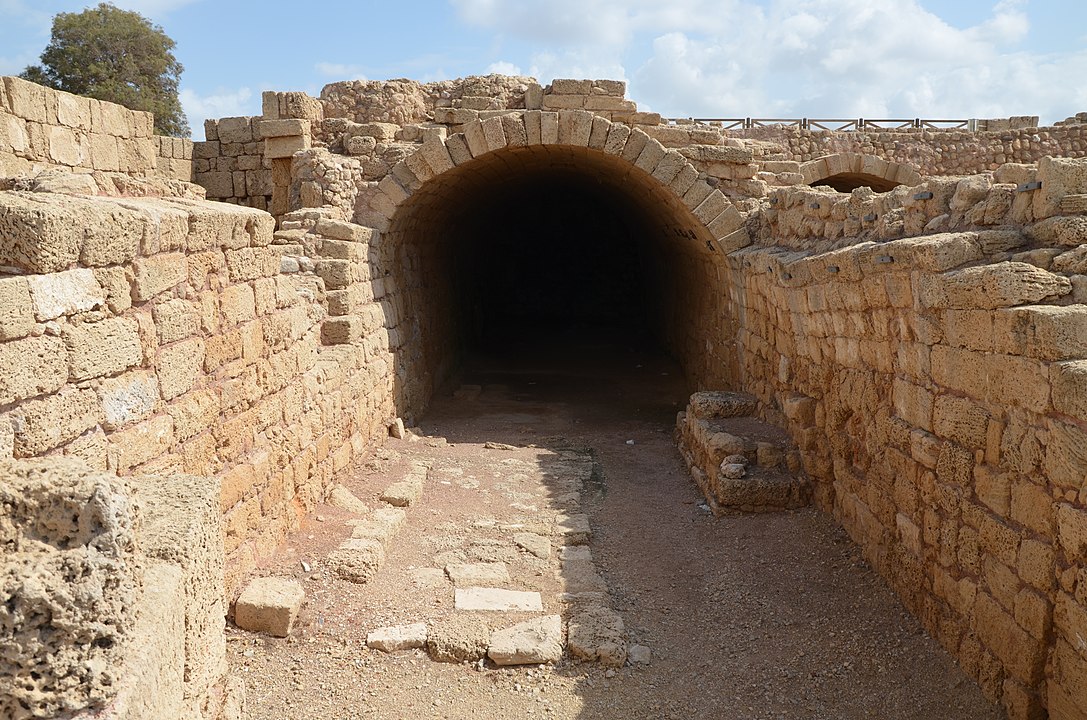
This shrine developed towards the end of 2nd century and remained active until beginning 4th.
Small bronze statuette in Oriental dress from the Walters Art Gallery, Baltimore, depicting a figure no longer considered a Mithraic object.
An altar found in 1889 at Caldas de Reyes (ancient Iria Flavia) in Galicia, bearing a fragmentary dedication to Cautes, possibly by a person named Antonius.

Veles lies within the central Balkan communications corridor historically connected with Roman Macedonia.
The locality of Vadas belongs to the Danubian hinterland associated with Roman Pannonia.
Thessalonike became one of the principal urban centres of the Balkans and the Via Egnatia corridor.
The island of Thasos occupied an important position in the northern Aegean maritime network.
The locality of Radeša belongs to the mountainous hinterland of the central Balkans.
Jiu valley site associated with the defensive system linking Dacia to the southern Danubian regions.
Besnyő belongs to the settlement landscape of the middle Danube frontier zone.
Besigheim stands at the confluence of the Enz and Neckar rivers in the frontier region of southwestern Germania.
Thagaste was a Roman-Berber city in present-day Algeria, now called Souk Ahras.
The base of a statuette, preserving only one foot of Cautes, found at Luguvallium (modern Carlisle), bearing a dedication to Deus Cautes by Iulius, the archietus.
A collection of ritual vessels from the Mithraeum at Pons Saravi (modern Saarburg) in Belgica, including a stone vase, a plate with a lion's head in relief, a terra-sigillata plate with a hunting scene, and an urn filled with ash, bird bones, and rings…
Several fragmentary stone bases and altars without identifying marks, one of which has a semicircular hole in one of its sides, found in the Mithraeum at Pons Saravi (modern Saarburg) in Belgica.
Two bronze statuettes of youthful women in flying cloaks with outstretched hands holding an object, possibly representing the Seasons, from the Mithraic sanctuary at Angleur near Liège in Belgica.
A torch end held by a hand in the pose of a dadophore, and another hand holding a small offering, found at the south-east cemetery adjacent to the Mithraeum of Les Bolards (ancient Venetonimagus) in Lugdunensis.
Two small stone fragments, possibly from a base, found at the Mithraeum of Les Bolards (ancient Venetonimagus) in Lugdunensis.
