Your search Terme di Caracalla gave 2863 results.

White marble statuette of a cross-legged Cautes with an upraised torch and a cock at his feet, with traces of blue and red paint, found during regularisation works in the Tiber and now in the Museo Nazionale delle Terme.
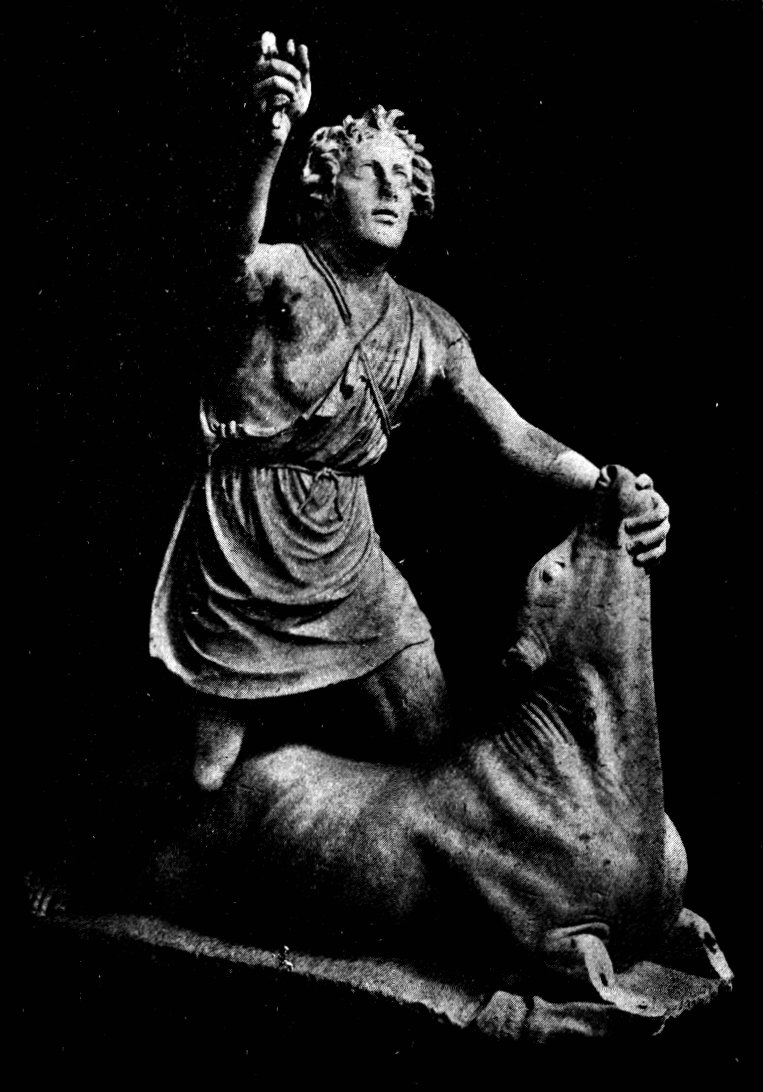
The person who commanded the sculpture may have been M. Umbilius Criton, documented in the Mitreo della Planta Pedis.
Late Roman funerary inscription from Antium commemorating the senator, governor of Numidia and Mithraic pater Alfenius Ceionius Iulianus Kamenius.

Emperor Caracalla ordered one of Rome’s largest temples to the god Mithras to be built in the baths bearing his name.
This marble dedication from Puteoli was offered to Sol Invictus and the genius of the colony by Claudius Aurelius Rufinus together with his wife and son.
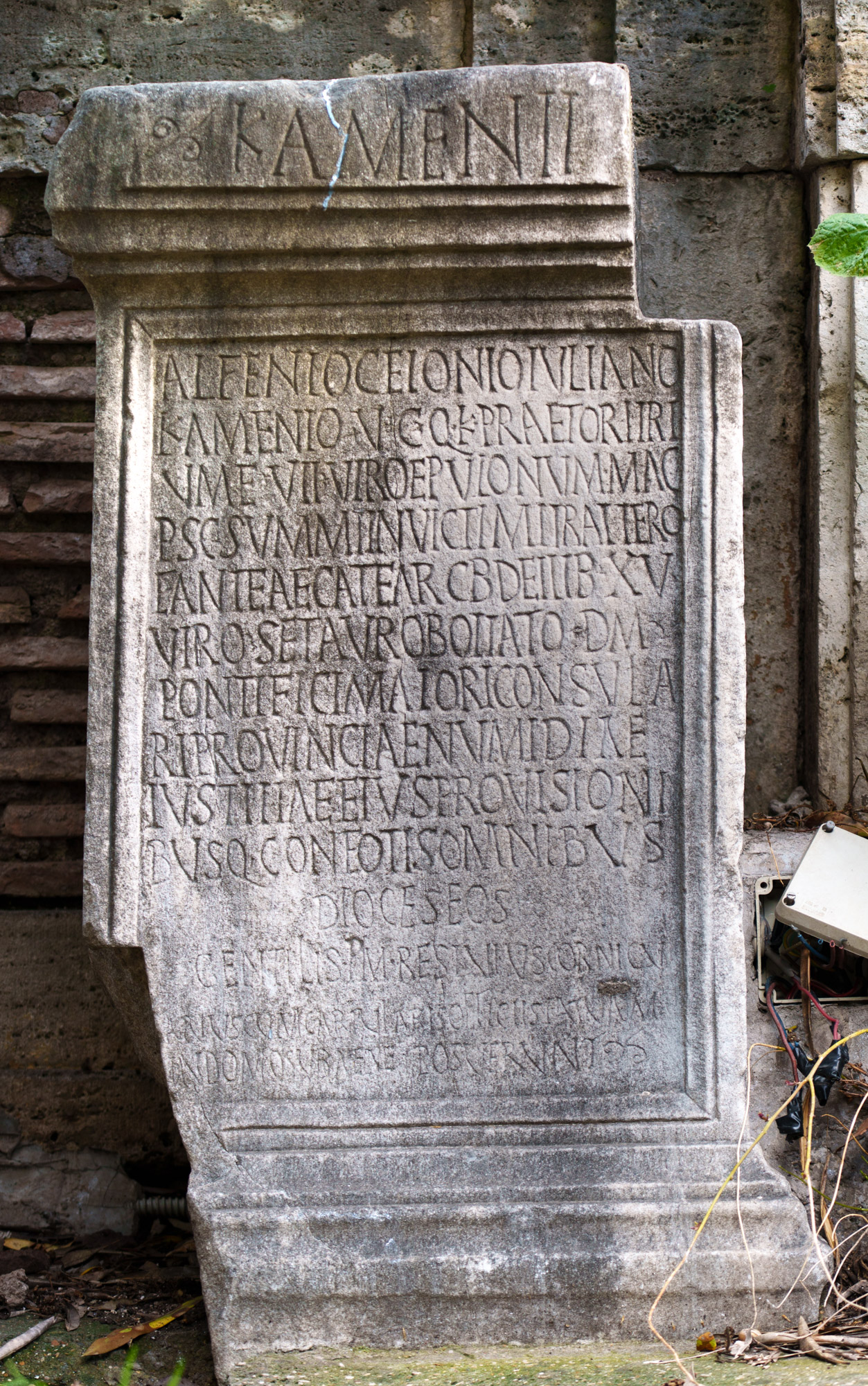
Honorific marble statue base dedicated to the senator and Mithraic pater Alfenius Ceionius Iulianus Kamenius by members of his provincial administration.
Marble altar dedicated at the Vatican Phrygianum in Rome by the Mithraic pater Alfenius Ceionius Iulianus Kamenius in 374 CE.
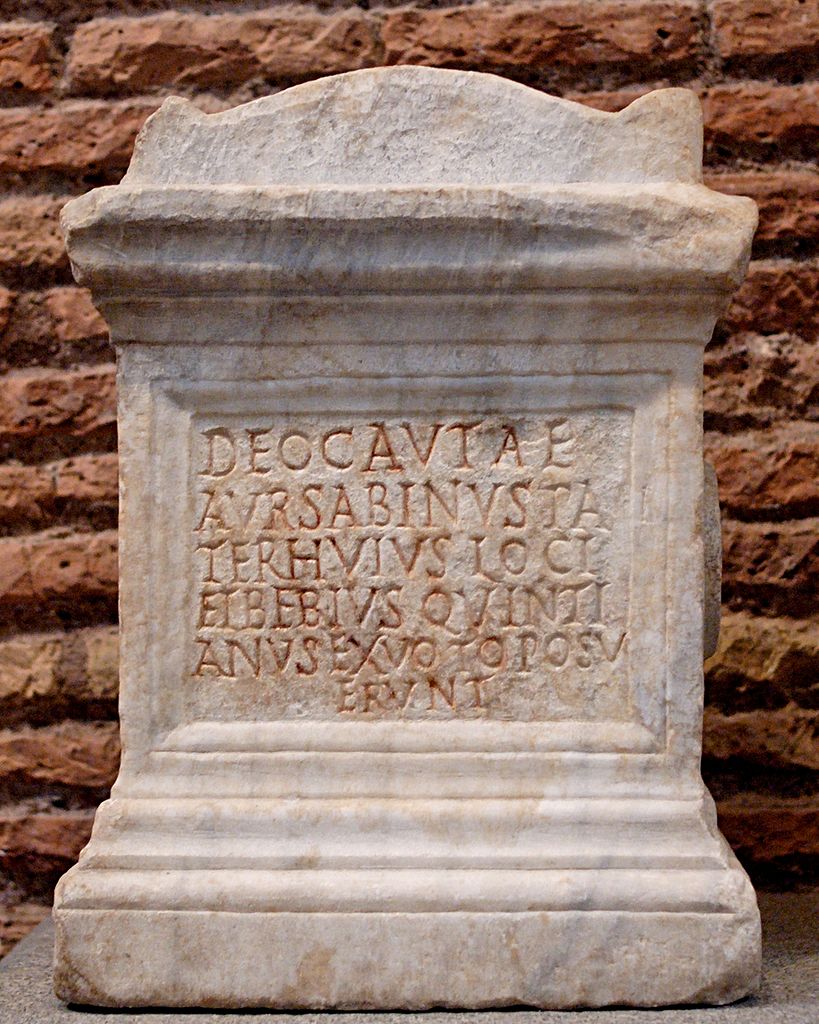
These two parallel altars to the diophores were dedicated by the Pater and a Leo from the Mithraeum of S. Stefano Rotondo.
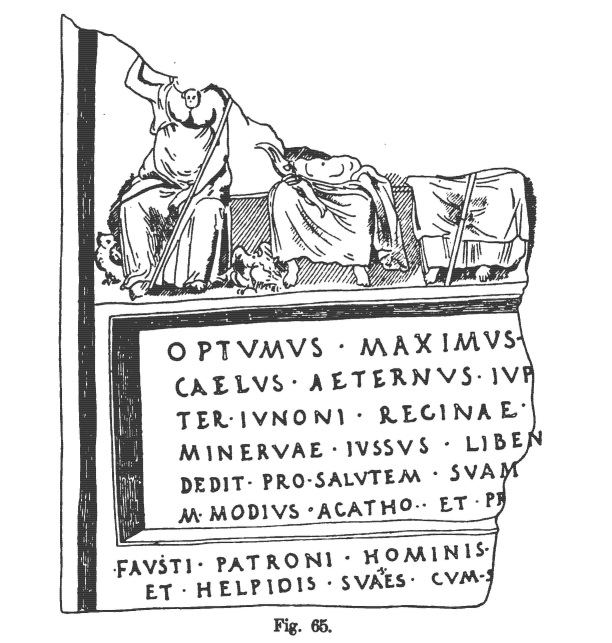
This marble relief bears an inscription by Marcus Modius Agatho, who dedicated several monuments to Mithras on the Caelian Hill in Rome.
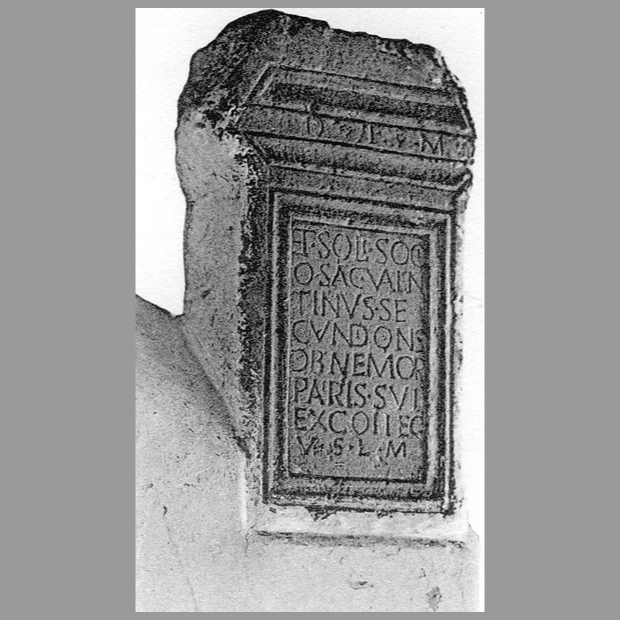
This monument, now lost, was discovered in the 16th century, probably on the site of Sublavio statio.
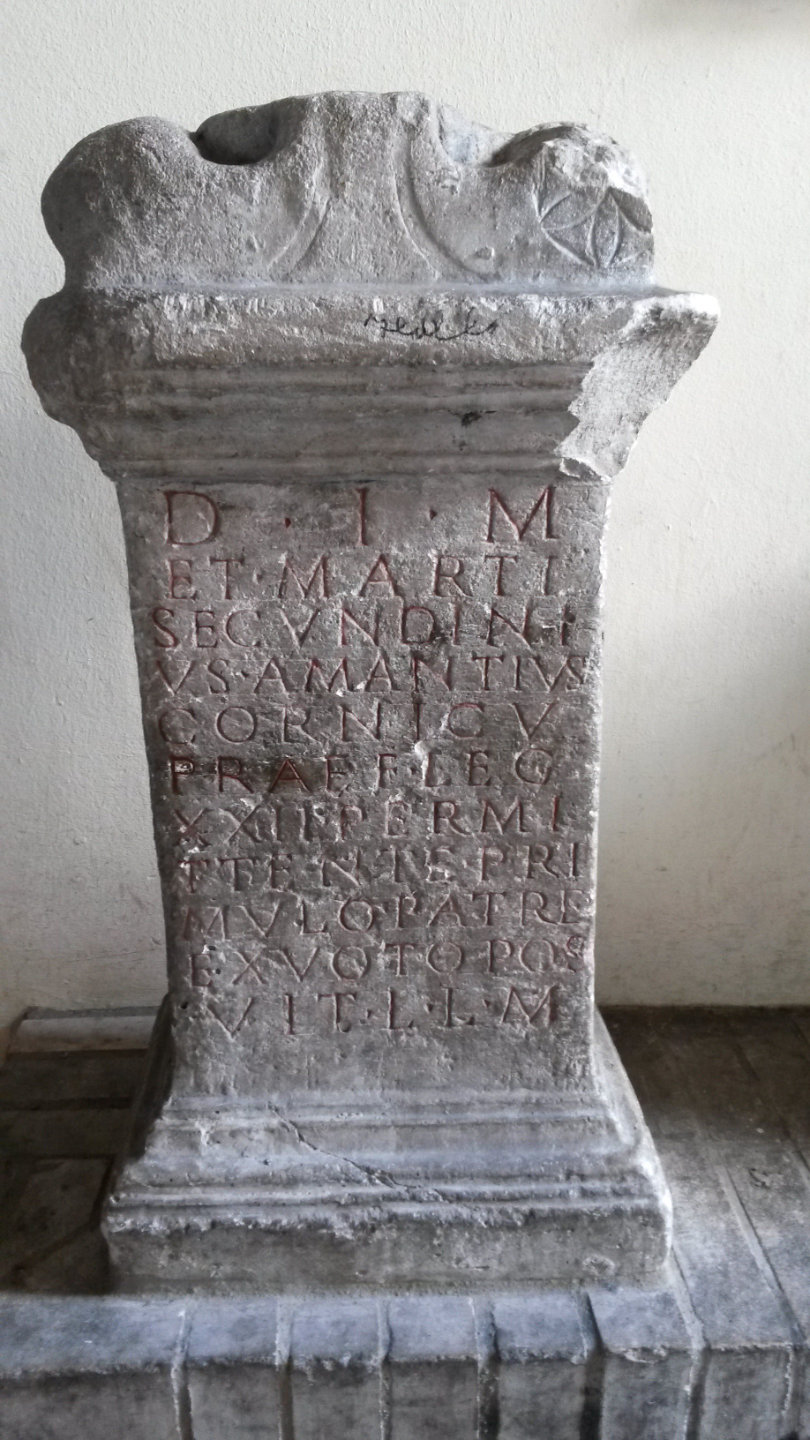
This altar has been unusually dedicated to both gods Mithras and Mars at Mogontiacum, present-day Mainz.
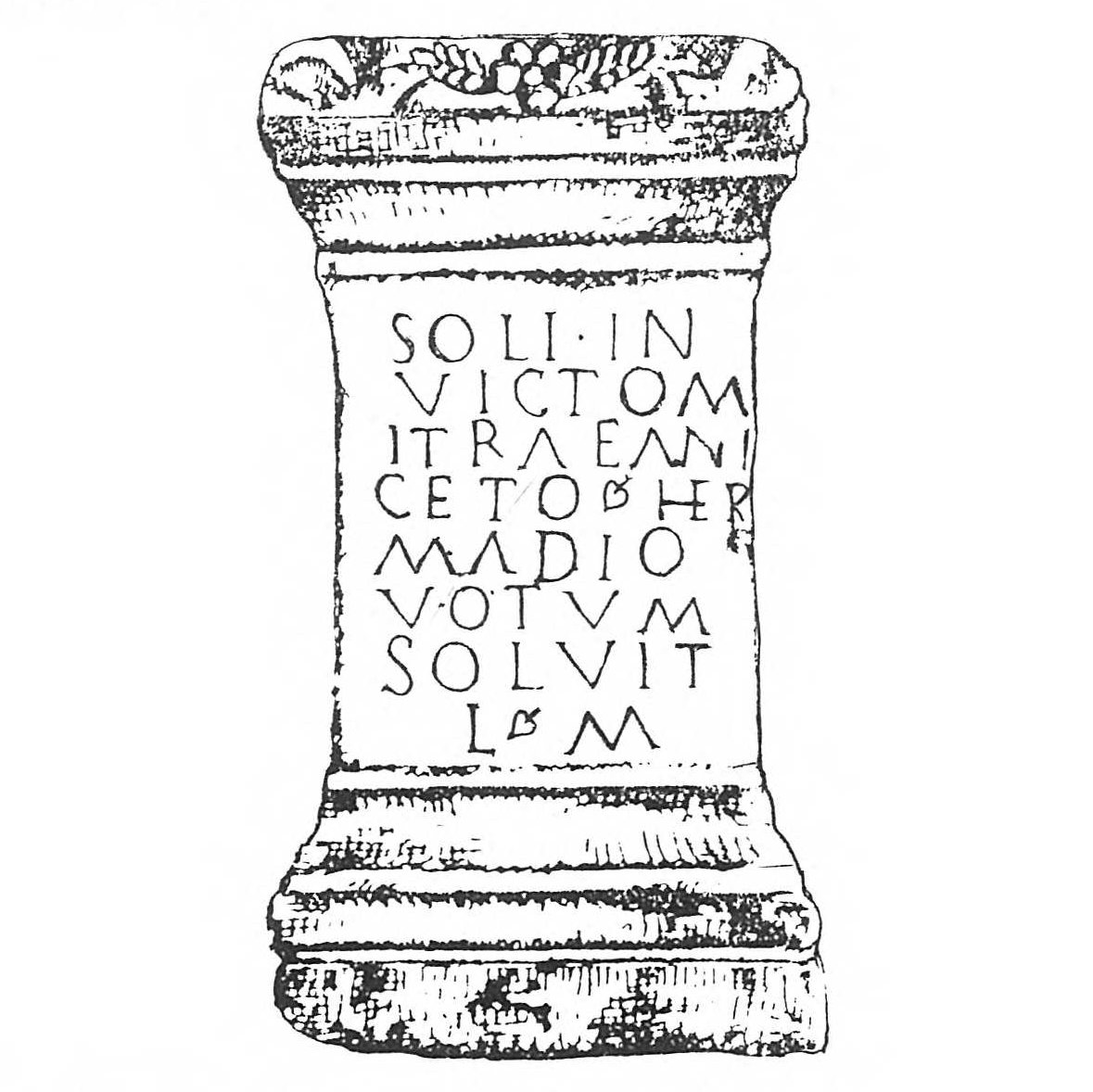
This altar was erected by Hermadio, who also signed other monuments in Dacia and even in Rome.
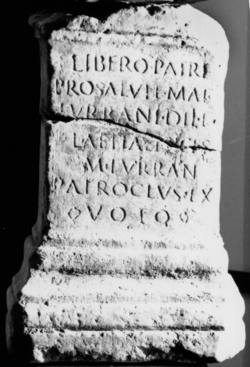
This altar was erected by Hermadio, who also signed other monuments in Dacia and even in Rome.
As this short inscription indicates, Aemilio Epaphorodito was both Pater and priest of the Mithraeum of the Seven Spheres.
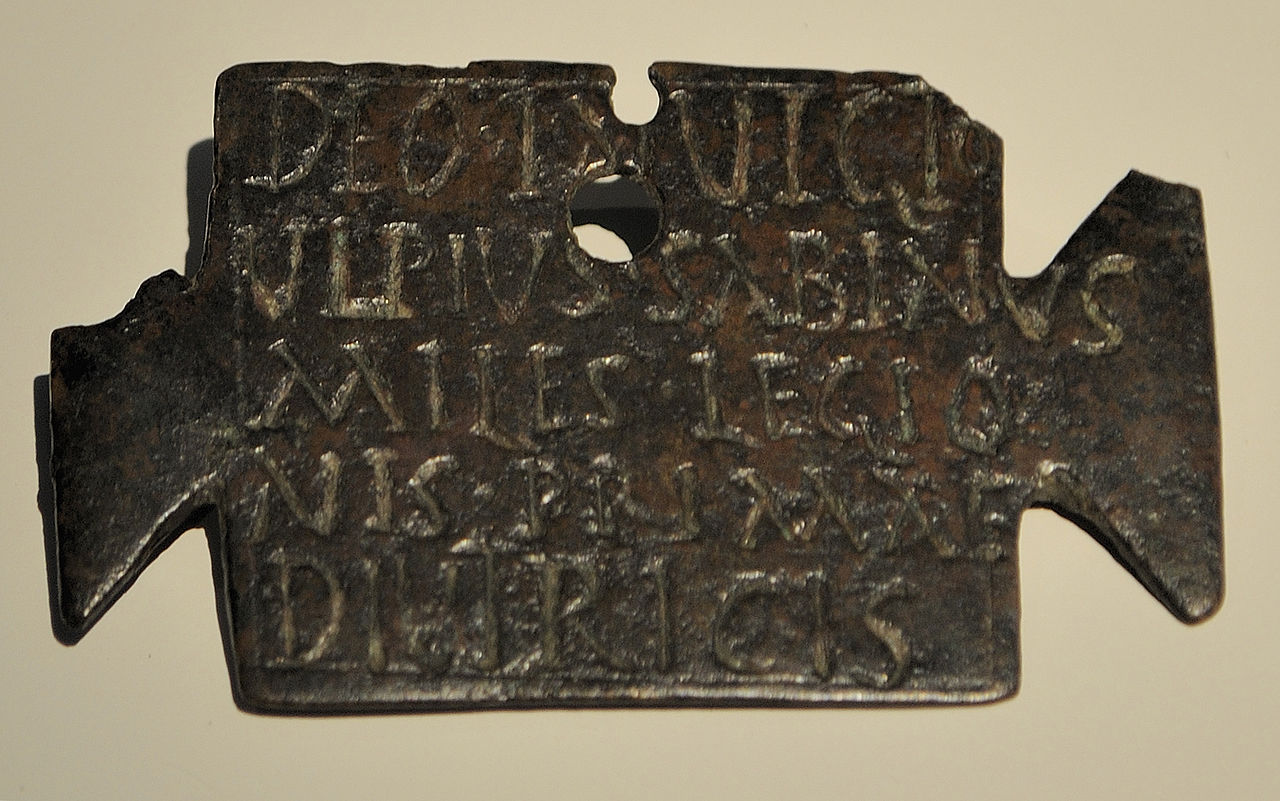
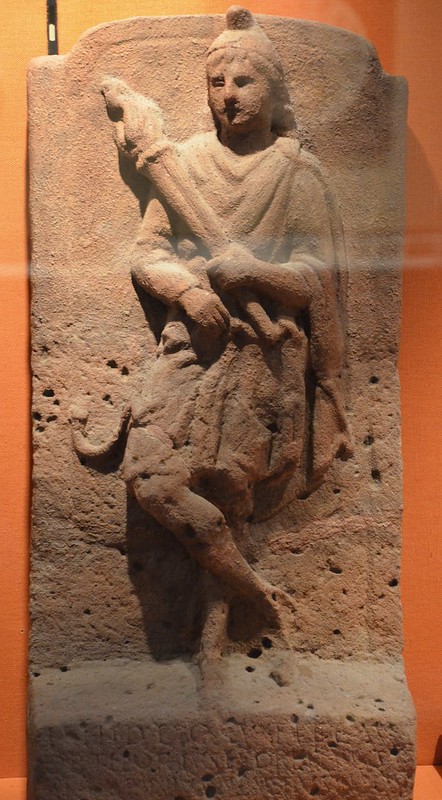
Reliefs of Cautes and Cautopates dedicated by Florius Florentius of Saalburg and Ancarinius Severus.
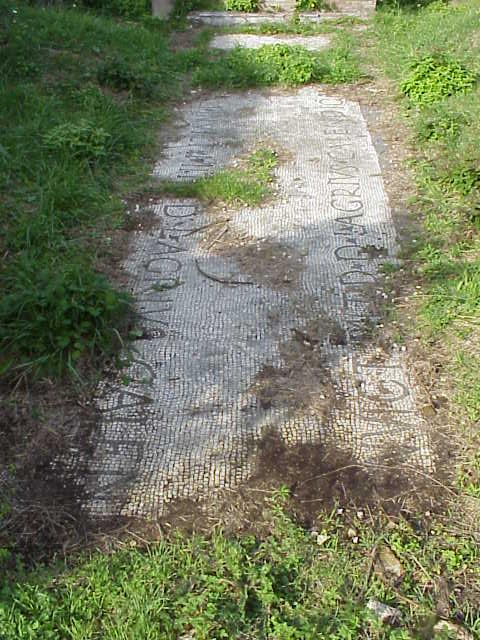
It bears an inscription repeated on each side of the podia.

This remarkable marble relief from the end of the 3rd century was discovered in the most remote room of the Mithraeum in the Circo Massimo.
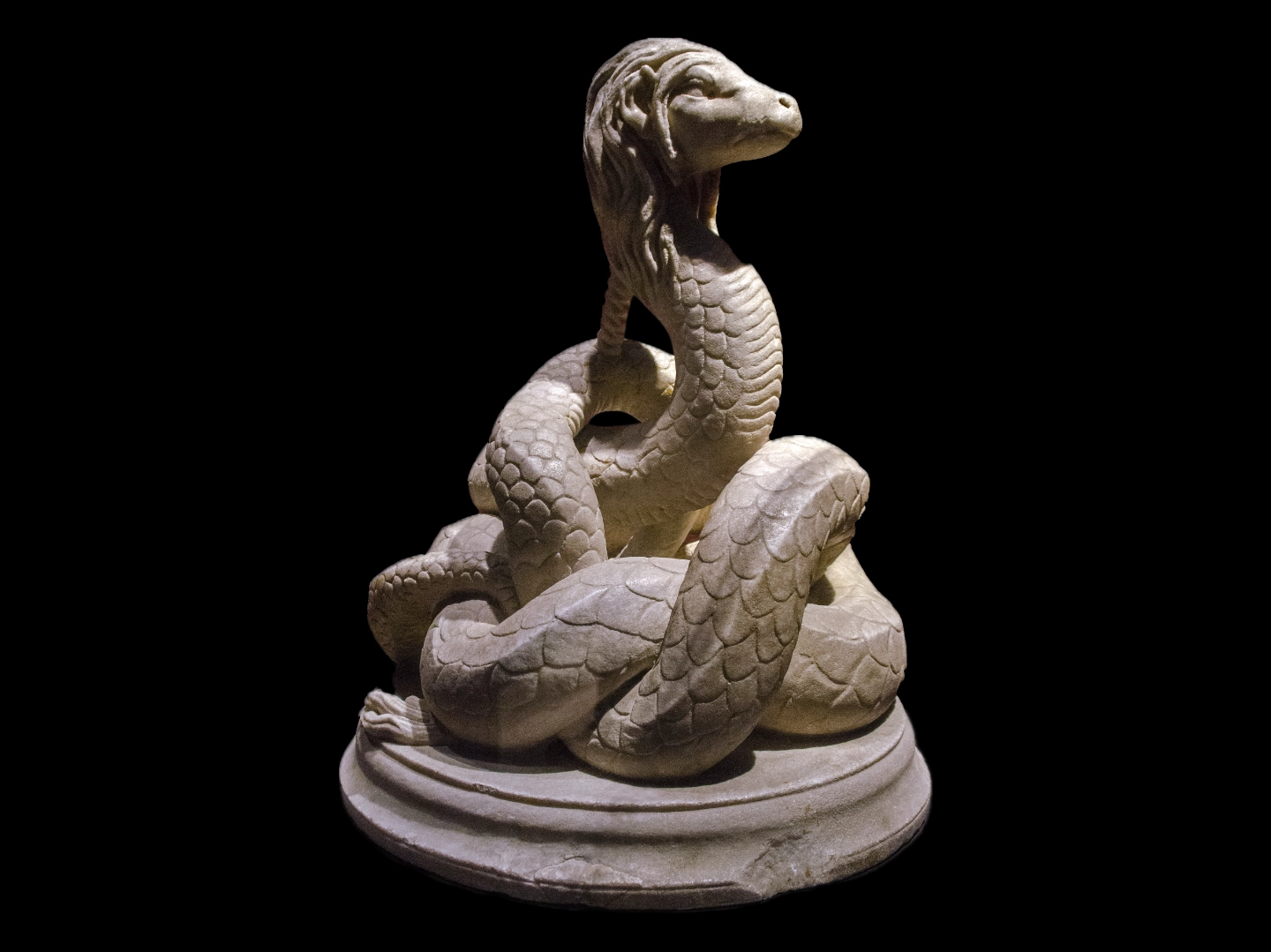
At Rome’s twilight, amid political upheaval and Christian ascendancy, Vettius Agorius Praetextatus embodied pagan intellect, virtue, and authority across senatorial, military, and mystical spheres.
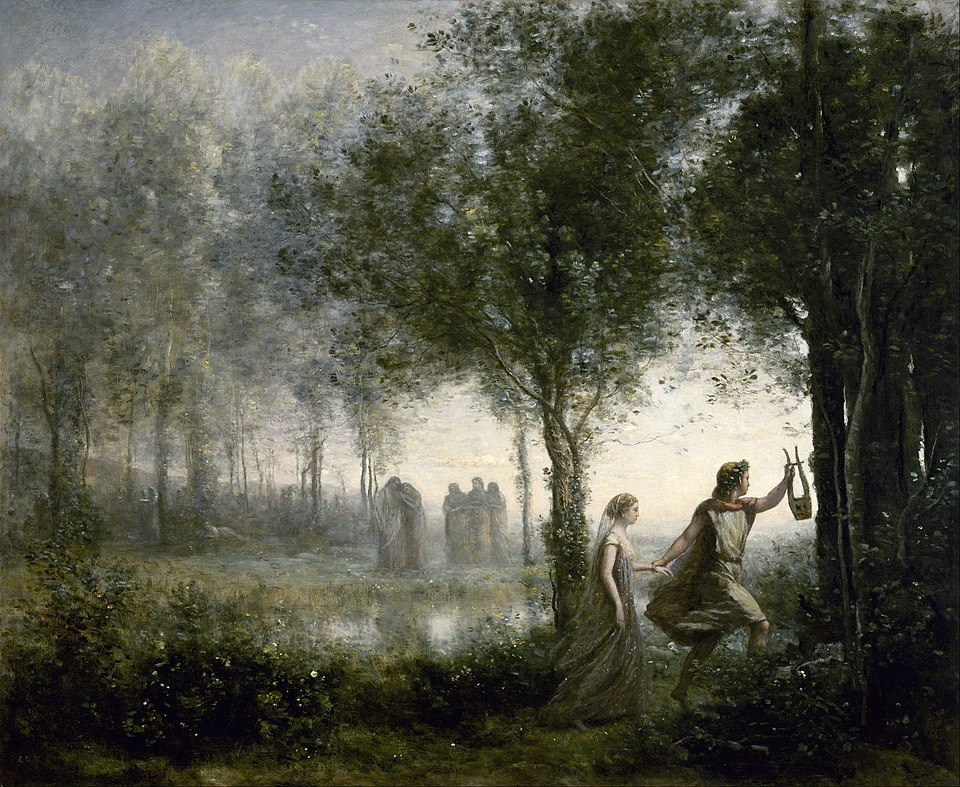
By reading Orphic theology together with Eleusinian ritual practice, the mysteries emerge as a structured mystagogy of transformation: a disciplined passage from forgetfulness (Lethe) to knowledge (aletheia), from mortality to participation in the divine.
