Your search Val di Non gave 2351 results.

Marble relief fragments from the cult niche of the Mitreo della Planta Pedis at Ostia, preserving the bust of Sol in radiate crown, the raven's tail, the bust of Luna in crescent, and parts of the rocky border.
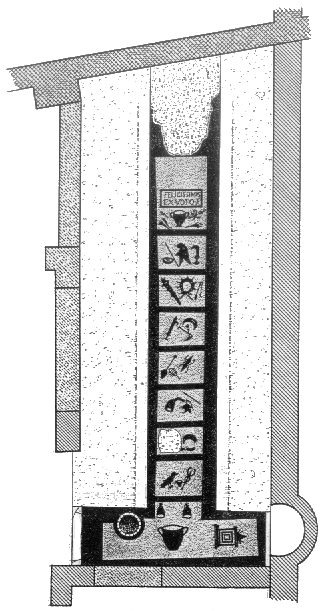
The Mithraeum Felicissimus has a floor mosaic depicting the seven mithraic grades.

Landowner from Augustobriga, transferred to Tarraco by Antoninus Pius and owner of the villa of Els Munts and its Mithraeum.
Sandstone altar with patera from the rock sanctuary at Kreta, Moesia Inferior, bearing a Greek inscription of uncertain reading, possibly a thanksgiving to Mithras.

Senior Mithraic priest of Ostia whose inscriptions preserve rare and unique epithets of Mithras, including Incorruptus Juvenis and Indeprehensibilis.

Member of a Mithraic community at Stockstadt who dedicated altars to Cautes and Cautopates.
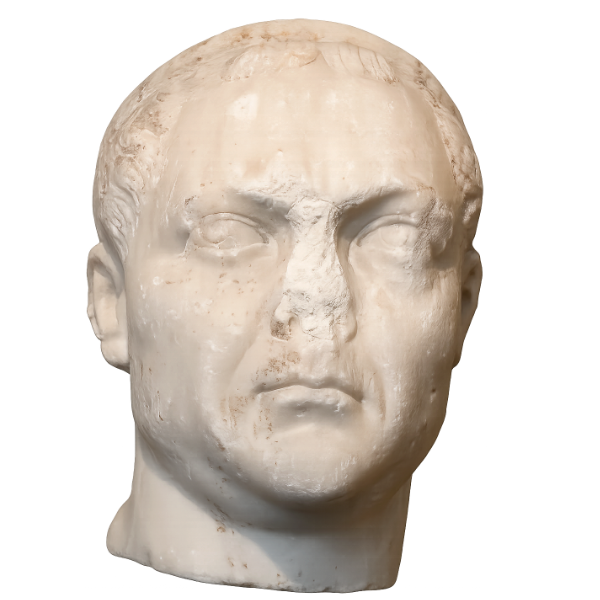
Roman emperor from 253 to 260, he was taken captive by Shapur I of Persia. He was thus the first emperor to be captured as a prisoner of war.
An altar found in 1889 at Caldas de Reyes (ancient Iria Flavia) in Galicia, bearing a fragmentary dedication to Cautes, possibly by a person named Antonius.
An altar in the shape of a mystic chest found at Aquileia in 1828, inscribed with a brief dedication to the Deity Mithras Sol.
Fragmentary inscription of unknown provenance, preserving only a pro salute formula and the name Attius Valerianus.

Luguvallium was a Roman settlement and fort in northern Britannia, today Carlisle.
Vindonissa served as one of the principal legionary bases of the Upper Rhine frontier.
Pautalia became an important urban and thermal centre in the southwestern Balkans.
Dionysopolis occupied a prominent position on the western coast of the Black Sea.
Dierna occupied a strategic position along the Danube corridor near the Iron Gates region of southwestern Dacia.
Abudiacum occupied a position along the important road network linking Raetia with the Alpine regions.
San Valentino in Abruzzo Citeriore is a mountain hill town in the province of Pescara, part of the Abruzzo region in central Italy.
Torrita di Siena is a comune in the Province of Siena in the Italian region of Tuscany, located about 80 kilometres southeast of Florence and about 40 km southeast of Siena.
A silver votive leaf from Deneuvre in Belgica, bearing a dedication to the unconquered god by a devotee named Germanus, with an archaic spelling of invicto.
An inscription on the base CIMRM 940 from Interanum (modern Entrains-sur-Nohain) in Lugdunensis, recording a dedication to Augustus and to the unconquered god Mithras Sol, made by a dedicant named Castor.
