
Biography
of Gaius Valerius Avitus
- Gaius Valerius Avitus, a decurion, may have been associated with a Mithraic community at the Mitreo dels Munts.
- Also recorded as Duumvir of Tarraco.
- Attested in 140 – 170.
- Born at Augustobriga, Tarraconensis, Hispania.
- Attested at Vil·la dels Munts, Tarraconensis, Hispania (TNMM 110).
TNMP 290
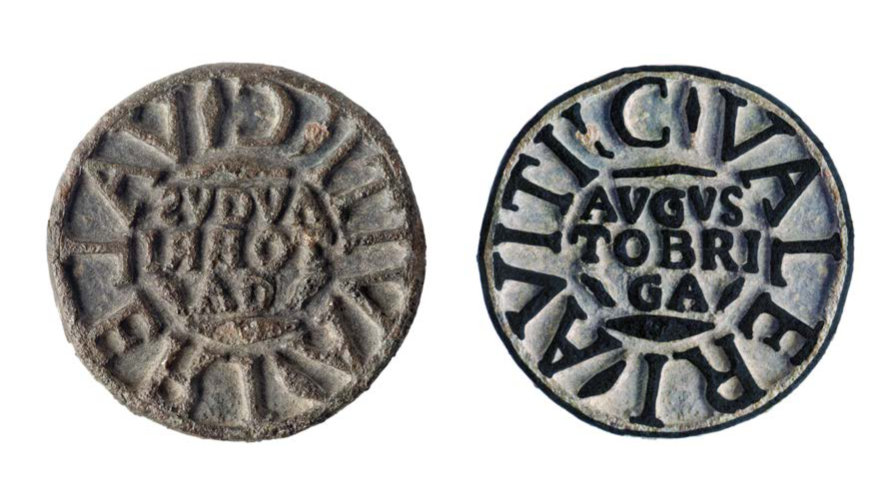
Caius Valerius Avitus was a wealthy landowner and municipal magistrate of the second century AD, originally from the municipium of Augustobriga in the territory of the Pelendones, near modern Muro de Ágreda in northern Hispania. His origin is explicitly recorded on a bronze signaculum discovered at the villa of Els Munts, which bears the retrograde inscription C(ai) Valeri Aviti / Augus / tobri / ga, and is confirmed by a dedication erected at Tarraco by his mother Valeria Firmina.
According to an inscription from Tarraco (RIT 352 = CIL II²/14, 1215), Avitus was translatus ab Divo Pio ex municipio Augustobrigensi in coloniam Tarraconensium, having been transferred from Augustobriga to Tarraco by order of Emperor Antoninus Pius. He subsequently attained the office of duovir, the highest magistracy of the colony. The reasons for this unusual imperial intervention remain uncertain. Joaquín Ruiz de Arbulo has suggested that it may have been connected with the political reorganisation of the province following the conspiracy of Cornelius Priscianus in AD 145, although this interpretation remains hypothetical.
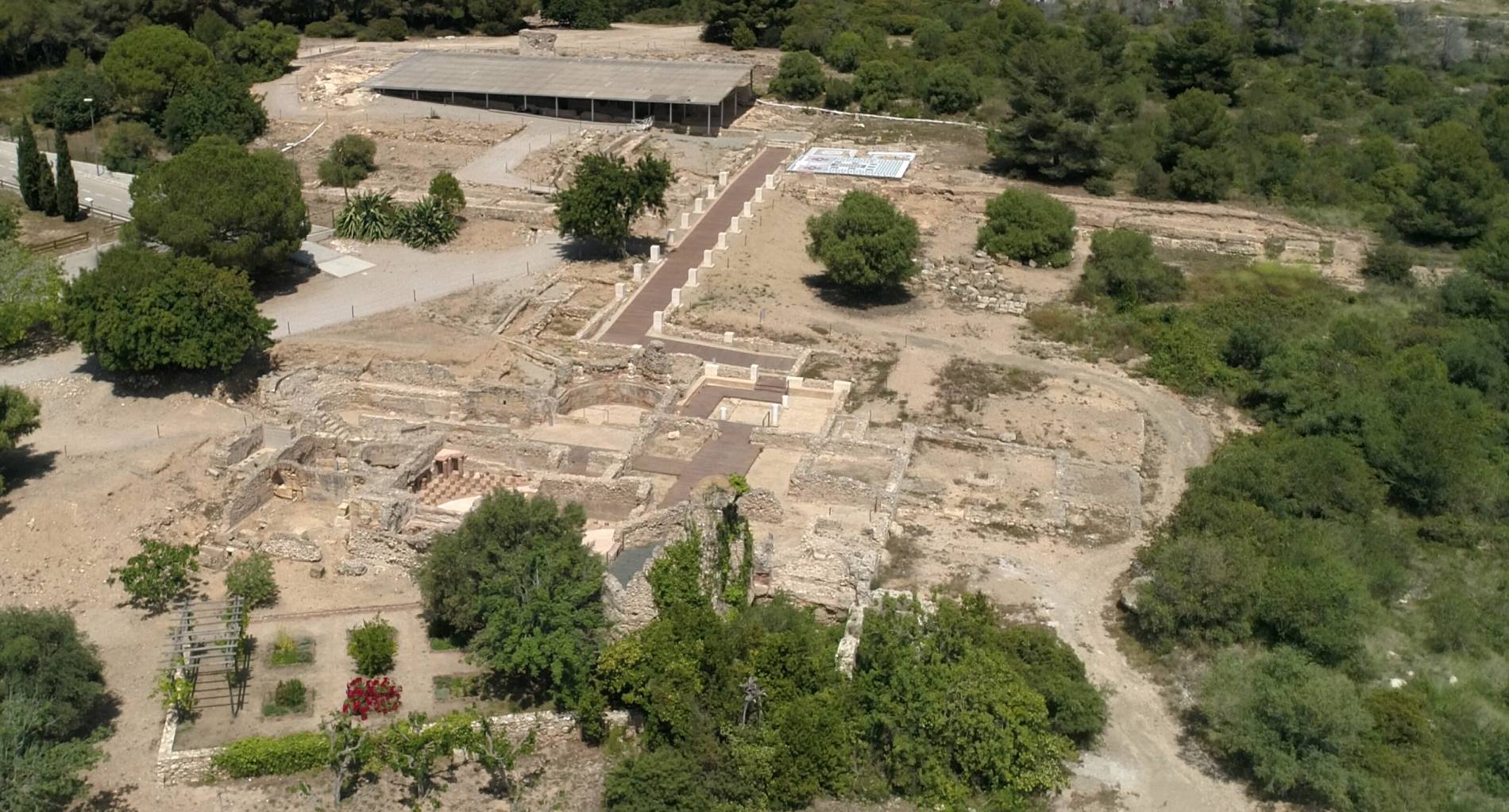
Avitus and his wife Faustina are identified as the owners of the villa of Els Munts through an inscription commemorating the construction of a cistern and fountain (Ex praecepto Aviti et Faustinae…). Archaeological evidence indicates that extensive renovations were undertaken during their ownership, including improvements to the bath complex, new decorative programmes, sculptures, mosaics and hydraulic installations. The estate also contained a Mithraeum, establishing a direct connection between Avitus and the larger Mithraic site in Hispania.
The cultural environment of the villa appears to have been strongly Hellenised. Greek painted inscriptions referring to the Nemean and Actian games were discovered among its decorative remains, leading Géza Alföldy to emphasise the owner’s familiarity with Greek culture and intellectual traditions. Subsequent scholarship refined some of Alföldy’s readings but broadly confirmed the exceptional Greek character of the decorative programme.
Several other inscriptions may illuminate Avitus’ wider family network. A funerary inscription from Complutum (CIL II 3035) commemorates a C. Valerius Avitus who died at Rome at the age of sixty. While the chronology is compatible with that of the owner of Els Munts, the inscription names a different spouse, Sulpicia Quinta, and provides no link to Augustobriga or Tarraco; the identification therefore remains unproven. By contrast, Tarraconensian inscriptions concerning the inheritance of Lucius Valerius Tempestivus mention Valerius Avitus among the heirs, suggesting that he may have belonged to an influential network of Valerii active in the provincial capital.
The mosaic reproduced in this profile comes from the Roman villa of Els Munts and probably formed part of the decorative programme of the main floor, together with depictions of Mnemosyne and the Nine Muses. The figure has been tentatively identified as Gaius Valerius Avitus, owner of the villa during part of the second century AD.
References
- Joaquín Ruiz de Arbulo Bayona (2023) Un sello perdido, un hombre de confianza, un propietario, una herencia, ¿una conjura imperial? Caius Valerius Avitus, augustobrigense, duoviro de Tarraco y propietario de la villa de Els Munts (Altafulla).
- Josep Anton Remolà Vallverdú (2009) Mitra en la villa romana dels Munts (ager Tarraconensis).
- Josep Maria Puche Fontanilles (2024) Inducir en lugar de deducir. Reflexiones sobre el supuesto mitreo de Els Munts (Tarragona).
- Museu Nacional Arqueològic de Tarragona. Villa Romana de Els Munts.
Attestations
Mitreo dels Munts
TNMM 31
A possible Mithraic sanctuary attached to the luxurious Roman villa of Els Munts, near ancient Tarraco, whose interpretation remains disputed.
Signaculum of Caius Valerius Avitus
TNMM 110
Bronze personal seal of a duovir of Tarraco and owner of the villa of Els Munts.
