Your search Vil·la romana dels Munts gave 370 results.

Marble base formerly in the Villa Negroni and then the Museo Borgia at Velletri, with bas-reliefs on three sides showing Sol in a quadriga, initiates in Oriental dress and other Mithraic scenes; the collection is now dispersed among museums in Naples and Rome…
Marble inscription from the Villa Giustiniani near Porta Flaminia, dedicated by M. Aurelius Euprepes, freedman of the three Emperors, to Sol Invictus Mithras through the priests Calpurnius and Ianuarius, dated to 194 A.D.
Two marble busts of youthful figures with Phrygian caps, probably representing the torchbearers Cautes and Cautopates, from the Villa Borghese collection, found at Formiae.
Red sandstone relief fragment from Mithraeum I at Stockstadt preserving the lower part of Vulcanus with an anvil, hammer, and tongs
Marble altar fragment from Mithraeum II at Ptuj, ancient Poetovio, dedicated by a tabularius et vilicus of the statio Confluentes, a customs station at the junction of Pannonia Inferior and Moesia.
Marble altar with akroteria from Mithraeum II at Ptuj, ancient Poetovio, dedicated to Fonti perenni by Epictetus and Viator, vicarii of Quintus Sabinius Veranus, vilicus of the publicum portorium.
Altar from Mithraeum I at Ptuj, ancient Poetovio, dedicated to Deo invicto Mithrae by Optimus Vitalis, vicarius of Sabinus Veranus, vilicus of the publicum portorium.
Inscription from Mithraeum I at Ptuj, ancient Poetovio, dedicated to Petrae genetrici ex viso by Felix, vicarius of Prudens, slave of Antonius Rufus, vilicus of the publicum portorium Illyricum — one of several Mithraic dedications by this household.
Marble altar with akroteria from Mithraeum I at Ptuj, ancient Poetovio, dedicated to Invicto Mithrae by Festus, vicarius of Primus, vilicus of the publicum portorium.
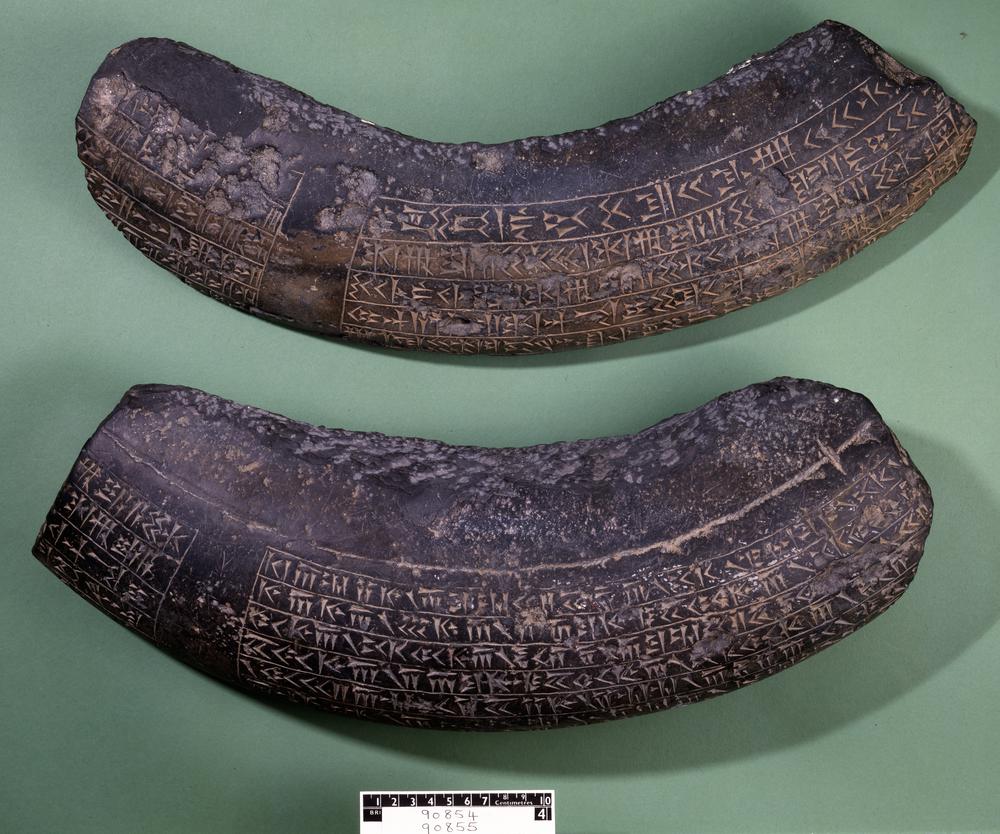
The base of the column bears an inscription that records the rebuilding of a palace at Ectabana ’by the favour of Ahuramaza, Anahita and Mithra’.

Emperor Caracalla ordered one of Rome’s largest temples to the god Mithras to be built in the baths bearing his name.
This fragmentary inscription from Zuccabar, reused in the wall of the Sidi Abd-el-Kader mosque at Affreville, preserves a dedication to Sol Invictus.
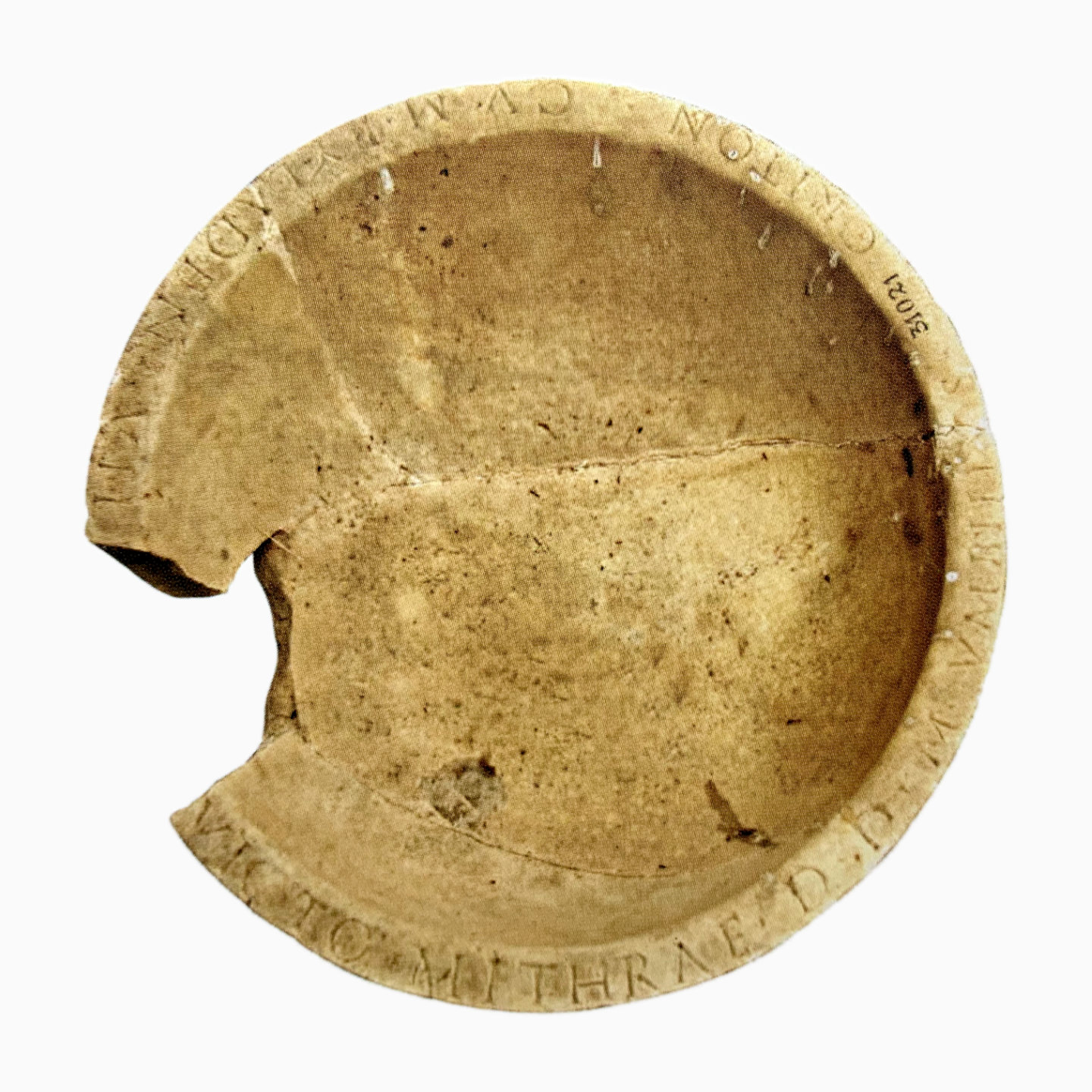
This marble basin found in the Mithraeum of the Footprint bears an inscription of a certain Umbilius Criton, associated with a monumental tauroctonic sculpture also found in Ostia.
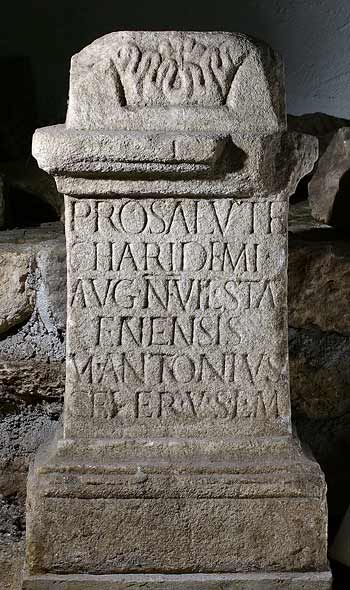
Marble votive altar with inscription to Mithras, featuring coiled, fan-like motifs above the text and associated with the statio Enensis.
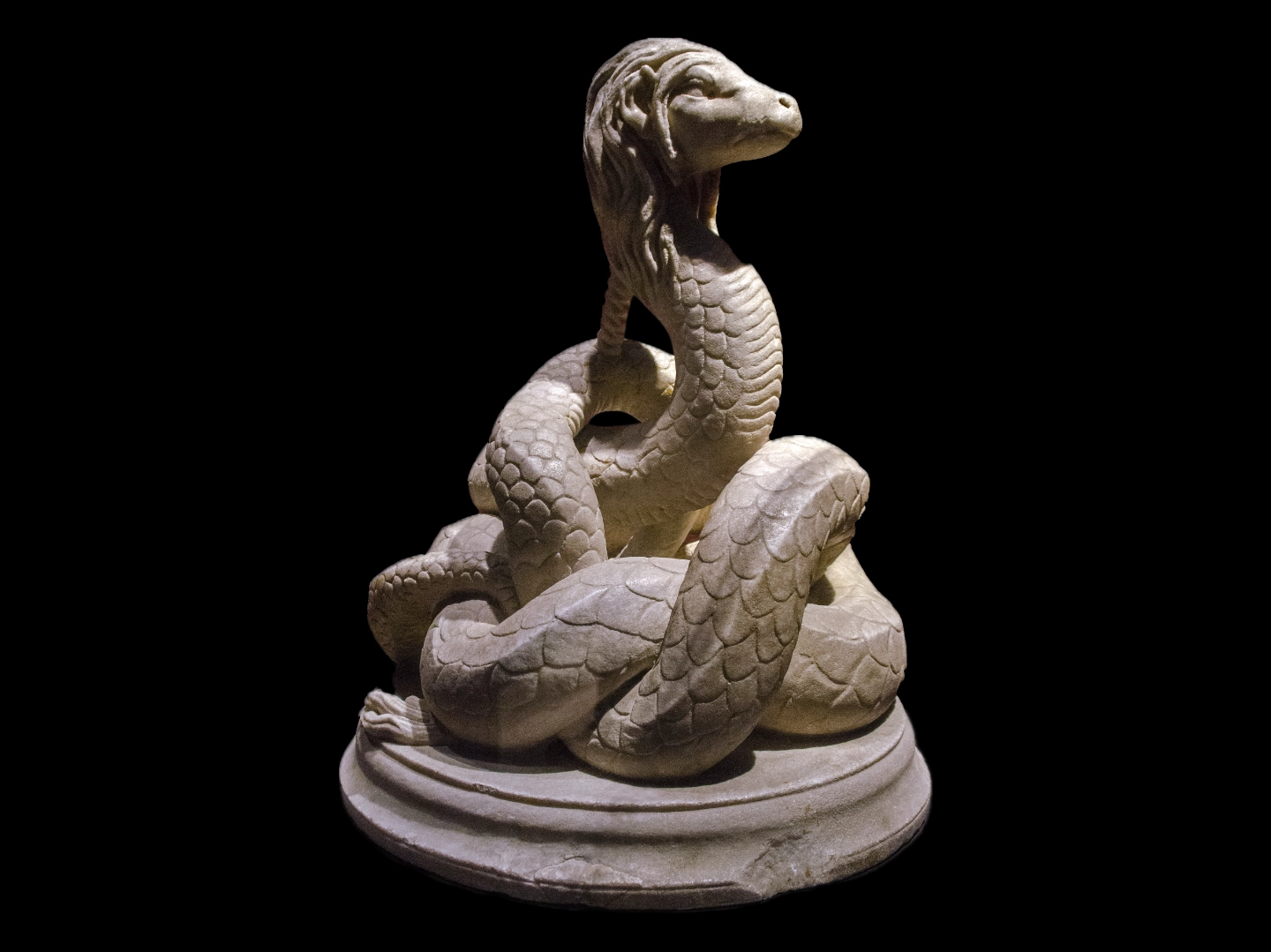
At Rome’s twilight, amid political upheaval and Christian ascendancy, Vettius Agorius Praetextatus embodied pagan intellect, virtue, and authority across senatorial, military, and mystical spheres.
A philosophical study of Iranian civilization that explores its spiritual foundations, including the legacy of Mithraic and Zoroastrian traditions, in order to reflect on Iran’s historical continuity and civilizational meaning.

The Dionysian themed frescos of Pompeii’s Villa of the Mysteries constitute the single most important theurgical narrative to have survived in the Western esoteric tradition.

Saul cutting the oxen to pieces poses as Mithras Tauroctonos in this painting, which adorns the mantelpiece of Henry II’s bedroom at the Château d’Écouen near Paris.
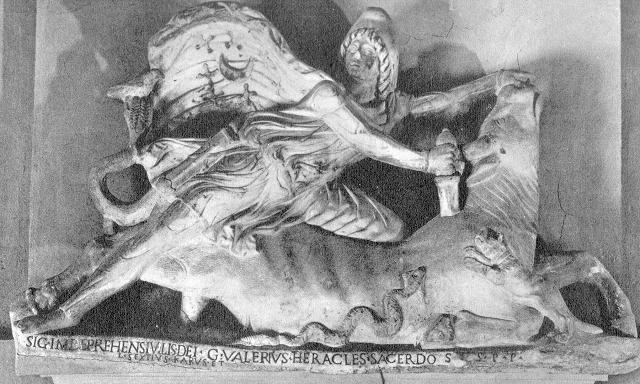
This sculpture of Mithras killing the bull was dedicated to the ’incomprehensible god’ by a certain priest called Gaius Valerius Heracles.
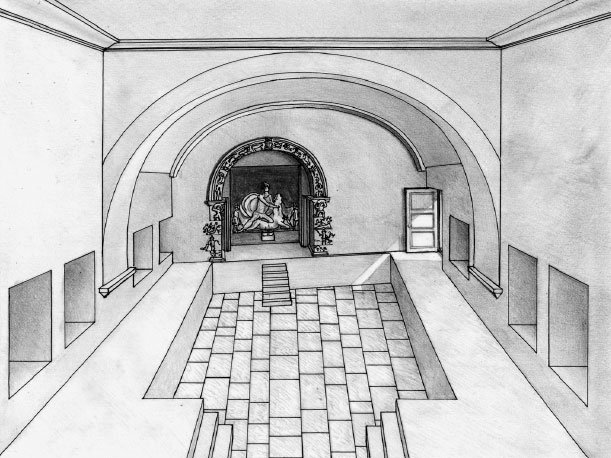
The Mithraeum of Saara, Syria, has been identified through the deciphering of the remains of the iconographic programme on its arch.
