Your search Villa of Domitian at the Castel Gandolfo gave 3663 results.

Mithraic relief from Rome reproduced in figure 169 of the corpus.

This white marble relief of Mithras killing the bull was found on the Esquilino near the Church of Saint Lucy in Selci in Rome.

Sandstone altar from Pritok near Bihać, Dalmatia, dedicated to Invicto Mithrae Soli by Cocceius for his own welfare.
Tauroctony relief mentioned from a mountaintop at Krivošije near Risn, Boka Kotorska, Dalmatia, found before World War I; the relief was lost.
Fragmentary inscription from Aequum, Dalmatia, preserving only the phrase invicti posuit.
Stone altar fragment from Danilo Gornje near Šibenik, Dalmatia, bearing a dedication to Deo invicto by Comitius.
Altar in poor-quality lettering from Burnum, Dalmatia, dedicated to Soli invicto by Caius Secundulus; the Mithraic interpretation is not entirely certain.
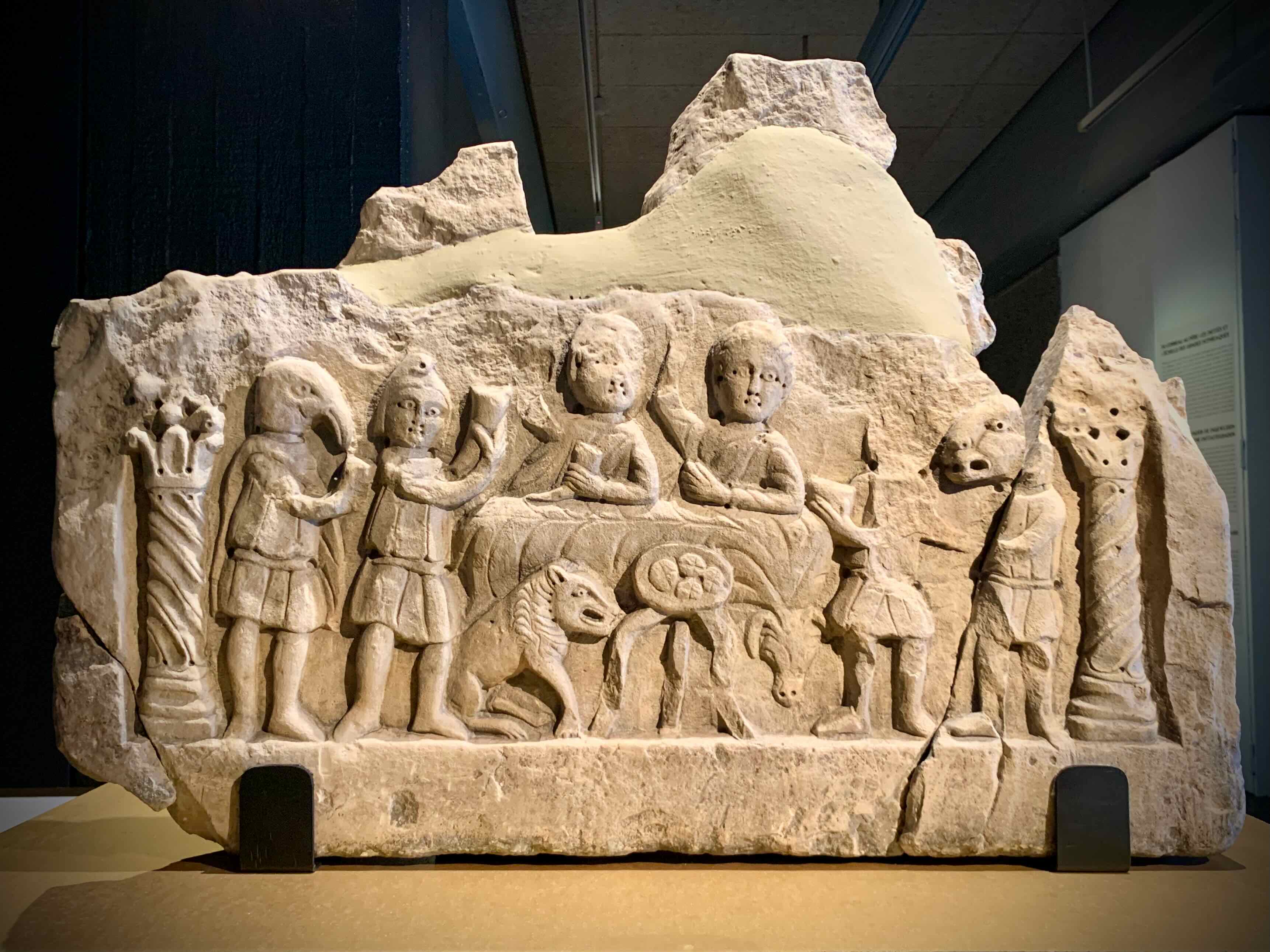
The mithraic relief of Konjic shows a Tauroctony in one side and a ritual meal in the other.
Sepulchral inscriptions from Lycaonia bearing the titles leo and aetos, previously interpreted as Mithraic grades but now understood as referring to tomb architecture.
Altar from Salona, Dalmatia, found in 1884, dedicated by Sextus Cornelius Antiochus to Soli deo, who donated both a star and a fructifera — interpreted as Sol and Luna — following a vision.
Altar found at Salona, Dalmatia, in 1884, dedicated simply to Petrae genetrici — the rock that gives birth to the god.
Inscription from a house staircase at Salona, Dalmatia, dedicated to Deo Mithrae invicto and all the other immortal gods by a dedicant whose name ends in -elius.
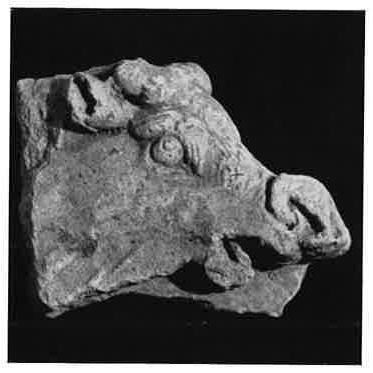
Limestone relief fragment from Salona or its surroundings, Dalmatia, preserving a very fine bull's head and the left hand of Mithras.
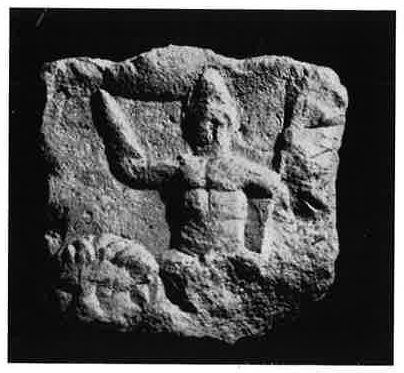
White limestone relief fragment from the walls of Salona, Dalmatia, found in 1906, depicting naked Mithras being born from the rock with a dagger in his right hand and a torch in his left.
Fragmentary inscription from Salona, Dalmatia, preserving only the phrase impendio suo — probably recording a building act.

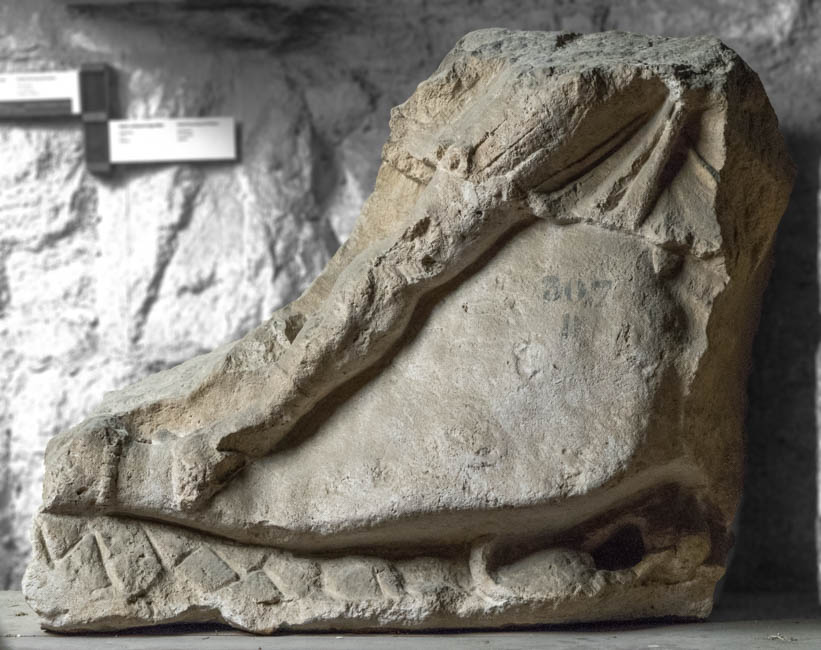
This large limestone fragment from Roman Salona preserves the hind part of the bull together with Mithras’ foot and traces of his red tunic.
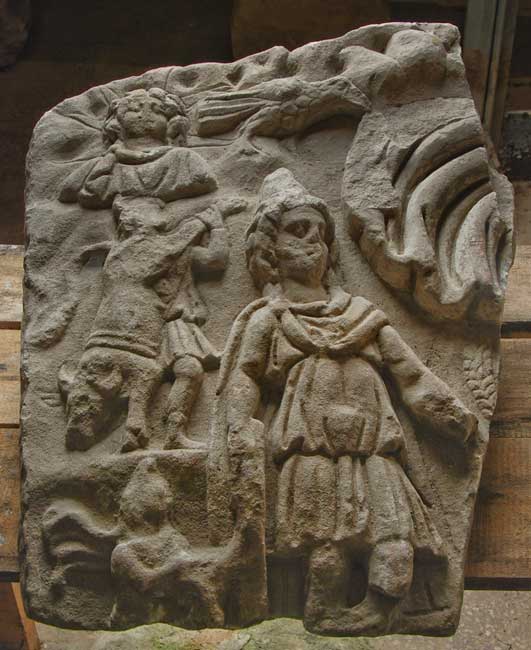
This marble fragment from Roman Dacia preserves part of a tauroctony with Sol, the raven, and Mithras dragging the bull.
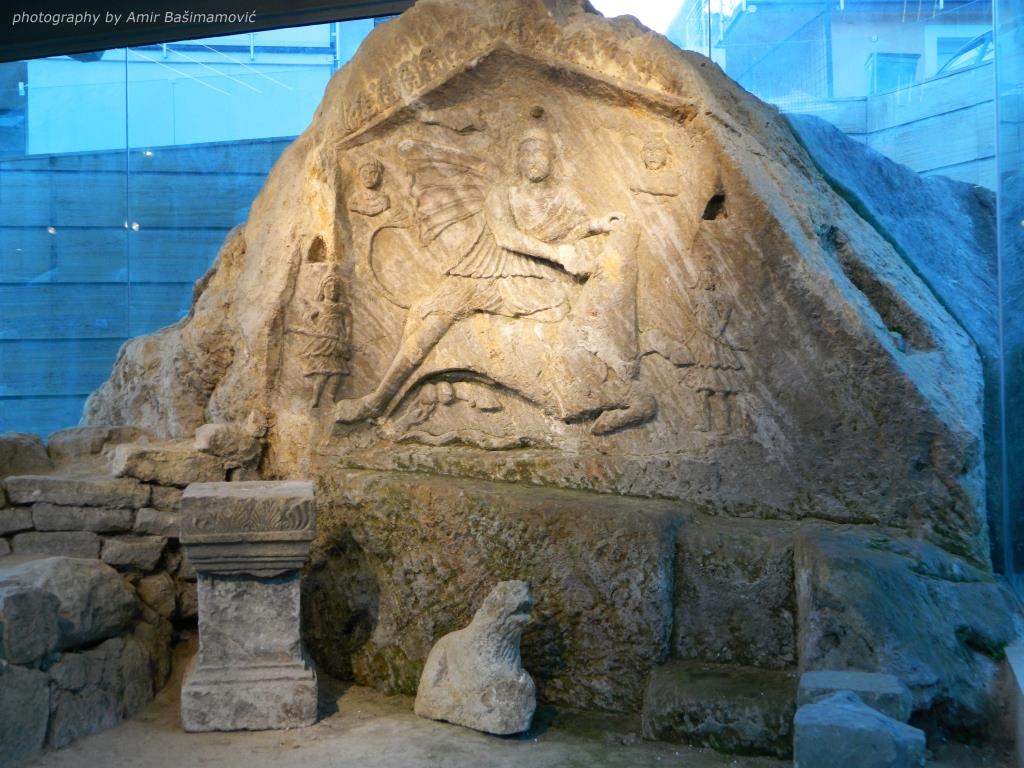
The relief of Mithras killing the bull from the Jajce Mithraeum is walled into the cult niche and surmounted by a roof.

