Your search Villa of Domitian at the Castel Gandolfo gave 3663 results.

White carnelian with red stripes, reportedly acquired at Epidaurum, depicting what may be Mithras as bull-slayer before a burning altar surmounted by a crescent and a nine-rayed star.
Small altar found in the foundations of a school building in the Piraeus, near Athens, dedicated to Helios Mithras.
Greek inscription from Athens, recording that Acrisius dedicated a gift to Mithras in honour of Chrysippos.
Altar found near Škrip on the island of Brač in 1899, bearing a dedication to Invicto deo; the Mithraic attribution and the expansion of i/d are uncertain.
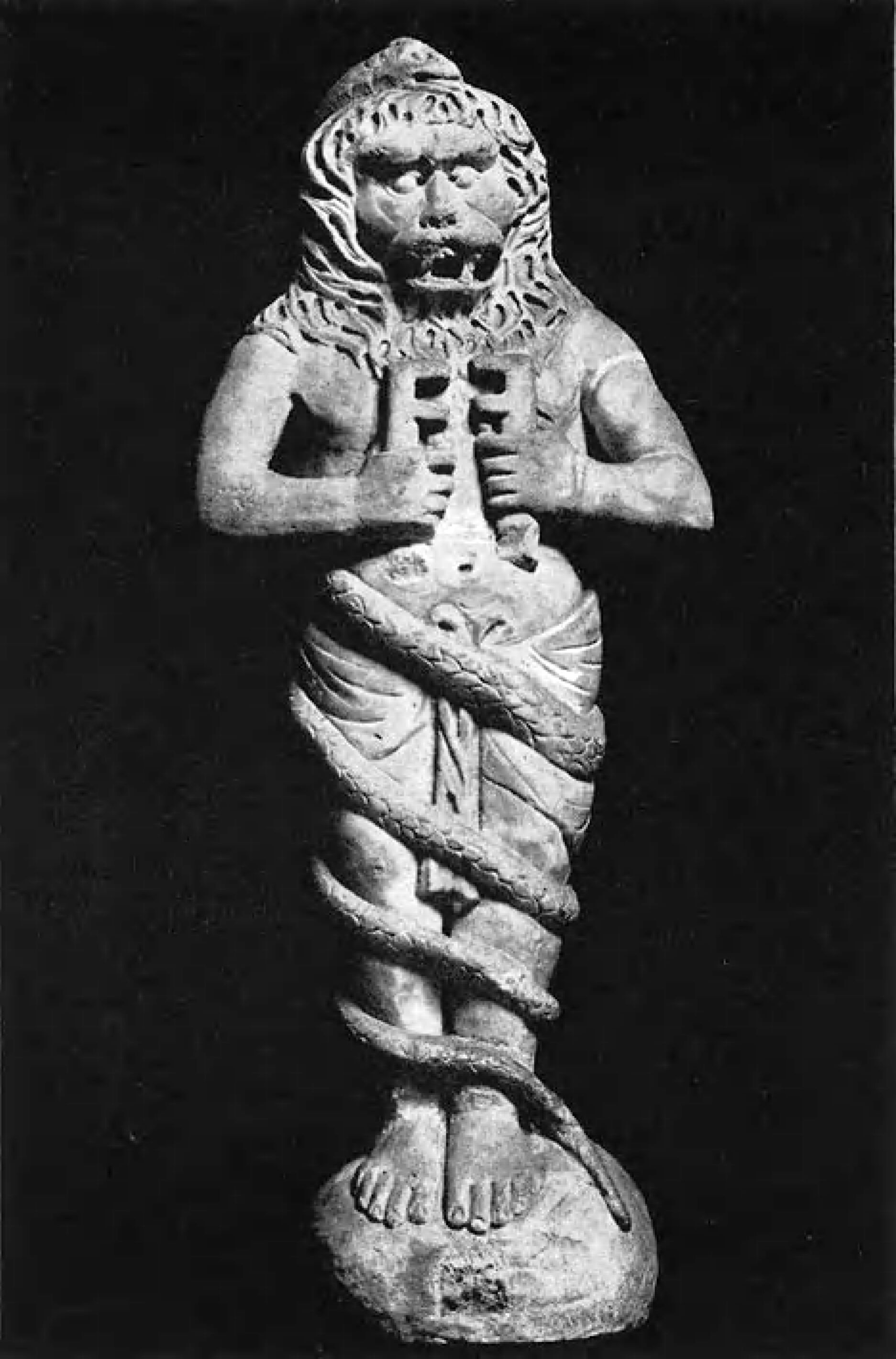
The lion-headed marble from Muti's gardens has a serpent entwined in four coils around his body.
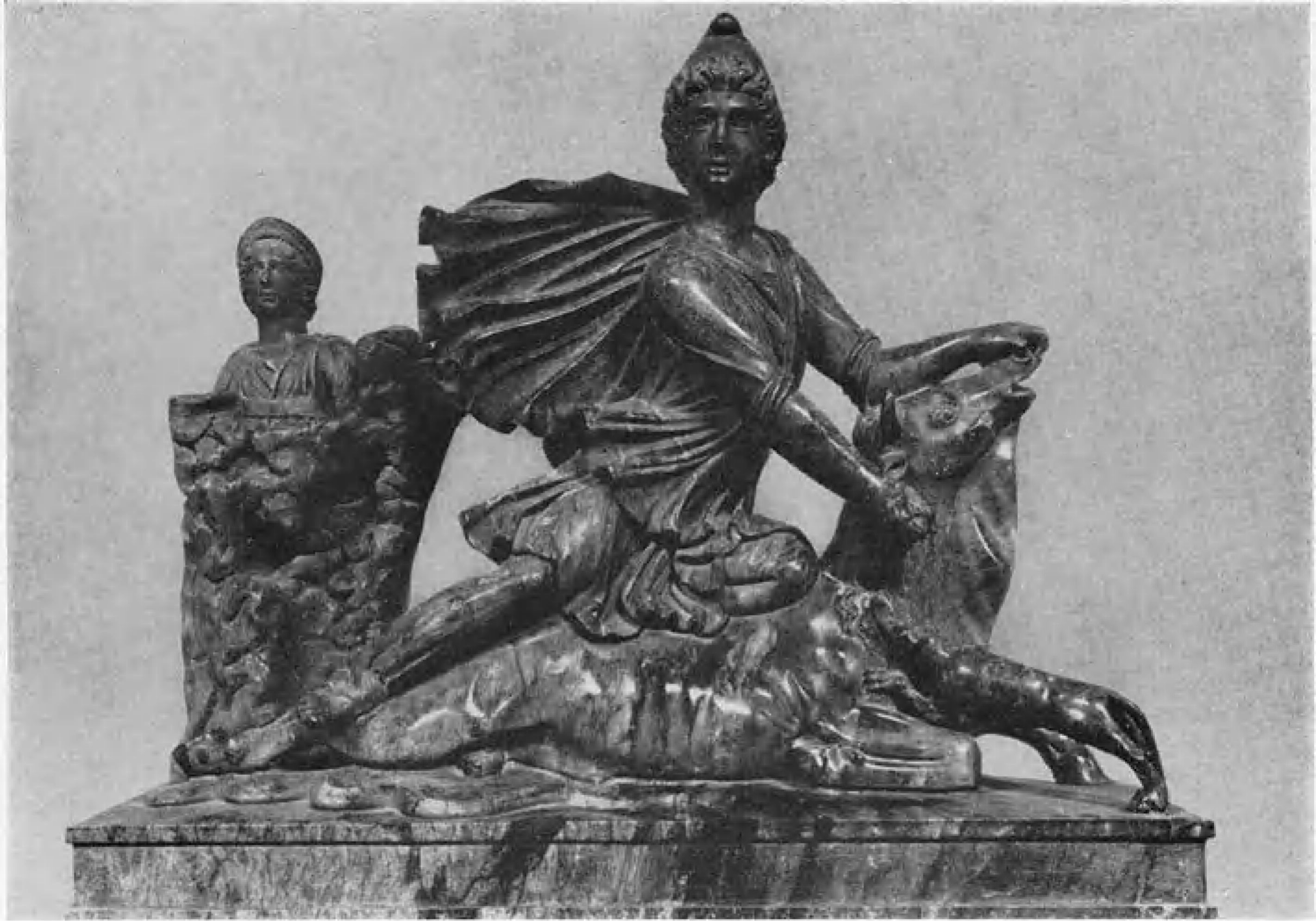
This black marble of Mithras killing the Bull has belonged to the sculptor Carlo Albacini.
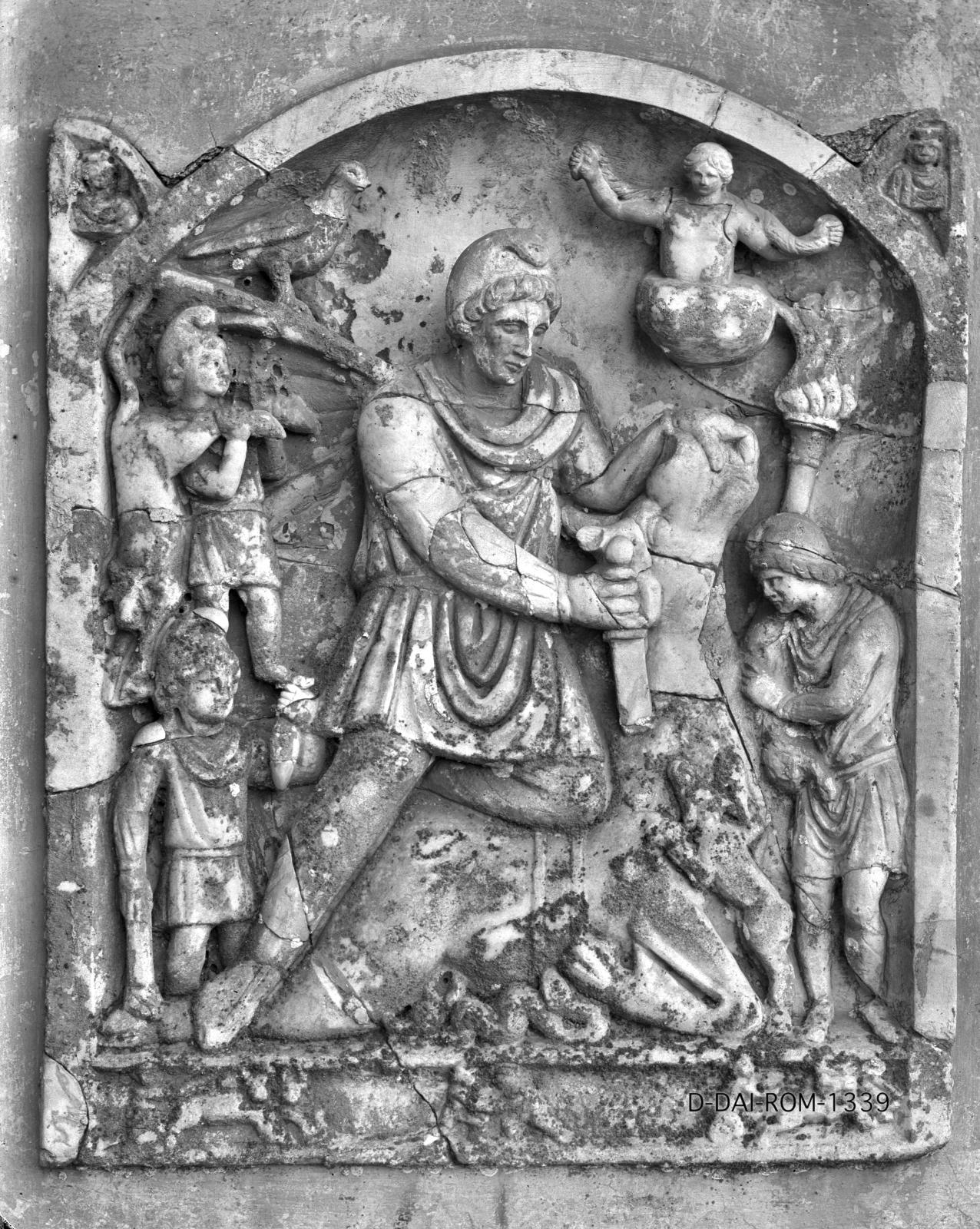
Currently in the Musei Vaticani, this Tauroctony includes Mithras’s birth restored as Venus anaduomene.

This unusual bronze bust of Sabazios features multiple symbolic elements, with Mithras depicted in his characteristic pose of slaying the bull, positioned just below Sabazios’ chest.
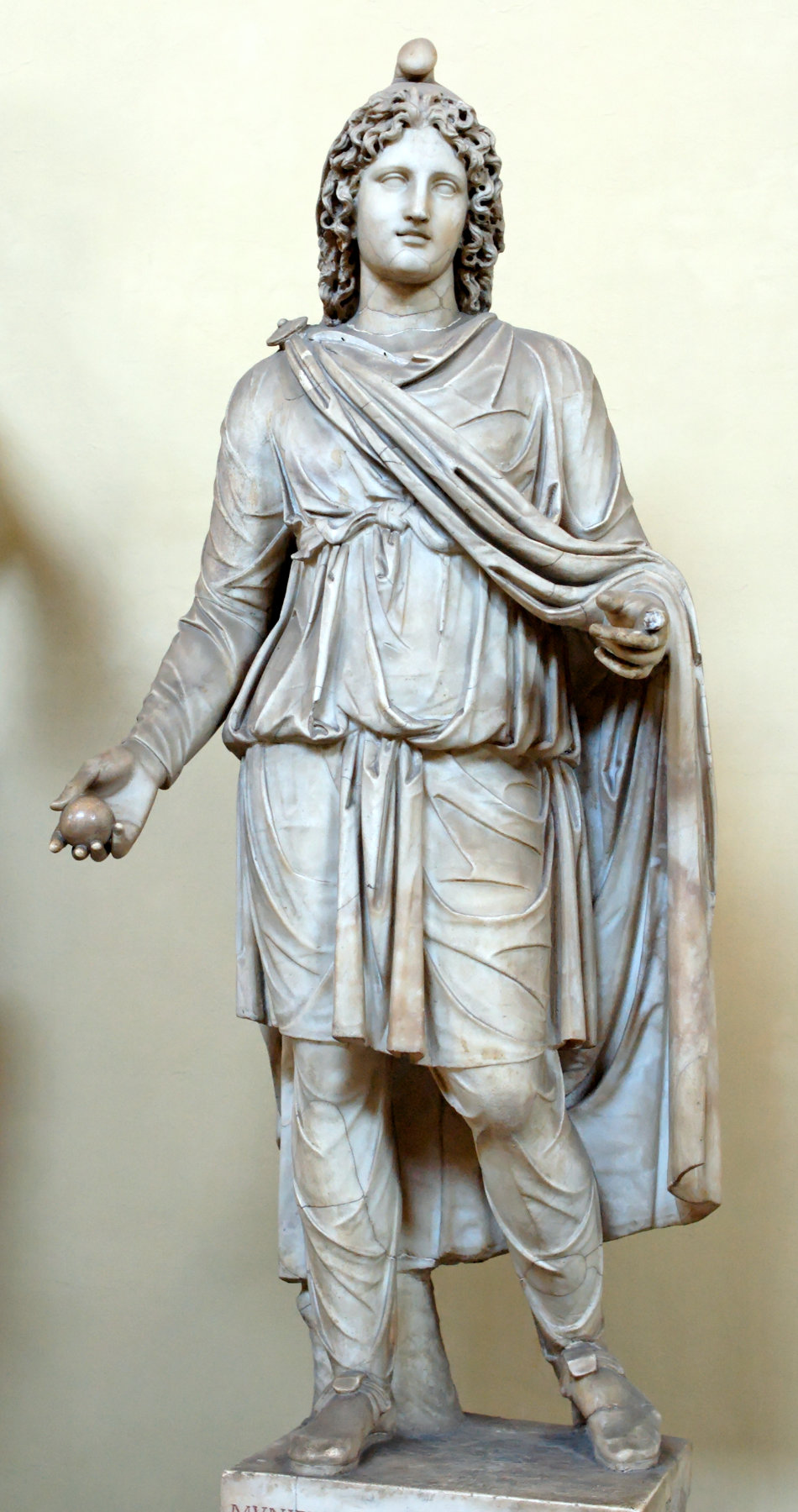
This sculpture, probably of Cautopates, now in the Musei Vaticani, was transformed into Paris.
This altar from Grumentum in Lucania was dedicated to Sol Invictus Mithras by Titus Flavius Saturninus, an evocatus in imperial service.
Gold ring amulet formerly in the Schlumberger Collection, published as Mithraic by Cumont and later identified as a healing charm against colic and diseases of the uterus.
Inscription from Corstopitum (modern Corbridge) recording a dedication to Sol Invictus by a vexillation of Legio VI Victrix under the governorship of Sextus Calpurnius Agricola in AD 163.
A fragmentary limestone tauroctony relief found on the south slope of the Castellhügel at Pola (modern Pula) during the demolition of a wall, now in the Lapidary Museum at Pula, preserving the bull's body, the dog, the serpent, the scorpion and a standing cross-legged torchbearer…

Villa Vicentina is associated with archaeological material from the Roman territory of Venetia.
A brief inscription reading "Deo Invicto Mithrae", found in the ruins of the Castello di Tuenno near San Zeno at the entry to the Tovel valley in Trentino, alongside the decorated relief No. 723.
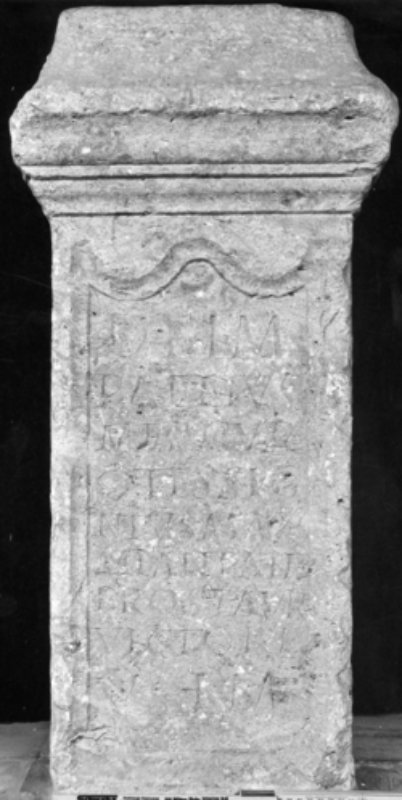
This altar to Mithras found in Aquilieia mentions several persons of a same community.
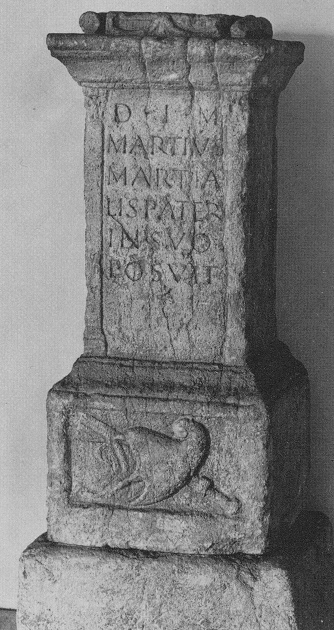
The altar with a Phrygian cap and a dagger from Trier was erected by a Pater called Martius Martialis.
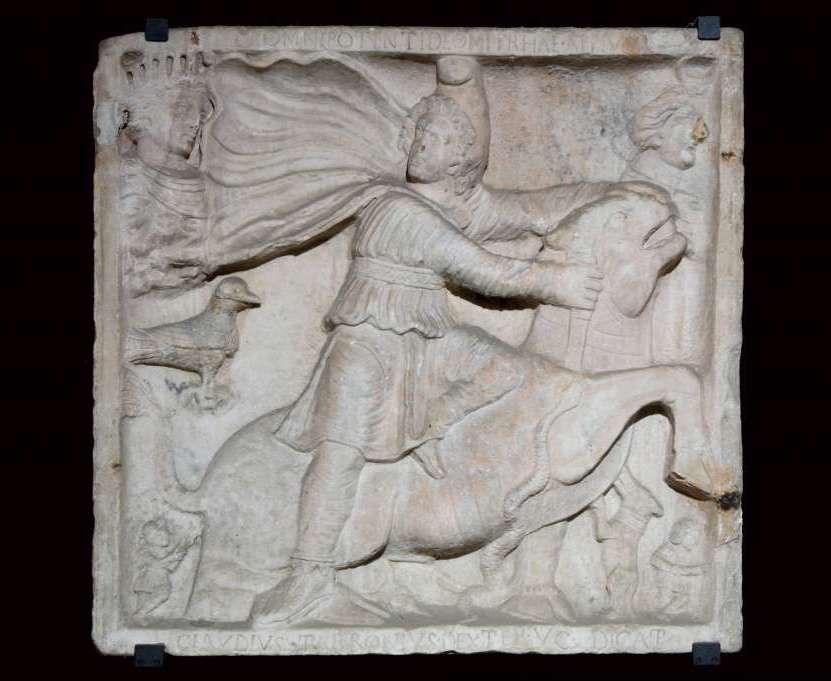
The marble relief of Mithras killing the bull in Naples bears an inscription that calls the solar god omnipotentis.
Marble tauroctony relief fragment from near Dolna-Malina, Thracia, depicting part of Mithras as bull-slayer together with Cautopates; no further details are available.
Small bronze statuette in Phrygian cap from Catunele de Motru, Dacia, possibly a torchbearer; the Mithraic attribution is not certain as no torch survives.
