Your search for Zagreb gave 15 results.

The area of modern Zagreb has yielded material linked to the northwestern frontier of the Dalmatian world.

Monument in the Zagreb Archaeological Museum catalogued as an Aion but correctly identified as Icarus; not a Mithraic monument.
Sisak is a city in central Croatia, spanning the confluence of the Kupa, Sava and Odra rivers, 57 km southeast of the Croatian capital Zagreb, and is usually considered to be where the Posavina begins, with an elevation of 99 m.
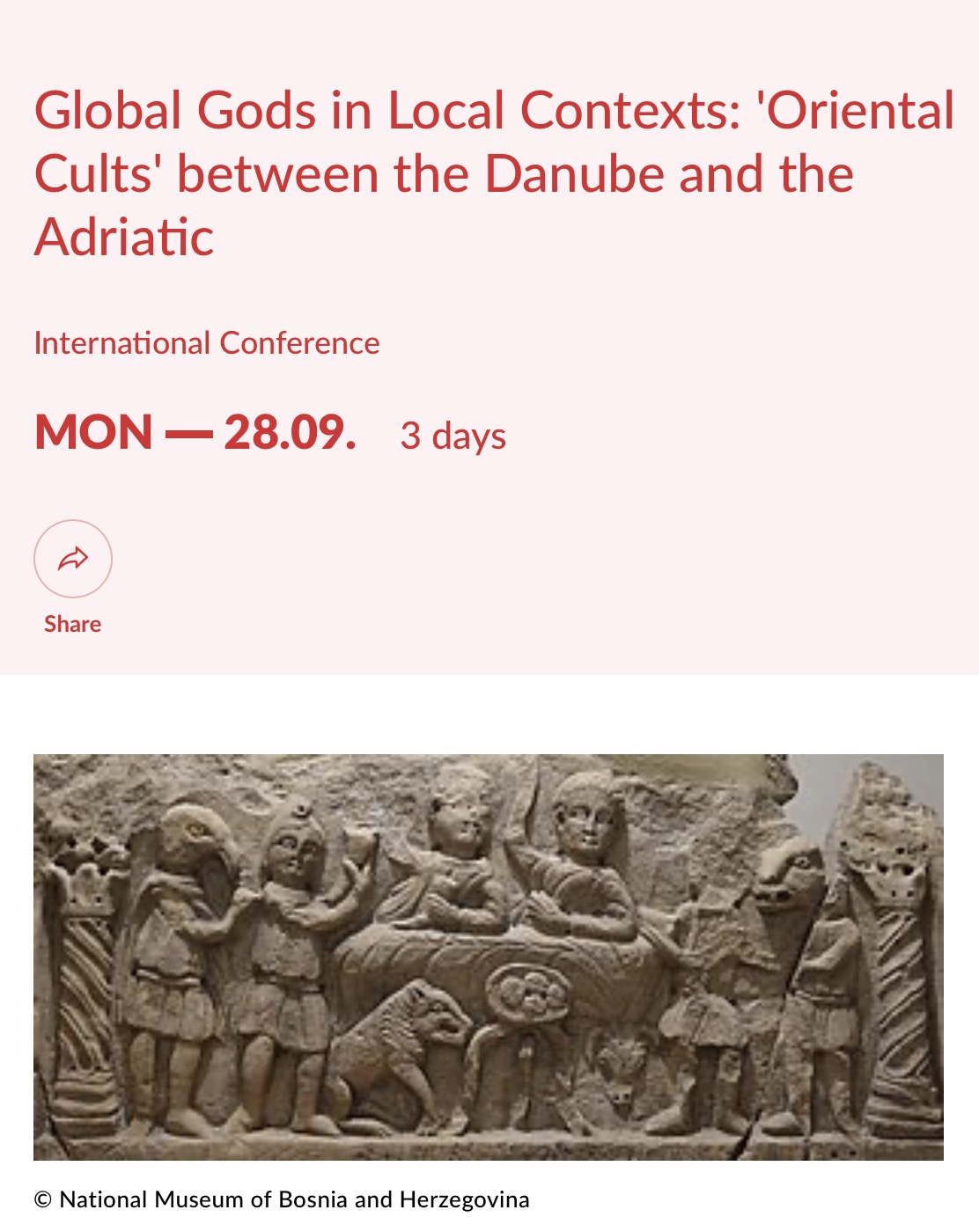
This conference is the latest in a series dedicated to the study of the so-called Oriental cults – religious traditions of Egyptian, Anatolian, Syrian, and Iranian origin – in the Danubian and Balkan provinces during the Roman imperial period (Skopje 2013; Zagreb/Ptuj 2022)…
Altar found at Osijek in 1922 when the fortress was demolished, ancient Mursa in Pannonia Inferior, now in the Zagreb Archaeological Museum, bearing a dedication to Deo Aeterno — the Eternal God.

This marble relief, found in Sisak, Croatia, shows Mithras killing the bull in a circle of corn ears, gods and some scenes from the Mithras myth.

This altar, dedicated to Sol Invictus Mithras by a certain Eutyches for the health of the Emperor Caracalla, was found in Sisak, Croatia, in 1899.
This limestone altar dedicated to Mithras by a certain Veturius Dubitatus was found in Dalj, Croatia, in 1910.
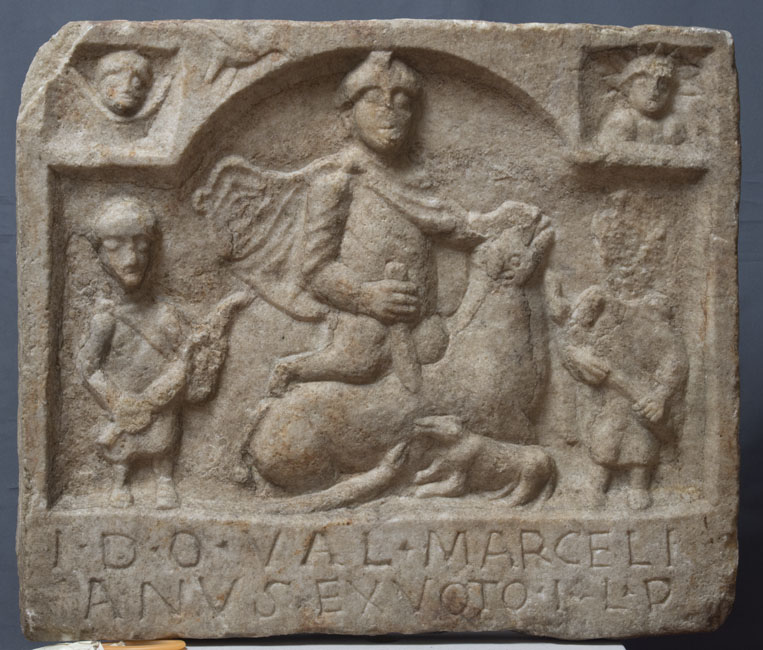
This primitive relief of Mithras as a bullkiller is signed by a certain Valerius Marcelianus.
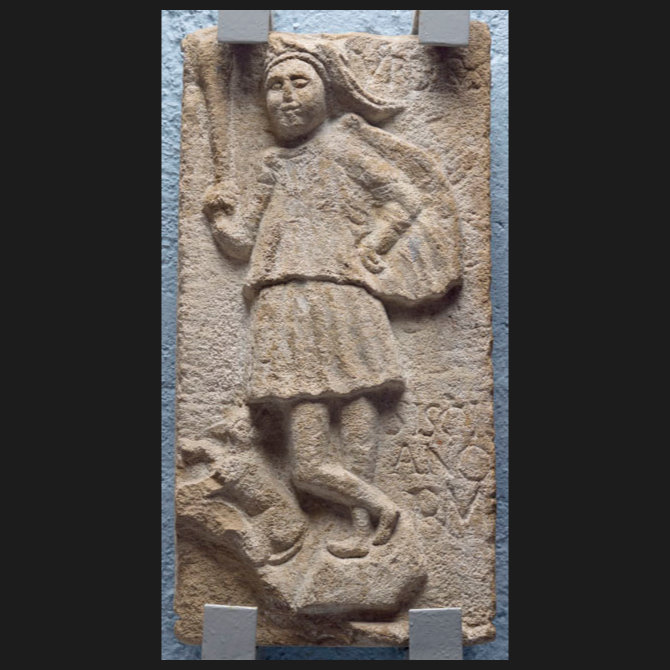
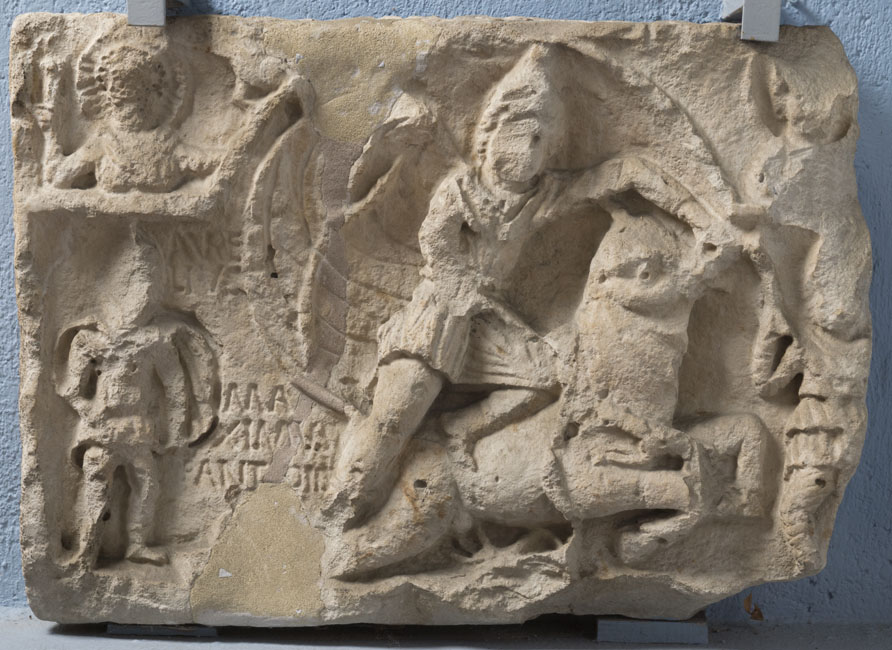
This relief of Mithras as a bullkiller was found in Golubić, Bosnia and Herzegovina, near a cementery.
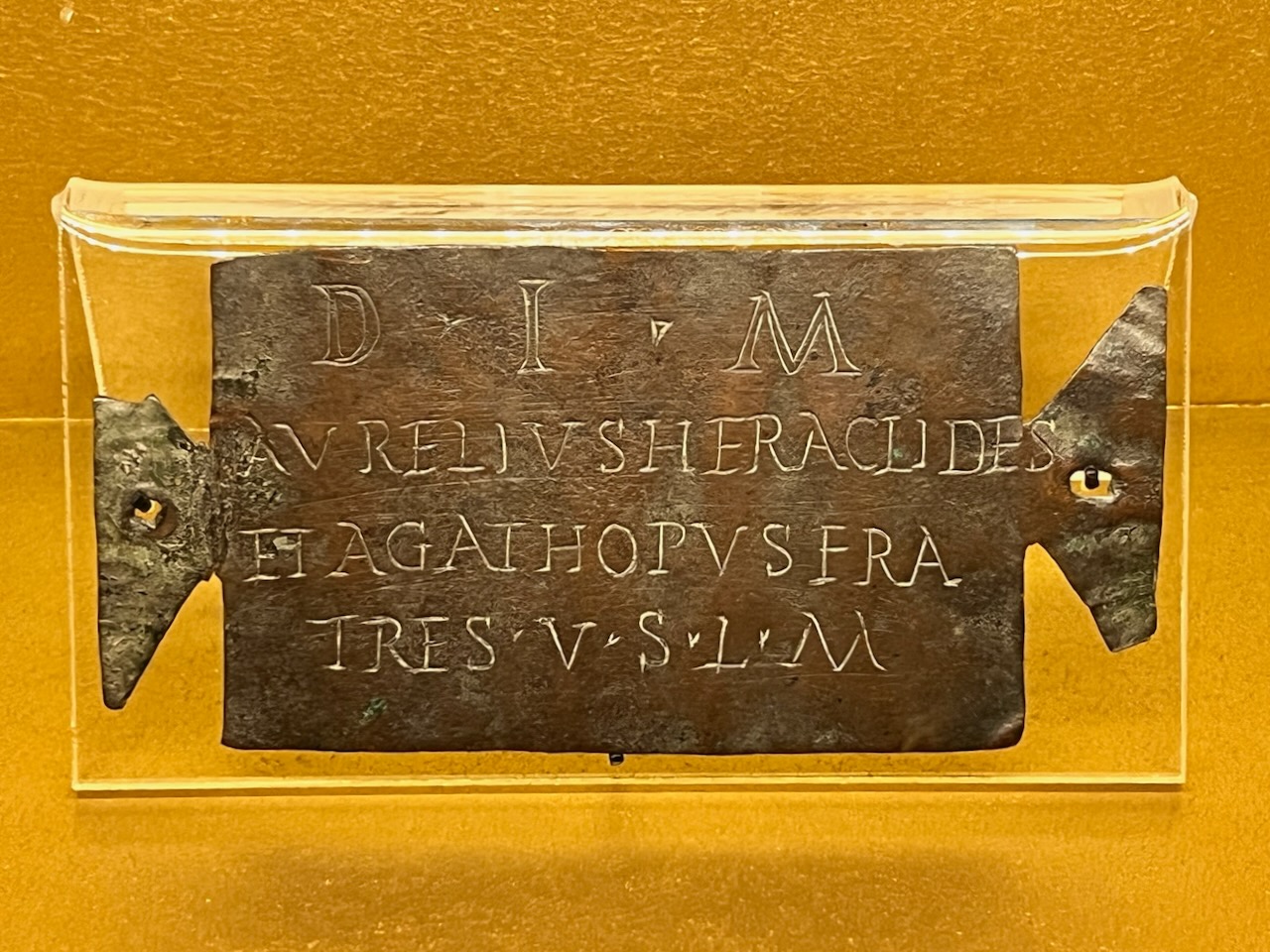
This small bronze tabula ansata was dedicated to Mithras by two brothers, probably not related by blood.

The dedicator of this altar was a slave in the service of a high official, the prefect Gaius Antonius Rufus, known from other inscriptions.
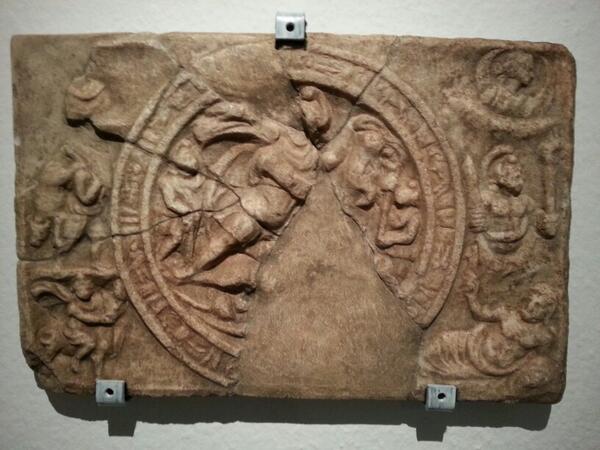
The relief of Mithras slaying the bull of Sisak includes the zodiac and multiple scenes from the myth of Mithras.