Your search aquincum gave 80 results.
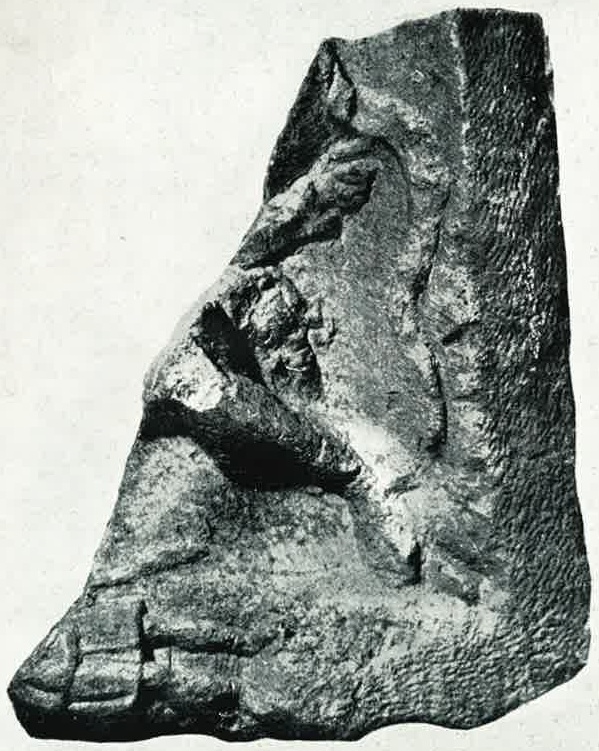
Right upper corner of a white marble tauroctony relief from Budapest, ancient Aquincum or its vicinity, in the National Museum since 1868, preserving part of the grotto border and divine busts.

Second Mithraic sanctuary discovered at Altofen in 1888, Pannonia Inferior; rectangular (15.03 × 7.06 m) and raised two metres above ground, with benches and a cult niche; one of the most fully excavated Mithraea from the Danubian region.
Observation that two altars dedicated by Caius Iulius Primus to Sol deo sacrum at Aquincum may belong either to Mithraeum I or to Mithraeum III.
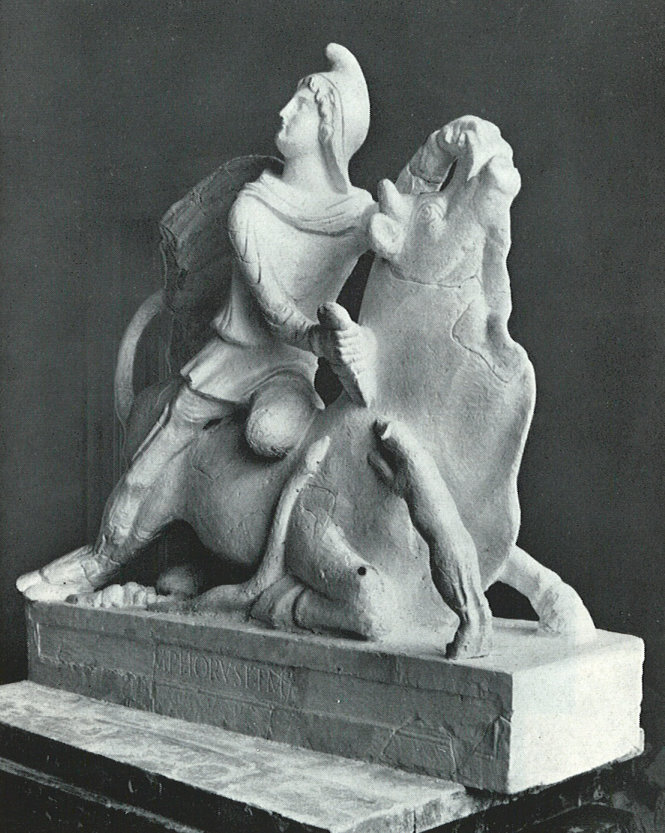
This sculpture of Mithras killing the sacred bull bears an inscription that mentions the donors.

Dedicated a sculpture of Mithras killing the bull in the 4th mithraeum of Aquincum together with Marcus.
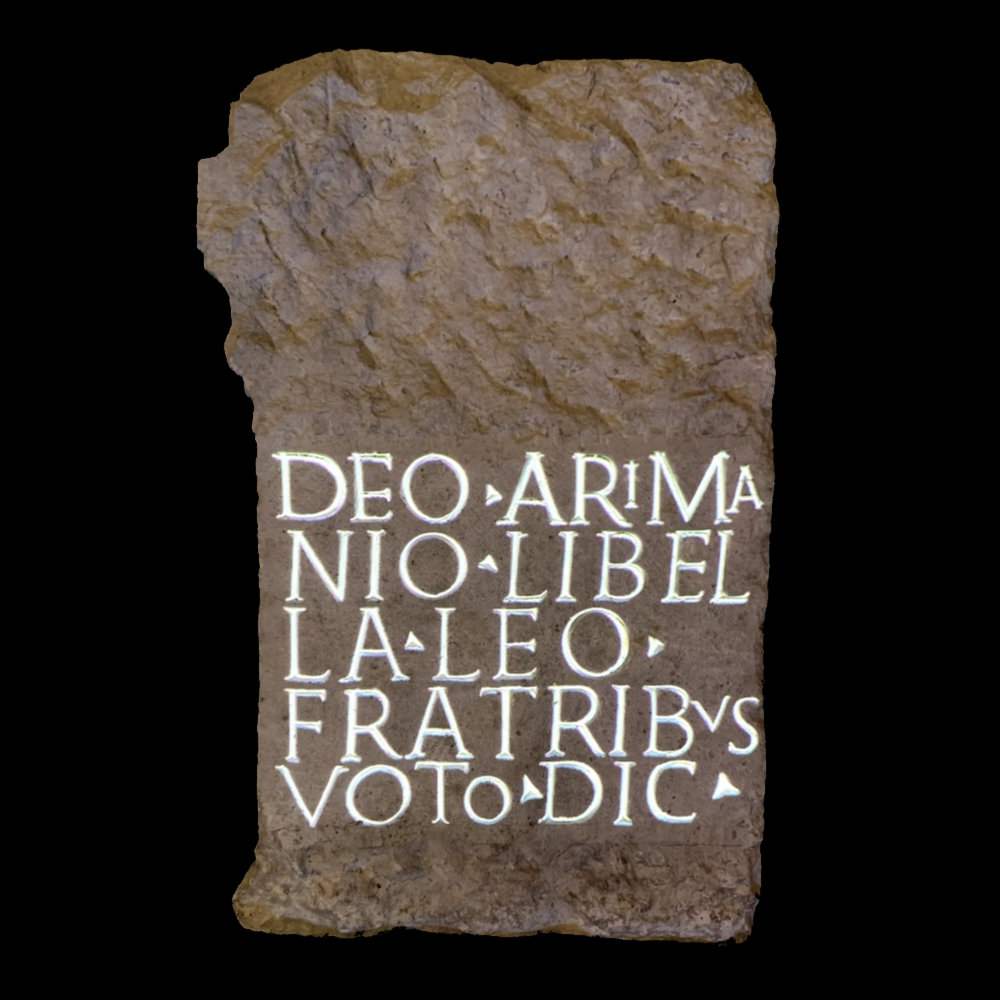
The dedicant of this altar to the god Arimanius was probably a slave who held the grade of Leo.
This altar to Mithras is dedicated by a certain Gaius Iulius Castinus, legate prefect of the emperors.

Ulcisia Castra formed part of the fortified Danube frontier north of Aquincum.
Nagykovácsi lies within the hinterland of the Aquincum frontier region.
Campona occupied a strategic position south of Aquincum along the Danube frontier.
Lost altar from Zsámbék near Aquincum, Pannonia Inferior, bearing a dedication to Invicto deo; found together with the following piece in a vineyard.
Limestone altar fragment from the Mithraeum at Sárkeszi, Pannonia Inferior, dedicated to Fonti dei by Septimius Valentinus, optio.

He and his brother, both of the Legio II Adiutrix, built a temple and erected several monuments in Budaors, Pannonia.

He built the sacred area of the Mitreo del Circo Massimo at his own expense.

Frontinianus and Fronto built a Mithraeum in Budaors, probably on their own property.

Hyacinthus, like Hermadio, seems to have been one of the profets of Mithraism in the Dacian region.

Ernest Renan suggested that without the rise of Christianity, we might all have embraced the cult of Mithras. Nevertheless, it has had a lasting influence on secret societies, religious movements and popular culture.
This base was found in the 18th century and bears an inscription to the god Arimanius.
