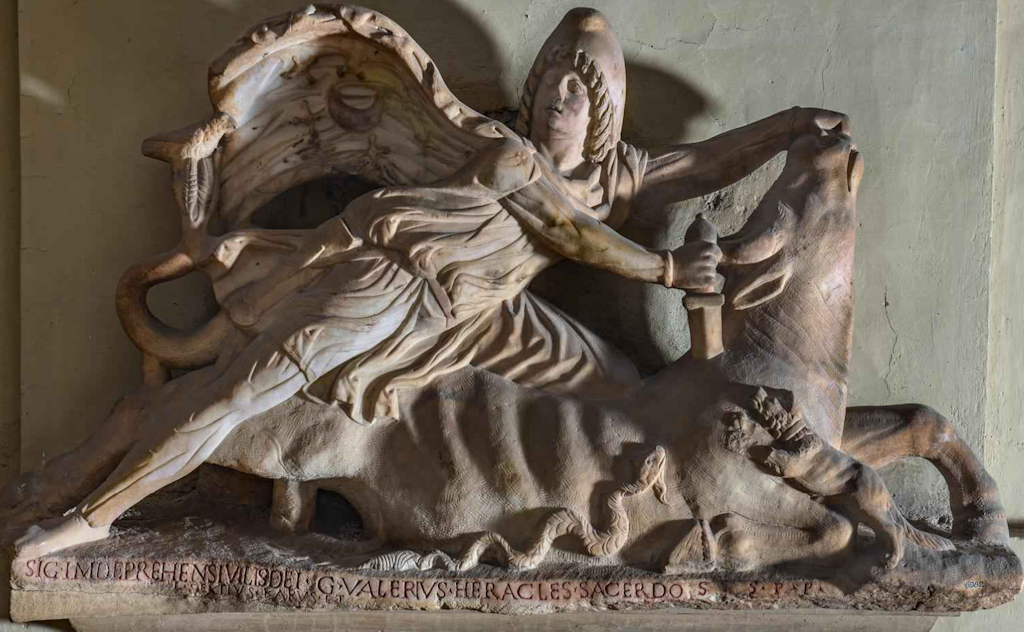
This sculpture of Mithras killing the bull was dedicated to the “incomprehensible god” by a certain priest called Gaius Valerius Heracles.
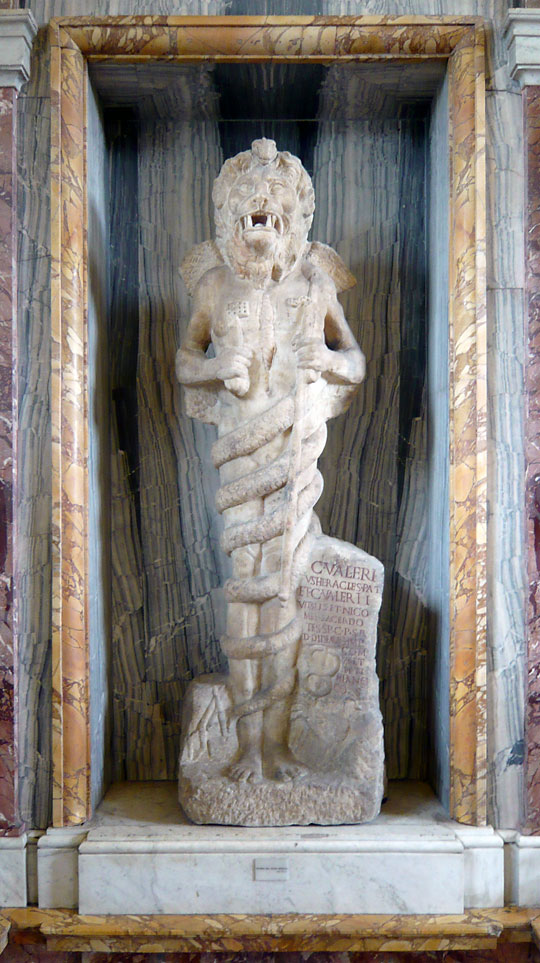
Marble leontocephalic Aion/Arimanus from the now-lost Fagan Mithraeum at Ostia, dedicated in AD 190 by three members of the local Mithraic priesthood.
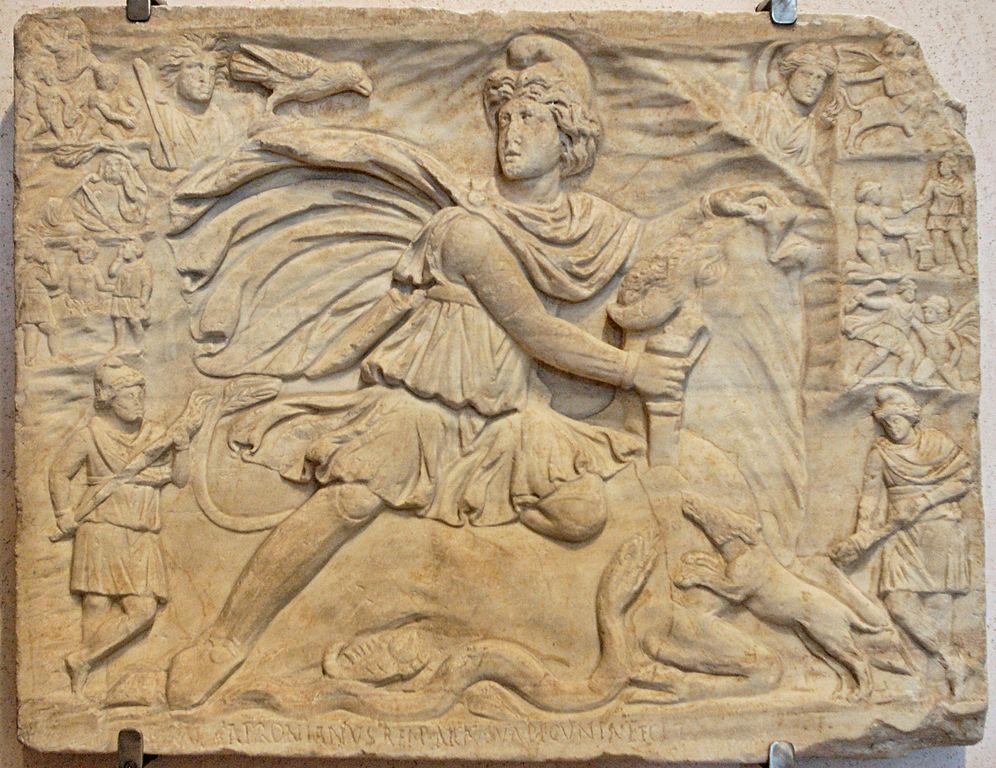
The relief of Mithras slaying the bull of Nersae includes several episodes from the exploits of the solar god.
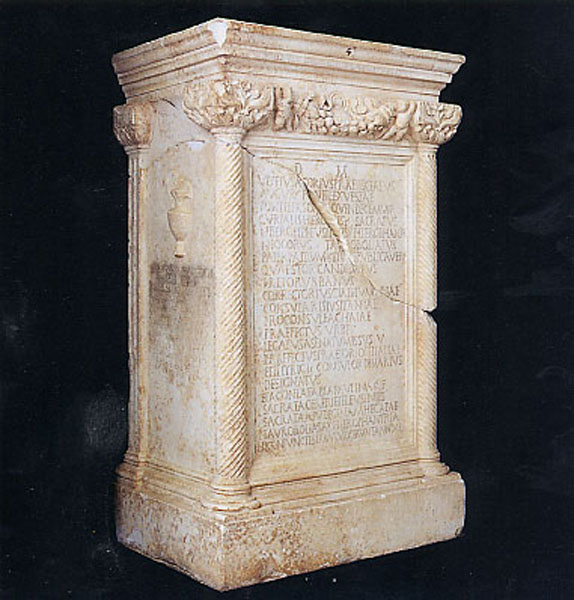
The marble altar mentions Vettius Agrorius Praetextatus as Pater Sacrorum and Patrum and his wife Aconia Fabia Paulina.

This white marble relief of Mithras killing the bull was found on the Esquilino near the Church of Saint Lucy in Selci in Rome.
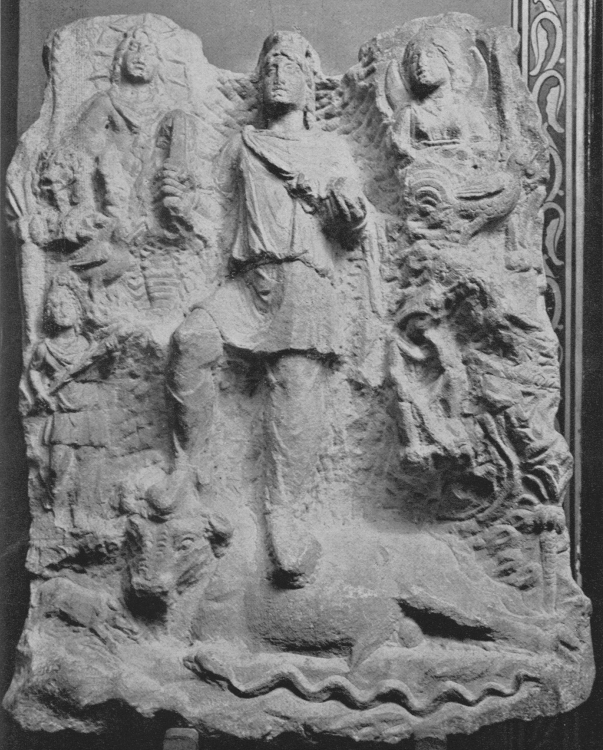
This unusual representation of Mithras standing on a bull was kept in the Casino di Villa Altieri sul Monte Esquilino until the 19th century.

Epigraphic monument from Tripolitania preserving a corrected reading discussed in later scholarship.
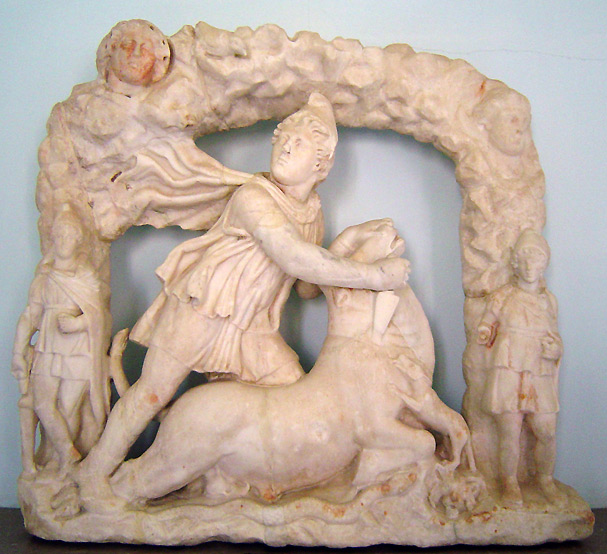
The assumed find-place of the Mithras Tauroctonus of Palermo is uncertain.
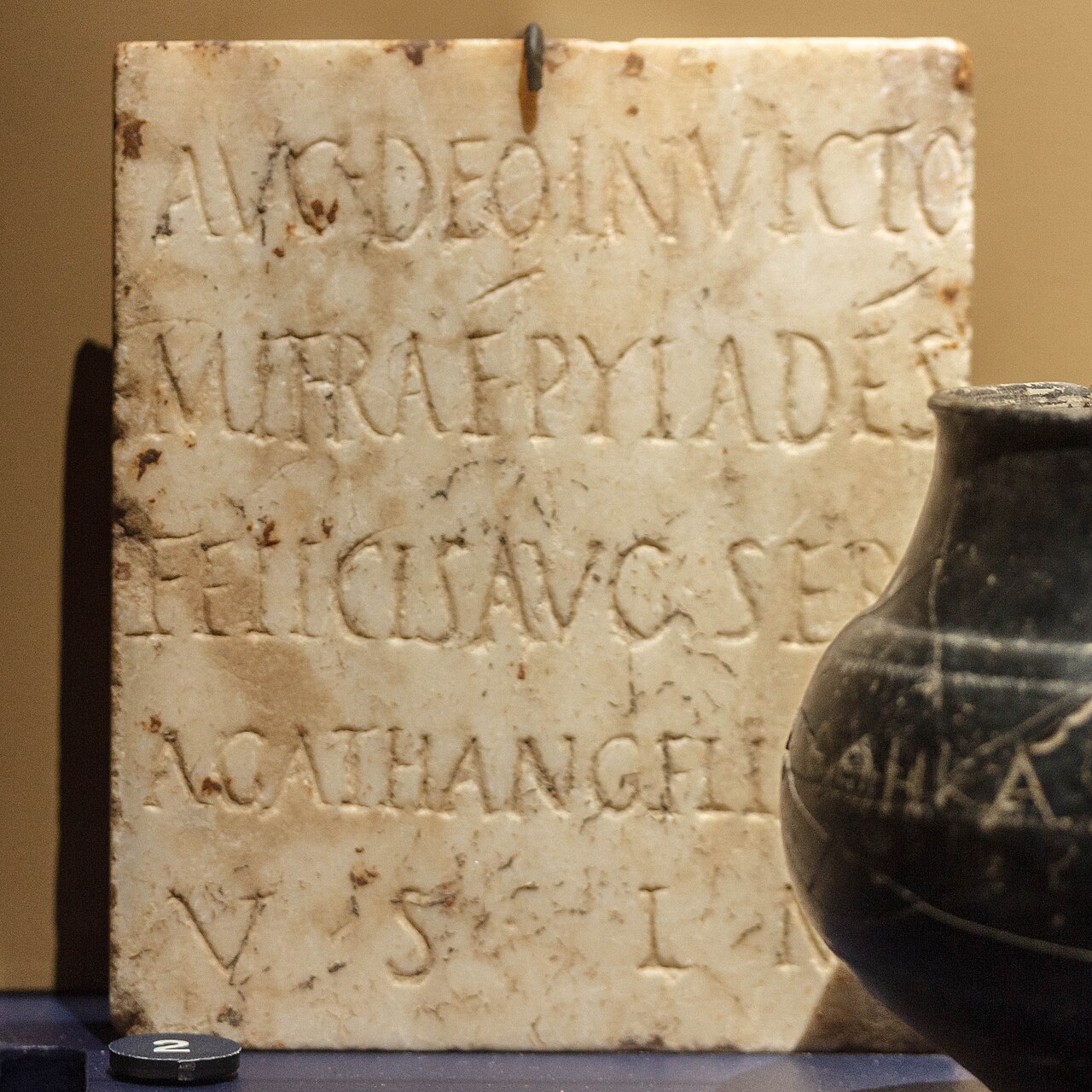
This marble plaque from Iuliomagus, Roman Angers, bears a rare dedication to Mithras by Pylades, a slave of an imperial slave connected to the Roman administration in Gaul.
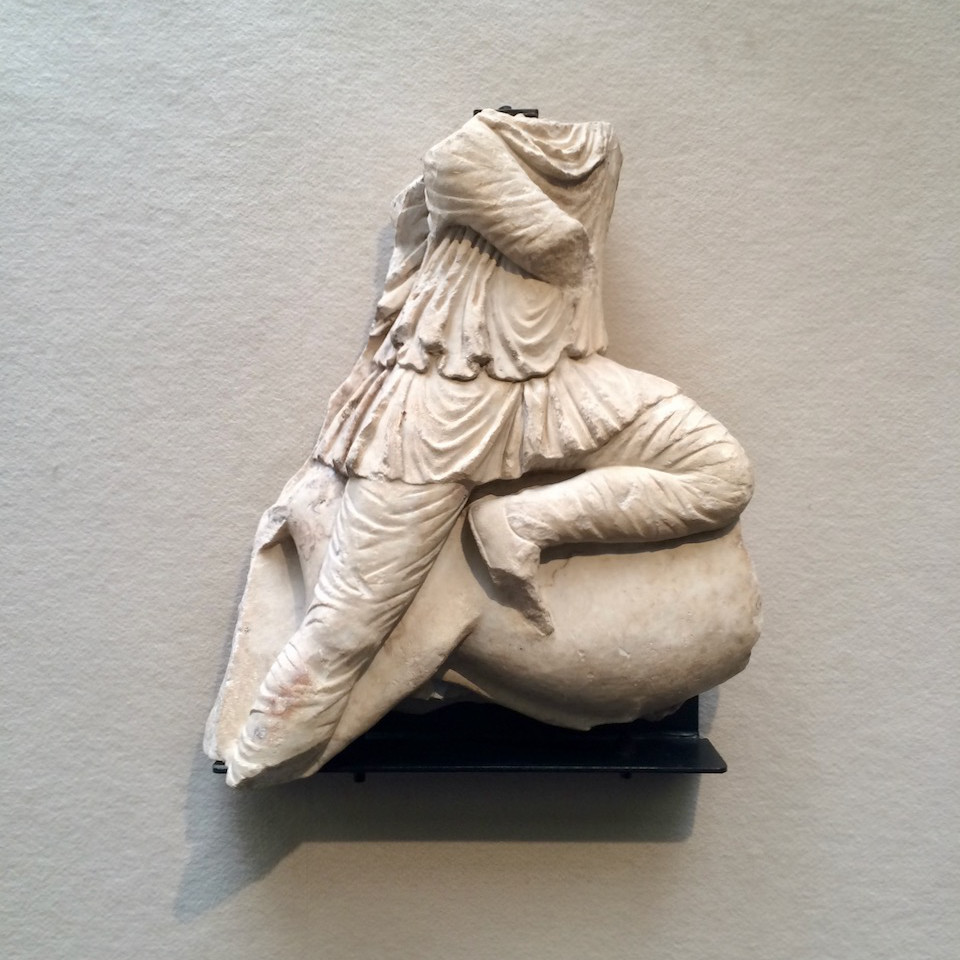
The Mithra Tauroctonos from Syracuse, Sicily, is currently on display in the city's archaeological museum.
,_found_in_Rome,_2nd_century_AD,_British_Museum_(15545876047).jpg)
The sculpture of Mithras slaying the bull was transported from Rome to London by Charles Standish in 1815.
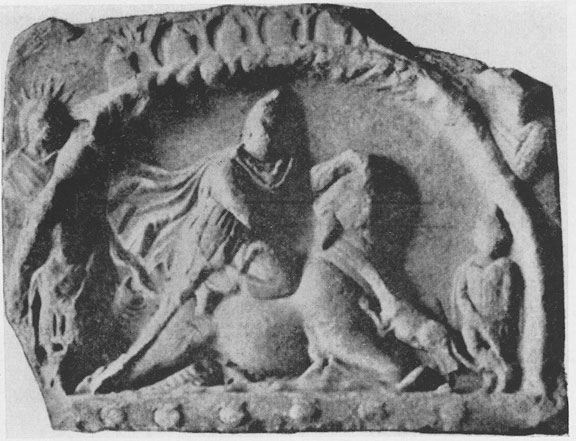
This finely carved marble tauroctony from Interamna features an unusual series of altars and ritual vases surrounding the scene.
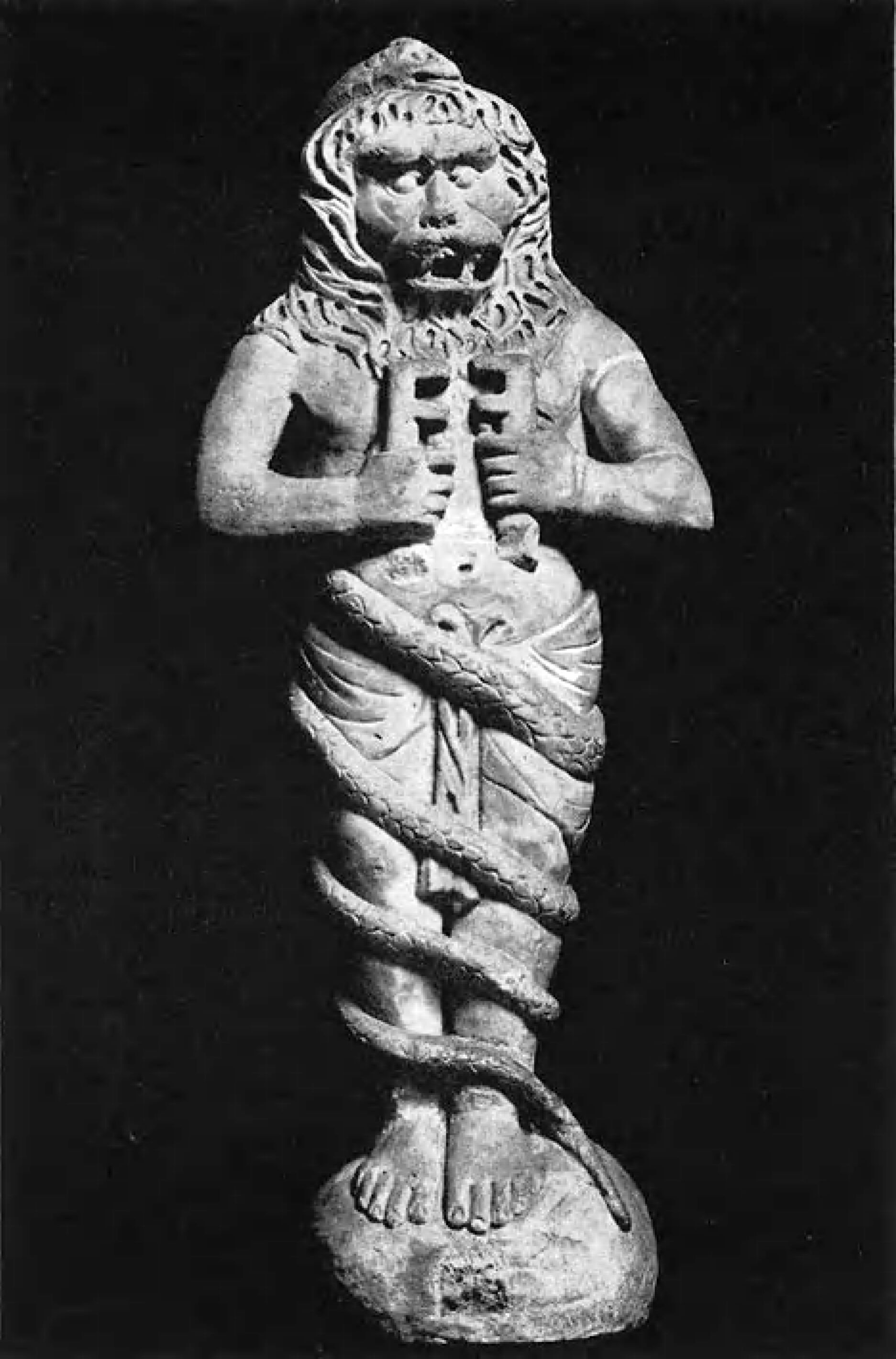
The lion-headed marble from Muti's gardens has a serpent entwined in four coils around his body.
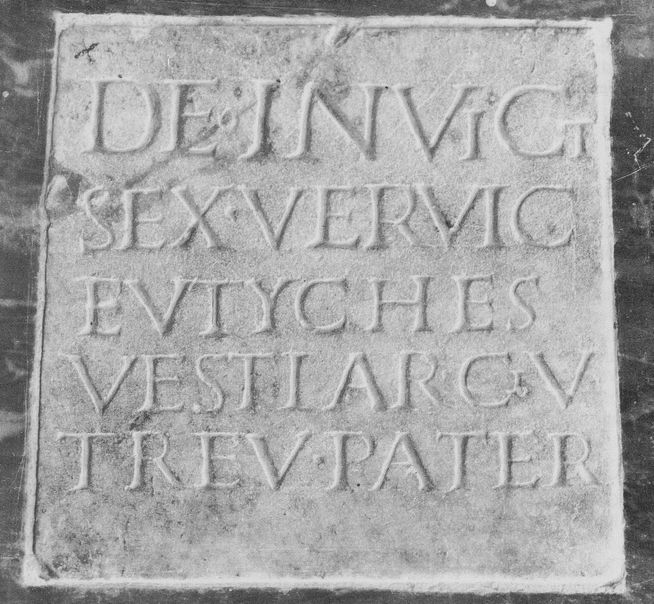
Several inscriptions dedicated to Mithras have been found in Eauze, including these two by a certain Pater Sextus Vervicius Eutyches, discovered in 1768.
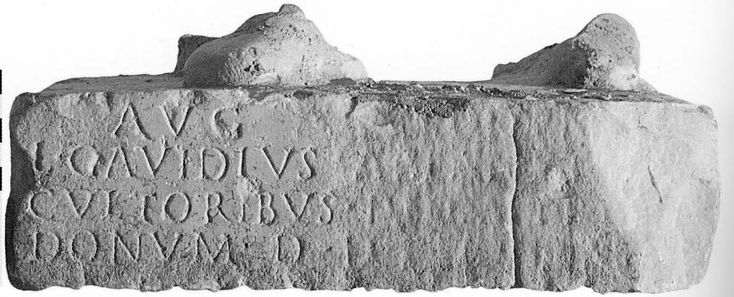
This inscription on white marble by Lucius Gavidius uses the term ther cultores to refer to his Mithraic community in Stabiae, Italy.
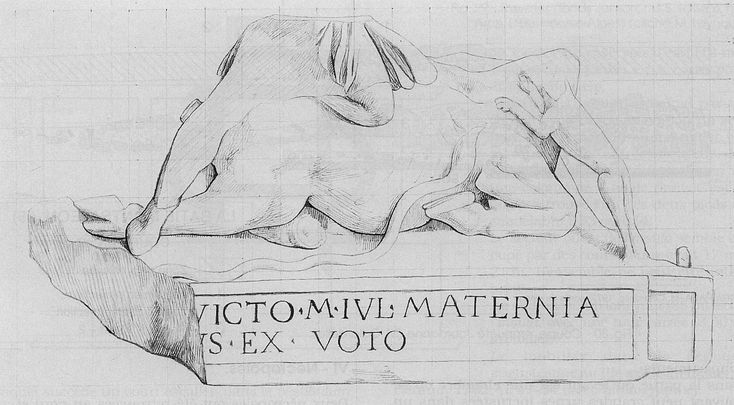
This damaged relief of Mithras killing the bull found in 1804 and formerly exposed at Gap, is now lost.
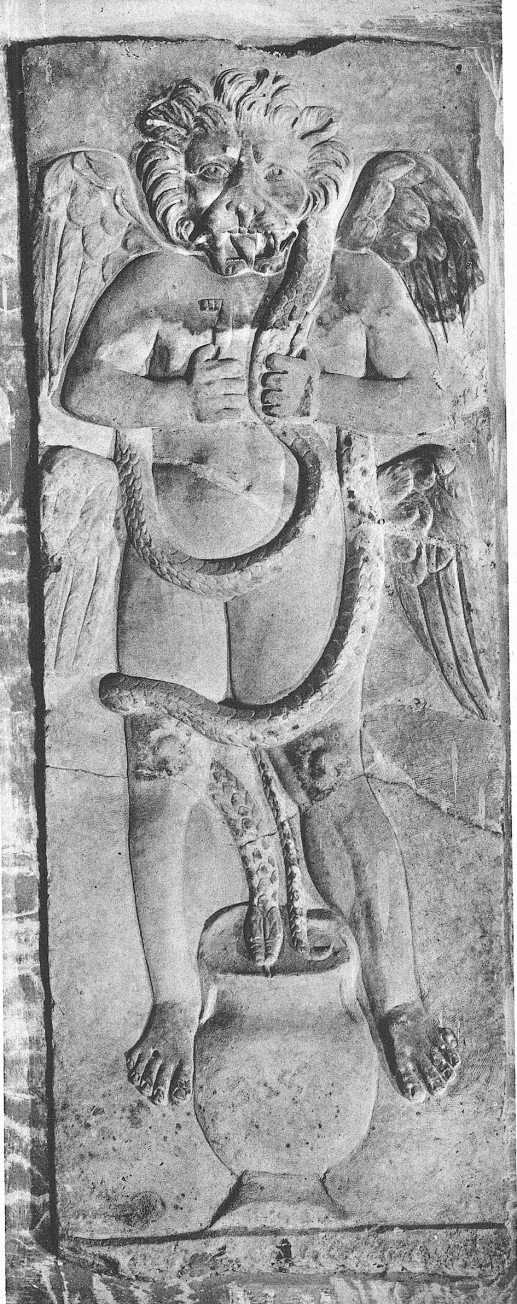
This white marble relief depicting a lion-headed figure from Ostia is now exposed at the Musei Vaticani.


White marble statue of Mithras killing the sacred bull preserved in the Museo Nacional Romano.
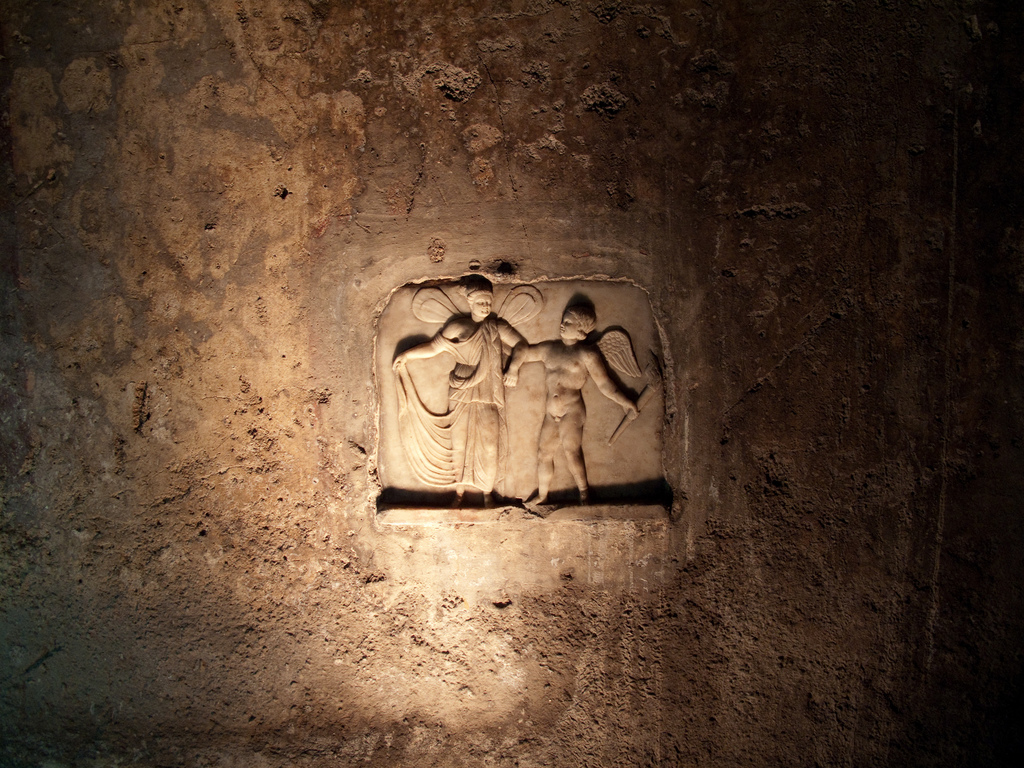
The Mithraeum of Santa Maria Capua Vetere includes a marble relief depicting a child Eros guiding Psyche through the dark.
