Your selection in monuments gave 176 results.
.jpg)
The statue of Arimanius/Ahriman was found in 1874 under the city wall of York during the construction of the railway station.
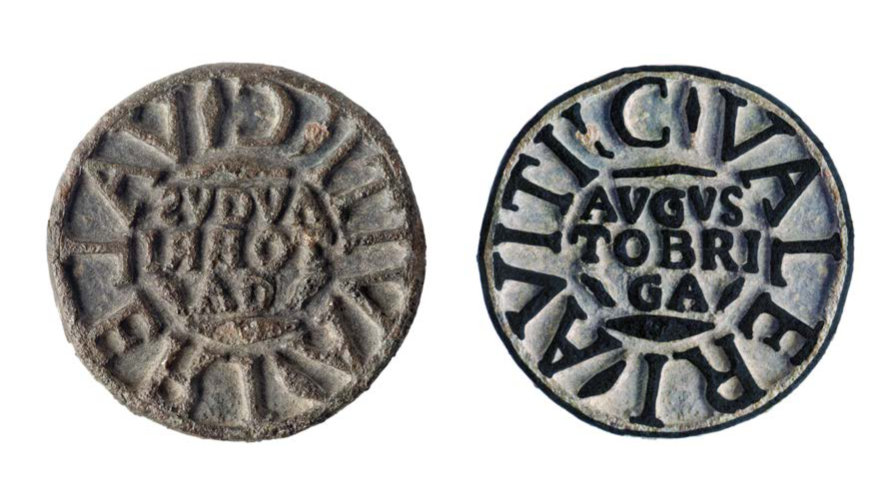
Bronze personal seal of a duovir of Tarraco and owner of the villa of Els Munts.

Bronze statuette bearing a Mithraic inscription, subsequently demonstrated by Anna Sadurska to be a modern forgery.
Small bronze statuette in Oriental dress from the Walters Art Gallery, Baltimore, depicting a figure no longer considered a Mithraic object.
Small bronze torchbearer statuette in Oriental dress from the Cabinet des Médailles, with restored feet and a missing torch-bearing arm.

Bronze torchbearer statuette in a short tunic from the Cabinet des Médailles, holding an upraised torch.

Pair of bronze torchbearer statuettes in Oriental dress from the Cabinet des Médailles, originally belonging to the same sculptural group.
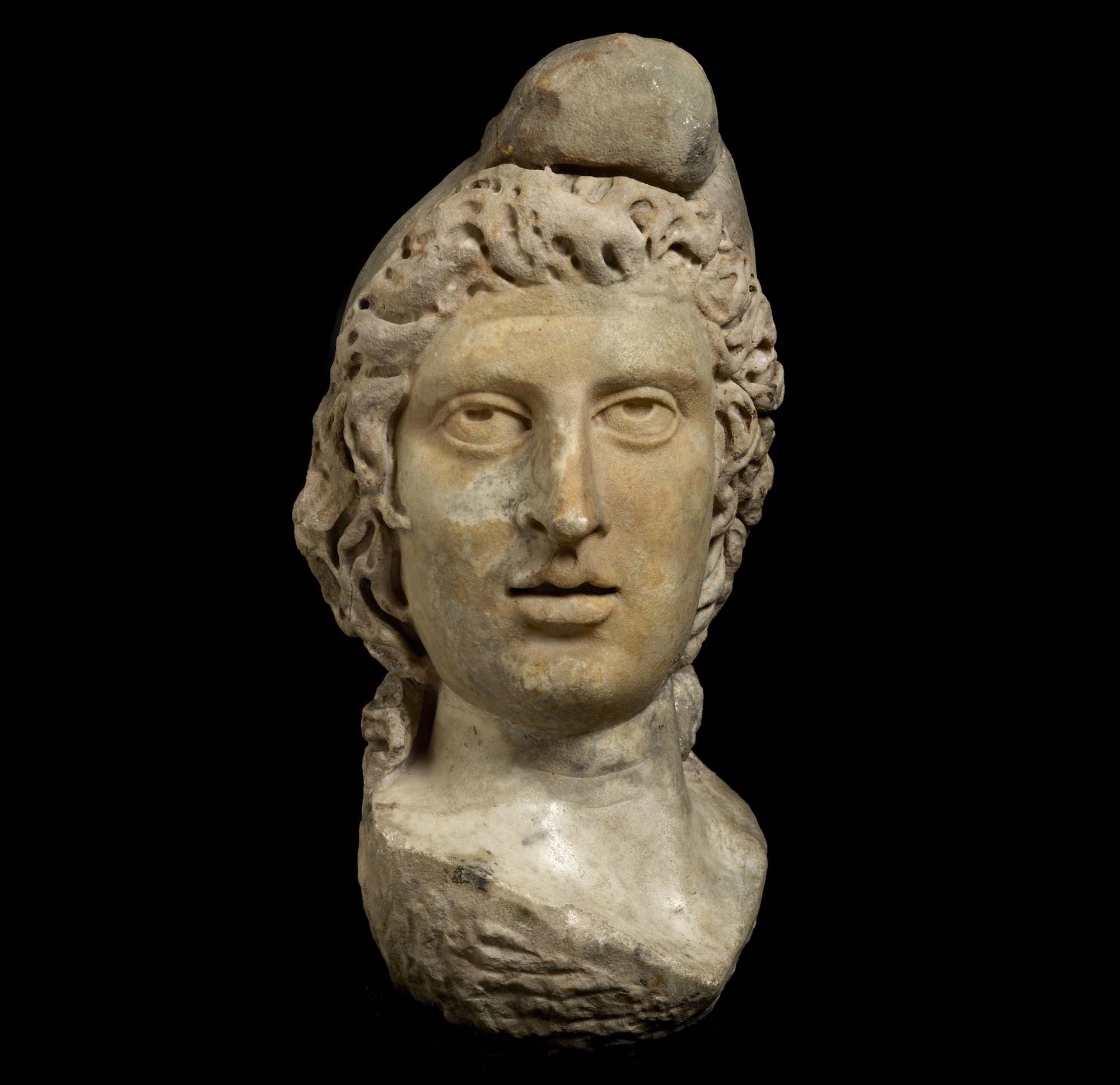
The Mithras's head of Walbrook probable belonged to a life-size scene of the god scarifying the bull.
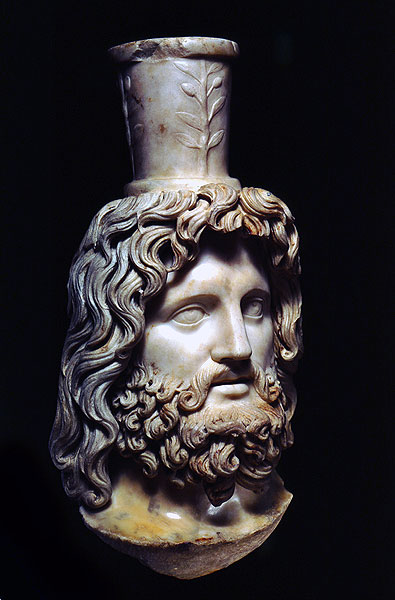
The head of Serapis found at Walbrook, London, is decorated with stylised olive branches.
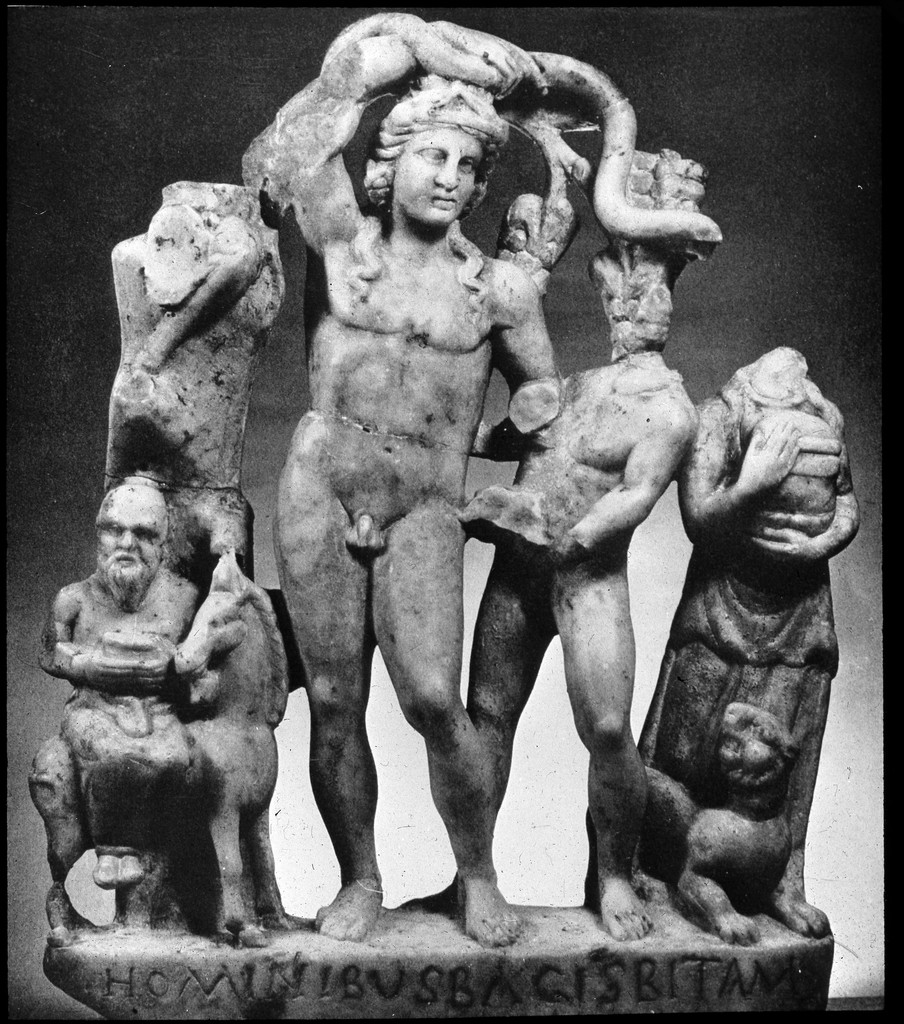
Marble group of Dionysus accompanied by a Silenus on a donkey, a satyr and a menead.
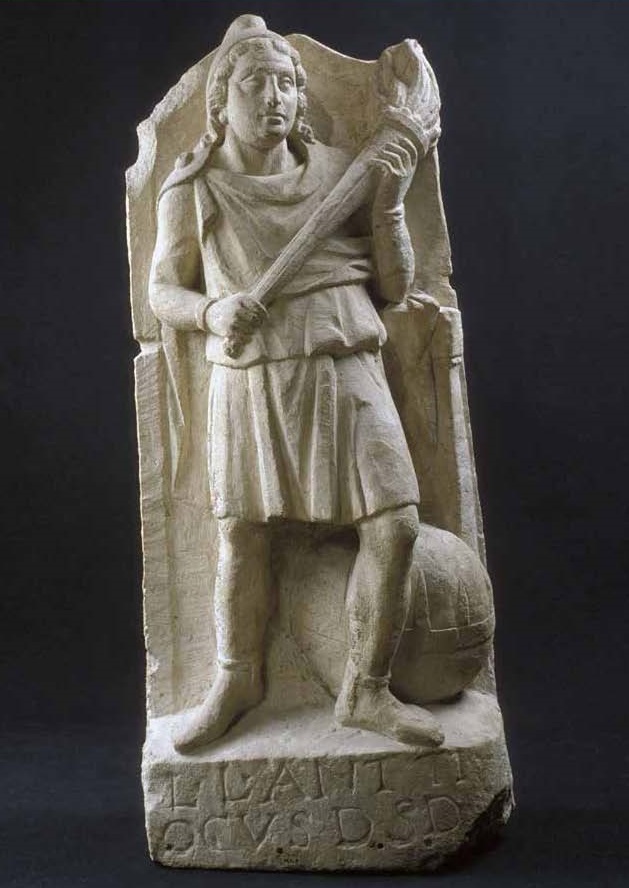
This monument representing Cautes with uncrossed legs was consecrated by a certain Anttiocus.
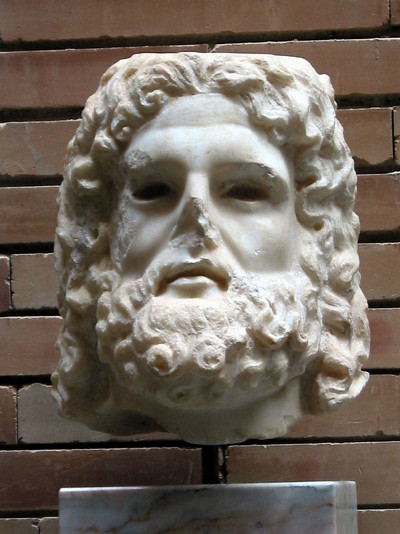
This head of Serapis from Cerro de San Albín may be unrelated to Mithras worship.
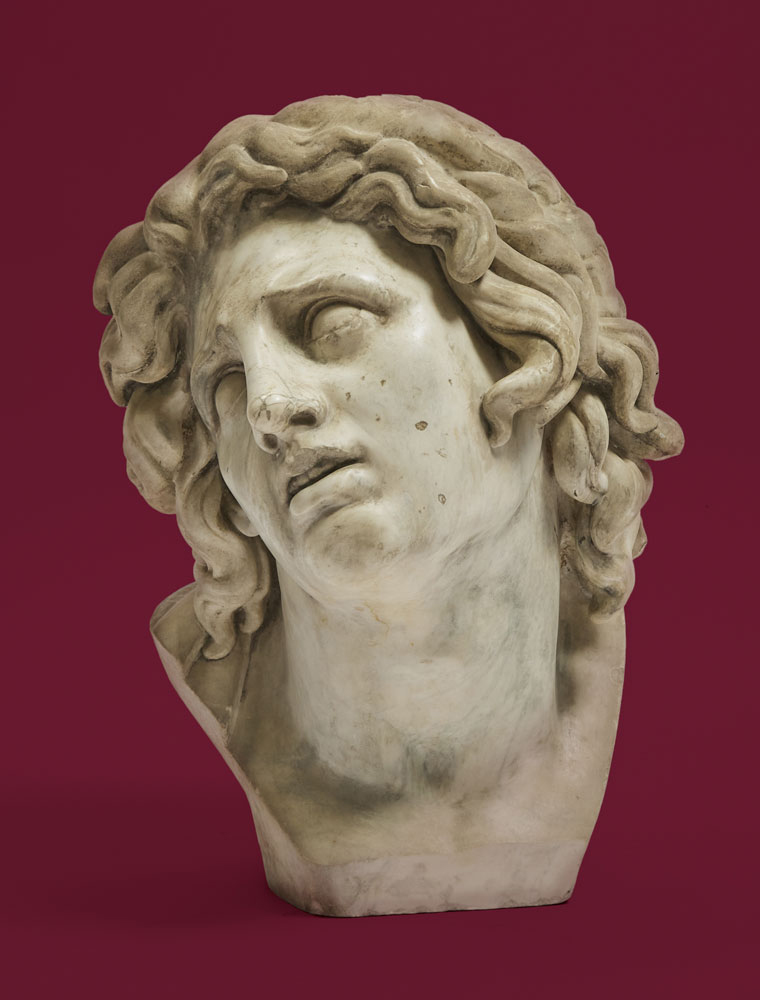
Head formerly associated with Mithraic material but interpreted by Margarete Bieber as a dying Giant.

Roman Mithraic relief illustrated in figure 171 of Vermaseren’s catalogue.
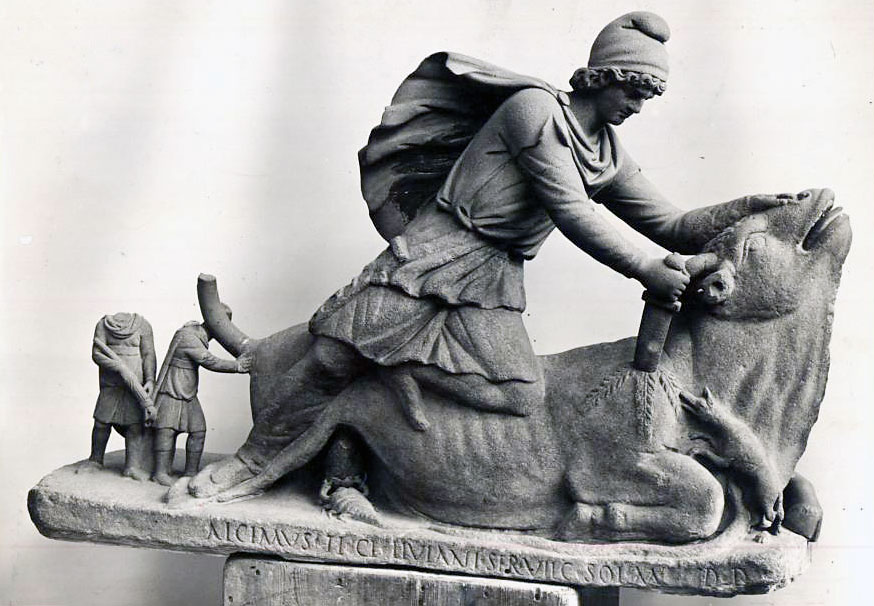
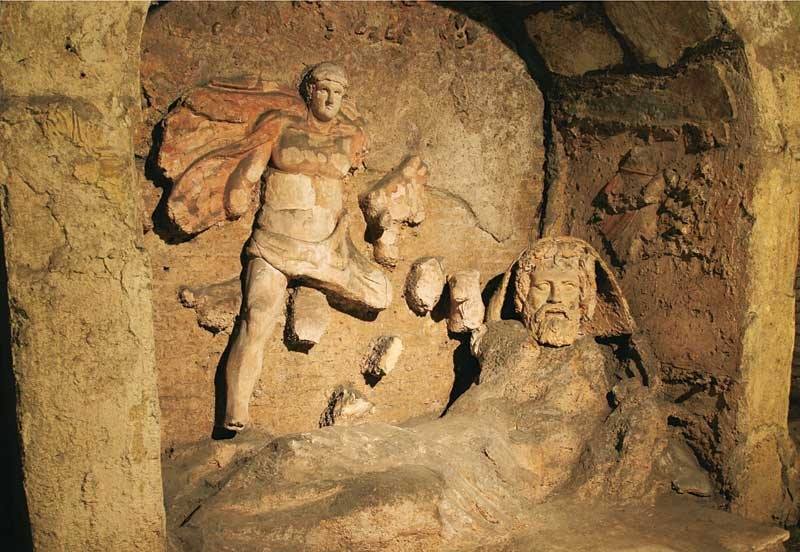
Even if only a few fragments remain, it is very likely that the main niche of the Mitreo di Santa Prisca contained the usual representation of Mithras killing the bull.
The fragmented tauroctony of the Mitreo di Santa Prisca rests on the naked figure of a bearded man, probably Ocean or Saturn.
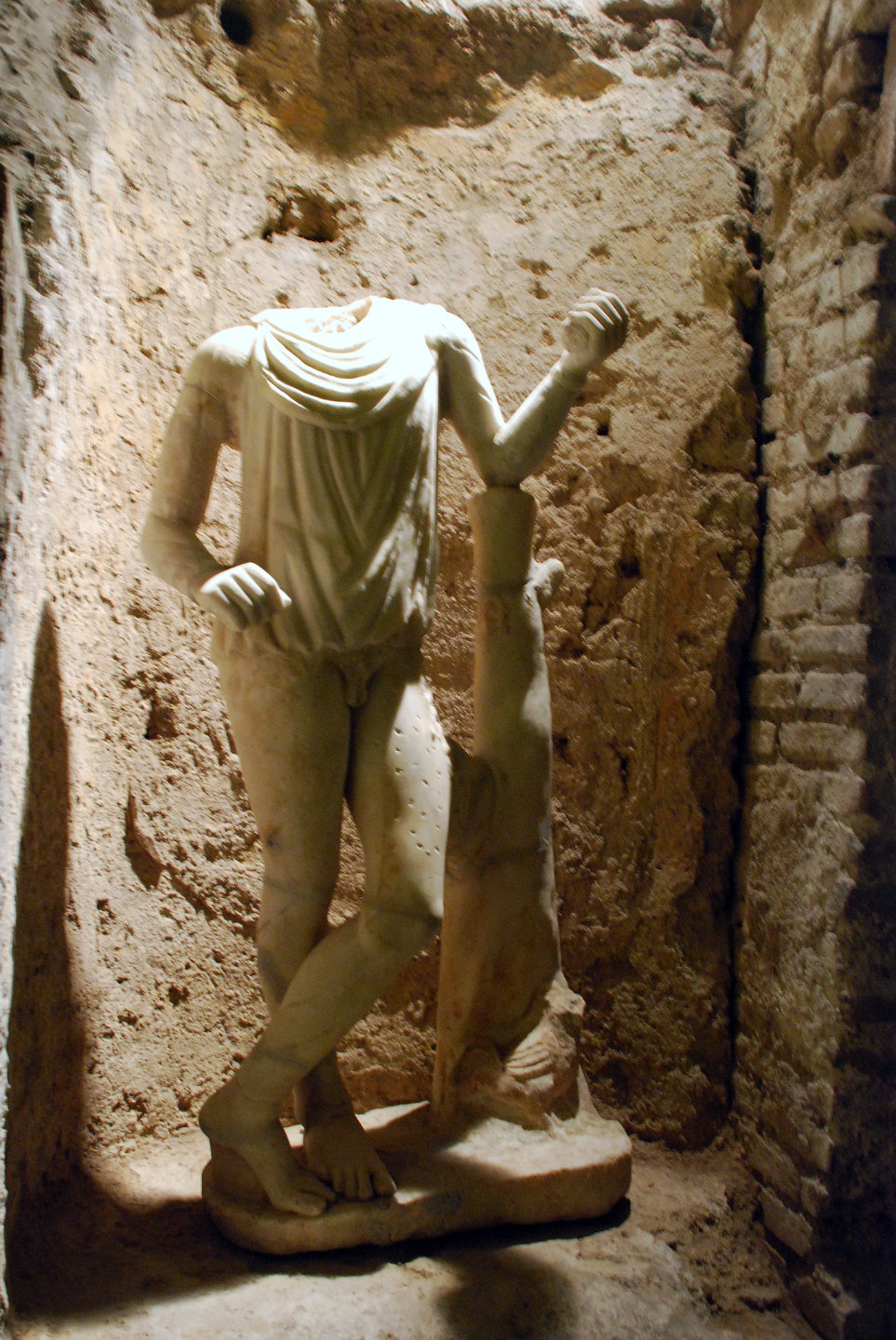
The marble statue of Cautes, found in the Mithraeum of Santa Prisca, was originally a Mercury.
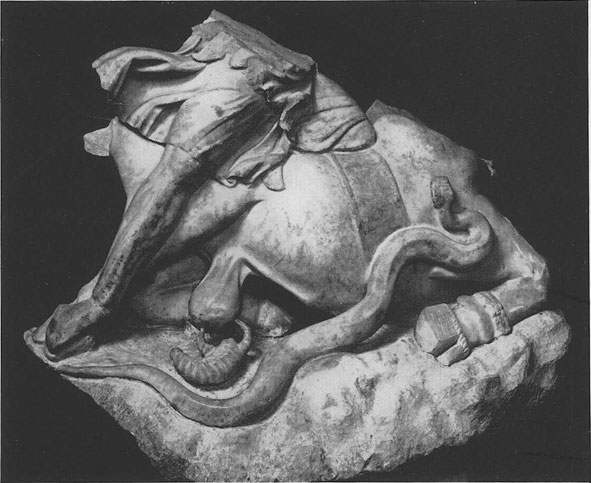
Partial marble statue of Mithras as a bullkiller found near Viale Latino, about 200 meters from Porta San Giovanni.
.jpg)
This limestone statue of Cautes is now exposed at Great North Museum of Newcastle.
